‘I don’t know how we approve this’: pharmacy board narrowly accepts drug diversion settlement
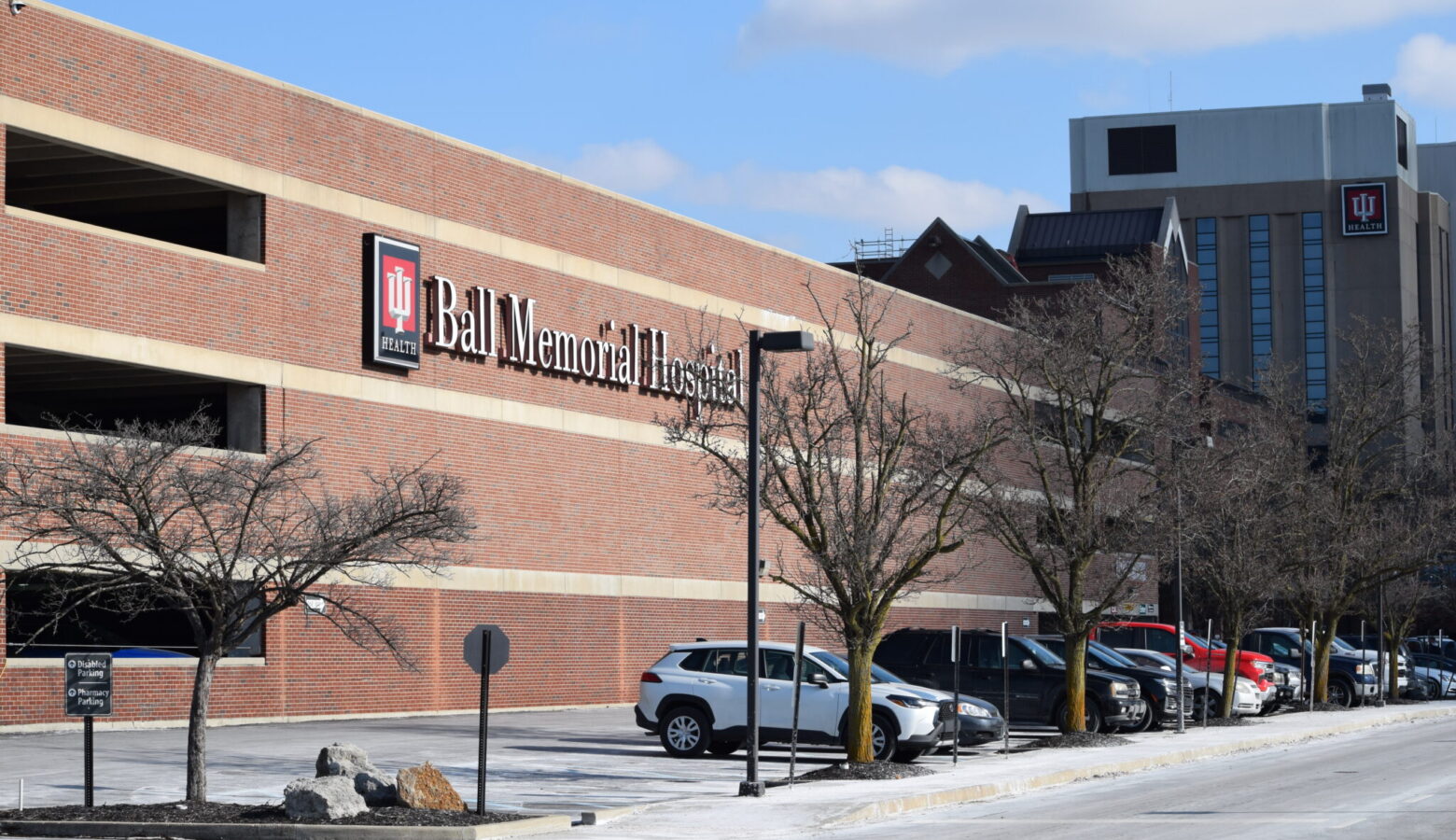
Indiana’s pharmacy regulators on Monday reluctantly approved a disciplinary settlement with IU Health Ball Memorial Hospital over what they describe as one of the largest known drug theft cases in state history.
Multiple board members questioned whether the punishment fit the magnitude of the misconduct, however.
The Indiana Board of Pharmacy voted 3-2 to accept the revised agreement after nearly three months of negotiations, placing the Muncie hospital’s pharmacy license on probation for at least three years, imposing the maximum $44,000 civil fine allowed under state law and requiring extensive outside audits, inspections and additional diversion-prevention training.
The vote came after several board members said they believed the penalties were still insufficient given the scale of the diversion scheme.
In a separate criminal case against the pharmacist in question, Christopher Knoth, prosecutors allege the longtime pharmacy manager stole tens of thousands of doses of powerful opioids over nearly four years without detection.
“I don’t know how we approve this,” board member Kate Snedeker said during Monday’s hearing. “From a public standpoint, this is reprehensible.”
Board President Matt Balla ultimately joined Snedeker in voting against the settlement, while members Steve Anderson, Mark Bunton and Mark Smosna voted to approve it. Board member Andrew Meador, an IU Health employee, recused himself from the case.
The split vote was a reversal from April, when the board unanimously rejected an earlier version of the agreement after raising concerns that the proposed sanctions did not adequately reflect what members repeatedly described as an “egregious” case.
Investigators said the reported losses included more than 32,000 milliliters of hydromorphone, more than 3,300 milliliters of methadone solution, more than 4,000 methadone tablets and smaller amounts of morphine. The hospital estimated its loss at more than $121,000.
‘Reasonable and appropriate‘
Monday’s revised settlement kept the $44,000 fine — the maximum permitted under Indiana law based on the 44 administrative violations alleged by the Office of the Attorney General — but added more detailed probation requirements that board members requested during earlier negotiations.
Deputy Attorney General Autumn Murphy told the board the most significant revisions involve include more specific training requirements for pharmacy leadership and additional documentation related to federal drug diversion guidance.
Counsel representing IU Health Ball Memorial additionally argued Monday that the agreement reflected the maximum discipline legally available under the administrative complaint filed by the attorney general.
“The attorney general’s office reviewed the evidence and made a reasonable and appropriate charging decision before filing the administrative complaint,” hospital attorney Barclay Wong told the board.
Wong said state investigators knew the details of the diversion scheme, as well as the hospital’s response, its inspection history and the absence of any enforcement action by the Drug Enforcement Administration before negotiating the settlement.
He emphasized, too, that prosecutors did not accuse the pharmacist of distributing diverted drugs to other people.
Murphy said Wong’s description of what the attorney general’s office knew before filing the complaint was “accurate.”
Snedeker acknowledged the statutory cap on administrative fines but said she struggled with approving the agreement in light of the hospital system’s size and the seriousness of the underlying conduct.
Smosna said he shared those concerns about the penalty amount but questioned whether the board’s “hands are tied.”
“I don’t disagree with you,” he said. “I’m just trying to understand if our hands are tied.”
Anderson said the board was effectively deciding between approving the negotiated agreement or risking no settlement at all.
“This board does not, or any board in Indiana, work autonomously like in other states,” Anderson said. “The attorney general’s office has decided that they believe this is fair in this case.”
He added that while board members pushed for stronger probation terms, “we’re not going to get anything better than this.”
Bunton similarly noted that Indiana law limited the available financial penalty.
“Our hands are tied,” he said. “Our options are limited at this point.”
Revised sanctions
Under the approved settlement, IU Health Ball Memorial Hospital’s pharmacy license and controlled substance registration will remain on indefinite probation for at least three years.
During that time, the hospital must:
- hire an independent outside auditor to conduct quarterly reviews of its controlled-substance policies, recordkeeping and diversion safeguards during the first two years of probation;
- submit the auditor’s findings and any implementation plans to the Board of Pharmacy;
- undergo two unannounced Indiana Professional Licensing Agency compliance inspections before seeking release from probation;
- require pharmacy directors, managers, team leaders and diversion specialists to complete an American Society of Health-System Pharmacists drug diversion certificate program and an additional 12 hours of continuing education focused on diversion prevention; and
- require designated DEA registrants to review and acknowledge the federal DEA Pharmacist’s Manual.
The agreement also requires the hospital to pay a $44,000 civil penalty — $1,000 for each of the 44 violations alleged by the attorney general — plus a $5 statutory fee within 90 days.
The administrative complaint alleges the hospital failed over a 44-month period to maintain adequate controls and procedures to guard against theft and diversion of controlled substances, allowing a pharmacy manager to systematically remove Schedule II narcotics without detection.
The settlement specifically acknowledges deficiencies in the hospital’s auditing practices, concluding that existing policies failed to compare controlled-substance acquisitions with actual patient utilization and failed to monitor certain transaction types that ultimately concealed the diversion scheme.
Drug diversion case
The disciplinary case stems from a significant drug diversion scheme uncovered at IU Health Ball Memorial Hospital in July 2024 that investigators say went undetected for nearly four years.
The hospital’s policies between November 2020 and July 2024 failed to include regular audits comparing controlled-substance inventory with actual patient use at two outpatient facilities — the IU Health Ball Memorial Pain Center and IU Health Ball Orthopedic Outpatient Surgery Center — and did not monitor certain transaction types within the hospital’s inventory system that were ultimately used to conceal the thefts, according to the settlement agreement.
Those gaps, per the agreement, allowed a pharmacy manager to repeatedly remove Schedule II controlled substances “through use of normally-unused transaction types” while disguising the withdrawals as legitimate transfers to the outpatient clinics.
Hospital officials first reported the suspected diversion to the Drug Enforcement Administration and the Indiana Board of Pharmacy in July 2024. Months later, an amended DEA loss report identified thousands of stolen doses of hydromorphone, methadone and morphine.
The attorney general’s administrative complaint alleges the hospital committed 44 violations of state law by failing to maintain effective controls against theft and diversion of controlled substances over the 44-month period.
At the same time, the settlement also identifies several mitigating factors, including that the hospital cooperated with investigators, had passed routine licensing inspections over the previous 15 years, successfully completed an unannounced Joint Commission survey after the diversion was discovered and, as of April, had not been subject to enforcement action by the DEA.
The diversion scheme has separately led to criminal charges against Knoth, whom Delaware County prosecutors accuse of stealing more than $121,000 worth of controlled substances from the hospital.
Knoth faces felony counts of possession of a narcotic drug, theft, obtaining a controlled substance by fraud or deceit, unlawful possession of a syringe and forgery. Prosecutors allege he diverted large quantities of hydromorphone, methadone and other narcotics over several years before the scheme was uncovered.
His criminal case remains pending, and court records show the next status hearing is scheduled for Aug. 5 after multiple continuances.
Delaware County Prosecutor Eric Hoffman told the Indiana Capital Chronicle his office intends to oppose any additional delays.
“I have instructed my staff to object to any further continuances and to get it set on the trial calendar,” Hoffman said.
Although Knoth was terminated by IU Health following the investigation, Professional Licensing Agency records show his Indiana pharmacist license status as “Valid to Practice While Reviewed” as of Monday afternoon. Knoth renewed his pharmacist license July 5, according to PLA records.
Balla said on Monday that Knoth is “likely” to be asked to be appear before the board before any further licensing action.
It remains unclear whether Knoth has worked as a pharmacist since his termination from IU Health in 2024.
