Ball State study: Indiana counties lose money by restricting solar and wind farms
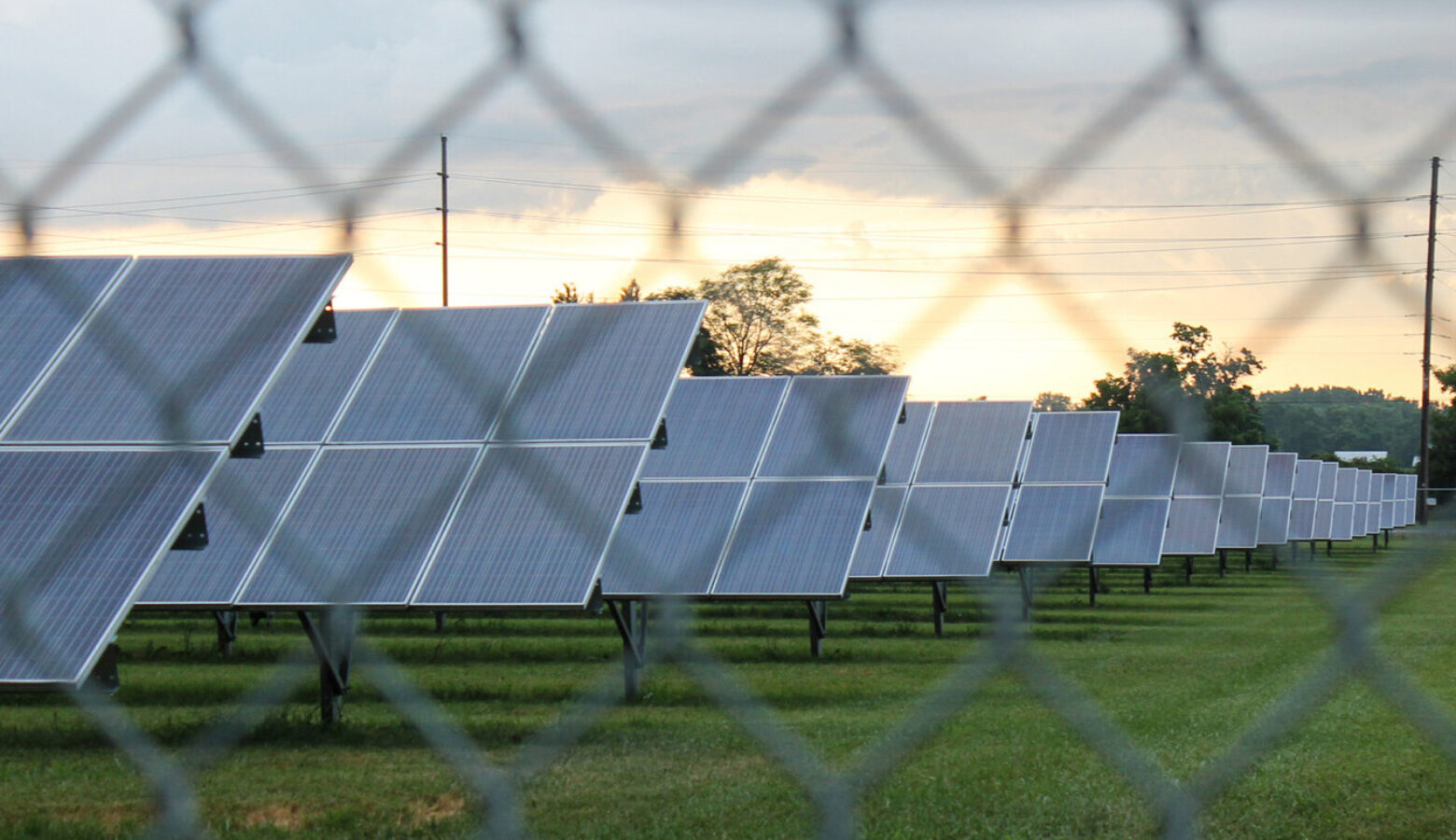
Hoosier counties that heavily restrict renewable energy farms are experiencing weaker employment growth and slower fiscal expansion. That’s from calculations from Ball State University’s Center for Business and Economic Research. IPR’s Thomas Ouellette reports.
Land use rules across Indiana’s 92 counties differ greatly, and the study looks at those that heavily restrict solar and wind projects. It finds, for solar restrictions alone, Indiana counties lose out on over $80 million in economic activity every year.
READ MORE: Delaware County adopts updated solar zoning ordinance
Economist Michael Hicks is the center’s director. He says many of these restrictions come from misinformation of how solar panels or wind turbines will affect the farmland it’s placed on. But Hicks says it is one way to use what he calls an excess supply of farmland in the state.
“In fact, nationwide,” he says, “over the past 75 years, we’ve tripled agricultural production while reducing the amount of land in use for agriculture by the equivalent of three full Indiana’s.”
READ MORE: Solar on big box stores and warehouses: Indiana’s big, flat, sunny opportunity
Hicks also says critics living near proposed renewable energy farms worry their visibility will lower surrounding property values. He says most of these renewable energy farms are located on inexpensive land far away from people so their effect on property values is minimal.
READ MORE: Report: Indiana has a lot of land for solar energy projects
Hicks says most American corporations have committed to using a large amount of renewable energy over the next few decades. By restricting renewable energy sources, counties make themselves less desirable for the future construction of facilities like factories and information centers.
He says a “spillover” effect should also be taken into consideration by counties in favor of strong restrictions.
“The restrictions from one county can affect the other and actually reduce manufacturing employment. They could push the wind or solar from Delaware [County] to, say, Randolph County, that has otherwise very similar wind availability,” he said. “We were able to measure the that spillover outside of the county and our findings were that it was largely negative.”
The study’s conclusion says it’s not aimed at convincing counties to invest in renewable energy. It does suggest county-level officials should “weigh these economic considerations” when making regulations.
Thomas Ouellette is our reporter and producer. Contact him at thomas.ouellette@bsu.edu
