
Audio Transcript
00;00;00;02 - 00;00;16;01
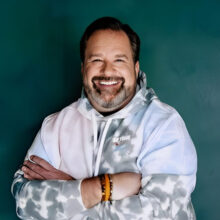
Dr. Jacquelyn B. Frank
Frank: We now have over - in this country - over 27,000 rules that bar formerly incarcerated people from either employment or licensure or housing. And that's a lot of, of barriers to overcome.
00;00;16;06 - 00;00;45;25
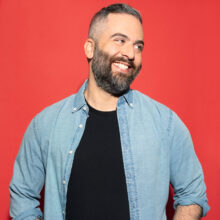
J.R. Jamison
Jamison: That was Dr. Jacquelyn Frank, a professor of aging studies at Eastern Illinois University. Jackie has spent years working within the prison systems of Indiana and Illinois, and her research and community engagement work focuses on long term incarceration and life after prison. We'll hear more from Jackie later. I'm J.R. Jamison. Today on The Facing Project, we’ll share two stories from Wisconsin: the story of a woman with a felony who is working on a new life with her kids, and another from a retired prison doctor who works on reentry program reform.
00;00;45;26 - 00;01;18;26
J.R. Jamison
In this episode, we'll explore life after prison, and even later in the show, I'll be joined by 15 year old Charlie Isaacs. Charlie has never been to prison and isn't related to any of the stories we'll share today, but he is a huge fan of public radio and this show. With his mom and dad's permission, Charlie will join me to talk about storytelling and why he wants to go into radio when he gets older. [Theme music]
00;01;18;28 - 00;01;48;13
J.R. Jamison
Jamison: Prison is honestly my worst nightmare. Since I was a kid, I've been terrified of being locked up, mainly because I don't think I'd survive. I'm a 5’9”, 160 pound gay man. And the thought of being incarcerated, well, let's just say that I know I would not survive. But being in prison is the reality for over 2 million people in the United States, and there has been a 500% increase in the number of folks incarcerated since 1980.
00;01;48;20 - 00;02;11;20
J.R. Jamison
According to the Innocence Project, 20,000 prisoners in the US have been wrongly convicted. They're incarcerated for no reason, but each year, more than half a million are released from state and federal prisons, either from serving their full or partial terms or released because they were found to be innocent. And this is after some of them have spent years in prison.
00;02;11;27 - 00;02;40;01
J.R. Jamison
So even more terrifying than my imaginary nightmare of trying to survive prison is what happens to these folks once they're released. If someone has a felony on their record, it's nearly impossible to find employment. And with an unemployment rate of over 27% for the formerly incarcerated, what is life on the outside look like for them? We'll hear the stories from Wisconsin, and then we'll do a deep dive into these questions with Dr. Jacquelyn Frank.
00;02;40;04 - 00;03;03;14
Tiffany Erk
Erk: “You Can Only Go So Far with Optimism,” as told to Rodrigo M. Jr. and Allison W., performed by Tiffany Erk. Second chances are hard to come by nowadays. The world forgets that people make dumb mistakes as we live our lives. We should be able to turn around safely back on the right path and not be punished for making the wrong turn in the first place.
00;03;03;17 - 00;03;21;21
Tiffany Erk
My wrong turn happened in Kentucky, and it took me back to where it all started in Eau Claire, Wisconsin. Born and raised in Eau Claire, I was sick of living with my father, so I left and moved in with my mother in Kentucky. But I made many mistakes in my past life, and it came back to haunt me.
00;03;21;26 - 00;03;46;14
Tiffany Erk
I ended up being charged with identity theft and possession of a stolen vehicle. I was taken into jail for three months in Kentucky, awaiting to be returned to Wisconsin. Once the van came to take me back to Eau Claire and that door slid open, I quickly realized I wasn't going to be alone. Six male inmates were being transported to other states, and I was the only female felon.
00;03;46;17 - 00;04;09;10
Tiffany Erk
The ride to Eau Claire felt longer than two days. It was nonstop, except for food and bathroom breaks, but they only stopped for two meals a day. Since showering was not an option, everyone's hygiene went to s---. There was nowhere to sleep except where you were sitting. As the ride dragged on, the others were dropped off throughout the Midwest.
00;04;09;12 - 00;04;34;11
Tiffany Erk
I was the last one to get off in Eau Claire, where I was sent to jail for two months due to my charges. We take for granted the lessons we learn as kids when it comes to keeping healthy relationships, dealing with anger, and keeping a positive attitude. Because I was an addict by the age of 12, I didn't learn these lessons, but one of the programs in the prison worked with me to develop these skills.
00;04;34;14 - 00;04;54;23
Tiffany Erk
I was feeling positive and hopeful for the future, but once I got out, I had nowhere to go or stay. I left jail with only the clothes on my back, which were meant for 80 degree weather in Kentucky. But shortly after, I found the Bolton Refuge House and was taken in by them. My focus was mainly on my kids.
00;04;54;24 - 00;05;15;24
Tiffany Erk
I had three at the time, and they were all taken away once I got into jail and charged. I wouldn't have a chance to get my kids back from my sister and mother in Kentucky until I could prove that I could hold a job and a home. Being a felon with an identity theft charge, I couldn't work anywhere near money, which took out cashiering telemarketing, and serving jobs as an option.
00;05;15;26 - 00;05;36;08
Tiffany Erk
I did get into city housing meant for families until I got kicked out due to not having my kids. An old friend ended up being my savior, and I stayed with her for six months as I slowly got back on my feet. From there, my luck turned around. I've been living in the house I'm at now for almost two months.
00;05;36;10 - 00;05;55;17
Tiffany Erk
My daughter’s been back with me for a while. I'm in the process of getting one of my sons back, and I have two seasonal jobs to keep income coming in. My children mean the world to me. I've made mistakes in my life, but I've changed my ways and attitude to better myself and the ones that matter the most to me in my life.
00;05;55;19 - 00;06;12;04
Tiffany Erk
But the road of a felon isn't an easy one. I was offered a deal to get my record cleared, but I was told I needed to pay a fine of $200, and when I went to apply, I didn't have the money at the time of the offer, and I didn't have anyone that would be able to lend it to me.
00;06;12;06 - 00;06;38;19
Tiffany Erk
Because of that, I'm labeled as a felon for the rest of my life. Over a matter of 200 f---ing dollars. Since then, I've been involved with the community as much as possible to spread awareness that felons deserve to be treated like citizens. I'm a part of Expo, which is an organization here in Wisconsin that helps transition those of us who were previously incarcerated back into everyday life.
00;06;38;19 - 00;06;59;22
Tiffany Erk
And it has helped me talk to people that have gone through similar experiences and we support each other. I'm in AA, anger and healthy relationship classes, and these things help keep this attitude that I've worked for. Though I'm not perfect, I've taken many steps to better myself and make sure my kids are taken care of and have a positive future,
00;06;59;22 - 00;07;22;25
Tiffany Erk
even if mommy made bad choices when she was younger. My attitude has gotten me farther than some ex-prisoners, but it will only take me so far without the help of others. [Positive chill beats]
00;07;22;28 - 00;07;47;28
Larry Beck
Beck: Ken Adler's story as told to Rachel E. and Nicole B., performed by Larry Beck. As a doctor, I've worked in a variety of places that have forever changed my perspective on the criminal justice system and the Chippewa and Eau Clair areas. I worked at the Marshfield Clinic in Eau Claire until about 2006, and I'm one of the founding members of the Chippewa Valley Free Clinic.
00;07;48;03 - 00;08;09;13
Larry Beck
I believe that working as a medical professional and doctor in the Wisconsin Department of Corrections is what opened my eyes to the area's criminal justice system. Going into my job at the correctional facility, I told myself I had to keep my guard up. I felt that I needed to be strictly professional with the prisoners because they had the potential to be dangerous people.
00;08;09;15 - 00;08;35;16
Larry Beck
And I'm not going to lie, I was scared. I think the stigma surrounding correctional facilities and those within them took over my thoughts for a brief time, but my perceptions and actions began to adjust through my experiences. Ultimately, I realized that putting up a guard was not going to work. You have to understand these people to help them, and once you respect them and listen to them, they will do the same for you.
00;08;35;18 - 00;09;02;11
Larry Beck
After opening up more with inmates and getting them to share their stories in return, I came to realize that many of them struggled with mental health problems, and of those problems, addiction stood out as the primary problem. Drugs and alcoholism just took over their lives and led them into a downward spiral. Personally, this realization had led me to believe that treatment, rather than corrections, is the right path for inmates with addiction.
00;09;02;16 - 00;09;22;09
Larry Beck
These people have a disease, and they need proper help to ensure that they won't fall back into bad habits. But it's hard and tricky. In the prison system, an inmate in a mental health crisis is able to meet with a psychologist within a span of hours. On the outside, it can take months for an individual to be able to meet with a counselor.
00;09;22;11 - 00;09;44;29
Larry Beck
I can only imagine what would happen if mental health resources could be made more abundant within the community. Coming out of jail or prison, former inmates often have nothing and nowhere to go. Stigma and prejudice make it exceedingly difficult for them to find jobs and housing, and they end up struggling to stay out of the habits that put them in corrections in the first place.
00;09;45;02 - 00;10;10;29
Larry Beck
Many of them end up defaulting on homeless shelters or inns, which are in a constant state of overflow. I have a friend who struggled to find a steady job and a place to live for nearly eight months after he was released. People shouldn't have to struggle that much to return to proper living conditions. These problems on the outside are what led me to engage in avid volunteer work following my retirement.
00;10;11;03 - 00;10;33;24
Larry Beck
Currently, I'm an organizer for the group known as Positive Outreach for Our Community's Homeless, and I helped advocate for the alteration of the hours at a homelessness resource center called Positive Avenues so that homeless people have a place to go when the homeless shelter is closed. Before this, homeless people had nowhere to go on Christmas, and we made sure to change that.
00;10;33;26 - 00;11;01;18
Larry Beck
While I'm proud of all of this work, I know that the criminal justice system still has a long way to go. When I imagine an improved community that supports former inmates, my mind goes to three things: adjusting the housing situation, making transportation more accessible, and continuing the fight against homelessness. And as we're able to help more people, perhaps we'll be able to break the cycles of poverty, addiction and incarceration.
00;11;01;22 - 00;11;36;07
Larry Beck
I want to see the stigma surrounding low income citizens and ex-prisoners further diminished. We shouldn't be fearful of inviting these people back into society, but we need more awareness and continued community support. If we face this change together and advocate for it, I believe it's possible. [Meditative acoustic folk music]
00;11;36;09 - 00;11;45;00
J.R. Jamison
Jamison: I want to welcome to the show Dr. Jacquelyn B. Frank, professor of aging studies and human services at Eastern Illinois University. Jackie, thank you for joining me.
00;11;45;01 - 00;11;47;01
Dr. Jacquelyn B. Frank
Frank: Thank you very much for having me. J.R..
00;11;47;02 - 00;12;06;29
J.R. Jamison
Jamison: I also want to share with our listeners that you and I go way back, like 15 years back. I first met you at a university level faculty fellows program in Indiana that supported community engaged research, and you were one of the fellows in that program. And because of that, I've had the opportunity to watch your work over the years as you've transitioned to working with aging prisoners. And following your work,
00;12;07;00 - 00;12;26;02
J.R. Jamison
I know that some of the men you work with do eventually get out. They don't stay in prison forever. They're, they're released because they've served their term or there's early release. So thinking about that, what have been some of the biggest challenges for these men once they get out?
00;12;26;04 - 00;12;55;09
Dr. Jacquelyn B. Frank
Frank: That's a really good question because as you alluded to, most of the men and women that I've worked with have been, have served long term incarcerations - 20, 30, 40 years - rather than a short sentence of 4 or 5 years. And that can pose much more major challenges for someone returning to the community. I think every challenge is a major challenge in some ways.
00;12;55;09 - 00;13;22;16
Dr. Jacquelyn B. Frank
When you're released after 30 or 40 years of incarceration, it's the reconnecting with your, your family - if you have any family left on the outside, and if you still have a relationship with them - or reconnecting to the community. Just readjusting, you know. Knowing people who went in in the mid-1990s and came out two months ago, and it's like, well, there weren't cell phones, there wasn't this, there wasn't that.
00;13;22;16 - 00;14;01;22
Dr. Jacquelyn B. Frank
And so [cough] just kind of being introduced to a whole new world of technology, but then finding employment and following the terms of parole, or if they came out on house arrest, following those terms, making sure that you have transportation. So everything kind of comes in at once. So some of its relational with other people. And clearly things like finding a job are also going to be more difficult when you've been incarcerated for 20 or 30 years than a year or two.
00;14;01;24 - 00;14;20;28
J.R. Jamison
Jamison: I want to focus in on that employment piece. So according to the Prison Policy Initiative, they found a 27% unemployment rate for the formerly incarcerated. From your perspective as a researcher and someone who works closely with the incarcerated, what policies or practices need to change to decrease the statistic?
00;14;21;01 - 00;14;45;00
Dr. Jacquelyn B. Frank
First of all, we need to understand how big of an issue this is, how many people are incarcerated and how many are, are returning to communities every year. And so this isn't a tiny, isolated issue. It's, it's a large one. And we don't tend to think of it that way. And oftentimes, too, people think, well, why should I hire someone?
00;14;45;00 - 00;15;32;16
Dr. Jacquelyn B. Frank
They were in prison, blah blah blah. It's, it's impacting families too. There's a lot of collateral impact and damage. So when you're refusing someone that, that has been incarcerated a job, then that impacts their, their whole family. But on the larger policy and procedure scope, there are some states that are really trying to move forward and take some of those barriers away, because what- based on the Collateral Consequences Resource Center, we now have over - in this country - over 27,000 rules that bar formerly incarcerated people from either employment or licensure or housing.
00;15;32;16 - 00;16;18;11
Dr. Jacquelyn B. Frank
And that's a lot of barriers to overcome. But a positive example is actually the state of Illinois. Earlier this year, our governor signed into law H.R. 1480, which is a major expansion of the Illinois Human Rights Act. And what that did is it added a new section that prohibits discrimination in employment based on a criminal record. Okay. So unless otherwise authorized by law, it is now a civil rights violation for any employer or employment agency or labor organization to use a conviction record as the basis to refuse to hire someone.
00;16;18;13 - 00;16;49;27
Dr. Jacquelyn B. Frank
There are exceptions to this, of course, and there are other states that are moving forward as well. For example, Louisiana. But what they're moving forward with is something that prohibits consideration of a non-conviction record in the hiring of someone. So if you've been convicted they can still consider that. But if you haven't, Louisiana says, yeah no, you can't consider that now in the hiring process.
00;16;49;27 - 00;17;00;29
Dr. Jacquelyn B. Frank
So some states are becoming more responsive. And that's something that's definitely good to see. But obviously there's still a lot of challenges out there.
00;17;01;01 - 00;17;10;25
J.R. Jamison
Jamison: I often hear people talk about felony convictions. The Illinois law you mentioned, does that cover felonies as well?
00;17;10;27 - 00;17;40;26
Dr. Jacquelyn B. Frank
Frank: Yes, it does cover felony convictions. But you raise a really interesting point, because lots of times when these policies or laws come forward, there's always a caveat about either a felony conviction or a violent felony, that we don't want a violent felon getting a job even at Burger King, or we don't want- So if it's a drug charge, well, that's fine, but a violent felony?
00;17;40;26 - 00;18;15;20
Dr. Jacquelyn B. Frank
No it's not. And most everyone that I've worked with does have a violent felony. And what's interesting - and most of those have been murder convictions - and what's most interesting is that the recidivism rate is lowest for people with murder convictions. It's usually a one time thing, a bad situation, a bad combination of players. And someone gets convicted at a very young age and serves a very long sentence, and then that person comes out and faces the, “you are a violent felon.
00;18;15;20 - 00;18;22;03
Dr. Jacquelyn B. Frank
We see you as someone who is violent, and therefore we should not employ you.”
00;18;22;05 - 00;18;33;22
J.R. Jamison
Jamison: Well, going back to the men and women you've worked with and who have gotten out, is there a success story that you can share? And what do you think made that transition a success?
00;18;33;23 - 00;19;04;16
Dr. Jacquelyn B. Frank
Frank: There are actually several success stories. I don't know, I think I would call them delayed success stories. So one in particular that, that comes to mind from Indiana is Gary, who became incarcerated at 18 or 19 on a murder conviction, served 22 years. During that time, he, he worked a number of jobs, had very responsible positions with, within the prisons.
00;19;04;16 - 00;19;32;05
Dr. Jacquelyn B. Frank
He earned a college degree. He went through a particular program, the Last Mile program, which has garnered a lot of support in Indiana from the governor. And anyway, he came out on house arrest and pounding the pavement with his college degree, and he got hired at McDonald's. And that is the only job he could get. And he took it.
00;19;32;05 - 00;20;03;03
Dr. Jacquelyn B. Frank
And then within a couple of weeks, he was then hired by a little more upscale, basically, fast food restaurant. And after a few months of working there, his manager said, “You know what? We really see you as management material. And we would like to, to, you know- you're responsible; you’re all these things. However, in order to do this, we would have to run you through a full background check, and you're not going to pass it, and then we're going to have to fire you.”
00;20;03;05 - 00;20;29;02
Dr. Jacquelyn B. Frank
He stayed working there and just kept pounding the pavement and pounding the pavement and working on things. And because of his computer skills and his college education, things did parlay, and he's now working for the Last Mile on the outside doing this training and also doing some computer consulting. So he's done extremely well, but not without a lot of frustration.
00;20;29;02 - 00;20;57;24
Dr. Jacquelyn B. Frank
And again, that 22 years of incarceration is just sort of this big gap. It wasn't a gap in his employment history at all. But then the barrier was there as soon as he came out. So, a lot of creativity is needed, some entrepreneurial push is needed and a lot of resilience to, to push forward. But there definitely are some, some good success stories, which is, which is nice to see.
00;20;57;25 - 00;21;22;01
Dr. Jacquelyn B. Frank
And a lot of the men who are successful really wanting to give back and give their advice and give a hand to those coming out so that, that they don't have some of the same barriers or better understand how to handle those barriers and challenges so they don't violate their parole or their house arrest and recidivate and go back to prison.
00;21;22;04 - 00;21;35;19
J.R. Jamison
Jamison: For the everyday person listening to this episode, and they think, what can I do to help with prison reform or reentry reform? What would you recommend?
00;21;35;21 - 00;22;10;04
Dr. Jacquelyn B. Frank
Frank: Become more educated. There are some organizations out there - certainly the Marshall Project, the Prison Policy Initiative, a lot of others - in terms of learning about what what the facts are, but also seeing the human side of, of things. So one of the, the, the men who was recently released as well, after serving 24 years, again, earned a college degree and a master's degree in prison, also had a barber's license - earned a barber's license and cut hair while incarcerated - and came, came out of prison,
00;22;10;04 - 00;22;41;15
Dr. Jacquelyn B. Frank
and I said, “So, you know, how did the interview thing go? How did the process go?” Well, he had lived at a reentry center for a year, and so he had had all that opportunity out in the community to, to re-acclimate and not be sort of pushed against a brick wall when it came out, he said. But they also did so many practice interviews with us about sitting down with an employer, a potential employer, face to face and saying, “So this is my work history, this is what happened.
00;22;41;17 - 00;23;21;15
Dr. Jacquelyn B. Frank
This is a mistake I made. I'm out of prison, I'm ready to work. I'm-” And so I guess a big piece of advice would also be: Listen to someone who is released. Have that interview with them face to face. If they look like a really good job candidate, see the person as human and as an individual. And- because it saddens me to hear these stories over and over again from, from people who've been released who get jobs and their, their, their boss or the director of the organization says, “You are a fabulous worker.
00;23;21;15 - 00;23;58;18
Dr. Jacquelyn B. Frank
We would love to move you up the chain. We can't do that because...” So then it's like, you know, “You're the best we have. You're doing great. But...” So there's always the “but.” So it's really sitting down talking to, to the person who is potentially going to work for you. And considering the fact that they've served their time, and they're- most are really anxious to work, to put their best foot forward, to really serve the community.
00;23;58;22 - 00;24;01;05
J.R. Jamison
Jamison: And be productive members of society.
00;24;01;12 - 00;24;03;12
Dr. Jacquelyn B. Frank
Frank: Exactly, exactly.
00;24;03;17 - 00;24;10;11
J.R. Jamison
Jamison: Well, Dr. Jacquelyn B. Frank, professor of aging studies and human services at Eastern Illinois University, thank you for joining me.
00;24;10;12 - 00;24;12;29
Dr. Jacquelyn B. Frank
Frank: Thank you very much.
00;24;13;01 - 00;24;28;29
J.R. Jamison
Jamison: Completely unrelated to this episode’s theme but related to public radio and ending on a lighthearted note is 15 year old Charlie Isaacs, who is a self-professed radio nerd who wants to one day have a career in radio. Charlie, thank you for joining me in the studio.
00;24;29;01 - 00;24;31;10
Charlie Isaacs
Isaacs: Thank you for bringing me in and letting me do this.
00;24;31;11 - 00;24;54;00
J.R. Jamison
Jamison: Yes, absolutely. I was excited to have you here today. I want to start off by saying that I met you at a book club event I did with bestselling author Ashley C. Ford, who used to be your babysitter when you were a little boy and before Ashley became The Ashley C. Ford. What was it like having Ashley as a babysitter?
00;24;54;02 - 00;25;12;27
Charlie Isaacs
Isaacs: I mean, she was a great babysitter. I hung out with her all the time. I remember watching TV, singing, going to the playground, and in general just having lots of fun. And it's been cool to see her, you know, get her job, her, you know, new job and be very successful with her new book.
00;25;13;03 - 00;25;15;28
J.R. Jamison
Jamison: Yeah. And she's still the same Ashley. Right?
00;25;15;29 - 00;25;18;12
Charlie Isaacs
Isaacs: Yeah. She really hasn't changed that much.
00;25;18;16 - 00;25;25;01
J.R. Jamison
Jamison: Yeah. And you also shared with me that same night that you hope to go into radio someday. Why radio?
00;25;25;02 - 00;25;44;18
Charlie Isaacs
Isaacs: Well, recently I've gotten a lot more interested in radio because this year our school got a radio and television class, and I've started doing the morning announcements for our school. I've also been listening to a lot of radio all my life, NPR and other local news stations, and I've just been interested in the stories they tell and the music they play.
00;25;44;22 - 00;26;05;25
J.R. Jamison
Jamison: Perfect. So thinking about the future for you, I know you're only 15, but as you're thinking about three years from now and heading into college, what side of radio do you want to go into? Do you want to go into NPR, or do you want to go into something more sports related or DJ type related? What what kind of is your interest area?
00;26;06;01 - 00;26;22;10
Charlie Isaacs
Isaacs: I think right now, NPR is the one that interests me the most because I'm really interested in the news. But I could also see myself going into something with music and DJing and potentially even sports, although I find that as the least likely one, I'm really open to almost all of radio.
00;26;22;16 - 00;26;27;20
J.R. Jamison
Jamison: Great. And besides the Facing Project, what's your favorite NPR show?
00;26;27;23 - 00;26;33;29
Charlie Isaacs
Issacs: I would say Wait, Wait... Don't Tell Me! I've been listening to it for years, and it's- I really love it.
00;26;34;02 - 00;26;54;29
J.R. Jamison
Jamison: Yes, that is a really excellent show. I am a big nerd and I love You Bet Your Garden. And most people laugh when I tell them that, but I, I have a green thumb, and it's a program that I like to listen to. And of course, I also like This American Life. Do you find that your peers who are in your age range listen to NPR?
00;26;55;01 - 00;27;05;12
Charlie Isaacs
Isaacs: No. Not really. I have an NPR jacket that I wore all throughout middle school, and my friends always made fun of me for it. I think I've met one other kid at my school that listens to NPR.
00;27;05;15 - 00;27;11;14
J.R. Jamison
Jamison: Well, I'm hoping with our interview that we're doing together, maybe your friends will tune in, and we can change that.
00;27;11;14 - 00;27;12;14
Charlie Isaacs
Isaacs: That would be great.
00;27;12;15 - 00;27;22;03
J.R. Jamison
Jamison: Well, Charlie Isaacs, you are an inspiration, and I hope that more folks your age listen to public radio and choose careers in media. Do you want to help me with the closing credits of our show?
00;27;22;04 - 00;27;22;22
Charlie Isaacs
Isaacs: Sure.
00;27;22;23 - 00;27;31;06
J.R. Jamison
Jamison: All right, well, let's roll with it. [Theme music]
00;27;31;08 - 00;27;56;08
Charlie Isaacs
Isaacs: We want to thank the University of Wisconsin Eau Claire for their work on organizing Behind the Faces of Criminal Justice in the Chippewa Valley, a Facing Project in Eau Claire, Wisconsin. “You Can Only Go So Far with Optimism” was an anonymous story written in collaboration with Rodrigo M. Jr. and Allison W. and was performed by Tiffany Erk. Ken Adler’s story was written in collaboration with Rachel E. and Nicole B. and was performed by Larry Beck.
00;27;56;10 - 00;28;11;18
J.R. Jamison
Jamison: To listen to past episodes of this program, visit IndianaPublicRadio.org/TheFacingProject. From there you can subscribe to the podcast where you’ll get episodes of The Facing Project delivered to your device each month, or just ask your smart speaker to play The Facing Project on NPR.
00;28;11;22 - 00;28;26;29
Charlie Isaacs
Isaacs: Listeners can contribute stories or volunteer to share the stories of others with the Facing Project that may appear on the show. More information at FacingProject.com/InspireAction. To continue the conversation about this episode, find us on Facebook at The Facing Project.
00;28;27;00 - 00;28;51;03
J.R. Jamison
Jamison: The Facing Project is recorded at Indiana Public Radio at Ball State University in beautiful and wonderful Muncie, Indiana, and is produced by the amazing producer extraordinaire Sean Ashcraft. The show is distributed nationally through PRX. We are your hosts, Kelsey Timmerman and J.R. Jamison, with special guest Charlie Isaacs, and until next time, we wish you the courage to share your own story, and the empathy to listen to others. [Theme music concludes]