Indiana primary voters deciding weight of Trump endorsements
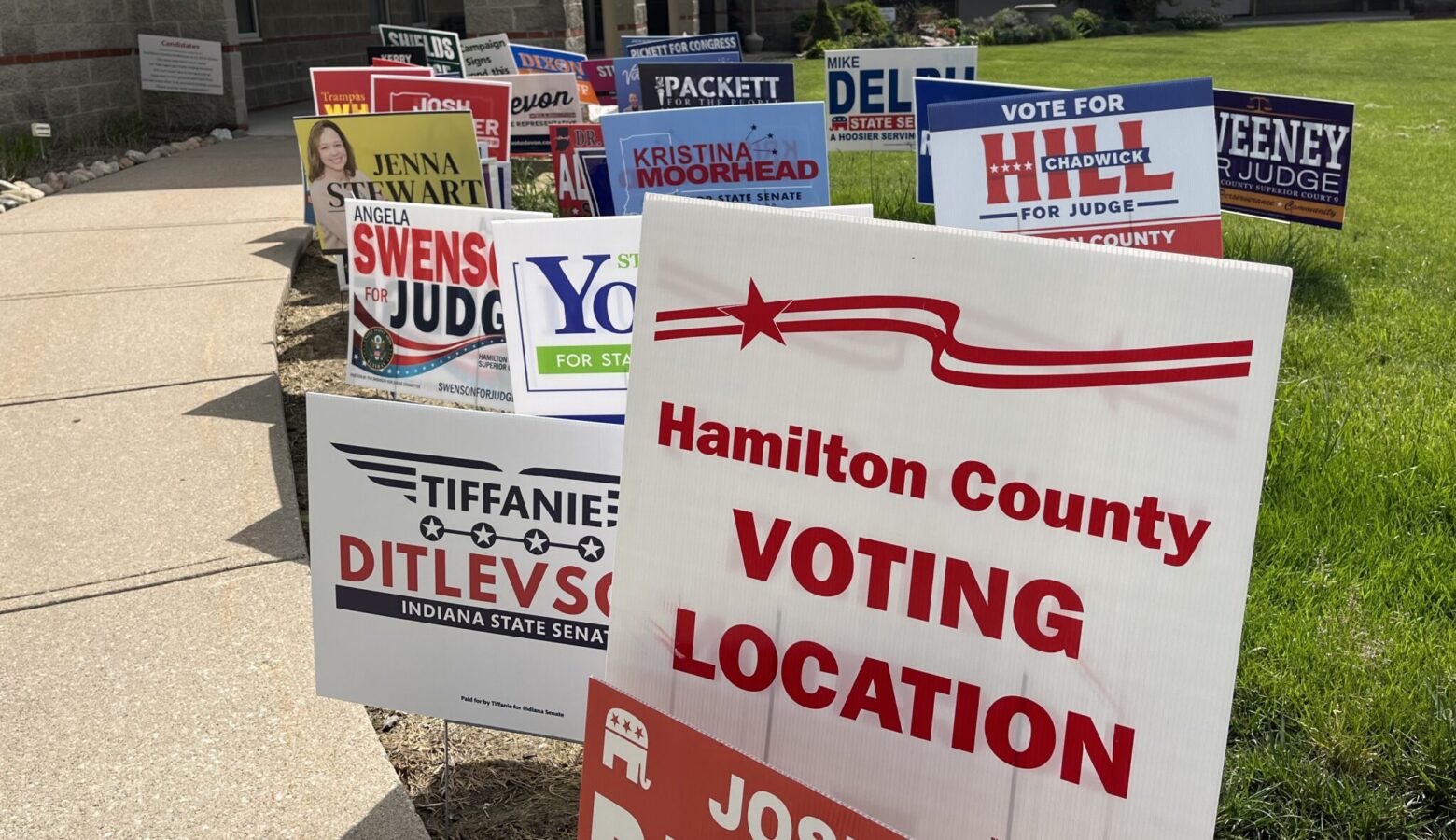
The expensive round of Republican in-fighting growing from the Indiana congressional redistricting debate will be decided by voters with Tuesday’s primary.
An estimated $9 million in advertising has been spent by national groups working to carry out President Donald Trump’s vow of political vengeance against Republican state senators who opposed his push to tilt the state’s U.S. House maps more in favor of GOP candidates.
The outcome of those eight state Senate races will have an impact on the Statehouse, but the primary results will also determine the Republican and Democratic nominees for U.S. House and other state legislative seats, many county offices, party precinct officials and state convention delegates.
The early in-person voting deadline is noon local time on Monday, with in-person voting hours of 6 a.m. to 6 p.m. local time Tuesday. State law requires mailed absentee ballots be received at local election offices by 6 p.m. Tuesday to be counted.
Trump’s sway up to voters
Much of the state’s political focus has been on Republican state Senate races where Trump has endorsed challengers to current legislators after the Senate voted down the redistricting bill in December.
A goal of pro-redistricting groups is to defeat enough of the current senators to force Senate President Pro Tem Rodric Bray from the chamber’s top position after Trump blamed him for the redistricting bill’s failure.
Political groups affiliated with U.S. Sen. Jim Banks have paid for many of the television, radio and digital ads attacking the current legislators.
Banks paints those senators as disloyal Republicans who are “anti-Trump.”
“I think we let the country down, but we can make up for it and elect better people so we don’t do it again,” Banks said in a recent radio show interview.
Those attack ads have lambasted those Republican senators as “liberals” who voted against Trump’s agenda.
Sen. Spencer Deery of West Lafayette, one of the targeted candidates, said the negative ads were meant to intimidate legislators into complying with orders from Washington politicians.
“All they have to hit me with are lies, and there’s no organic grassroots movement behind these attacks, because they’re not coming from Indiana and not coming from my district,” Deery said. “They’re coming from back east, from Washington, D.C.”
Republicans currently hold 40 of the 50 state Senate seats. Half of those districts are up for election this year — 22 now-Republican and three now-Democratic seats.
Couple key congressional primaries
Indiana’s two longest-serving U.S. House members face ardent primary opponents in their reelection bids.
Besides the challenges to Democratic Rep. André Carson and Republican Rep. Jim Baird, the state’s other current House members have little-known foes or no competition to advance to November’s general election.
Carson, first elected in 2008 to the 7th Congressional District in Indianapolis, has pushed back on complaints that he’s not been aggressive enough in Washington for the district or in energizing the Democratic Party in its state stronghold of Marion County.
Carson is on the ballot against George Hornedo, a Democratic strategist who got his start as part of President Barack Obama’s administration, and attorney Destiny Wells, who has previously been the statewide nominee of Democrats for attorney general and secretary of state.
Meanwhile, Baird’s bid for a fifth term from the 4th District is being opposed by state Rep. Craig Haggard of Mooresville. Haggard is challenging the 80-year-old Baird’s effectiveness in Congress.
Baird has countered by highlighting an endorsement from Trump and his office’s constituent service work.
Republicans hold seven of Indiana’s nine congressional seats — and whoever wins the 4th District and 7th District primary races will be heavily favored going into the November election as the districts have strong partisan leanings under the state’s unchanged district maps.
Statewide races not on primary ballots
Don’t be surprised by what is not included on primary ballots as no candidates for statewide offices will be listed.
This is the year during which Indiana doesn’t have a U.S. Senate seat up for the midterm election. That leaves secretary of state, treasurer and comptroller as the statewide races for the general election.
The Republican and Democratic nominees for those offices will be decided by delegates to their state party conventions in June.
Primary voters will find those delegate candidates — which are apportioned by county — on their ballots.
