Indiana coal retirements delayed again as utilities seek to recover costs
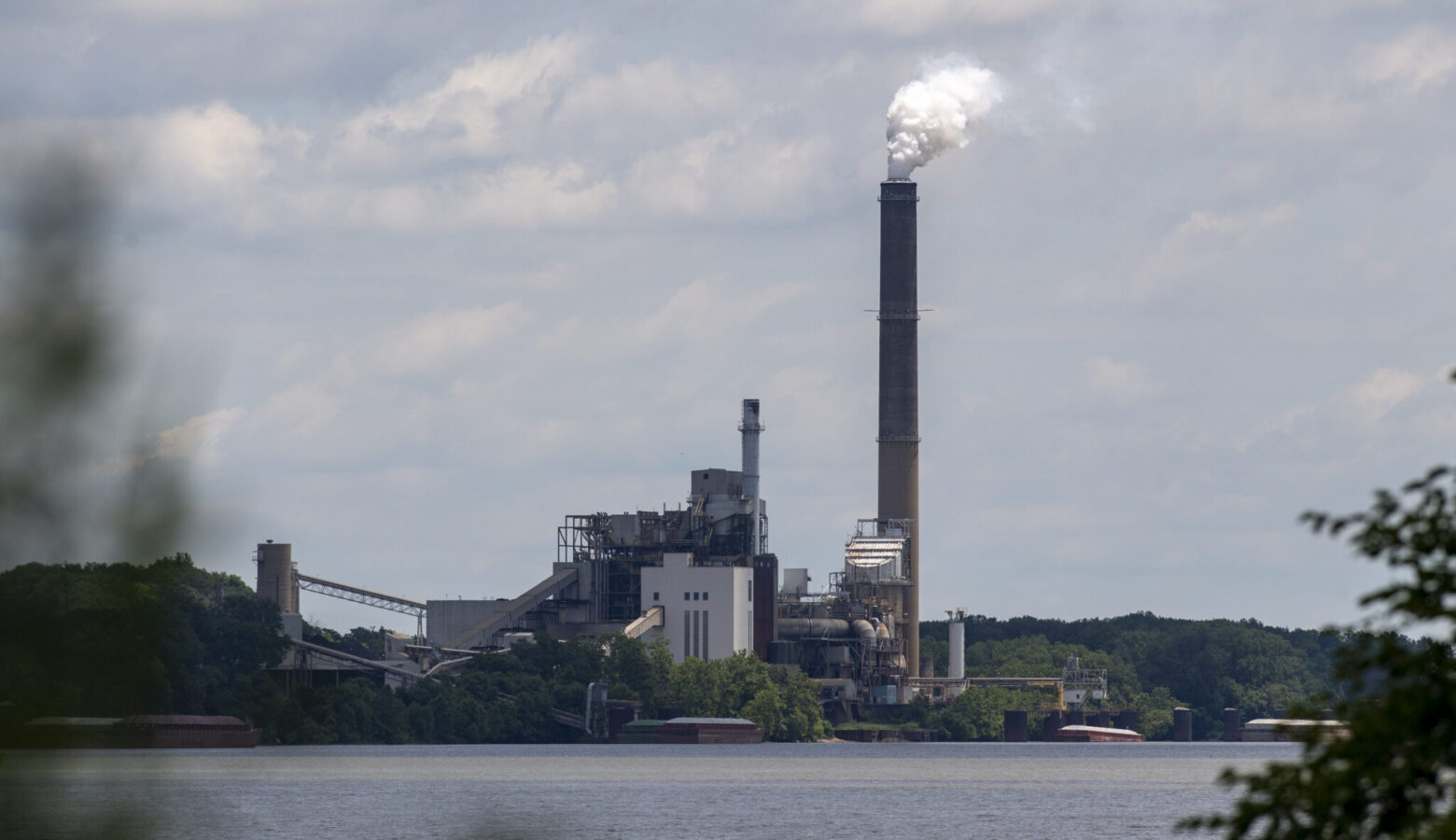
Two Indiana coal-fired generating plants scheduled to retire last year must remain available through December under renewed Trump administration orders, prolonging a dispute over the cost of keeping the aging facilities on the grid.
The latest federal directives cover two units at NIPSCO’s R.M. Schahfer Generating Station in Jasper County and one at CenterPoint Energy’s F.B. Culley Generating Station in Warrick County.
Energy Secretary Chris Wright issued the orders Sept. 18, requiring the units to remain available from Sept. 20 through Dec. 18.
Gov. Mike Braun praised the extension, saying the partnership with the Trump administration would “help protect Hoosiers from higher energy costs and keep the power on.”
But consumer and environmental advocates argue the mandates will drive up bills by prolonging the lives of expensive units that utilities had already planned to retire.
Rep. Carey Hamilton, an Indianapolis Democrat, said the financial burden warrants action from Indiana’s attorney general.
“I’m calling on the attorney general to challenge this order,” she said in a statement. “This isn’t a partisan issue, it’s about standing up for the people who see the consequences of these decisions on their monthly power bill.”
The companies, meanwhile, are seeking to recover the costs of complying with the orders.
NIPSCO told the Indiana Capital Chronicle it continues to comply with the orders, but both Schahfer units remain offline for inspections, maintenance and repairs, “including significant turbine and boiler work.”
The utility asked federal regulators in August to approve roughly $38 million in cost recovery for the first quarter of 2026.
CenterPoint told the Capital Chronicle that its customers are not seeing direct bill impacts now, but the company is preparing to recover costs associated with operating Culley Unit 2.
The U.S. Department of Energy first intervened Dec. 23, 2025, days before the units’ scheduled retirement. Renewals followed in March and June, making the latest directives the fourth set of orders and the third extension.
Competing claims over reliability, affordability
The orders direct the utilities and the Midcontinent Independent System Operator, or MISO, which manages the regional electric grid, to ensure the units are available to operate. They also direct MISO to consider costs when deciding when to run the units, rather than requiring continuous generation.
DOE officials said the plants had supported the grid during periods of high electricity demand and low renewable generation, including Winter Storm Fern.
“Forcing reliable, dispatchable coal generation off the grid would compromise energy reliability and needlessly raises energy costs for Americans,” Wright said. “Midwestern families should not be forced to pay the price for the misguided energy subtraction policies of the past. They deserve affordable, reliable, and secure energy, regardless of the wind blowing or the sun shining.”
The latest Schahfer order cites rising electricity demand, extreme weather, retiring generation and delays in bringing new resources online. It also points to demand from large data centers in northern Indiana.
But Sierra Club organizers said the environmental advocacy organization and its partners delivered more than 1,000 petitions earlier this month urging Braun and Indiana Attorney General Todd Rokita to oppose the orders.
“The Trump Administration wants to squeeze Hoosiers for even more money while families struggle in one of the most difficult economies of our lives, and Governor Braun is celebrating it,” Megan Anderson, a senior campaign organizer for the Sierra Club, said in a statement responding to the renewal.
“These orders have been a relentless attempt to keep lining the pockets of billion dollar fossil fuel companies at the expense of real, hardworking people across the state,” she added. “We’re going to keep fighting these orders until they’re struck down in Indiana, too.”
Repair work, recovery requests
NIPSCO’s August filing sought approximately $38 million for January through March after crediting revenue from MISO. The request went to the Federal Energy Regulatory Commission, not Indiana’s utility commission.
The units also have different operating histories. Unit 17 supplied electricity to the market during the first quarter before entering a planned outage in March. Unit 18 had been offline since July 2025 following a turbine component failure.
In the August filing, NIPSCO anticipated returning Unit 17 to service in October and Unit 18 in mid-December. Those were the company’s projected dates at the time.
The costs had already prompted warnings from utility executives earlier this year. At a March hearing before the Indiana Utility Regulatory Commission, NIPSCO President and Chief Operating Officer Vince Parisi said investments in the units could exceed $100 million, with operating expenses on top of that. That was a projection, not a tally of spending already incurred.
CenterPoint separately said it has filed requests with both FERC and the IURC concerning compliance and cost recovery.
“At this time, there are no direct bill impacts to CenterPoint customers, but we remain committed to keeping customer affordability top-of-mind as we plan for recovery of costs associated with operating the unit,” the company said.
The approximately 103-megawatt Culley Unit 2 had been scheduled to retire at the end of 2025 under CenterPoint’s long-term resource planning, according to the company.
In February, CenterPoint Indiana Region President Michael Roeder asked DOE to let the initial order expire, describing the unit as an “inefficient and increasingly unreliable asset.”
Indiana court challenge still pending
Environmental and consumer organizations are already challenging the Indiana mandates in the U.S. Court of Appeals for the District of Columbia Circuit.
The petitioners include the Environmental Law & Policy Center, Sierra Club, Citizens Action Coalition of Indiana, Just Transition Northwest Indiana, Hoosier Environmental Council and Public Citizen.
The same appeals court on Sept. 11 vacated a separate DOE order requiring continued operation of Consumers Energy’s J.H. Campbell plant in Michigan.
The court concluded that DOE’s stated reasons did not establish an emergency under Section 202(c) of the Federal Power Act. It said the law requires circumstances calling for an immediate federal response beyond ordinary state and regional reliability planning. General concerns about possible shortages and longer-term supply risks did not meet that standard in the Campbell case.
The ruling did not itself vacate the Indiana orders.
