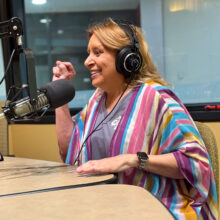
S03 E01 – We Get Our Glass in Gear
Listen

Audio Transcript
Sean Ashcraft (00:00):
Support for Pop of Culture comes from Stallings Wealth Management. Daniel Stallings, financial advisor. Securities and advisory services offered through Cetera Advisors LLC. Member of FINRA/SIPC, a broker/dealer and registered investment advisor. Cetera is under separate ownership from any other named entity.
Kara DuQuette (00:16):
This week on Pop of Culture, we get into glass.
Jessica Calderwood (00:19):
That material was also a way to create an homage that would last because glass and metal is going to last longer than we will.
Kara DuQuette (00:26):
We shine a light on two different angles of the see-through substance.
Michelle Kinsey (00:31):
Also, this hour, a family of bears. Or did we mishear that? And we'll ask our favorite question, "What are you working on?"
Olivia Willard (00:39):
And I think it's such a misconception that nothing is happening in Anderson because I assure you there is a lot.
Kara DuQuette (00:46):
That's coming up.
Luke Jones (00:47):
Support for Pop of Culture comes from Stallings Wealth Management, the Innovation Connector. And from you. With state and federal money eliminated, you are the difference in keeping local programming on the air at IPR. Become a member today at indianapublicradio.org.
Michelle Kinsey (01:14):
From IPR, this is Pop of Culture. I'm Michelle Kinsey.
Kara DuQuette (01:18):
And I'm Kara DuQuette. Welcome to season three.
Michelle Kinsey (01:21):
Yay. The pop team is so excited to bring you more arts and culture coverage from where we live, and we're going to start today with two stories on glass.
Kara DuQuette (01:32):
There's a new documentary about the community around Ball jar collecting. And yes, it's a thing and there's an annual convention right here in Muncie.
Michelle Kinsey (01:41):
Joining us to talk about all things Ball jars in the Pop of Culture Studio is Chris Fluke, he's the senior lecturer of media at Ball State. Chris, thank you for coming into the studios.
Chris Flook (01:53):
Yeah, thanks for having me.
Michelle Kinsey (01:54):
So a big documentary is going to premiere in January. Tell us a little bit about the idea behind it, how it came to be. Ball jars, in case you didn't know, if you're listening and you didn't know that Ball jars are very, very important in this part of the world.
Chris Flook (02:12):
Very important. That's right.
Michelle Kinsey (02:12):
Yeah. So I guess we'll start there with the importance of Ball jars in Muncie.
Chris Flook (02:16):
So it all begins in 1886. No, just joking. A man and a couple by the name of Mary and Jeff Harper. Jeff has passed, but Jeff was the great-grandson of Frank Ball, who was one of the five Ball Brothers that founded the Ball Corporation or what became Ball Corporation. And they made Ball jars for many, many, many years inside Muncie. So Jeff, because of his family connection, collected probably the best Ball jar collection ever.
(02:48):
And you might think that this is like, "Okay, Ball jars." But this is like tens of thousands of dollars. This is a very elegant collection, rare finds demanded by lots of collectors all over the world. Well, the Harpers, after Jeff passed, both of Jeff and Mary were from Muncie. And when Jeff passed, Mary donated that collection to Ball State University. So we have that collection. It's not on display yet, but it's going to come at some point. But Muncie is also the location of the annual Midwest Antique Fruit Jar & Bottle Club.
Michelle Kinsey (03:24):
Wow.
Chris Flook (03:24):
It's a regional organization.
Michelle Kinsey (03:26):
Yeah, it makes sense-
Chris Flook (03:26):
Makes total sense.
Michelle Kinsey (03:27):
... that they would come here. Yeah.
Chris Flook (03:28):
But they have an annual conference in every January. And so last year, this announcement was made at that conference. Jeff and Mary were very much involved with the conference when Jeff was around. Jeff Harper is a legend amongst the conference goers-
Michelle Kinsey (03:42):
I bet.
Chris Flook (03:43):
... because he had this really great collection. And so what we did, through my role in the Department of Media, partnered with the Virginia Ball Center over at the Honors College, and we made a documentary of that collection, and then of the club, their annual conference, and then just an exploration of the importance of collecting things, the importance of Ball jars, and then the documentary then ties all that into Muncie's history.
Michelle Kinsey (04:14):
Wow. How many Ball jars are we talking about in this collection?
Chris Flook (04:18):
Thousands. Thousands of Ball jars. These rare one-off things. When you think about the company had been producing jars from the early 1880s, and Ball Corp doesn't make jars today, but that brand is still licensed to others. And so you can still get Ball jars. But you think of maybe a classic... There's one or two types of small mouth, large mouth, but there's all... I'd learned all this over the past year. There's just all kinds of variation and especially the rare stuff that is really sought after by collectors.
Michelle Kinsey (04:48):
Wow. I'm assuming this would be your first Ball jar conference that you attended in January.
Chris Flook (04:54):
It was, yes.
Michelle Kinsey (04:56):
Tell me what that was like when you walked in and you started documenting this.
Chris Flook (05:00):
So I don't collect anything. And so it's not that I passed it off, but I don't collect anything. So I don't really have any... It's like one person's collection is, in my mind, they clever into another. So I... "Ball jars. Okay, that's fine." I underestimated the elegance of some of these jars and then the cost of some of these jars. I mean, these people are trading jars that are $60,000, $10,000-
Michelle Kinsey (05:22):
What?
Chris Flook (05:22):
... $8,000. Yes. And there's the demand for it. The conference is really cool. It'll happen this year on Saturday, January 17th. It's open to the public at the Convention Center. People who trade this stuff set out a little booth and can come around and see it. But what's really cool is that the days leading up to that, a lot of the heavy hitters within the club, they go into the hotel downtown and they have this thing called Room Swap. And they open up their rooms. They put all their best in private collection and then people just usually with beers and good cheer will go to each other's rooms and then make trades and then-
Michelle Kinsey (06:02):
Wait a minute, their actual hotel rooms?
Chris Flook (06:02):
Yeah.
Michelle Kinsey (06:03):
They just open the door to their hotel rooms.
Chris Flook (06:04):
Yes. Yeah.
Michelle Kinsey (06:06):
They have a little display of their best Ball jars and they're inviting people in to-
Chris Flook (06:13):
Yep. Mm-hmm.
Michelle Kinsey (06:14):
... make some deals.
Chris Flook (06:14):
To make some deals, room swap. And it's like a lot of the ring leaders. So it's like people then make-
Michelle Kinsey (06:19):
We're talking about high-end jars and very rare.
Chris Flook (06:20):
We're talking about very high-end stuff.
Michelle Kinsey (06:21):
Yeah.
Chris Flook (06:22):
But it is delightful. People are kind and they're joking. They know each other. Politics doesn't enter into it. I mean, because everything else is very divisive right now in our culture. It's refreshing to be part of something or to witness something... I know they all have their political opinions and religious opinions and all that, but the focus is just on having a fun time trading Ball jars and selling Ball jars.
Michelle Kinsey (06:49):
I'm curious about the reasons why people collect and trade and come to a conference like this. Did you get some stories from people about where this began for them, why they collect Ball jars?
Chris Flook (07:02):
Sometimes I think it's maybe idiosyncratic. You like something or maybe a lot of people talked about having ball a lot and their families growing up, canning and like that kind of thing.
Michelle Kinsey (07:12):
Yes. Yeah. Nostalgia.
Chris Flook (07:14):
Nostalgia for it. Right. But I got the sense, and you'll see this, if you watch the documentary, that the people are just there to hang out with their friends. You could swap Ball jars with Mountain Dew cans or pencils or anything anybody else collects. And it's more of just the medium for them all to get together and have a good time.
Michelle Kinsey (07:35):
It's about the community.
Chris Flook (07:36):
It's about the community of it. Yeah. And some of them don't really see each other other than that one time a year, but then it's... they've done it every year for 20 years or 30 years. So they have this long connection in history. And then with the advent of the past 20 years with the growth of social media and all that, they can do a lot of trading and communication throughout the year from... They're coming from all over. A lot of them do come from the Midwest, but there's people that come from California and Maine, so they can have these discussions about what they're into and what they're trading in July, and then gear up for the conference every January.
Michelle Kinsey (08:10):
Wow. So that's a big part of the documentary, right? As you said. Can you talk a little bit about some of the things that you learned that you're not going to be able to get out of your head now that you know about Ball jars?
Chris Flook (08:22):
Well, I didn't realize just the manufacturing process. And all these folks, they know weird nuanced stuff from the 1930s, like what certain molds and models. And I didn't realize that Ball jars, at least the old mechanism was the molds were all carved backwards. And so there was a couple molds within the Harper collection that we were able to see. And that makes sense. You pour in glass, you're drawing on this mold that's backwards and has to fill and all that.
(08:52):
So there's like tons of errors, misspellings, like common stuff that you would expect, someone in the 1890s or 1920s or whatever, they make a small error and they don't realize till a couple hundred or a couple thousand jars have been made and they got to redo the mold. And so that stuff that the corporation probably hated has now become the most valued.
Michelle Kinsey (09:12):
[inaudible 00:09:12] Oh my gosh. Yeah.
Chris Flook (09:13):
Imperfections, which is as common with glass-making, particularly in the early years. I learned about light. It's actually very, at least it was, I don't think it is anymore. It was very hard to make clear glass. And so they had to add all these chemicals and so some of the chemicals would fade in sunlight. And so the clear ones change color over time.
Michelle Kinsey (09:34):
Oh, wow.
Chris Flook (09:35):
And it's just all kinds of little quirky things that the collectors have come to really value that might have just been passed off as being junk or mistakes when the jars were actually made.
Michelle Kinsey (09:46):
Interesting. I know you don't collect, but do you now have a Ball jar at home?
Chris Flook (09:49):
Well, I do a lot of canning.
Michelle Kinsey (09:51):
Oh, you do?
Chris Flook (09:52):
Yeah, I have a huge garden.
Michelle Kinsey (09:53):
You actually use them.
Chris Flook (09:53):
Yeah.
Michelle Kinsey (09:54):
Were there people at the conference and people that you talked to that still can-
Chris Flook (09:57):
Yeah.
Michelle Kinsey (09:57):
... with Ball jars?
Chris Flook (09:58):
Some people, I would ask about canning and they're like, "We don't can." It's like, "Oh, okay." But then some people very much do can. A lot of people though, I would say almost everybody had some kind of story about canning that even if they didn't necessarily do it themselves, that they had a grandmother or a parent or something like that growing up, that that was part of their life.
Michelle Kinsey (10:22):
Let's talk about the premiere. Give us the details of that.
Chris Flook (10:24):
Premiere is on Friday, January 16th, the day before the big conference. The conference will be at the Convention Center here in Muncie, and then the debut for the screening will be at Cornerstone.
Michelle Kinsey (10:38):
Do people need to get tickets in advance?
Chris Flook (10:42):
No.
Michelle Kinsey (10:42):
So you just show up?
Chris Flook (10:42):
So I mean, we're hoping for a big crowd, but the theater can hold a lot. It's at 6:00 PM, try to come early. There'll be a small reception afterwards. And then we strongly encourage people, if you can't make it, to try to go Saturday to the actual conference. You can walk through-
Michelle Kinsey (11:00):
Oh, nice. Yeah.
Chris Flook (11:00):
... you can see all these really cool things that people will collect. And then the documentary will eventually be on Ball State PBS sometime in spring.
Michelle Kinsey (11:08):
Wonderful. Thank you so much, Chris, for coming into the Pop of Culture studios to tell us about all things Ball jars and the big documentary coming out in just a few days.
Chris Flook (11:17):
Yeah. Thank you so much.
Michelle Kinsey (11:19):
Chris Fluke is a senior lecturer of media at Ball State University.
Kara DuQuette (11:39):
We're rolling from glass Ball jars to little glass beads.
Michelle Kinsey (11:44):
Metal and glass artist, Jessica Calderwood is in the Pop of Culture studios to talk about a new exhibit at Minnetrista Museum & Gardens called Threads of Home. Jessica, welcome to the Pop studios.
Jessica Calderwood (11:58):
Thank you so much for having me.
Michelle Kinsey (11:59):
Well, this is a very interesting exhibit. I personally, I don't think I've seen or heard of anything quite like this before, Jessica. So let's start at the beginning. If you were to give someone a nutshell of what is Threads of Home, what would your answer be?
Jessica Calderwood (12:18):
So this project actually has its roots in 2020 during the COVID pandemic. So if you remember when we were all on lockdown and looking for things to do to use up our time, I was contending with whatever art supplies I happened to have at the moment that didn't require shipping. And I had all these beads, glass seed beads, those tiny little things, and metal and enamel, which is a powdered glass, which is my medium of choice.
(12:50):
And I started actually thinking, "Well, what could I do that could suck up the most amount of time?" And so I started recreating patterns that I found in my home using the seed beads, like a little point or a little dot and just tweezing these really elaborate patterns. And I found that the most interesting patterns were from textiles. So I was looking at my carpet-
Michelle Kinsey (13:14):
Interesting.
Jessica Calderwood (13:15):
... my family blanket, the chair that my cat loves to scratch. And sure enough, it did suck up a lot of time. But as the world opened up, I started thinking about how I could move outwards with this process that I got really enamored with. So I really loved the labor of it and I loved the color and I didn't mention this, but I actually melt the beads.
(13:42):
So they change in these interesting ways, they look distressed. And so I was at a friend's house and I was looking at their collection of carpets they had just brought back from their home country of Yemen actually, and I found that I was just as interested in the patterns, but also their stories.
Michelle Kinsey (14:03):
And I love that. And I think therein lies the uniqueness of this particular exhibit, Jessica, is the stories that are told about whether it's an item of clothing that means so much and has been passed down or it's handmade or curtains crafted from something else. And then you take that pattern and recreate it in glass on metal, correct?
Jessica Calderwood (14:33):
Exactly. Exactly.
Michelle Kinsey (14:34):
But the stories that you tell alongside that, you had each of the individuals that you spoke to tell the story, the meaning behind that particular textile.
Jessica Calderwood (14:46):
Exactly. So it birthed this project titled Threads of Home that was really focusing on people who are first generation immigrants to Delaware County. And I thought the textiles were important because it's an item that you can travel with.
Michelle Kinsey (15:04):
Yes.
Jessica Calderwood (15:04):
Right?
Michelle Kinsey (15:05):
Absolutely.
Jessica Calderwood (15:06):
It's lightweight, you can fold it, you can put it in a suitcase. And it was an item that I found that a lot of people had decided to bring with them as a memory of their home, their original home. So it was 24 participants and this happened over the course of about two and a half years. And it was a huge process. And it was something that I didn't actually have a really strong vision of it. It unfolded as we were going, but I would reach out to a person and I would ask them to come to my studio first and to learn about my work and the process and why this was important to me. And so for me, I thought that recreating that with that material was also just a way to create an homage that would last because glass and metal is going to last longer than we will.
Michelle Kinsey (15:59):
Absolutely. Absolutely. Especially the textiles themselves.
Jessica Calderwood (16:03):
Right. The textiles will degrade, they'll break down, they'll fade. And so they would come to my studio and then not everybody was really always on board with the project for all sorts of different reasons, but most people were and really interested. And so then they would go back to their home and pick something that was meaningful for them and then they would loan that textile to me. I would document it. I would work on my part with the glass beads and the metal and then we would do a photographic documentation of that person in their preferred space with the textile.
Michelle Kinsey (16:42):
Yes.
Jessica Calderwood (16:42):
They could choose. Sometimes it was their home, but sometimes it was a park, right? But the parameters were really somewhere in Delaware County to talk about the past and the present, where people were coming from and where they are now and what does that look like? So that's really the arc of the project. And so the exhibition that you see at Minnatrista, which is up until March 1st, it shows a large wall installation of all the beaded enamel works showing almost like a patchwork quilt of objects. And then each person has a panel that has their photograph and then their information and some narrative about why this piece was meaningful for them. And yeah, so the hope is that it's also educational for the people that come to the exhibit as well as honoring the participants.
Michelle Kinsey (17:38):
Absolutely. You had some help telling the visual story of the storytellers in the exhibit. Who took the photos that are displayed in the exhibit?
Jessica Calderwood (17:51):
So I had a bunch of amazing collaborators for this project and Mark Sawrie, who is a good friend of mine and also a recently retired faculty member from the School of Art at Ball State University and he was essentially along for the entire ride.
Michelle Kinsey (18:09):
Wow.
Jessica Calderwood (18:10):
And so when we would set up a photo shoot, I would be his assistant and I would hold all the reflectors and help carry the gear, but his ability to see space and context, composition, and sometimes humor in the photographs was just, it really just was the icing on the cake, the cherry on top.
Michelle Kinsey (18:36):
Awesome. And can you describe for me the finished kind of the textile art piece that you created? It's round, and I guess like at first glance, I would describe it almost like as a button.
Jessica Calderwood (18:51):
Yeah.
Michelle Kinsey (18:51):
Like a large button.
Jessica Calderwood (18:52):
Yeah. Some people have called them little pillows or little tuffets.
Michelle Kinsey (18:56):
Yes.
Jessica Calderwood (18:57):
So they're these round domed forms. And so I actually made these at a local metal forming company called Muncie Metal Spinning. And so we started working together also right after the COVID pandemic opened up the world again. And so they're meant to look like little pillows that are meant to be welcoming and comfortable. And glass is usually thought of as like really shiny and reflective. And so we do some things like these acid washes to make the surfaces really matte. So they look really... The whole idea was for it to look like a trick of the eye, that it would look like textile.
Michelle Kinsey (19:42):
Really more like cloth. Yes, absolutely.
Jessica Calderwood (19:44):
Yeah.
Michelle Kinsey (19:44):
100%. So when you talk about these threads from home, these textiles that they brought with them to Muncie, what are the different types of homes? What are we talking about? Where are your participants coming from?
Jessica Calderwood (19:59):
From all over the map. And obviously this is not meant to be an accurate representation of everybody who has relocated to our county.
Michelle Kinsey (20:09):
Sure, sure, sure.
Jessica Calderwood (20:10):
It's more of a sampling that's meant to be symbolic, but let's see. So we have participants, I already mentioned Yemen, we have Palestine, we have France, England, China, Malaysia, Canada, it's 24. Bosnia as well. The list goes on and on, but my goal was to get as a diverse range of participants as possible.
Michelle Kinsey (20:37):
Absolutely.
Jessica Calderwood (20:38):
Right? Yeah.
Michelle Kinsey (20:39):
What was the textile that maybe surprised you the most when they brought it to you that you thought, "Oh, this is interesting"? And then the story behind it.
Jessica Calderwood (20:53):
I would say... That's a great question. There are so many beautiful textiles, but I think that a lot of the pieces that were the most powerful for me were surprisingly, maybe not the ones that were as colorful or dynamic visually, but really did tell a powerful story. So one of the participants named Ramzia is originally from Bosnia and so she immigrated to the US and not in a direct line, but ended up landing in Muncie eventually, but her object was a very small crocheted pin, a little white flower with a green center. And it's a pin that she is widely available in her hometown of Srebrenica that really talks about the genocide that happened during the Bosnian War.
Michelle Kinsey (21:45):
Wow.
Jessica Calderwood (21:46):
And she lost all of the men in her family, her father, her uncles, everybody was lost. And so this pin was a really powerful reminder that she wears every year during Ramadan to really commemorate that event. So I learned so much through this project. And a lot of it tells stories of people who are coming to the US for all sorts of reasons. Sometimes it's to escape war, it's for economic opportunity, it's to be in touch with family and this exhibition really tells that entire story.
Michelle Kinsey (22:22):
How did that feel as an artist to take all of these stories which sound incredibly personal and powerful, take those in and then interpret them in glass and metal?
Jessica Calderwood (22:37):
I felt very honored to do this project. I'm not somebody who has immigrated to the US, but I felt like I wanted to really be a communicator and a connector to be able to communicate these stories. And so I just felt really humbled by the experience. I loved the community aspect of this project and I just... The amount of trust that people put in me for this, I was really, really humbled by.
Michelle Kinsey (23:10):
Yeah. What do you hope visitors to the exhibit get out of the experience?
Jessica Calderwood (23:20):
So many things, I hope. But I hope that they are able to appreciate the art for what it is, the objects and an education about different ways of making. I hope that they learn a little bit more about our global community, right? And I do think that right now, there's a lot of rhetoric that's going around in terms of how people are thinking about our population, our immigrant population. And so there's like a national amnesia about our collective history, that we are a nation of immigrants. And so through this exhibit, I hope that community members from all walks of life come away with an understanding of our shared humanity.
Michelle Kinsey (24:11):
And I'm assuming when you started this project, you didn't realize the impact it would have in the current climate that we are in, right?
Jessica Calderwood (24:24):
No. Like I said, I started this so many years ago and I just wanted to get into people's stories-
Michelle Kinsey (24:34):
Stories. Yeah.
Jessica Calderwood (24:35):
... and have a connection. And it took on a much more powerful meaning as the years have progressed, sadly, but so it is very relevant to our national moment.
Michelle Kinsey (24:50):
Absolutely. Well, thank you for telling these stories through your art. Jessica, thanks for coming into the Pop of Culture studios. Really appreciate it.
Jessica Calderwood (24:59):
Thank you so much. I really appreciate the opportunity to share.
Michelle Kinsey (25:06):
Threads of Home is open at Minnetrista Museum & Gardens through March 1st. You're listening to Pop of Culture. I'm Michelle Kinsey.
Kara DuQuette (25:24):
I'm Kara DuQuette.
Jen Blackmer (25:25):
And I'm Jen Blackmer. And today we have another entry in our series called Beautiful Things. This is our ongoing collaboration with River Teeth Journal. Today, we're very pleased to welcome author Diane Gottlieb. Hello, Diane.
Diane Gottlieb (25:45):
Hi, thanks for having me.
Jen Blackmer (25:47):
Of course. And we're so excited to have you here with us. And Diane is going to share her beautiful thing entitled Mondegreen.
Diane Gottlieb (25:58):
Great. Thank you. "Mondegreen. I found a lost memory today, discovered it inside a writing prompt. 'Recall something you've misheard.' The title of the 1971 Sly and the Family Stone song is It's a Family Affair, but I swore it was a family of bears. How wonderful it felt to belt out a song about bears and more bears, a family of bears. I imagine clumsy cubs gorging on berries their proud papa watching as he scratched his back against a nearby tree, and the mama, a lovely furry, solid, massive strength, safety, devotion. Oh, that glorious mama who lived to protect her young.
(26:53):
"I was young in 1971, clumsy. I gorged on chocolate and more chocolate, maybe berries too. Somehow, I hope, though I didn't know it, that my soft full rolls of flesh would save me. Somehow I knew, though I didn't know it, that my own mama, who took to bed midday, hibernating beneath worn, woolen blankets, my dear mama who wore sunglasses indoors to hide swollen eyes, disappear her tears, would disappoint me deeply, leave me to the wolves. A family of bears, it's funny how the mind tells the ears what to hear, how the heart tells the voice what to sing."
Jen Blackmer (27:53):
Thank you, Diane, for sharing that with us.
Diane Gottlieb (27:55):
Thank you.
Jen Blackmer (27:56):
Mondegreen is such a lovely title for this. For our listeners who don't know, Mondegreen actually refers to a misheard lyric. It's a term for that, and that is of course the basis of this piece. What inspired the piece for you?
Diane Gottlieb (28:18):
So I was in a writing group and the facilitator would give us prompts. And the prompt that day was, "Write about something you misheard." And this immediately came to mind, this memory.
Jen Blackmer (28:34):
Right. Yeah. The song is really... I mean, it's catchy and it's boppy. And I love... After I read the piece, I said... This morning, I listened to the song in the car and it was very prevalent. Once you know you're listening for a family of bears, that's what you hear.
Diane Gottlieb (28:57):
I love that.
Jen Blackmer (28:57):
And you say that at the end, and I think that's such a beautifully profound thought to end on, right? It's funny how the mind tells the ears what to hear and how the heart tells the voice what to sing. Could you dive into that maybe a little bit more? What is that for you?
Diane Gottlieb (29:21):
So I don't know, that just came to me. But when I was young, I was very, very lonely and singing just was one of the things that saved me. I later studied opera. I used to sing opera, but as a kid, I would just belt out whatever.
Jen Blackmer (29:41):
Of course. Yes.
Diane Gottlieb (29:42):
And yeah, this song, I don't know. It was one of the ones that brought me joy, brought joy to a really, really round, chubby, bear-like little girl. So those two lines just happened.
Jen Blackmer (30:02):
It's lovely though, this idea that the mind can determine how you hear a piece of art or a moment of connection between two people and how your mind-
Diane Gottlieb (30:20):
I think it's what I needed to hear. I needed to hear about bears and then I imagined the mama bear.
Jen Blackmer (30:29):
Of course.
Diane Gottlieb (30:30):
Yeah, it brought me comfort.
Jen Blackmer (30:32):
And as you get into some of the more difficult moments, I think this idea of the song maybe celebrating the family of bears is where we come back to. I also love the heart telling the voice what to sing-
Diane Gottlieb (30:47):
Thank you.
Jen Blackmer (30:48):
... that there's such an emotional sense of our need to connect. And in this case, I think through song. So Diane, tell me a little bit about the second part of the piece. We talked about the family of bears being a safe space. And then it seems, as we move through the story that this was a bit of a painful time for your mother. Yeah?
Diane Gottlieb (31:14):
Yeah. So my mom did not have a family of bears either.
Jen Blackmer (31:23):
Oh.
Diane Gottlieb (31:23):
Yeah. She actually grew up from eight years old in an orphanage. And she had so much pain in her life. And so she was not able to necessarily give us all that we needed, but she's such a model to me of the beauty of imperfection and a model of growth because she never stopped growing. She died at 88 years old in a car accident.
Jen Blackmer (32:02):
Oh my-
Diane Gottlieb (32:02):
Yeah. I think she would've gone on forever. And she was on the internet. Before Zoom, she was doing Skypes and she just learned and learned and grew and grew with every year. And so she is really my hero.
Jen Blackmer (32:27):
That's wonderful to hear that actually. And what you've done I think so well, Diane, is you've captured the tension between that pain or perhaps this painful moment for your mother wrapped into this idea of the family. And tell me a little bit about, "Leave me to the wolves." What's behind that moment?
Diane Gottlieb (32:50):
Oh, that is like... So my mom was really unavailable, so we were just on our own. And there are a lot of wolves out there and baby bears-
Jen Blackmer (32:59):
There really are, aren't there?
Diane Gottlieb (33:00):
Yeah. Yeah. Baby bears need some protection, even though they can be big and scary on their own. But yeah, that wasn't there for us. Yeah, I have two sisters. I'll speak for myself. That wasn't there for me, the safety and the protection. So that's what the, "Leave me to the wolves," was about.
Jen Blackmer (33:20):
But then it seems that your mother did, as you say, grow and learn as time went on.
Diane Gottlieb (33:29):
She did probably not soon enough to protect me from the wolves, but I learned and grew. And then as adults, we became very, very close. And it was a beautiful thing.
Jen Blackmer (33:44):
Yeah. Oh, I love that.
Diane Gottlieb (33:45):
Just like this. Yeah.
Jen Blackmer (33:47):
Great way to bring that back around.
Diane Gottlieb (33:48):
Yeah.
Jen Blackmer (33:50):
Diane Gottlieb is the editor of Mana Songs: Stories of Jewish Culture and Heritage, Grieving Hope, and Awakenings: Stories of Body and Consciousness. She is special projects editor for ELJ Publications and is prose and creative nonfiction editor of Emerge Literary Journal.
Diane Gottlieb (34:14):
Well, I just want to say thank you so much for having me. It's been a great pleasure. And I just want to give a shout-out to Jill Chrisman over at Beautiful Things and all the folks at River Teeth.
Jen Blackmer (34:27):
Absolutely.
Diane Gottlieb (34:27):
Thank you. Thank you to all.
Jen Blackmer (34:29):
We love our partnership and collaboration with them. And speaking of, this story comes from IPR's collaboration with River Teeth's Beautiful Things, a weekly magazine of micro essays. More at riverteethjournal.com. I'm Jen Blackmer.
Kara DuQuette (35:05):
This is the last part of our show, and every week we like to end by asking an East Central Indiana artist, "What are you working on?"
Michelle Kinsey (35:13):
Maya Doss spoke to one artist busy with commissions just before the holidays.
Maya Doss (35:18):
Today on the show, I have writer, illustrator, and artist, Olivia Willard from Anderson. Olivia, what are you working on?
Olivia Willard (35:25):
I am working on holiday commissions. I do watercolor portraits of homes and dogs and cats, and I'm deep in that.
Maya Doss (35:33):
That is so sweet. What do you like about painting pet portraits for the holidays?
Olivia Willard (35:37):
Oh my gosh. I'm obsessed with when people tell me the pet's name and their personality. And there was a cat that I did that was really into potato chips and playing with Q-tips. And so I had to have those all around on the ground.
Maya Doss (35:55):
So cute.
Olivia Willard (35:56):
Yeah. And so things like that where the people really are sharing their animal's personality, I love to channel it while I'm working on it.
Maya Doss (36:03):
That's so sweet. I love your watercolor work. In fact, I'm really interested in this book that you wrote, illustrated and published yourself, a children's book of watercolor. Yes?
Olivia Willard (36:13):
Yes.
Maya Doss (36:14):
So will you tell us, for the people who are curious about the process, what was it like, the experience producing a book?
Olivia Willard (36:21):
Yeah, it was a lot of stumbling my way through the process. So mainly I'm a painter and so I've started with the illustrations. I was really interested in doing something more imaginative and creating little worlds, and I just collaborated with my kids. My 10-year-old daughter was a really big help.
Maya Doss (36:44):
That's so sweet.
Olivia Willard (36:45):
Yeah, she's the best. And yeah, the story just came out of forming the illustrations.
Maya Doss (36:52):
That's really cool. And you said that it's of a historic site in Anderson?
Olivia Willard (36:56):
Yeah. So in Anderson, our big historic area is on Historic West 8th Street. And yeah, so it's all of these gorgeous gas boom houses that are there. And there's a really cute historical park. And so it's set walking up that street.
Maya Doss (37:12):
So I'm curious, with that being the idea behind the book, who are the characters? What's the theme of the story?
Olivia Willard (37:19):
Yeah. So the main character is Fable, which is a small child. They're really cool and creative. And the other characters are everyone that they meet along the way. So there's a snail community. So it's a mother-led community and it's really amazing. And then there's a community of little people that live up in the trees that collect acorn caps. There are ones that live along mushrooms. They forage for mushrooms. And all of the plants and mushrooms and animals are all Indiana native, so that was really important to me.
Maya Doss (37:54):
Yeah, that's really awesome. I think it's so cute that you were making it very magical and imaginative.
Olivia Willard (38:00):
Thank you.
Maya Doss (38:00):
No problem. When it comes to your illustration style for your book, you said you started with the watercolors. Will you talk us through what the visuals are for those pieces?
Olivia Willard (38:11):
Yes, I would love to. So I always start doing pencil drawings to sketch it out, finding the shapes and finding the lines. So my illustrations, you can really find a lot of those lost and found lines. And then I translate that to my painting. So I have a lot of vivid colors. There's a section where Fable is meeting a little girl that is in the acorn community and you can see inside the tree. And so the light is coming from within the tree. I really love wet-on-wet wash, just getting to watch the paint dry. And those really organic shapes that are found in that, I really enjoy.
Maya Doss (38:50):
Yes. As a fellow watercolor artist, it almost looks like little rivers or something.
Olivia Willard (38:54):
Totally, totally.
Maya Doss (38:56):
I would love to know more about what made you choose to design the layout for the pieces the way you had, knowing maybe they would soon become a storybook.
Olivia Willard (39:05):
Yeah. That was something that was a lot of trial and error. I started out with all of these individual paintings and then was wanting to really piece them together almost like a storyboard, but using those pieces. And some of them, I did find that they were not super ideal to have in the book.
Maya Doss (39:25):
I see.
Olivia Willard (39:26):
Yeah.
Maya Doss (39:27):
So what was that trial and error process? What made a cut, I guess?
Olivia Willard (39:31):
Yeah, for sure. Yeah. I mean, there were certain things where I took the painting, like the image all the way to the end of the page. And when I didn't leave room for a bleed area, I found that I was having to crop too much of my image out that I wasn't happy or there were just... Yeah, it was weird stuff with the margins. And so from that, I've learned from my next book that I really need to leave a lot of wash for a bleed area.
Maya Doss (39:59):
Yeah, that makes me think of Caillou. Funny enough.
Olivia Willard (40:02):
Yeah, no.
Maya Doss (40:03):
There's the floating watercolor space.
Olivia Willard (40:05):
Listen, I thought about Caillou.
Maya Doss (40:10):
Now that you've made a book to share with your students as a art teacher in Anderson, what is something you're looking forward to teaching them or maybe a class you've taught before?
Olivia Willard (40:19):
Yeah. I always love doing watercolor with kids. I find that it's one of the most forgiving forms of paint because you really are able to just give yourself to it. So it really allows curiosity and play. So that's what I really enjoy. I also do a lot of nature-inspired art through my nonprofit that I have. My nonprofit, Bloom Madison County, my best friend Anna and I started three years ago and we have a lot of really cool programming. I'm really obsessed with our education program. We have a great partnership with Community Hospital in Anderson, and I teach mindfulness art classes. Farm-to-school is a huge program initiative that we're starting at my children's elementary school.
Maya Doss (41:02):
Oh, that's awesome.
Olivia Willard (41:03):
Yeah, we have 19 beds in. We got a grant for 100 fruit trees and we're putting in a barn in a greenhouse.
Maya Doss (41:09):
Olivia, wow.
Olivia Willard (41:11):
Yeah, it's amazing.
Maya Doss (41:12):
That's so special.
Olivia Willard (41:13):
Yeah, we do a lot.
Maya Doss (41:15):
You said something about Bloom was a part of the farmer's market too.
Olivia Willard (41:19):
Yeah. Yep. We do the Anderson Farmers Market, so I run all of that behind the scenes. Let's see. We also do farm-to-table cooking classes. Those are really fun. We harvest right from the farm and then come inside and use those ingredients.
Maya Doss (41:32):
I love how much you've worked and put in effort into your community and making it a better place, not only just for kids, but it sounds like it's reaching even farther than that.
Olivia Willard (41:44):
Totally.
Maya Doss (41:44):
It's influencing the whole community. That's really inspiring.
Olivia Willard (41:47):
Thank you.
Maya Doss (41:47):
Of course.
Olivia Willard (41:48):
Thank you. Speaking of other people in the community beyond kids, we have an amazing group of seniors that have a growing club.
Maya Doss (41:55):
Cute.
Olivia Willard (41:56):
It's 15 amazing women that are all... I mean, they're like 65 and up and they're working in the gardens and they're just gabbing. And we're working on a group art display right now, so that's really cool.
Maya Doss (42:09):
Oh, tell me more about this group art display.
Olivia Willard (42:11):
Yeah. So we wanted to do some sort of a community mural, but with this group, it was just not really going to work, the labor piece of it. So we're-
Maya Doss (42:20):
Right. You have to find a creative solution, right?
Olivia Willard (42:21):
Right. So we have three wooden panels that we're working on, a collaborative piece together. So we've been putting together images from the children's gardening club and the adult gardening club and talking about generational farmers. And it's really neat.
Maya Doss (42:37):
Wow. So when you're gathering all of this inspiration from Anderson, what do you hope people realize about this maybe lesser known city that you've grown to love and invest so much of your time and effort into?
Olivia Willard (42:52):
That Anderson is actually really cool. There's a lot of people that are doing a lot of really exciting things. And I think it's such a misconception that nothing is happening in Anderson because I assure you there is a lot.
Maya Doss (43:04):
That is something people say about smaller areas in the Midwest is, "Oh, there's nothing to do except look at corn."
Olivia Willard (43:10):
Right?
Maya Doss (43:10):
Not true.
Olivia Willard (43:11):
I know. I'm like, "Where were you at First Friday?"
Maya Doss (43:14):
"Did you even come to my farmer's market?"
Olivia Willard (43:16):
Right. I know. People still will be like, "Anderson has a farmer's market?" And I'm like, "Oh my God."
Maya Doss (43:22):
If people wanted to see your book for themselves or wanted to find you, where could they look?
Olivia Willard (43:26):
Yeah, you can check out my website. It's oliviawillard.com or you can find me on Instagram at Oliviaistillpainting.
Maya Doss (43:35):
Thank you so much for coming on the show today, Olivia. Trekking through the ice and snow, right?
Olivia Willard (43:39):
Right. Thank you for having me, Maya.
Kara DuQuette (43:47):
It's that time, Michelle.
Michelle Kinsey (43:48):
Woo-hoo.
Kara DuQuette (43:49):
All right. We're going to find out what's going on. The Charles W. Brown Planetarium at Ball State will present a new show, The Great Solar System Adventure. Friday and Saturday, January 9th and 10th. This character-led adventure takes you through the dangers and wonders of our solar system and beyond. Fasten your seat belts and see if you have the courage to make it home in one piece. Showtimes are 5:00 and 6:30 PM Friday and 6:30 PM Saturday.
Michelle Kinsey (44:15):
Ooh, that sounds like fun.
Kara DuQuette (44:16):
Yeah.
Michelle Kinsey (44:17):
Checkpoint. Interactive Artworks & Experimental Play an exhibition by John C. Gonzalez is on display now with the Ned and Gloria Griner Art Gallery at Ball State. Gonzalez is an interdisciplinary artist whose practice spans installation, sculpture, painting, performance, writing, music, game design, and socially engaged projects. Wow. His work often blurs the lines between artist, viewer, and participant. This exhibition will include several interactive and game adjacent artworks in the galleries, including images, performance, and site specific works that will welcome viewer engagement and provide space for the unexpected connections and exchanges of its visitors. I love this idea. Gallery hours are Tuesday through Friday, 10:00 AM to 4:00 PM.
Kara DuQuette (45:05):
Oh yeah, I'm going to that.
Michelle Kinsey (45:07):
Oh yeah.
Kara DuQuette (45:07):
That's amazing. A tea and talk at Minnetrista Museum & Gardens is set for January 14th at 3:00 PM. Enjoy tea and light refreshments while hearing from local glass artist, Jennifer Halvorson, whose work explores family heritage, memory, and the ways values are passed from one generation to the next. Jennifer will share insights into her recent body of work, including pieces featured in her upcoming solo exhibition in Lafayette and discuss how glass can hold both personal narrative and emotional resonance. Register at minnetrista.net.
Michelle Kinsey (45:43):
Very cool. Winston Churchill is back. Well, sort of. Pruis Hall-
Kara DuQuette (45:49):
Do tell.
Michelle Kinsey (45:50):
Pruis Hall will host Randy Otto as Winston Churchill at 7:30 PM January 15th. The one man show, a stirring, inspirational theatrical keynote, brings Winston Churchill's keen, incisive message of hope to the 21st century. The audience, get this. The audience will have the opportunity to interact directly with Prime Minister Churchill during Ask Winston, a fun, lively Q&A.
Kara DuQuette (46:16):
Okay, so what would you ask Winston?
Michelle Kinsey (46:18):
That's right. "Winston, what are your thoughts on AI?"
Kara DuQuette (46:24):
Emmy award-winning comedian, Vicki Lawrence was part of the legendary cast of the Carol Burnett Show, where she created Thelma Harper, better known as Mama. With new material and a modern twist, expect the unexpected from Vicki and Mama. Andersonparamount.org has the details.
Michelle Kinsey (46:43):
Send your shows and other arts and culture happenings to us at Indianapublicradio.org/contact, then click Pop of Culture.
Luke Jones (46:56):
Support for Pop of Culture comes from Stallings Wealth Management, the Innovation Connector, and from you. With state and federal money eliminated, you are the difference in keeping local programming on the air at IPR. Become a member today at indianapublicradio.org.
Kara DuQuette (47:19):
And that's our show. Our general manager is Phil Hoffman.
Michelle Kinsey (47:23):
This week was produced by Luke Jones, who knows all good things come in threes.
Kara DuQuette (47:28):
And our audio fellow is Maya Doss. Our show was hosted by me, Kara Duquette.
Michelle Kinsey (47:33):
And me, Michelle Kinsey. Pop of Culture is a production from IPR on the campus of Ball State University.
Kara DuQuette (47:51):
It's okay. No, this is making me better. This week on Pop of Culture. Sorry. I scared myself.
Michelle Kinsey (48:00):
Well, it was good though. I was right there with you. I was like, "What's going to happen? Tell me more, Kara."
Welcome to Season 3! Lots to get to…
We’ll start with two different takes on the medium of glass: documentarian Chris Flook tells us what surprised him during his new documentary about collecting Ball jars (“The Hobby”); artist Jessica Calderwood takes us through the process for her new metal and glass series honoring textile patterns from diverse communities across East Central Indiana (“Threads of Home).
Also in this episode: a Beautiful Thing from Diane Gottlieb (“Mondegreen“) and Maya Doss asks Olivia Willard, “What Are You Working On?”