S03 E05 – We Build a Bakery
Listen

Audio Transcript
Sean Ashcraft (00:00):
Support for Pop of Culture comes from Stallings Wealth Management, Daniel Stallings, financial advisor, securities and advisory services offered through Cetera Advisors, LLC, member FINRA/SIPC, a broker/dealer and registered investment advisor. Cetera is under separate ownership from any other named entity.
Angie Grimes (00:15):
IPR runs on love.
Luke Jones (00:17):
And member support.
Angie Grimes (00:18):
Your love.
Luke Jones (00:19):
And your financial support.
Angie Grimes (00:21):
Join us for IPR's Love Fest 2026, starting February 10th.
Luke Jones (00:26):
Just go to indianapublicradio.org.
Michelle Kinsey (00:30):
This week on Pop of Culture, we press our noses against the display case. A new bakery is opening and we get a taste of the process.
Heather Taylor (00:39):
And I hope this becomes part of people's day, but it's more about people than it is food or coffee.
Jen Blackmer (00:45):
Also, why the tile game Mahjong is having a moment in East Central Indiana.
Michelle Kinsey (00:51):
And we have time, Time for Three. Nick Kendall talks with us about the Grammy-winning trio's new album.
Jen Blackmer (00:58):
That's coming up.
Luke Jones (01:00):
Support for Pop of Culture comes from Stallings Wealth Management, the innovation connector. And from you. With state and federal money eliminated, you are the difference in keeping local programming on the air at IPR. Become a member today at indianapublicradio.org.
Jen Blackmer (01:28):
From IPR, this is Pop of Culture. I'm Jen Blackmer.
Michelle Kinsey (01:32):
And I'm Michelle Kinsey. In just a few minutes, we'll speak to the co-founder of a musical trio that defies a genre.
Jen Blackmer (01:40):
They're called Time for Three, and their new album interprets the works of Emily Dickinson.
Michelle Kinsey (01:45):
Very cool. But first, a new bakery is opening up in Yorktown. IPR's Stephanie Wiechmann spoke to... Wait a minute. How did Stephanie get this story?
Jen Blackmer (01:56):
I don't know.
Michelle Kinsey (01:57):
I would've made myself available for a baked goods story.
Jen Blackmer (02:01):
Me too. I think both of us could have gone.
Michelle Kinsey (02:03):
Oh, man. Anyway, IPR's Stephanie Wiechmann spoke to part of the team getting ready to open.
Stephanie Wiechmann (02:09):
We have two of the team behind the new soon to open, Cocoa & Cream Collective in Yorktown. Heather Taylor is the founder and Casey Morgan is lead baker. Heather, first up, why locate in Yorktown?
Heather Taylor (02:19):
Well, like lots of things, it's a long story. The short version is that's become home for my husband and I. We've been living in Yorktown for more than 20 years. And we actually own another business a half mile away from the bakery. And so I'd actually swore I'd never do another startup. We did one 12 years ago, and it's done great. Swore I'd never do it again. So looked at buying a business and so looked at a couple different bakeries in other locations. It just didn't work out. But by then I was obsessed and it just made more sense to do something close to home.
(02:50):
Jokingly, I've been saying since I moved here, I want a from scratch bakery in town. I want a bakery that I can get really good pastries and croissants. And so I've been joking I'm now putting my money where my mouth is. So yes, it just ended up, we found a great location in Yorktown. As a former member of the Yorktown Economic Development Committee, that committee actually offers a great grant for startups in Yorktown to incubate those new businesses. And so that's also a draw to Yorktown.
Stephanie Wiechmann (03:21):
Okay. Let's talk about the location. You mentioned that your new space is being built out to us, literally construction and brand new walls. What's it like to be able to design the space the way you want it?
Heather Taylor (03:32):
We've been joking from the beginning, so actually a truck drip drove through the front window of the space 18 months ago, so it's been reconstructed. It was literally a white box. I mean, there was nothing there, which the upside is, "Wow, we can make this whatever we want. We don't have to live with somebody else's jinky kitchen layout," or, "Well, gee, that wall's in a weird spot, but all right." I mean, literally we've been able to go through step by step. So that's been fantastic. The business side of me from a budget standpoint, there was absolutely nothing there. And so obviously the build out costs are higher then, but again, the chance to just start from the very beginning.
Stephanie Wiechmann (04:12):
Casey, was there anything special or unexpected that you asked for in the kitchen?
Casey Morgan (04:17):
You know, I didn't really ask for a lot. I don't think.
Heather Taylor (04:22):
You didn't.
Casey Morgan (04:22):
I mean, just to have the space in general was just enough for me. Just to be able to have all the free space and with all the coun ters and all the ovens and everything and the help that we're having, that in itself is just enough for me really.
Heather Taylor (04:40):
I'm not going to try and take over the interview on you, I promise. But have Casey tell you a little bit about her current background and the space she's working in now.
Stephanie Wiechmann (04:48):
Yeah.
Casey Morgan (04:49):
Okay. Yeah. So I'm actually out of my home kitchen and I've been doing that. So my oldest son, he's 16. I made his first birthday cake and it was not great. I thought it was great at the time-
Heather Taylor (05:04):
Do not despise small beginnings.
Casey Morgan (05:06):
So really just over the years since then, I've kind of just taught myself. The beginning, I used to watch YouTube tutorials all the time and like how to do this and that and just like making fondant, making icing, making everything. And using my artistic background with just how I am, I was able to just master the art of doing cakes. And I really like the decoration of it too, as well as the flavor. The flavor is important. But yeah, I've just been doing it out of my home with four kids.
Heather Taylor (05:37):
So this is a big upgrade.
Casey Morgan (05:38):
Right. For the longest time I had a baby gate in the dining room that separated the living room and dining room with the kitchen. But my three year old, she ripped it out of the wall one day. I mean, this has been about a year and a half or so ago, but she just, "Mom." But yeah, it's been a challenge at home. So I'm ready for this. This is...
Heather Taylor (06:00):
Four commercial ovens is the upgrade. Not that we're upgrading from your children. Your children are delightful.
Casey Morgan (06:06):
No, it's okay.
Heather Taylor (06:06):
But we're trading four assistant children to trained assistant bakers and four commercial ovens.
Casey Morgan (06:13):
This is really all of my kids know, just mom's in the kitchen, mom's working. So it's going to be a big change, but a good change.
Stephanie Wiechmann (06:22):
Let's talk about the people who are going to be working there. You have somebody focused on cakes, you have somebody focused on bread, you have a French patisserie chef. The word collective seems very deliberate in your business name and your business model. Can you talk about that?
Heather Taylor (06:35):
Absolutely. So Casey actually signed on first, so took a leap of faith with me and just given her background, her following in Delaware County is really significant. And then from there, we reached out to one of her farmer's market buddies, if you can... That's a term. So the Bearded Baker, Shane Heath, is coming on board and Shane makes the most amazing bread. Casey and I have been joking of we might have to instead of The Biggest Loser, we're going to do it in reverse, who gains the most weight the fastest between... And then we've been working really closely with the team at Ivy Tech. Heather Pier, she has just been a godsend. She's come alongside and just jumped right in.
(07:17):
So we've actually hired four recent Ivy Tech grads. So Tanner Patton is coming on board to do our French patisserie work and he just has such a great spirit. He's just so excited to be there and to jump in with both feet. And then we have three assistant bakers, Emma Howard, who's also working on all of our coffee and she has a real passion for coffee. So that's fantastic. And then Chris Rodriguez, who comes to us with a Hispanic heritage that he's excited to infuse that into our recipes. So we're ready to get rolling with that. And then Jocelyn Funk Stanley has also a passion for bread and patisseries. So we're just excited to bring them on board.
(07:58):
I will admit, they're the same age as my kids. So there are moments I have to remember to not maybe mother, put my mom hat on too often. But they're just all so enthused and excited and launched their careers. And then the cafe side, the front of house team is very enthusiastic about interacting with people and making sure it's a great customer experience and that it's a place you feel welcome. And so that's been fun. So I'm excited to get... We've not yet had everybody on both sides of the house and the room at the same time. So that'll be coming soon. We've had different groups meeting. But we're excited to see everyone together and see the team work together. And then we also will be doing a lot of farmer's markets and vendor markets, literally in a 90 mile radius.
Stephanie Wiechmann (08:41):
More chances to get your products and to get your name out there.
Heather Taylor (08:45):
Right, right. Well, and I come at this from the business side. I've promised Casey I will stay out of the kitchen. From a business and revenue standpoint, I think what we're trying to create I'm not sure can be fully supported from a single retail location in Yorktown. So therefore we will be doing a lot of the markets. We'll also be doing direct to consumer, catering, corporate, that sort of thing. So yeah, we're excited just to be able to see how to grow something that we think is needed in the community. And I think we both have a vision to create.
Casey Morgan (09:13):
We do. I think we really are a great team. We've learned so far. We didn't know each other before this. So we've just kind of learned to know each other. And I really think our team is great. Even everybody was really handpicked and it wasn't just thrown out there. We weren't just like, "Well, we got to get a team together. Let's get this started." It was very strategic and I think it's very special.
Stephanie Wiechmann (09:36):
Nice. Now, since we're on the radio, we can't see or smell what's happening, but as a bakery lover, I kind of judge the bakery by what's in the case. When you walk in, what does it smell like? So what will you have for customers kind of every day, the ones that stop in and get coffee and want something?
Casey Morgan (09:54):
So it will change, but for the most part, we're going to have cake slices. We'll have different flavors of cake slices. We'll have cheesecakes. We'll also have scones and cinnamon rolls and cake pops. We'll have some French pastries. We'll have macrons, croissants, brownies. I might have left... I probably left a lot out.
Heather Taylor (10:13):
We will have a fair amount of bread.
Casey Morgan (10:15):
We will.
Heather Taylor (10:16):
So Shane will be solely focused on bread.
Casey Morgan (10:18):
We'll also have a fair amount of gluten-free items too.
Heather Taylor (10:21):
Yes.
Stephanie Wiechmann (10:22):
Okay.
Heather Taylor (10:22):
Casey is actually gluten intolerant herself. So for those that just know how important that is, she's pretty passionate about that. So yeah, there will always be gluten-free items in the case.
Casey Morgan (10:31):
There will. And then all of those things like flavors, and maybe we'll just start something in different, but it won't be the same old, same old every day.
Stephanie Wiechmann (10:37):
Kind of a rotating menu.
Casey Morgan (10:39):
Yeah.
Stephanie Wiechmann (10:39):
Do you hope the physical space will be one of those places that's a gathering place that has daily customers where people stay and make it part of their day?
Heather Taylor (10:48):
Yes. I realize you can't see me nodding. Yes. So we will not have a large amount of seating. We made the strategic decision to maximize the kitchen space. So when you walk in, the wall is in a little bit of an odd spot. Someday, 50 years from now when we've moved on, somebody will say, "Gosh, this wall is kind of in a jinky spot." But we did it intentionally to maximize that kitchen space. Sometimes you don't know how many seats you're going to have until you get it in there. We think it will be 12. So again, it's not that it's going to be a large crowded restaurant by any means. But yes, I hope those 12 seats are filled and that people feel welcome and comfortable and know that this is just a place to connect.
(11:30):
To me, great food, great coffee, I'm Canadian by birth, so therefore you are required to drink gallons of tea. Great tea, to me, it elevates every day. You don't want to just live for the next weekend or live for your next vacation. The point is to build a great life you love on the random Wednesday. And I hope this becomes part of people's day, but it's more about people than it is food or coffee.
Casey Morgan (11:57):
That's right.
Stephanie Wiechmann (11:58):
Excellent. What are your hours and how are they deliberately set?
Heather Taylor (12:04):
So while the kitchen will be operational on Mondays and Tuesdays, the cafe itself will be closed. And at the risk of disparaging my husband and other men, which is not my intent, my personal experiences that generally it's mom picking up those baked goods, that's ordering those. Mom needs time after work to be able to go pick up bread for dinner, to be able to pick up the birthday cookies, to be able to pick up the team snack practice or practice for... I'm not getting that order right.The snack for after practice is what I-
Stephanie Wiechmann (12:36):
Snack practice sounds pretty good actually.
Heather Taylor (12:38):
Yeah.
Casey Morgan (12:38):
I didn't even catch. I was like, "Oh yes, snack practice."
Heather Taylor (12:41):
Yeah, snack practice. But the treats for the team that night. So yes, it was very intentional to give mom time to leave work and swing by before she jumps into the next 600 things to do tonight. And those hours, to a degree, certainly we've spoken to others in the community and have attempted to seek wise counsel, but at the end of the day, the customers are going to tell us. Is 6:30 too late or is that too early? I don't know. We're going to know in about 60 days. And if we need to back it up to 6:00 AM, we will. If nobody's showing up until 7:00 AM, well, that's a really easy decision to make then. So it's a lot of that. Again, we'll just see what the traffic flow looks like. We've also debated on evening hours.
Casey Morgan (13:24):
So we didn't mention why we're open early. We're doing breakfast too.
Stephanie Wiechmann (13:28):
Okay.
Heather Taylor (13:28):
Yes, yes. But we'll do breakfast sandwiches.
Casey Morgan (13:30):
We also have some cinnamon rolls, some cake donuts and just some other sweet options as well.
Heather Taylor (13:36):
And we've been working with Caffeinery who a lot of people locally know, and we've worked with Frank and his team to create a proprietary coffee for us. And so we're excited about having the coffee.
Stephanie Wiechmann (13:47):
I know you're still under construction a little bit, but can you tell us when you hope to open and then also where we can find you?
Heather Taylor (13:55):
So we are shooting for mid-February. The goal all along has been to be open for Valentine's Day. We've been joking now we'll either be open two days before Valentine's Day or two days after Valentine's Day. So that's been the target. But at the same time, as anxious as I am, I also want to make sure that we open well. And then we are located on the west side of downtown Yorktown. If you know Yorktown at all, we are just past the Civic Green and Four Day Ray, and the landmark that lots of people seem to know, we're two doors down from Twisters Soda. And so that's become my landmark for people. We're just down from Twisters Soda. So our website is www.cocoaandcream.com, and that's cocoa with an A, and the and is spelled out because the nice people in internet land will not let you use the ampersand. And then we are also on Facebook, Instagram, TikTok and X.
Stephanie Wiechmann (14:52):
Okay. I can't wait to try everything. Thank you very much for being here. Heather and Casey, thank you so much.
Casey Morgan (14:59):
Thank you for having us.
Heather Taylor (15:00):
Thank you for having us.
Stephanie Wiechmann (15:01):
I'm Stephanie Wiechmann.
Jen Blackmer (15:16):
You're listening to Pop of Culture. I'm Jen Blackmer.
Michelle Kinsey (15:19):
And I'm Michelle Kinsey.
(15:21):
Grammy and Emmy winning string trio, Time for Three has a new project that just dropped on January 30th. Here on Pop to tell us all about it is Nick Kendall. Thank you so much, Nick.
Nick Kendall (15:33):
It's great to be here, guys.
Michelle Kinsey (15:35):
Really appreciate it. Before we get to the new album though, for those who may not be familiar with the group, and I can't imagine how that could be, Nick, give us a little Time for Three background, and I wonder if you can do it in under three minutes.
Nick Kendall (15:49):
Oh gosh. This is the elevator pitch of all elevator pitches.
Michelle Kinsey (15:56):
That's right.
Nick Kendall (15:57):
I mean, two violins and upright bass, all three of us, we grew up in different parts of our country and all of us had this desire, coming from the craft of classical music, a lot of our friends in high school, lower school, high school had no idea about the violin or bass or what happens in a concert hall with music that we loved, like Beethoven, Brahms, Tchaikovsky. And we, somehow, the three of us during those young ages figured out that if we played something familiar to our friends, like Britney Spears on violin suddenly we're like the coolest thing since sliced bread.
(16:35):
And really the idea of Time for Three happened, started at the Curtis Institute of Music where after these intense rehearsals of playing Mahler symphonies, we just had these jam sessions. And we really were not planning to be a group. It was just three humans completely on the same page vibe-wise. And it just took off. I mean, the famous pianist, legendary pianist, Gary Graffman, who was then the president of the Curtis Institute of Music, said, "Whatever this is, there's such an energy that people feel your energy."
Michelle Kinsey (17:09):
Yes.
Nick Kendall (17:10):
And it's not about the genres, the energy. And he suggested that a big management firm check us out. And I mean, it just kind of like took off. And our biggest fans early on were our friends, and it just happened.
Michelle Kinsey (17:22):
Yeah. I think you're right. I think with energy and charisma and the chemistry among the three of you, you can literally play anything and draw people in, right?
Nick Kendall (17:33):
We think so. And in our space, playing in like these big concert halls and gorgeous places, I mean, we do play club dates, we play alternative spaces, but there's nothing like that in sharing these moments with other fellow humans. It's beautiful.
Michelle Kinsey (17:50):
Yeah. And we probably should shout out the other members of the trio. You are on violin and vocals, and then tell us about the other two.
Nick Kendall (17:57):
So the other violinist and lead vocalist, Charles Yang, who's just unbelievable, he comes from Austin, Texas. And then the other founding member with me is Ranaan Meyer on double bass and vocals.
Michelle Kinsey (18:12):
Yeah. So let's talk a little bit about this new album, Emily -- No Prisoner Be. And this album was inspired by the poetry of Emily Dickinson. Tell me more about that.
Nick Kendall (18:24):
Yes. I was one of these idiots in high school that took class but sometimes information went in one ear and the other. It's like Emily Dickinson, of course it was part of the whole curriculum, but I just never really dove into it as a human until this project came about. And so Kevin Putz, who's the creator of Emily -- No Prisoner Be, he's a genius. And Time for Three has worked with Kevin. Throughout the pandemic, he created a concerto that ended up winning, the album won a few Grammys and-
Michelle Kinsey (18:54):
Oh yeah. You said that very nonchalantly. "And we got a couple Grammys for it. No big deal."
Nick Kendall (19:00):
I mean, trust me, it's definitely huge achievement-
Michelle Kinsey (19:03):
I know.
Nick Kendall (19:04):
... but it does not solve all problems. I wish it did. And at the same time coming out of the pandemic, he was working with Joyce DiDonato, arguably one of the most famous iconic singers, opera singers in the world-
Michelle Kinsey (19:18):
Seriously, so great.
Nick Kendall (19:21):
And he was working on The Hours with her at the Met Opera at the same time. And Joyce was actually asking him, it's like, "I love your music, Kevin. I want to do something more." And he said, "Well, I've been working with these guys. They're just kind of wild. And I've just been thinking about the poems of Emily Dickinson," but then he's famously said, "But not like the boring kind of staid Emily Dickinson that you might think of. It's more about her world that she created."
(19:51):
And Emily Dickinson, as we know, and as we've gotten to know, she wrote in the confines of a small room. She lived during a time when women were very much thought to just make babies and stay in the kitchen. And she wrote not for likes or never to be published, she never had that in mind. She wrote for herself. But everything that she wrote about was liberty and freedom and using the imagination to create all of these worlds that are so emotional and so relatable. And we feel like a lot of the poems, these 24 poems, young people we feel like are relating to it because they're coming out of a time of isolation.
Michelle Kinsey (20:35):
Yeah. Good point.
Nick Kendall (20:38):
And this has been such a meaningful project, two years in the making. And this album is, and this amazing collaboration with Joyce and Kevin and Time for Three, is so timely right now where there's so much confusion and so much chaos happening. But we've launched into this tour that's representing the album now. It's a live show that we're taking all across the country. We feel like it's representing all of these things that represent freedom and liberty and imagination. And the first poem is They Shut Me Up in Prose. So we come out really strong and it's talking, it's that poem that she wrote where she felt like she belonged in a closet. And very skillfully, Kevin ends the whole show with No Prisoner Be. And it's this anthem Kevin created, with us actually, created this pop like anthem that's like this cry for just self and liberty, No Prisoner Be.
Michelle Kinsey (21:44):
Yeah, freedom, yes.
Nick Kendall (21:44):
And it's beautiful... Freedom, yeah. And it's so awesome. We did the first show on the tour the other night. It's just like the show felt so inclusive and everybody walked out with this feeling of ownership of the whole thing in this moment. It's very, very cool.
Michelle Kinsey (22:00):
Oh, that's wonderful. As you mentioned, you are touring with this. And I think the closest you come as of now is Chicago and Louisville.
Nick Kendall (22:08):
Yes. Yes.
Michelle Kinsey (22:09):
So when are we getting you back in Indiana? That's the question, Nick.
Nick Kendall (22:12):
Well, we're working on it. I mean, as you guys know, we have a very lifelong connection to the city of Indianapolis, but specifically through the Indianapolis Symphony. And we'll be back for sure. We just are not exactly sure when.
Michelle Kinsey (22:28):
Well, I will hold you to that because we have that on tape now. That is recorded.
Nick Kendall (22:32):
Yes. I love that.
Michelle Kinsey (22:32):
So I will hold you to that. All right. We're going to do a little lightning round. Are you ready? Some really quick questions.
Nick Kendall (22:36):
I'm so ready.
Michelle Kinsey (22:37):
All right. If the trio could collaborate with any one artist alive today, who would it be?
Nick Kendall (22:42):
Bruno Mars.
Michelle Kinsey (22:44):
Nice. Who is an artist you listen to that may surprise others?
Nick Kendall (22:50):
The artist, D'Angelo, but I don't know if that's going to be... Maybe it'd be surprising to people, yeah. But the artist D'Angelo, who actually passed away sadly this year.
Michelle Kinsey (22:59):
Yes. Yes.
Nick Kendall (23:00):
Like R&B, hip hop, old school hip hop king.
Michelle Kinsey (23:03):
I love that. What's the first piece you learned that you still love playing?
Nick Kendall (23:09):
Brahms' Lullaby. It's, I think, it's Suzuki book two or one or two. But the Brahms' Lullaby. It's an obscure piece by Brahms, very short, and we played it as young children.
Michelle Kinsey (23:25):
Oh, I love that.
Nick Kendall (23:25):
And it's very hummable and it's something that I still sometimes will play just for my four-year-old, four and a half-year-old.
Michelle Kinsey (23:33):
What's the most surprising influence on your playing these days?
Nick Kendall (23:38):
Oh, wow. God, this is a great, great question. I mean, I have to say, I have the Russian school, like tradition school as my bones, as my backbone, as my tradition. But the violinist and just, I mean, he was such a god, Stephane Grappelli, who was like a jazz fiddler, he's always been an influence on me. Just the way he just makes the violin dance. The notes just come flying in with such ease. And it's really his right hand technique with the bow, how he uses the bow.
Michelle Kinsey (24:11):
What's one word that you would use to describe a Time for Three concert?
Nick Kendall (24:16):
Heartfelt and sincere. Sorry, that's not... That's two words.
Michelle Kinsey (24:20):
Oh, yeah, Cheaty McCheaterson. You just like a-
Nick Kendall (24:21):
Sorry.
Michelle Kinsey (24:24):
I think we'll allow the two words because those were two great words. Well, Nick Kendall, thank you so much for taking time to talk with Pop today.
Nick Kendall (24:32):
This was great. Absolutely. It's great to be speaking to a community. Actually, Muncie, my parents lived there for quite some time and I'd go there quite often, and I miss you guys a lot.
Michelle Kinsey (24:43):
Oh, we miss you too. That's why you got to get back here.
Nick Kendall (24:46):
Yes.
Michelle Kinsey (24:47):
Nick Kendall is a founding member of Time for Three.
Jen Blackmer (24:58):
The tile game, Mahjong is having a moment. It was invented in 19th century China, but it's becoming popular with a new generation of players looking to get off their phones and socialize in the real world. IPR's Thomas Ouellette learned the basics from a local expert.
Thomas Ouellette (25:16):
And I'm sitting next to the person spearheading the Mahjong community in Muncie. Can you introduce yourself for me?
Raquel Santoni (25:22):
Sure. My name is Raquel Santoni.
Thomas Ouellette (25:24):
And when you're not playing Mahjong, you're a nurse practitioner?
Raquel Santoni (25:27):
I am. I work for the Veterans Administration.
Thomas Ouellette (25:28):
So Mahjong?
Raquel Santoni (25:30):
Yes.
Thomas Ouellette (25:31):
How would you describe Mahjong as a game to somebody who's never heard of it?
Raquel Santoni (25:35):
I think that it's almost a mix between dominoes and the game of Rummy. It's just a card game that people play and they form suits. Yes.
Thomas Ouellette (25:45):
So it's ultimately it's a matching game?
Raquel Santoni (25:48):
Kind of, yeah. So there are suits. So you have the cracks, which are characters, bams, which are bamboo, and then dots, which are exactly what they are... They correspond to dots. Each suit has a corresponding dragon, a white dragon, which is also called soap, which can also be the number zero, belongs to the dots-
Thomas Ouellette (26:08):
I should be taking notes right now. I should be writing this down.
Raquel Santoni (26:10):
Red dragons go with characters and the green dragons go with bamboo. Then there's also flowers and jokers that you can use. But you can never, ever, ever use a joker in a pair.
Thomas Ouellette (26:19):
Do you know where Mahjong comes from, how old it is?
Raquel Santoni (26:22):
So Mahjong is originally from China. And I mean, back before recorded time, there were drawings of people playing Mahjong. It was actually brought to the United States in the 1920s by a businessman. It was all the rage for some time. My in laws were in the military. My father-in-law was an army man and they played Mahjong in the '50s and '60s with their friends, just like people played Bridge or Canasta or other things like that.
Thomas Ouellette (26:55):
How long have you been playing it? How did you get into it?
Raquel Santoni (26:56):
Okay, well, I was a freshman at the University of New Orleans, and in one of the dorms someone said, "Hey, are you bored?" And I said yes. So he said, "Let's play Mahjong." So I played Chinese Mahjong at the University of New Orleans, I'll date myself a little bit, back in 1994. This May, I was actually on a girl's trip with my sister-in-law and she told me that she had just started playing Mahjong. And I said, "Wow, that's a core memory there that was unlocked." I hadn't heard that in a long time and hadn't really thought about it in a long time. So we started talking. And while I played Chinese Mahjong in college, she plays American Mahjong, which is a whole different... I mean, similar, but very different and very fun. So I now have been playing American Mahjong since May.
(27:44):
I think it's had a huge resurgence since the pandemic. I think it was very, very popular in the '20s, '30s, '40s, and maybe early '50s. There's actually a Saturday Evening Post from 1924, and there's a lady on the cover playing Mahjong. It's been featured in a lot of movies, mostly like Crazy Rich Asians there's a scene where they're playing Mahjong. But I think that it's just a sense of community. You're playing a game with other people in real life. There's something tactile about touching the tiles and listening to them kind of clacking away. There's a mental aspect as you're trying to arrange all these suits and there's also... I don't know how to describe it. It's just a great experience. I think that's just the gist of it, yeah.
Thomas Ouellette (28:29):
So what is it that you find is the most fun about playing Mahjong?
Raquel Santoni (28:35):
I think the most fun about playing Mahjong is just being able to play with real people. And I'm using my brain and it's fun. There is some skill involved, there's some strategy involved. But also there's a lot of luck in what you're dealt. So I just think that it's kind of that combination of putting all of that together.
Thomas Ouellette (28:56):
Yeah. So it's becoming more popular. You were talking about that a second ago, about the pandemic, right, after the pandemic, or I guess during it, people were learning new things, they were playing Mahjong. And afterwards, they were able to get together with more people and play it. What do you think, I guess, led to that growth?
Raquel Santoni (29:13):
I think, if anything, during the pandemic, we kind of understood what kind of loneliness felt like. And I think also everything is so expensive and Mahjong can be a very expensive hobby, I'll just say that, depending on what suits you buy. But if you want to get together with your girlfriends and you don't want to just sit and have a beverage or you don't want to sit and go to a bar, you don't want to go to dinner and you want something to do, it's very fun to come up with these fun table scapes to pick tiles and mats and all the things that match and correspond and have just a girl's night in where you're meeting a friend maybe at her house, you're hosting weekly or you're taking turns hosting or ... I have a group of girlfriends, sometimes you just go to the Pizza Keg and play.
Thomas Ouellette (29:59):
How long does a game of Mahjong typically take?
Raquel Santoni (30:02):
So if you're really good, it can take as little as 15 to 20 minutes. Usually in tournament play, they keep them 15 minutes per game. But sometimes when you're just learning and having fun, it could take 45 minutes to an hour.
Thomas Ouellette (30:15):
Right?
Raquel Santoni (30:15):
Yeah.
Thomas Ouellette (30:16):
Wow. So what is the ultimate goal of Mahjong? How do you win the game?
Raquel Santoni (30:22):
So the Mahjong League has a card and there's different combinations of all the suits. And when you have a suit or have one of those combinations, you have a total of 14 tiles you get to call Mahjong.
Thomas Ouellette (30:34):
Okay. And I guess how many pieces are in a suit?
Raquel Santoni (30:40):
So there's nine dots plus four corresponding dragons, but you play with a total of 166 tiles.
Thomas Ouellette (30:48):
Wow.
Raquel Santoni (30:48):
So when you're playing, usually you play, you can play Siamese, which would be against another person. You can play with three people. Normally the game is played with four. And you're hoping that when you're playing that everybody is choosing a different, what I call, neighborhood or part of the card so that you're not all vying for the same things because that could get really difficult.
Thomas Ouellette (31:07):
So are you able to see what your opponent is playing?
Raquel Santoni (31:10):
No.
Thomas Ouellette (31:10):
Okay.
Raquel Santoni (31:11):
Sometimes when you get really good at the game, you can kind of see what they're discarding or what they're calling for and what they're exposing. So sometimes you're able to kind of tell where they're going.
Thomas Ouellette (31:22):
So there's a bit of deception involved, right?
Raquel Santoni (31:24):
Oh, a little bit, yeah, yeah.
Thomas Ouellette (31:25):
Throwing people off and stuff like that. So is there a way that you can stop another person when they're about to win? I guess like in Uno, when someone's got one card, if they don't say Uno fast enough, then someone else says it and they find a draw.
Raquel Santoni (31:37):
So you have to hope that they're not going to pull what they need from the discard or a wall. But if you know they need a tile and you're holding onto it, it's almost safer to throw your own hand than to give that person the Mahjong win.
Thomas Ouellette (31:54):
Okay, yeah, so there is some pretty deep strategy then at that point. A lot of prediction, like chess. So tell me about the Mahjong scene in Muncie. How is it here?
Raquel Santoni (32:05):
So I know that there's a group of ladies that play once a week usually. I think I've heard that they play at the Tonne Winery. But I really couldn't find any women that were playing. So I taught some of my girlfriends in my neighborhood and then I have a friend that owns Tonne and I went to her and I said, "Hey, I would really like to teach people to play," selfishly so that I would have people to play with. So I have taught a total of two classes, which is about 24 women. And then I've probably taught two handfuls of other women.
Thomas Ouellette (32:43):
When you were teaching these classes, have you ever run into somebody who's like staring at these pieces like, "Oh man, I don't know about all this"?
Raquel Santoni (32:52):
I think a lot of people feel that way at first. I mean, I think it's very overwhelming at the beginning. But I just think that once you start playing, and I mean, when you first look at them, it's a lot. There's so many things that we're not used to seeing. I think at least I can't play cards, but I know what the cards look like because they're so integrated in our life that people see cards all the time, whether you're playing Go Fish or something else. When you're looking at Mahjong for the first time, most of us haven't seen that, so we don't even know what it is.
Thomas Ouellette (33:30):
And so you're teaching these classes. Do you think there's going to be more?
Raquel Santoni (33:34):
Yeah, we're hoping to do some more. We're also hoping maybe to start a monthly Mahjong meetup. I would love to do that. The thing is, my sister-in-law plays in St. Louis and they have a community center, we don't have a lot of that in Muncie. So I really wish that we had a community center where we would have the space without having to pay for using the space and we could all just kind of go play there.
Thomas Ouellette (33:59):
Yeah, I was going to ask, do you guys have an area, like a spot, and you said Tonne, is that like your area where you go?
Raquel Santoni (34:05):
No, we've taught the classes there, but we've met at just a couple of local restaurants to play. Friends have hosted at their houses. So we just kind of go from place to place. Sometimes we want to be in the house and sometimes we're like, "Hey, let's go get a pizza and play Mahjong."
Thomas Ouellette (34:21):
So when you're out playing in public and someone walks by and goes, "What the heck is this?" What do you tell them?
Raquel Santoni (34:24):
"It's Mahjong." Yeah. And sometimes people have questions. We played this weekend and one of the young girls is like, "Oh my gosh, my grandpa used to play Mahjong. I haven't seen it in a really long time." So that kind of brought back a memory for her. I think sometimes, especially the older generation, they played a lot. There's a lot of Mahjong tournaments in Florida, New York, New Jersey, but it hasn't really made its way into the Midwest yet. It's all over the South. It's been on Good Morning America. It's been on the Today Show. So I know that there's a huge boom in playing Mahjong, so I'm hoping it continues.
Jen Blackmer (35:12):
And a note here, Raquel Santoni is our audio fellow, Maya Doss's mom.
(35:31):
Every week, we ask a local artist, "What are you working on?" But this month we have a theme. Let's welcome our co-host, Maya Doss. Hi, Maya.
Maya Doss (35:41):
Hi, Jen. I want to ask you guys, what do my interviewees have in common with both myself and Bob Ross? Guess you'll have to listen to find out.
Jen Blackmer (35:50):
Is it the hair?
Maya Doss (35:51):
Oh, we do have fabulous hair, don't we?
Jen Blackmer (35:56):
All right, let's take a listen.
Maya Doss (35:58):
Today in the hot seat, I have Taylor Woodruff, a student at Ball State. And Taylor, I'd love to know what have you been working on?
Taylor Woodruff (36:05):
Hello. Recently, I have been working on some paintings and drawings. I'm in two art classes right now. We just finished our first painting and we're still in the midst of our second drawing project. And I just started thinking of concepts and ideas for this next painting.
Maya Doss (36:24):
That's so awesome. So what are these classes?
Taylor Woodruff (36:26):
So my painting class is Narrative Painting, and then my drawing class is actually Narrative Drawing as well.
Maya Doss (36:34):
Oh, wow. So are you interested in this idea of telling stories with your work?
Taylor Woodruff (36:38):
Yes, absolutely. I think it definitely caters to my kind of visuals and just symbols, motifs in work. So it's been nice to have those kind of guiding narrative things.
Maya Doss (36:51):
So with you taking art classes at Ball State, you are an art major, right?
Taylor Woodruff (36:54):
Yes. Yeah.
Maya Doss (36:55):
You study painting and entrepreneurship?
Taylor Woodruff (36:58):
Yes.
Maya Doss (36:58):
That's really awesome. So what was this first painting that you said you just finished?
Taylor Woodruff (37:02):
So this first painting was our color narrative. So we take a color and we kind of think about what that color could mean or how it makes us feel, and then we create a narrative surrounding that color. So this painting, I chose pink. I'm not a very big fan of pink, which is actually why I chose it. I wanted to challenge myself.
Maya Doss (37:24):
Nice.
Taylor Woodruff (37:25):
So I kind of did a little bit of a Barbie in real life, playing on how I am a blue-eyed blondie, and that label that society has created and kind of something like that.
Maya Doss (37:38):
That's interesting. I like that. And then what was your drawing?
Taylor Woodruff (37:42):
So basically, what we're doing is we're building a set of ideas for our overall theme for the entire semester. So we get one theme and then we use only one material, one medium for each project, and then we can't use that material again, which is really cool, yeah. So right now we're just doing thumbnails and we're just creating ideas surrounding the theme. For my piece, I've chose the mundanes of life, which I've kind of gotten into that concept before with my work.
Maya Doss (38:18):
Yeah, that's been a reoccurring theme.
Taylor Woodruff (38:19):
Yeah. Yeah. So I thought it would be really fun to dive into that. So right now I'm just working on hundreds of thumbnails to give myself ideas to go.
Maya Doss (38:29):
I remember, because I've been in an art class with you before, before I graduated, that you did paintings of people brushing their teeth and things like that. Why do you find beauty in the mundane?
Taylor Woodruff (38:40):
I think that it often just goes unnoticed and it's a big part of being a human. I think it's a connecting point for all of us and it can reach a bigger audience that way. And you can kind of put yourself into the painting rather than seeing a regular, like more complicated narrative.
Maya Doss (39:00):
And speaking of bigger, you did just do a huge mural, right?
Taylor Woodruff (39:03):
Yes.
Maya Doss (39:03):
Can you talk to us about that?
Taylor Woodruff (39:04):
Yeah. So it kind of has a gritted plant background. So there's little strings of leaves and vines in the background of the entire piece. They go up to about 10 to 15 feet high. And then in front of those, you kind of start up the staircase, which it is on a stairwell, so you kind of turn into it. But you start with a big pink peony and then you go into these beautiful red roses. There's like a red rose bud and then a big, like a huge rose in the center of the wall. There's a little hummingbird too kind of looking at the roses.
Maya Doss (39:44):
I love hummingbirds.
Taylor Woodruff (39:45):
Yeah. Really cute. That was actually my choice to add that as well. And then moving more, there is the flagpole with the checkered flag kind of flying in the wind. And then there's a few peonies to kind of connect that piece. There's also a Colts horseshoe at the bottom.
Maya Doss (40:07):
Oh, I didn't notice that.
Taylor Woodruff (40:08):
Yeah. So they're big Colts fans. They didn't want it to be super blue. So I just kind of did a wash, kind of light gray blue. And then there's two tulips that I added. I wanted those to represent the clients themselves.
Maya Doss (40:23):
That's sweet.
Taylor Woodruff (40:23):
Yeah. Just like new beginnings and all the things that tulips can represent. Oh yeah, and then there is the cardinal above the tulips kind of flying over the entire mural. And then there's a little tiny picture of their dog at the very end of the mural.
Maya Doss (40:40):
I love how you included so many personal touches for them because it is in their family home.
Taylor Woodruff (40:44):
Yes, yeah.
Maya Doss (40:44):
And I saw pictures of it and you looked like a fairy in the garden next to these huge flowers. It was really awesome.
Taylor Woodruff (40:50):
They were awesome. They helped me a lot. And it was really cool to get to ask them like, "Hey, do you like this? You want me to change this?" So it was really great.
Maya Doss (40:59):
It seems like you have been pushing yourself to go larger and larger, like with this 15 foot mural, before that, it was a three foot by four foot, right?
Taylor Woodruff (41:06):
Four-by-six, yeah.
Maya Doss (41:07):
Four-by-six, even bigger.
Taylor Woodruff (41:08):
Yeah.
Maya Doss (41:08):
Talk to us about that painting.
Taylor Woodruff (41:09):
So I had this idea. Our last painting last semester was an epic narrative. And when I thought of epic, I thought big. So I wanted to just go crazy. And I was graciously gifted that canvas, four-by-six foot, by my professor and he told me that I needed to do it if I was going to do it and I did. So I kind of wanted to give back to the artists in that painting. And whenever I think of creators or like the makers, I think we're like angels and I think we provide light in the world and that's kind of what I wanted to capture.
Maya Doss (41:48):
That's so beautiful because seeing the painting, they do look like angels in the moonlight.
Taylor Woodruff (41:52):
Yeah. Thank you.
Maya Doss (41:53):
What did you end up titling that four-by-six painting?
Taylor Woodruff (41:57):
Yeah, it's called We the Heroes, the Makers, the Light.
Maya Doss (42:01):
Beautiful.
Taylor Woodruff (42:02):
Yeah. I thought it kind of captured just the idea that I was going for, and a big piece gets a big title.
Maya Doss (42:11):
Well, that's better than when artists call everything Untitled.
Taylor Woodruff (42:14):
Yeah, I know. That makes me so sad. The title, it's so important to me.
Maya Doss (42:19):
Will you describe to us what's happening in this painting, how you depicted these artists as angels of light?
Taylor Woodruff (42:24):
Yeah. So there are four figures in this painting and they're kind of all spread out across the image. They're kind of running through a field. It's kind of a greenery foresty background and it's nighttime. So there's a big moon, lots of trees in the back. But they're lit from themselves, so they're wearing all white and they're kind of glowing in a ways. They have like little outlines that help show that they are the light source, which is kind of where that the light comes from in the title. And they're all kind of interacting with each other, kind of in whimsical poses, like flowing arms and fabrics and stuff. And then the figure on the farthest is actually looking at the viewer, almost inviting them to join this idea where you can create and you can change the world and all that. And the coolest part I think is the fireflies that surround all of them, kind of connects all of them.
Maya Doss (43:26):
It is beautiful to see the darkness and then there's the moon, the fireflies, and the artists are the sources of light. It really makes it luminous and it does invite you in. I think it's cool how they're kind of receding back into space running towards us too.
Taylor Woodruff (43:41):
Yeah. Thank you.
Maya Doss (43:42):
Super cool. Taylor, it's been an honor to have you in the studio today. I love giving a platform to Ball State students so that we can show the world that art is still important and it's worth learning about, right?
Taylor Woodruff (43:53):
Yeah, of course. It is. It is everything.
Michelle Kinsey (43:58):
Are we ready for the calendar, Jen?
Jen Blackmer (44:00):
I am ready. I am so ready.
Michelle Kinsey (44:02):
So many good things this week. The Muncie Symphony Orchestra String Quartet will perform Music of the Heart, Saturday, February 7th at Westminster Village in Muncie. Warm your heart with an afternoon of beloved melodies that celebrate joy and connection. The concert will include Mozart, Strauss, and more. So romantic. The concert begins at 1:30 PM.
Jen Blackmer (44:26):
Lot of love in the air.
Michelle Kinsey (44:26):
It is.
(44:28):
The Anderson Symphony Orchestra will present Beethoven on the Rocks, Friday, February 6th at the Paramount Theater. You are invited to join artistic director and conductor, Daniel Wiley for Beethoven like you've never heard or tasted before. Beethoven on the Rocks is a relaxed social evening where great music meets great cocktails. After the performance, stick around for a casual meet and greet with the musicians, chat, connect, and raise a glass together. The event begins at 7:30 PM. Andersonsymphony.org is the place to go for more info.
Jen Blackmer (45:03):
The new play, Balls Balls Balls opens this weekend at Ball State. That's a lot of balls.
Michelle Kinsey (45:11):
A lot of balls.
Jen Blackmer (45:12):
A lot of balls. The Department of Theater and Dance will present the new play February 6th through 14th at the Oakwood building, which is just north of campus. This play is presented as an on script reading, and it tells the story of the big game asking the question, "Can you imagine a world where we all make bread and break bread together?" Written by award-winning playwright, Alice Tuan, Balls Balls Balls was commissioned by the Ball State Department of Theater and Dance. Bsu.edu/theater for details.
Michelle Kinsey (45:47):
Very interesting. Balls. I just had to say it. I'm just saying it so much.
Jen Blackmer (45:51):
I know, of course. It's so much fun to say. Yeah.
Michelle Kinsey (45:54):
Indiana Poet Laureate, Curtis L. Crisler will host an evening of poetry, performance and literary innovation at 6:00 PM Wednesday, February 11th in Bracken Library on the Ball State campus, room 104. Crisler will share work from his acclaimed Chitlin Circuit project and introduce audiences to sonastic poetry, a style he pioneered. Bsu.edu/bracken has info.
Jen Blackmer (46:20):
The musical Groundhog Day takes the stage over and over and over again at Muncie Civic Theater, February 12th through the 22nd. Visit the charming town of Punxsutawney as Phil Connors, a cynical weatherman, tries to escape that never ending time loop. Munciecivic.org for details.
Michelle Kinsey (46:43):
Love it. Sister Sadie performs at Ball State's Pruis Hall on February 12th. Sister Sadie is a bluegrass band born by accident, kept alive by chemistry, and fueled by an unshakeable bond between women who had spent their lives not just learning the rules, but defying them. I love that description.
Jen Blackmer (47:02):
Born by accidents.
Michelle Kinsey (47:04):
Right?
Jen Blackmer (47:04):
Yeah. How about that?
Michelle Kinsey (47:05):
Defying the rules. The Grammy nominated, all woman band will perform at 7:30 PM.
(47:11):
Hey, if you've got a concert or other events that we need to know about, tell us at indianapublicradio.org/contact, then click Pop of Culture.
Jen Blackmer (47:20):
Plenty of balls for everyone.
Michelle Kinsey (47:21):
Balls.
Speaker 3 (47:23):
Support for Pop of Culture comes from Stallings Wealth Management, the innovation connector. And from you. With state and federal money eliminated, you are the difference in keeping local programming on the air at IPR. Become a member today at Indianapublicradio.org.
Michelle Kinsey (47:46):
And that's our show. Our fact checker and ethics curator is Stephanie Wiechmann.
Jen Blackmer (47:51):
And also baked goods consumer.
Michelle Kinsey (47:54):
Yeah.
Jen Blackmer (47:54):
This week was produced by Luke Jones, who's going into Valentine's Day next week full of love for the team that helps carry this program and, by extension, him. Aw.
Michelle Kinsey (48:05):
Aw. Speaking of, we had production assistance from Andrew Montavon and Stephanie Wiechmann. Okay. We've said her name way too many times this episode.
Jen Blackmer (48:13):
Uh-huh. Our audio fellow is Maya Doss. Our show is hosted by me, Jen Blackmer.
Michelle Kinsey (48:19):
And me, Michelle Kinsey. Pop of Culture is a production from IPR on the campus of Ball State University.
Jen Blackmer (48:26):
All right. Pop of Culture has more sweet treats for your ears, coming up. After this from IPR. I saw Michelle's thing in there, I thought she-
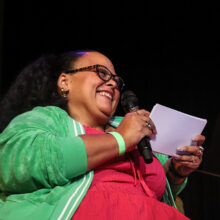
This week on Pop of Culture, we meet Heather Taylor and Casey Morgan of Cocoa & Cream Collective—a new bakery opening in Yorktown… soon! They take us through the process of opening a new small business and why their team is truly a collective.
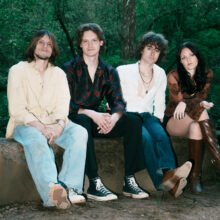
We’ll also catch up with musician Nick Kendall of Time for Three, a genre-bending trio with a new album based on the works of Emily Dickinson. The tile game Mahjong is having a moment, so we asked local expert Raquel Santoni to give us the basics. And Maya Doss kicks off our first-ever themed month of “WAYWO!”