S03 E11 – We’re Live!
Audio Transcript
Sean Ashcraft (00:00):
Support for Pop of Culture comes from Stallings Wealth Management, Daniel Stallings financial advisor, securities and advisory services offered through Cetera Advisors LLC. Member FINRA/SIPC, a broker/dealer and registered investment advisor. Cetera is under separate ownership from any other named entity.
Kara DuQuette (00:16):
This week on Pop of Culture, we're live to celebrate our hundredth episode. We'll chat with NPR's Stephen Thompson about what's popping up in pop culture.
Jen Blackmer (00:27):
We'll dive into the history of East Central Indiana Arts and Culture with documentarian Chris Flook.
Maya Doss (00:34):
We'll catch up with a few of our favorite, what are you working on guests?
Kara DuQuette (00:38):
And we'll hear some audio that got cut from our previous 99 episodes.
Maya Doss (00:43):
That's coming up.
Luke Jones (00:47):
Support for Pop of Culture comes from Stallings Wealth Management, the innovation connector. And from you. With state and federal money eliminated, you are the difference in keeping local programming on the air at IPR. Become a member today at Indianapublicradio.org.
Michelle Kinsey (01:13):
Live from Indiana Public Radio, this is Pop of Culture's 100th episode. I'm Michelle Kinsey.
Kara DuQuette (01:22):
I'm Kara DuQuette.
Maya Doss (01:24):
I'm Maya Doss.
Jen Blackmer (01:25):
And I'm Jen Blackmer. Yay. We have an action packed arts and culture hour for you today.
Kara DuQuette (01:34):
Coming up, we speak with filmmaker and local history expert, Chris Flook. We'll ask him about the history of the arts in East Central Indiana.
Maya Doss (01:44):
And later, we'll check in with some of our favorite, what are you working on guests?
Michelle Kinsey (01:48):
But first, we wanted to get a national perspective on where the cultural conversation is right now. So we called up NPR editor, writer, and host, Steven Thompson. In 2024, NPR Music's Stephen Thompson, co-creator of the Tiny Desk concert series and co-host on NPR's Pop Culture Happy Hour joined IPR for its new station launch event. We invited him back for our 100th episode and he said yes. We were only 38 episodes in when you first joined us, Steven. Can you believe that?
Stephen Thompson (02:24):
Now you are 62 episodes hotter.
Michelle Kinsey (02:28):
Oh my gosh. You did some math. I'm not even going to check your math on that, because quite frankly, I can't.
Stephen Thompson (02:36):
Well, you are talking to a former Wisconsin state mathlete.
Michelle Kinsey (02:42):
That's good. That's good information. I don't know that anybody knows that.
Stephen Thompson (02:46):
It's exclusive.
Michelle Kinsey (02:46):
You heard it here first, everybody. Well, I think the most important question we should ask right off the bat is, have you missed us?
Stephen Thompson (02:57):
I have. I had a wonderful time at your station opening. I loved talking to you on stage, talking to listeners, talking to donors, and just being in an environment where people are excited about public media and excited about pop culture. That is my happy place.
Michelle Kinsey (03:12):
Absolutely. Do you remember when you hit that first 100 episode milestone with Tiny Desk or Pop Culture Happy Hour? And if so, what was that like for you?
Stephen Thompson (03:26):
I do remember in both cases, I even remember the artist with the hundredth Tiny Desk concert because it's one very near and dear to my heart, a guy who records under the name The Heligoats. And it's a fantastic Tiny Desk. And having that feeling with both of those projects where you're not just trying something, now you're doing something. And I often say that the secret to creative success, at least in my world, has been have a good idea and then execute it hundreds and hundreds and hundreds of times.
Michelle Kinsey (04:03):
Absolutely.
Stephen Thompson (04:04):
And very often that's the secret of success. If you don't find yourself letting deadlines slip and maybe we won't bother to do an episode this week or I'm busy or this has run its course. Things fizzle out like that all the time. But if you're able to just keep cranking out shows, eventually you create this habit with listeners and this sense of trust with listeners that that show is always going to be there.
Michelle Kinsey (04:31):
Absolutely. Absolutely. So, and that was Tiny Desk. Do you remember hitting that milestone with Pop Culture Happy Hour? Did you like that hit?
Stephen Thompson (04:40):
I think we've hit it a number of different times in a number of different ways to the point where we now have absolutely no idea how many episodes we've done. In part because we've done long form episodes and short form episodes. We used to just be weekly and now we're daily. There've been so many different iterations of the show and we've done enough reruns and reruns technically get counted in our system as new episodes, but we don't count those as new episodes. We figured it out at some point, and I think the last time I did a social media post celebrating a pop culture happy hour milestone, we had just done our 2000th episode.
Michelle Kinsey (05:20):
Wow.
Stephen Thompson (05:23):
And that really takes you aback. And of course with that show, we have four different hosts. So for each individual host, you can't say like, "I've done 2000 episodes," because there are many of them that I'm not even on.
Michelle Kinsey (05:34):
Right, absolutely. But 100 still important, right? I mean, because you're like 2000, no big whoop, no.
Stephen Thompson (05:37):
Oh, God. Oh, Michelle. Michelle, 100% a hundred is still important. Absolutely it is. You know how many ghost ships are in any given podcast feed where they've just stopped doing it? Doing a hundred episodes and still being excited about the show means that second hundred is going to happen and you're going to be like, "Whoa, it's our 200th, we forgot to celebrate."
Michelle Kinsey (06:04):
Exactly. And you get to talk about things that you're truly excited about.
Stephen Thompson (06:10):
Oh, yeah.
Michelle Kinsey (06:10):
Yeah. And speaking of that, what are you most excited about right now when it comes to pop culture?
Stephen Thompson (06:16):
I'm excited about the Oscar season being over. No, right now in terms of pieces of culture that I'm really enjoying, I'm really excited about the movie Project Hail Mary, which is out today, a space epic in the vein of the Martian or gravity, beautiful effects, really nicely acted. Great to see in a theater if you can see it on one of those giant IMAX screens, I recommend it. I'm really enjoying that. There are a couple of TV shows that I'm really excited to catch up on. Once I'm through the Oscar award season gauntlet, I've heard nothing but great things about Strip Law. I've heard nothing but great things about Reggie Dinkins with Daniel Radcliffe and Tracy Morgan. And honestly, Michelle, I have to say, I'm watching Survivor 50 and I'm into it.
Michelle Kinsey (07:07):
Wow. Now, have you watched every season?
Stephen Thompson (07:11):
Oh, Michelle. I have watched every season of Survivor. And you're hearing it here first. You want an exclusive. I'm working on a ranking of all 50 survivor seasons. So I've been doing a full survivor rewatch in my copious free time and writing essays about each season of Survivor and doing a ranking.
Michelle Kinsey (07:31):
Wow. Well, while we're admitting to things of that sort, my weakness is Love is Blind.
Stephen Thompson (07:40):
Oh, I get it. I get it. I watched the first few seasons and drifted away from it, but I completely understand letting yourself be hypnotized by it.
Michelle Kinsey (07:50):
Oh my God. And every time a season starts, I'm like, "This is ridiculous. What am I doing? I should not watch the..." And there I am every time. Every time.
Stephen Thompson (07:59):
And there you are, "I'm better than this."
Michelle Kinsey (08:01):
And then next episode.
Stephen Thompson (08:02):
Cut to nine hours later. You not being better than this.
Michelle Kinsey (08:09):
Exactly. Let's shift to music if we could. You listen to an astonishing amount of new music every year and share a lot of that with us during New Music Fridays. What's something happening in music right now that you think people should be paying attention to?
Stephen Thompson (08:22):
Ooh, boy, Michelle, that's a hard question. It's always so tricky because you mentioned Pop Culture Happy Hour and you mentioned Tiny Desk Concerts. I also host New Music Fridays for All Songs Considered, which is an NPR music podcast. And we round up the five albums you most need to hear that are out today, plus a lightning round of some other recommendations. And it really is just drinking out of a fire hose, trying to figure out what to talk about each week and what to say about the albums we do end up picking. As far as overall trends in music, it's hard to step back from a 10,000-foot view and get a sense of themes and trends that are worth keeping an eye on. All I can do is just say, there are some beautiful, beautiful records that slip through the cracks in part because there's so much stuff coming out each week, it's easy to forget to go back and savor the stuff that you love.
(09:21):
I recently went back and revisited my favorite album of 2025, Luxe by Rosalia, the Spanish singer. And this album is so audacious and so beautiful and it brings in all these amazing guests and classical musicians and opera musicians and composers and her voice is so gorgeous and she sings in 13 different languages. And in a way, it's such an audacious piece of art that you don't want to listen to it the way you would listen to, not to suggest that these aren't pieces of art, but you're not going to listen to the Rosalia record the same way you listen to the new Bruno Mars record or the new Harry Styles record. It's so much more thematically and musically ambitious that to me, one of the hardest 10,000 foot view things to do in music is take a step back and when you hear something that is truly transcendent and wonderful, don't just forget about it because it's not time to talk about it anymore.
Michelle Kinsey (10:22):
I love that. I love that. And I really appreciate that you and others at NPR Music happily listen to so much music and then curate and bring to our attention some things we should be listening to. So I really appreciate that. And I know there are a lot of people listening right now that appreciate that as well. Okay, let's have some fun. I've got 100 rapid fire questions. Just kidding.
Stephen Thompson (10:50):
Six. 14. Barbados.
Michelle Kinsey (10:54):
I'm kidding. Absolutely. Absolutely. Okay. Ready? It's just a few. It's not anywhere near a hundred, but the best concert you've seen recently in Tiny Desk performances Count.
Stephen Thompson (11:05):
Oh my gosh, this is so hard. Oh my gosh. We just published a Tiny Desk concert with Maddie Diaz, who is just one of my favorite singer songwriters. Her voice absolutely rips my heart out, massages it gently and then puts it back where it was better than it found it. She is such an amazing singer and such a great songwriter. And her Tiny Desk, I just went and blubbered like a baby.
Michelle Kinsey (11:34):
Aw, I love that. An artist you think is about to have a huge breakout moment.
Stephen Thompson (11:39):
Oh boy. I'm going to go with an actor. I'm going to go with Jack O'Connell. He's an actor. He is the lead bad guy in both sinners and 28 years later, The Bone Temple.
Michelle Kinsey (11:54):
Yes.
Stephen Thompson (11:55):
And he plays like the lead Jimmy, if you've seen Bone Temple. He's so creepy. And I just spent more time with Sinners and you watch his work in there where he's singing beautifully in addition to being such a creepy and hypnotic presence. I just think that guy is due for that like Jesse Buckley breakout where all of a sudden we're talking about a mid-award season.
Michelle Kinsey (12:18):
Absolutely. One musician you'd love to interview, but haven't yet.
Stephen Thompson (12:23):
Oh boy. I mean, any number. Let's go with Tracy Chapman.
Michelle Kinsey (12:27):
Ooh. That's a good one.
Stephen Thompson (12:28):
The Fast Car renaissance that happened in 2023 when Luke Combs covered that song. And all of a sudden Tracy Chapman resurfaced for a minute and performed at the Grammys and I was just like, "Man, what I wouldn't give." She was just such a huge gateway for me. I grew up in a small town in the middle of Wisconsin. I was just outside the reach of the nearest college radio station and Fast Car blew doors open for me as far as what music could say and what it could mean. And she just continues to be a lifelong favorite.
Michelle Kinsey (13:03):
Absolutely. Well, let's all send good vibes out there for that everyone listening right now. We're going to manifest this 2026. If you could recommend just one song for a road trip through Indiana, what would it be?
Stephen Thompson (13:18):
Oh boy. Well, you know what? I'm going to recommend this. It's an album from about 20 years ago by a singer-songwriter named David Meade. And the album is called Indiana. And the lead song is about driving through Indiana, which those of us from different Midwestern states who now live on the East Coast can really relate to the experience of driving through Indiana. So if I'm doing a road trip through Indiana, that's the record I'm pulling out.
Michelle Kinsey (13:46):
I love that. Steven, if NPR had a theme song for 2026, what song would you nominate?
Stephen Thompson (13:54):
Something chaotic and terrifying. Do you know the group Mr. Bungle? Mr. Bungle, it's Mike Patton from Faith No More.
Michelle Kinsey (14:04):
Oh, okay. Yeah, I know Faith No More. Yeah.
Stephen Thompson (14:07):
And sometimes their songs are just like... That would be the soundtrack for 2026.
Michelle Kinsey (14:13):
Wow. Mr. Bungle. Got it. And one final question, Steven. Any advice for the Pop of Culture team for our next 100 episodes?
Stephen Thompson (14:27):
Just keep leaning into talking about things you love and keep taking the things you love seriously. Trust your audience, lean on each other. Remember that joy is an essential part of the human diet. And sometimes I think when you're in the business of talking about pop culture, people can come at you like, "Why are you talking about that? That's not as important as what's going on in the world, or that's not as important as what's going on in government." And just remember that those things are vital. They're vital to being human. Joy is vital to being human and that you're doing good and important work. Even if it doesn't feel like you're saving the world, you're still giving people a pop of joy. And that's one of the most important things you can do in trying times.
Michelle Kinsey (15:23):
Absolutely. Well, Steven Thompson, thank you for bringing so much joy to our 100th episode. We really appreciate it.
Stephen Thompson (15:32):
It is my pleasure. Anytime. Bring me back for 150. Bring me back for 200. Happy to do it.
Michelle Kinsey (15:37):
You got it. You heard that everybody. All right. We'll see you then.
Stephen Thompson (15:40):
Talk to you soon.
Michelle Kinsey (15:40):
All right. Thank you so much.
Stephen Thompson (15:41):
Bye.
Jen Blackmer (15:43):
Hey, hey. Now that my mic is working, we're going to step away for 30 seconds. When we come back, we will step into history with local historian documentarian, Chris Flook. This is Pop of Culture live from IPR.
Kara DuQuette (16:01):
I'm Kara DuQuette. You're listening to Pop of Culture. This is a local arts and culture show, so we wanted to focus on why East Central Indiana is so rich in both art and culture. We are in studio with Chris Flook. Chris is a storyteller, an educator, a filmmaker, a writer, and a historian at the Delaware County Historical Society. Chris, welcome back to the program. Thank you for being here.
Chris Flook (16:26):
Thanks for having me.
Kara DuQuette (16:27):
Of course. Let's jump right in. We want to know. I want to know, what groups and institutions do you feel played a part in creating Muncie's early arts and culture history?
Chris Flook (16:41):
One of the first things that Muncie did when it got money. And so it was this poor, rural agricultural backwater up until basically the Civil War. The railroads come in and then there starts to become industry. So one of the first things in the 1870s when Muncie had money, sort of a land baron by the name of Jacob Henry Wysor builds an opera house. And it was just south of the courthouse. It was known as the Wysor's Opera House. And it brought in plays, a lot of Shakespeare. Frederick Douglass spoke there. So it was like an event venue. And then Vaudeville starts, this is American form of variety entertainment.
Kara DuQuette (17:23):
The old Vaudeville.
Chris Flook (17:24):
The old Vaudeville. Yeah. Musicians and professional wrestling and just all kinds of crazy stuff. He becomes enormously popular in the United States and Muncie becomes a major stop. And then all of a sudden, beginning in the 1880s, when gas was discovered, then all of a sudden Muncie becomes very wealthy. So does Marion, so does Kokomo, so does Anderson. And so all these places then start adding Vaudeville theaters. And at one point, Muncie had like 12 Vaudeville theaters, movie houses, Nickelodeons, all within a five or six block radius.
Kara DuQuette (17:55):
Oh, and you were talking a little bit about the placement of Muncie geographically. Can you talk about that a little more?
Chris Flook (17:59):
So Muncie really got big Vaudeville acts, like folks that... And like big stage productions too from Broadway. So New York as it is today is still the center of all this. But the rail lines all went to Chicago. All the main rail lines went through Chicago and many of them came right through Muncie. And so there might be a three-day show in Chicago on the weekend and a three-day show in Cleveland on the weekend before, but they would stop Wednesday or Thursday and these big acts would then come to Muncie. And so Muncie was prominent, but not as big as obviously as Chicago, but it got access to all these really cool entertainment things in a time and a lot of communities did not.
Kara DuQuette (18:39):
That's amazing. So there's a big interplay there between like the money and the creativity and the rail. That's exciting. So is there a historical group or space that you wish was still around to provide culture?
Chris Flook (18:56):
I wish there was a movie theater downtown. I mean, there are obviously cities, all of the United States still has it. I love that the AMC Theater is here, but it's not downtown. It doesn't have the same vibe. Star Theater, which was put in the Boys Block around 1906, 1907 as a refined Vaudeville. Then it became the Hoosier Movie Theater and now it's Muncie Civic. So in some ways that legacy is still there in a different kind of entertainment. And then Cornerstone, Center for the Arts and Masonic Temple has one of the nicest theaters in downtown. So they're not completely gone, but I have this romantic fantasy about going downtown and going out to eat and then going to a movie, which you really can't do downtown because there aren't any theaters.
Kara DuQuette (19:42):
Well, so you say there's a theater in Cornerstone. Do they show movies? I mean, I think that's-
Chris Flook (19:48):
They do now because Epson, which it makes these really cool projectors and Epson donated this really high-end 4K projector, laser projector, and so they mounted it. And so you get 4K projection in this beautiful old 100-year-old theater. It's not a movie theater, but you could run movies and shows and stuff like that and give people that traditional experience.
Kara DuQuette (20:14):
And talking about this, it makes me really excited about the possibility for a lot of Vaudevillian variety show experiences.
Chris Flook (20:24):
Yeah. Well, interestingly enough, Laura Williamson, who runs Muncie Civic, Laura somehow, I think it was just she inherited it when she came into Civic, but she had about a hundred, they're called cabinet cards, but they're basically like baseball cards. And it was all these Vaudeville actors and actresses that had performed in Muncie. Beginning, I looked it all up, found all their performances, basically from 1892 until about the World War I. And she thought that they were from Star Theater, but they were actually from the Wysor Grand Opera House, and at least all their performances were always at Wysor. And these are big names and people that were in Broadway, and then they got into the early silent film actors and actresses. Some people made it all the way to the radio era and then the sound movie era. And so it was cool to see that these people came to Muncie. And Muncie was this major stop for a lot of early entertainment and Hollywood people.
Kara DuQuette (21:20):
Well, and you were talking about downtown being dotted with different venues. So the opera houses, and then what are some of the other [inaudible 00:21:31] types.
Chris Flook (21:30):
My favorite were the Nickelodeons. And you know the station Nickelodeon, that comes from an old, early film. Early film was not movies like 90 minutes like we know today. They were essentially like Instagram Reels. They were like these short things that would repeat.
Kara DuQuette (21:44):
Oh, what as old as new again.
Chris Flook (21:46):
Yeah, that's exactly right. We just basically reinvented the same thing and new technology. What you do is you go and pay a nickel and you'd go into this theater and it'd be a standing room only and it'd be just run movie after movie after movie after movie. It's gross because everyone was smoking cigarettes and, but people loved it. And it was a period of half those theaters were called Nickelodeons. And one of them was the Vera Mae's, the restaurant that just went out downtown. That was a Nickelodeon. There was something called the Theatorium and there was just, you just paid a nickel and went in and watched this stream of content. And it would be simple stuff like a fireman putting out fires. It wasn't narrative content, but it was just animated reels that we even watched today on TikTok.
Kara DuQuette (22:28):
Well, yeah, we'd love to watch kittens rolling around.
Chris Flook (22:30):
Yeah. Same stuff.
Kara DuQuette (22:32):
Similar. Well, I want to know, what was one of the first pieces that you saw in Muncie that made you stop and think, there's a story behind that?
Chris Flook (22:42):
That would be Appeal to the Great Spirit. Unfortunately, it's become the icon for Muncie. It's a beautiful statue. It was made by Cyrus Dawn. It's a replica of the one in the originals in Boston. In fact, one time when I was in Boston at the Boston Museum of Art, I walked out. I'm like, "Oh, they have a copy of our statue." And I was like, "No, it's the other way around." We have the copy. It was put here to honor Edmund Burke Ball. One of the five Ball brothers, he died and the Balls and many others were trying to improve the area around the river. And so they put a statue right there at the river as an homage. That story has then become to be its Chief Muncie. It's been conflated with the local native. It's not. It has nothing to do with local Native Americans at all. It's there to honor Edmund Ball. And they picked a sculptor that was really prominent at the time that was sculpting.
Kara DuQuette (23:36):
Okay.
Chris Flook (23:36):
But then it made me realize the value of the public art and then how that definition then changes over time. So the community has forgotten about the homage to Edmund Ball and it's become something else.
Kara DuQuette (23:51):
Yeah. So you think there's a lot of public art in Muncie that reflecting the changes that are coming at this point?
Chris Flook (24:00):
Yeah. I do think that there's people here that have a concerted effort to make public art viable. And I don't think it ever went away, but there are people that are actively with statues and architecture and river improvements and green spaces. And so we all want to, at least I want to live in a great city, and part of that is having beautiful spaces, architecture, and there are people that I think are making that a concerted effort in the 21st century.
Kara DuQuette (24:30):
Yeah. Loving where you live has a lot to do with the beauty that surrounds you.
Chris Flook (24:35):
That's right.
Kara DuQuette (24:36):
Well, thank you so much.
Chris Flook (24:37):
Yeah.
Kara DuQuette (24:39):
Chris Flook is a filmmaker and writer, among many other things. You can read his regular history column, Bygone Muncie in the Star Press. But right now, you're listening to Pop of Culture from IPR.
Michelle Kinsey (25:00):
This is Pop of Culture. I'm Michelle Kinsey.
Maya Doss (25:03):
And I'm Maya Doss. We spend a lot of time on this show every week, editing interviews, writing scripts, recording voiceovers. So it might surprise you that we're not always perfect.
Michelle Kinsey (25:18):
What? If you're a regular Pop podcast listener, you've heard some of our outtakes and bloopers before, but there's an entire folder dedicated to this stuff. Here's just a taste. This is Pop of Culture from IPR. Perfection. I apologize. Shut your face hole.
Kara DuQuette (25:42):
That was my perfection ding.
Michelle Kinsey (25:44):
That's exactly right.
Jen Blackmer (25:48):
This week on Pop of Culture, we're back to school. Grab your nap sack and join us.
Michelle Kinsey (25:55):
What the hell year is it? Nap sack?
Jen Blackmer (26:02):
What the hell year is it?
Kara DuQuette (26:06):
Indiana Public Broadcasting's Tony Sandleben. Sandleben. What? Reports.
Luke Jones (26:06):
Sandleben.
Kara DuQuette (26:19):
Sandleben. Sandleben. Say it Sandleben.
Speaker 9 (26:20):
There you go. We're going to Wisconsin. So I don't think I've ever been to Wisconsin, so I'm excited to visit Wisconsin. So there we go.
Thomas Ouellette (26:26):
Well, I think they're-
Speaker 9 (26:28):
[Inaudible 00:26:28].
Thomas Ouellette (26:28):
Yeah, they've got a big thing on cheese over there, so give it a shot.
Speaker 9 (26:36):
Oh. I like cheese.
Kara DuQuette (26:44):
Indie, Sandleben.
Luke Jones (26:44):
San. The exact way I said it.
Kara DuQuette (26:45):
Sandleben. Sandleben. Sandleben.
Luke Jones (26:55):
[inaudible 00:26:55]. Can I get a quick mic check?
Dan Wright (26:56):
The test check one, two big bats up to 155. Down cross over up the thing though.
Michelle Kinsey (27:05):
That's the best mic check we've ever had. Ever.
Jen Blackmer (27:10):
And finally, Moons of Mystery explores the man moons of our soul. The man mons, is it main moons?
Luke Jones (27:10):
I think it was just meant to be moons.
Jen Blackmer (27:10):
Okay.
Kara DuQuette (27:22):
I like the idea of a man moon, but you know.
Maya Doss (27:25):
Bow chica wow wow.
Kara DuQuette (27:30):
Oh, no. It's back. Pop of Culture after dark. Indiana Public Broadcasting's Tony Sandleben reports.
Luke Jones (27:52):
Sandleben.
Kara DuQuette (27:52):
I was doing so well.
Michelle Kinsey (27:52):
You're still doing well.
Kara DuQuette (27:52):
Oh, thank you.
Michelle Kinsey (27:52):
This is hot.
Kara DuQuette (27:52):
Okay, Awesome.
Michelle Kinsey (27:53):
I made him laugh too much. He does that all the time.
Kara DuQuette (28:00):
Okay, good.
Maya Doss (28:02):
Our show host was hosted by, oh wait, that's me too. Maya Doss.
Michelle Kinsey (28:08):
And me, Michelle Kinsey. Pop of Culture is a production from IPR on the campus of Ball State University. No, I thought you were going to never do it again. So I just waited. It sounded like I wasn't thrilled at all.
Michelle Kinsey (28:26):
And me.
Kara DuQuette (28:30):
Indiana Public Broadcasting's Tony Sandleben. Laben
Luke Jones (28:33):
Sandleben.
Kara DuQuette (28:33):
Sandleben.
Michelle Kinsey (28:37):
And hosted by me, Michelle Kinsey.
Jen Blackmer (28:39):
And me, Jen Blackmer.
Michelle Kinsey (28:42):
Did you forget your name? Our show was hosted by me, Michelle Kinsey.
Kara DuQuette (28:50):
And me, Kara Duke. My God.
Michelle Kinsey (28:59):
Listen. Listen, that's going on the blooper reel. Kara Duke. My God.
Kara DuQuette (29:05):
Indiana Public Broadcasting's Tony Sandleben reports.
Maya Doss (29:16):
My favorite Pop memory is probably when I came on as a guest before I was ever a radio co-host. Michelle actually interviewed me and I remember just how validated I felt as a local artist to get such an amazing platform.
Michelle Kinsey (29:29):
Yeah. We've had a lot of great moments on the show. Jen, what's yours?
Jen Blackmer (29:35):
Just now when I hear Kara trying to say. Say it, Kara, say it. I think we're putting her on the spot right now.
Michelle Kinsey (29:44):
Do it.
Kara DuQuette (29:44):
Sandleben.
Jen Blackmer (29:44):
Yes.
Kara DuQuette (29:49):
I can learn.
Jen Blackmer (29:51):
Seriously, some of the interviews that stand out for me were the interview we did with Rose Elliot and the way she is learning to use a fiber art technique pillow making to remember her father. I think that one of the things that sticks out as well too is just learning as much as I've been able to learn about things that are not what I normally do.
Michelle Kinsey (30:15):
100%.
Jen Blackmer (30:16):
Going to live music and all the local artists doing and producing great work.
Kara DuQuette (30:23):
Yeah. Meeting new artists, talking to other artists that you know and you love their work, but maybe you haven't met them or you totally know them. One of my favorites is episode one, season one.
Maya Doss (30:34):
Well, taking it back.
Kara DuQuette (30:36):
I have to. Levi Rinker, you don't forget your first interview.
Michelle Kinsey (30:40):
And he's become a great friend of the show. I mean, we check in with him often and that's very, very cool. Mine has got to be the music, introducing people to musicians in and around the area, and especially when we get the opportunity to go on location and hear them in studio or in concert at a dive bar, wherever it is. I mean, that's my jam pun intended.
Jen Blackmer (31:03):
Yeah, absolutely. One of the great things about radio to that I've learned while doing this is just the immersive nature of it. And that became clear to me when I heard the interview we did at Minnetrista with the creators of the Night in the Forest exhibits. And how that, when I listened to the experience of that, it felt like being there. It was awesome. Yes,
Michelle Kinsey (31:29):
Yes, absolutely.
Kara DuQuette (31:29):
We've gone to studios. You never know where we're going to pop up.
Michelle Kinsey (31:30):
That's right.
Jen Blackmer (31:33):
Pop up. Pop. I see what you did there. And I don't know, getting to work with all of you.
Kara DuQuette (31:41):
Yes, absolutely.
Jen Blackmer (31:44):
Yeah. And I have to slip that in. Anytime I see a calendar alert pop up from Luke Jones and I accept it to come to the studio and do something, I know it's going to be the highlight of my day. And it has been.
Michelle Kinsey (32:00):
Absolutely. And like Steven Thompson was saying earlier this hour about finding joy and leaning into the passion of what we do here. I don't think we have a problem with the passion part of it at all. And that's what I love about this team. We each bring our own passions, but also that desire to learn something right along with the audience, right?
Jen Blackmer (32:24):
Oh yeah, absolutely.
Maya Doss (32:25):
Bringing people out from our local culture and arts community is really amazing too, because you don't even realize just how much depth and hidden maybe from you, passions and things that people are doing right here in our hometown.
Kara DuQuette (32:38):
Oh, for sure. And as we hit this milestone of a hundred episodes, the community is so gracious and so happy to have us here and talk to us. And that makes me happy.
Jen Blackmer (32:52):
Also, during this time, I've had the privilege of chatting with several artists who are not here, not from Muncie. And they either have Midwestern roots or they're working in another area in this part of the country. And I've talked to folks from Wisconsin and Nebraska and Missouri and Tennessee. And they're always amazed by Muncie and East Central Indiana and what we've got going on here. And we have these moments where we talk and chat before we actually turn the mics on for the show. And in every single one of those conversations with folks, it's been like, "Wow, you're doing that?" We're like, "Yeah, absolutely." And it makes me very proud to live here.
Michelle Kinsey (33:39):
Absolutely. You know what else is great and I'm sure we can all relate is when you're out and about, and we've all had those like NPR moments, right? "Oh, I heard this on NPR," but how many hands up in the room? Well, I guess we shouldn't do that since we're on the radio, but just give me a quick shout out that you've been out and about and people say, "Oh, I heard that on Pop of Culture or I know about this artist, this exhibit, this event, this concert, because I heard it on Pop of Culture." And the warm and fuzzies that you feel when you hear that, because I'll hear just random people talking, not people talking directly to me, but they're just saying, "Oh yeah, I heard on Pop of Culture last week that da da da da da da was happening."
Jen Blackmer (34:17):
I had somebody come up to me in the pharmacy. They overheard my voice talking to the person. And I don't know if this was embarrassing or not, maybe it was, but they said, "Are you on that show that they do on IPR about arts and culture?" And I was like, "Yep, that's me."
Maya Doss (34:32):
Couldn't be embarrassing. You guys have such prolific voices, honestly. So easy to recognize.
Michelle Kinsey (34:39):
Right back at you Maya Doss.
Maya Doss (34:40):
Oh, thank you. Thank you. I have to say, coming out of the PMX program was also an amazing experience for me because here at Ball State, they encourage students to get involved with the station. And I came into this feeling so nervous, but everyone really helped encourage me, build me up stronger, and I couldn't be more grateful for you guys for that.
Michelle Kinsey (34:59):
Oh, that's awesome. And if you want to know more about the PMX program, it's a fellowship program for students. You can go to Indiana Public Radio dot org to learn more about that because we don't have time to do that today. We got more pop culture to talk about.
Kara DuQuette (35:10):
Yeah. And keep listening to Pop of Culture because we're going to bring you more.
Maya Doss (35:14):
And we've got more show to do, but we wanted to remind you if you've missed anything so far, the Pop of Culture podcast will be available later today. You can find it on NPR one, Apple Podcasts, YouTube, Spotify, or at Indiana Public Radio dot org. You can also find us right after this break from IPR.
Jen Blackmer (35:41):
This is Pop of Culture. I'm Jen Blackmer.
Michelle Kinsey (35:44):
And I'm Michelle Kinsey. We're broadcasting live today.
Jen Blackmer (35:49):
Oh yeah, we are. When we first came on the air in 2024, we brought you a segment we called What Are You Working On?, affectionately known as WAYWO. For our 100th episode, we are taking a look back. In December of 2023, the Pop team had a meeting where we gathered ideas for our new show. Our soon to be co-host, Michelle Kinsey brought a full page of ideas, including one that said-
Michelle Kinsey (36:18):
And every week we interview an artist and ask them, "What are you working on?"
Jen Blackmer (36:23):
And from there, Kara DuQuette got to work. Our first interview is with Levi Rinker.
Levi Rinker (36:34):
Hi, my name's Levi Rinker and I am the economic development specialist for the City of Anderson. And my focus is on downtown revitalization strategies is one hat that I wear. The other hat, I'm a, I guess, co-founder and art director at a local artist cooperative that we've found downtown.
Kara DuQuette (36:56):
So you're driving the revitalization beat in downtown Anderson.
Levi Rinker (37:01):
Yeah, right. I put on my tap shoes and do a little dance, maybe put on my cheerleading skirt, go team.
Jen Blackmer (37:10):
Levi told us about the artist alley he was working on in downtown Anderson. Levi himself constructed arches on each side of the alley and asked other artists to paint panels.
Kara DuQuette (37:21):
So these panels, are they like relief? Are they flat paint? Could you describe a little bit about it?
Levi Rinker (37:28):
Yeah. I mean, originally the concept was just a four by eight treated plywood board and paint on it. But again, you give artists a few specks and spurt parameters and they're going to bend it. And yeah, so we have pieces that break the plane more three-dimensional sculpture-esque.
Jen Blackmer (37:48):
As we looked back across three seasons of WAYWO, we reached out to a few artists and asked them, "What are you working on now?" Levi sent us this update for 2026.
Levi Rinker (38:00):
So this year for the Artist Alley, we are getting ready for our fourth annual show that will be opening May 1st on the first Friday Art Walk. This year for the exhibition, we're opening up submissions to all ages in the community, trying to get as many as 56 young artists from our local school districts showcasing their creative works. We've expanded the artist alley now into four locations downtown, hanging the previous year's works in different spots, connecting the Anderson Museum of Art to Dickman Town Center Plaza throughout the business district. This year we're doing some major light enhancements and adding another partner with the Historical Society of Madison County where we'll be adding nine panels of illustrations by artist Philip George, who's depicting the history of Madison County over the years. So really excited for this expansion this year. Yeah, looking to get so many people involved in walking downtown. We're excited for it.
Jen Blackmer (38:57):
Another one of our early asks was Molly Schaller.
Molly Schaller (39:00):
My name is pronounced Molly Shay-ler, not Shall-ler, which it often happens to be used that way. And my husband actually had to tell me that I was pronouncing his name wrong about two months into our dating process. He let me know I had that all wrong. So it's common. It happens to all of us. As far as my work goes, I definitely am a creative. I've been making things all my life practically compulsively.
Jen Blackmer (39:33):
When we talked to her in season one, Molly was engaging her community through art by restoring jewelry.
Molly Schaller (39:40):
And I have had the best time talking with people about their stories and their loved ones and these objects and either remaking them into something that suits their current style and fashion, but still echoes back to your great aunt Sally's story or just repairing it in a way so that let's say that maybe there was a piece that you bought on your vacation and you really loved it, but when you actually put it on, it always falls in a funny way and it doesn't quite work with your body. So I get to talk with people about what these objects that they love, and then I get to work with them to remake them into something that they can enjoy all the time and wear close to their bodies.
Jen Blackmer (40:27):
When we reached back out for an update, no surprise here, she wanted to share her latest community and arts connection.
Molly Schaller (40:34):
I'm working on a project called Pressing Matters, a community jelly printing initiative here in Muncie. If you've never heard of jelly printing, it's a mono printing technique that's incredibly accessible. No press, no experience needed, just a soft gel plate, some acrylic paint, and a brayer. The results are these beautiful, one of a kind prints. I hosted two sold out workshops at MadJax's this winter, and I'll be hosting workshops around town for people of all ages, from kids to seniors at community spaces people already know and love. Then we'll bring the prints together in a group show in Muncie, because art is for everyone.
Jen Blackmer (41:13):
Since those earliest days, we've asked over 60 artists and arts organizers what they're working on. We've talked to local painters.
Anne Maddox (41:22):
Well, I am finishing up the last of a series of six ecosystem paintings. I've been working on them for over 15 years now.
Maya Doss (41:31):
These are primarily acrylic with some collage work, and they're inspired by my personal alchemy of more negative or difficult emotions. I've self-guided myself through art therapy for about a decade now.
Speaker 16 (41:45):
I wanted to get out of my head, literally on the floor throwing paint around, and that's what led to a lot of new discoveries.
Jen Blackmer (41:53):
We've thrown down with potters.
Speaker 17 (41:55):
Once I started throwing, I never looked back. It was so much fun.
Speaker 18 (42:00):
Even before I started working on these robots, it was the clay that brought my strength back in my hands and allowed me to recover from that.
Jen Blackmer (42:09):
And folks all across the artistic spectrum.
Rebekah Galliard (42:13):
I tested some things out. I tested new lighting. I tested in ways to color grade, so I'm really excited to show some growth in my photography and in my art.
Speaker 20 (42:22):
I've just got a ton of, I've got a lot of pieces of wood. And so I look at everything that I have and I say, "Oh, this would be interesting here." And I think what if I put this next to that?
Sean Orlosky (42:35):
Yes, I'd hope to be hip deep in diamonds, but they're a poor substitute for what I really crave. A bonafide hero to help me feel whole for without a hero. What am I? Half a villain, a pirate in part, ruthless, but toothless.
Jen Blackmer (42:53):
That's Sean Orlosky, one of our favorite local voices. You can see him around town.
Sean Orlosky (42:58):
Busy days for yours truly. I'm currently hopping back and forth between two of my favorite theatrical stomping grounds. At Muncie Civic Theater, I'm currently painting the set for the upcoming world premiere of a brand new comedy, The West Wind, written by my great pals, John and Jenny Marsh, which will open on March 20th at the Casazza Family Studio Theater upstairs at the Muncie Civic. And I'm going to be back on the boards myself a week later on March 27th when I open along with an incredible team of folks led by director Mason Llewellyn in Thornton Wilder's Pulitzer Prize winning classic Our Town at Guyer Opera House in New Castle. To all my friends and fellow creatives out there, keep inspired, keep creating and keep having fun.
Jen Blackmer (43:40):
Some of the artists we speak to are making work for fun, some are building their community, and some are working on personal projects.
Rose Elliott (43:48):
We made a pillow out of my dad's shirts. He recently passed July 18th, 2024. And we thought, I mean, he has a lot of shirts, so we wanted to incorporate that and just have it around the house for hugs.
Jen Blackmer (44:03):
We often say that What Are You Working On is where we talk to artists both full-time and free time. That's because anytime dedicated to art is important to this show. You are important to this show. Thank you for helping our team with what we've been working on.
Michelle Kinsey (44:25):
Oh, that was awesome. I love the WAYWO. Yay. That was a great compilation, Jen Bravo. Guess what time it is, ladies?
Jen Blackmer (44:34):
Oh, is it that time?
Michelle Kinsey (44:34):
What? You know it is.
Jen Blackmer (44:36):
Amazing.
Michelle Kinsey (44:37):
It's time for the arts calendar.
Jen Blackmer (44:43):
Live.
Michelle Kinsey (44:43):
Yes live. I know. What could go wrong, as Jen said earlier this week? All right, I'll kick it off. We'll see how it goes. America's hometown jazz band will present a journey through jazz history on Sunday, March 22nd. The band will perform a variety of jazz styles spanning the decades. The music begins at 3:00 PM in St. Andrew Presbyterian Church in Muncie.
Jen Blackmer (45:04):
All aboard. Yeah, we did that. The West Wind opens this weekend at Muncie Civic Theater. This is a new original play written by Muncie residents, Jenni and John Marsh. You'll ride the rails across turn of the century America in this heartwarming comedy about finding friendship, purpose, and inner strength. Muncycivic.org is the place to go for more info.
Kara DuQuette (45:29):
The Jellicle Ball is this weekend at Emens Auditorium. The musical Cats presented by Ball State's Theater and Dance department will pounce, claw and chase its tail on stage today through Sunday. If memory serves me well, this production is this weekend only. Meow.
Maya Doss (45:53):
A spring forward dance is tonight, March 20th at the Muncie Delaware County Senior Citizen Center. This dance, open to anyone age 18 and older, will definitely put some spring in your step from 7:00 to 10:00 PM.
Michelle Kinsey (46:08):
Muppet Pleasure Island. I'm going to say that again, friends. I'm going to say it again. Muppet Pleasure Island, burlesque, drag, and aerial show is Saturday, March 21st at MadJax's in downtown Muncie. All of your favorite Muppets will be there, sort of. In ways you've never seen them before. It's time to start the music and light the lights. The Muppet Mayhem starts at 10:00 PM.
Jen Blackmer (46:35):
I'm glad you said that twice because I wasn't sure I heard it right the first time. Did you know more than 300 handbell musicians are in Muncie for a conference right now?
Michelle Kinsey (46:46):
Yeah, that rings a bell.
Jen Blackmer (46:48):
Oh my God.
Michelle Kinsey (46:49):
I had to do it.
Jen Blackmer (46:50):
Handbell Musicians of America will perform a closing concert at 5:30 PM, Saturday, March 21st at the Horizon Convention Center. The concert is open to the public.
Kara DuQuette (47:02):
Little known fact, I played the bells in high school, Middle C.
Jen Blackmer (47:06):
I know that now.
Michelle Kinsey (47:14):
That's awesome. Had we known before, you could have been WAYWO.
Kara DuQuette (47:17):
Anderson is the place Saturday for the Mad Little Spring Market featuring local makers, artists, plant folk, and small batch creators along Main Street from noon to 6:00 PM. And down the road a little ways is Marion's Spring Equinox Extravaganza. That's hard to say.
Michelle Kinsey (47:34):
Oh, that was nice. I like the emphasis you put on that.
Kara DuQuette (47:39):
Happening today through Sunday, you'll find workshops, vendors, plant sales, art, and more.
Maya Doss (47:45):
The Women of Song concert will be 7:30 PM March 24th at Ball State's Sursa Performance Hall. Enjoy a celebration of music featuring Ball State's Vox Anima, Indie's White River Sound, and Anderson University's Vola Voce.
Michelle Kinsey (48:00):
And that is part of a larger women's week situation, a schedule at Ball State University and as a-
Maya Doss (48:05):
Go women.
Michelle Kinsey (48:08):
Who said that?
Maya Doss (48:09):
That was me.
Michelle Kinsey (48:09):
It's fantastic.
Maya Doss (48:11):
[Inaudible 00:48:11].
Michelle Kinsey (48:12):
Go women. Oh, that was lovely. As a reminder, Anderson's Artist Alley is looking for, well, more artists. This year for the Anderson Artist Alley exhibition, they are opening up submissions for all ages in the community. They would love to get as many as 56 young artists from school districts showcasing their creative works. Submission deadlines coming up, people. It's March 27th. Go to atowncenter.org for more details. And we would love, don't we love to hear from people in the community about their artsy events? We love it. Yes.
Jen Blackmer (48:45):
There's a reason why we love this. Why we love doing the calendar.
Michelle Kinsey (48:49):
Yeah. That's exactly right.
Jen Blackmer (48:51):
There is.
Michelle Kinsey (48:52):
Yeah. So what you need to do to get your information heard on the arts calendar every week is send us those events. Simple, right? Send your artsy events, artists call-outs and more to us at indiana public radio dot org slash contact. Then all you have to do is click Pop of Culture. Very simple. We love sharing all of these events every week.
Jen Blackmer (49:14):
Absolutely.
Luke Jones (49:18):
Support for Pop of Culture comes from Stallings Wealth Management, the Innovation Connector. And from you. With state and federal money eliminated, you are the difference in keeping local programming on the air at IPR. Become a member today at Indianapublicradio.org.
Jen Blackmer (49:41):
And that's our show. We did it, friends. Our executive producer and interim general manager is Angie Grimes.
Kara DuQuette (49:49):
Our director of audio operations is Sean Ashcraft.
Maya Doss (49:53):
Our art director is Tracy Louck.
Michelle Kinsey (49:56):
Our digital content god is August Wilde.
Jen Blackmer (49:59):
Our fact-checker and ethics curator and today studio producer is Stephanie Wiechmann.
Maya Doss (50:05):
Our audio fellow is Maya Doss.
Kara DuQuette (50:10):
We had production assistance from Andrew Montavon.
Michelle Kinsey (50:14):
This week was produced by Luke Jones, who has spent 100 episodes fixing our mistakes and quietly judging all of them.
Jen Blackmer (50:24):
Yep.
Maya Doss (50:24):
Thank you.
Jen Blackmer (50:27):
Special thanks this week. Go to Chris Flook, Casey Alexander and Jack Ringenberg.
Kara DuQuette (50:31):
Our show was hosted by me, Kara DuQuette.
Maya Doss (50:33):
And me, Maya Doss.
Jen Blackmer (50:34):
And me, Jen Blackmer.
Michelle Kinsey (50:35):
And me, Michelle Kinsey. Pop of Culture as a production of IPR on the campus of Ball State University.
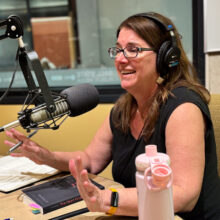
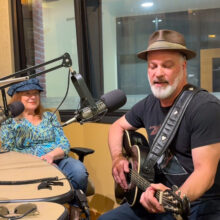
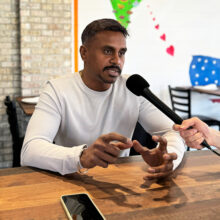
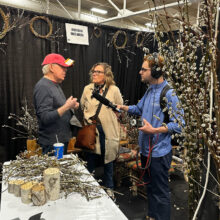
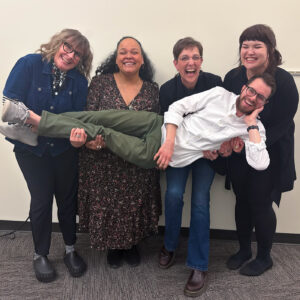
This week, we’re celebrating our 100th episode by doing the show live! We’ll be joined by NPR’s Stephen Thompson for a national perspective on pop culture right now. We’ll chat with filmmaker and local history expert Chris Flook about the history of arts and culture in East Central Indiana.
We’ll also check in with some of our favorite “WAYWO” guests, do our Arts Calendar live, and laugh at some of the audio that didn’t make it into our previous 99 episodes. Join us!