S03 E24 – We Have High-Octane Research Data
Listen

Audio Transcript
[Sean Ashcraft] Support for Pop of Culture comes from Stallings Wealth
Management. Daniel Stallings Financial Advisor Securities and Advisory
Services offered through Cetera Advisors, LLC. Member FINRA/SIPC, a
broker/dealer and registered investment advisor. Cetera is under
separate ownership from any other named entity.
[Michelle Kinsey] This week on Pop of Culture, Hoosier authors who
traveled wide…
[Jill Blocker] And then I quit my job, moved to France, then wrote my
first novel.
[Keith Roysdon] Everything I put into the small town I knew about the
real life small town my parents were from. [Michelle] Are headed back to
East Central Indiana.
[Luke Jones] We’ll also look at what the data says about equity in
dance.
[Michelle] And we’ll go behind the song.
[Luke] That and more is coming up. Support for Pop of Culture comes from
Stallings Wealth Management and from you. You may have heard about large
gifts to NPR. Those donations are important, but they don’t bring back
the funding to IPR. Your support pays for the programs you rely on,
especially local programs like this one, and the people like me who
create them. Pop of Culture exists for you and because of you. Give
today at indianapublicradio.org.
[Michelle] From Indiana Public Radio, this is Pop of Culture. I’m
Michelle Kinsey.
[Luke] And I’m Luke Jones.
Coming up, we learn about an organization promoting gender equity in
dance through data. We’ll find out exactly what that means in about 15
minutes. [Michelle] Good, ’cause I’m a little confused. But first, we
have two Hoosier authors with strong Indiana roots. Keith Roysden and
Jill Blocker. Welcome to both of you.
[Keith] Thank you so much for having us.
[Jill] For having us.
[Michelle] Keith now lives in Tennessee, and Jill calls Switzerland
home. But both of you will be coming back to Muncie for an author event
in July. Keith, do you want to tell us a little bit about the event
coming up? [Keith] We have, I think, July 14 and a July 15 talk and
signing. I believe the first one is at the E. B. And Bertha C. Ball
Center. And the second one is at Carnegie Library downtown.
And in the afternoons of those days, the first of those days, we have an
event at Ink Drickers Anonymous bookstore downtown. [Michelle] Yeah.
[Keith] And on the second day,
we have an event at and these are both 3:00 P.M. events. On the second
day, we have an event at Aw Yeah Comics. [Michelle] Oh, nice. Making the
most of your time back in Muncie. [Keith] Yeah. Yeah. It’s really kind
of It’s kind of loaded with lots of activity.
[Michelle] Yeah, yeah.
Well, let’s get to those Indiana roots. Full transparency. I believe we
all have a newspaper in common, am I right?
[Keith] We really do. We really do. [Michelle] We all spent some time at
the Star Press newspaper in Muncie. For each of you, when did you decide
to move from journalism to more novel writing, creative writing?
[Jill] Oh, man.
So I studied journalism at Ball State. I was a ’09 grad, and looking
forward to going back to Ball State for sure. It was a really strong
foundation. I did my internship at the Muncie Star Press. Keith, at the
time was my editor. So he walked me through how to find, you know, all
the good stuff in the police reports and get texts that I needed.
I worked shortly for a TV news station. And then from there, I moved to
Switzerland. And in Switzerland, I switched my careers because of the
language, so I wasn’t able to be a reporter in English. And I went into
marketing, and then after that, I realized, you know what? I’m a writer.
Let’s write. And then I quit my job, moved to France, then wrote my
first novel. [Michelle] Wow. That’s a great story.
[Keith] I know. I know.
I’m not gonna bother to mention I wrote a book in Tennessee. After after
hearing, you know, “Oh, I moved to France and read a novel.” Oh, yeah.
You won. You won.
[Jill] It’s the dream.
Yeah.
[Michelle] I mean, that is pretty cool.
Jill, that is pretty cool. Keith, tell us about kind of your journey
from newspaper, which was how long were you in the newspaper business
more than 30 years, right?
[Keith] Oh, yeah.
I started I started writing freelance for what was then the Muncie
Evening Press when I was still in high school, and started full-time in
1984 after having gone to Ball State. And
covered a variety of things for years and years and years from
entertainment to politics and government and a lot of filling crime
shifts and court shifts.
And took a buyout that began in January 2019. [Michelle] Mm hm.
[Keith] I’ve continued to write.
I write for a bunch of sites, and my two books now, one published,
self-published a couple of years ago with Jill’s editing help. We’re
publishing the new one, “Seven Angels” through our company that’s called
Constelate Creative/Costellate Publishing. [Michelle] Mm hmm.
[Keith] The the whole as they say, the book journey.
The book journey has been really fascinating because we decided probably
ill advisedly for our peace of mind and our time to act as kind of
imprint, you know, imprint, indie publishers of our own. So we’re
constantly talking to other authors about the possibility of publishing
your manuscript. And it’s a lot of fun, but it’s a very different world.
[Michelle] Absolutely. So did you stay in touch, Jill, from your time at
The Star Press before you started, you know, bopping around all over the
world, did you stay in touch with Keith or how did this kind of
partnership, this author relationship continue?
[Jill] Yeah, I don’t remember exactly how we stayed in touch all those
years. I mean, it’s probably almost been like almost 20 years.
[Michelle] Yeah.
[Jill] But I think Facebook for a while,
kind of checking in with each other back and forth. And then I published
my first novel, which is a literary historical fiction novel set in
Zurich during World War I I published that in German traditionally with
a Swiss publisher. [Michelle] Oh.
[Jill] And once that came out,
I was able to retain the English rights, and I was looking for
like an agent and a publishing path in the US to publish the English
version. And I ended up self-publishing it, which allowed me to really
take full control over the whole process. And then when Keith was
talking about, you know, I’ve been trying to find an agent. I don’t know
what to do with my book, I said, “Hey, let’s publish it.” And yeah, from
that journey with his first book, which is called “That October,” we
kind of opened it up to other authors, and we’re working through this
publishing in print now.
[Michelle] I love that. I’m assuming when you go from journalism to
more, you know, novel writing, fiction writing, I mean, there’s got to
be a pretty big learning curve. I mean, there’s a big difference
between, you know, doing, you know, a story on deadline that maybe eight
or nine paragraphs to a 200-page novel. Can you talk a little bit about
kind of the writing process for each of you?
[Jill] For me, it was actually really challenging writing in a
journalism style, everything is very factual. Everything, you know, is
source-based. So writing historical fiction was kind of my entryway into
novel writing because I was really fact-based, and I was able to kind of
make up conversations that maybe didn’t happen, but would likely happen
based on the time. And then, yeah, from there, I was able to become a
little more creative in the fiction writing, but it was a big
transition. [Michelle] Yeah. Keith, what about you?
[Keith] When I started writing in earnest, these novels, including
“Seven Angels,” I found two big hurdles. One of them was getting used to
the idea of you had near unlimited words that you could you didn’t have
to be terse, you didn’t have to make anything, you know, 12 inches long.
And the other was you needed to put I needed to put more emotion into my
stories. People that I wrote articles about, they may have very
emotional stories, but, you know, you made things fairly
straightforward. And with books, you can really indulge that thing where
people feel betrayed and they say they feel betrayed. And people feel
overwhelmed and scared and all those emotions that
I was able to exercise and put on the page, and it was a great way to
find a new kind of writing from newspaper writing. [Michelle] Yeah, it
really seems like you’re just unlocking another part of your creative
brain, right? And that sounds really exciting. [Keith] Absolutely. Yeah.
Absolutely.
[Michelle] Yeah. Well, let’s
talk about your new stuff, both of you. Jill’s new young adult novel is
“Happily After Ever.” Tell us a little bit about this book, Jill.
[Jill] Yeah, “Happily After Ever.” It’s a little spin on the classic
fairy tale. So it’s a young adult, a YA new adult crossover, which is
kind of like a new-ish genre that’s becoming popular for 18 to
30-year-olds. So it’s really kind of focused on, like, telling the
traditional fairytale story, but in a more realistic kind of way. You
know, not everything ends with the happily ever after, but that doesn’t
mean that your journey’s not a fairy tale.
Um, so, yeah, it’s the story of a young woman, a writer, a journalist
who is traveling around the world for love and have to eventually, like,
decide to choose herself throughout the process. And there’s some
hometown roots in there, too. So there’s some Indiana connections, for
sure, especially with the Swiss and Indiana, like, small town vibe. I
come from a small town outside of Berne, Indiana. So connection to the
small town roots is in the story, as well. [Michelle] Oh, that’s
awesome. And, Keith, tell us about your new thriller.
[Keith] So I was still in Indiana and had no plans to move to Tennessee
when I wrote “Seven Angels.” But we had family down here, and my parents
had come from Tennessee. And I’d read so much about the little town in
Tennessee where my parents were from, and I’d visited it many times. And
it was a town that was really in dire shape. An opioid epidemic and loss
of jobs and the factories closed, and people were really desperate.
So I thought, well, that’s a good starting point for a story about a
young woman who comes she’s working for the prosecutor’s office in
Knoxville, and she moves back to her little town, and she gets thrust
into this situation that involves opioid addiction and a doctor’s
pushing pills and white supremacists. And again, writing this in 2019.
I’m glad this
turned out the way that it did, because some of the main conflict is
about a Russian human trafficker who is pursuing a 12-year-old girl from
Ukraine.
[Michelle] Wow.
[Jill] So it was written slightly
before everything blew up several years ago about Russia and Ukraine.
And there is at least one character, two characters from my Muncie set
of characters that are in the book, too. So it gave me a chance to write
about a small town, and the response from people has been really
gratifying. Everything I put into the small town, I knew about the
real-life small town. My parents were from
[Michelle] Yeah. I think I think it’s really interesting that both of
you have these really wonderful nuggets from your time in Indiana. Both
of the books, though, very, very, very different. What do you hope
readers sit with after they finish “Seven Angels” and “Happily After
Ever?”
[Jill] I think kind of the mission behind our imprint, Constellate
Publishing is that we are just having, you know, conversations around
broader topics that aren’t necessarily, like, in the public, like
discourse. So with Keith talking about
topics like human trafficking and, you know, small town drug use and me
on the like, a little bit more fairy tale side, but still kind of
questioning, like, modern society and how we’re thinking about what
we’re, you know, teaching our young girls and how we expect women to
grow up into, like, a strict society of being a wife and being a
stay-at-home mom and stuff like that. So that’s what we’re trying to do,
I think, with our publishing is opening up conversations and opening it
up to writers who are kind of allowing people to, like, a little think
more critically about different topics. Um,
yeah, what do you think, Keith?
[Keith] Well, I think one of the things that I
like the most about “Happily After Ever” is that the expectation that
especially young women, but young men, too, you have this fairy tale
life or you’re doing something wrong.
You know? And that’s totally not a good way to look at it. And it puts
so much expectation on young people. And one of my favorite things about
Jill’s book is that it is very much a person making their way and making
mistakes and deciding, “Okay, this isn’t necessarily how I think things
should always go. And what can I do to improve that and to find my way.”
And that’s really what, to me, a lot of the point of the book is.
[Michelle] Oh, I love that. Well, congratulations to both of you on all
of your success, and we look forward to seeing you in July when you come
back home to Muncie. [Keith] We’re looking forward to it.
[Jill] Thanks so much.
Yeah, we’re looking forward to seeing you in Muncie. Thank you.
[Michelle] Jill Blocker and Keith Roysdon are both authors. They’ll be
back in Muncie in July.
[Luke] If I said, women are underrepresented in administrative roles and
arts organizations, you’d probably believe me. But what does the data
say? Or co-host Kara DuQuett spoke with two leaders at the Dance Data
Project. [Elizabeth “Liza” Yntema] Elizabeth Yntema, President and
Founder of Dance Data Project. I go by Liza.
[Nancy Dobbs Owen] Hi, I’m Nancy Dobbs Owen.
I am the External Communications Lead for Dance Data Project.
[Luke] And she started by asking them, What is the project? [Liza] Dance
Data Project is a not- for-profit that I started in 2015, and we use
data to advocate for women in dance and the performing arts generally.
But as part of that, we also advocate for transparency, best practices,
and educating the field. And that could be artists, that could be dance
critics or, you know, performing arts critics. It can be parents of
dancers. It could be audience members, and it can, in particular, be
donors. So they get a sense of what’s going on with the money. [Kara] I
think that’s something we expect in this day and age. I certainly do.
[Nancy] Yeah, I think it’s really important that not only artistic
directors, but executive directors, board members, also choreographers
coming in, dancers in the room understand how a organization runs and
where the money comes from, where it’s going, and where it’s allocated,
because the more transparency there is for everyone in the organization,
the cleaner it’s going to run.
[Kara] I completely agree. And then there’s not room for people to make
up their own narratives when, you know, actually, what’s going on is out
there for everyone to know. Will you talk a little bit about some of the
inequities in the field of dance and what they are? And probably more
specifically the areas of dance that you’ve researched the most, which I
believe is ballet, classical ballet, specifically, because I think a lot
of people might see that as a field dominated by women. [Liza] Uh huh.
Exactly.
I’m going to do very broad brush and start with the big picture. We have
produced 72 publicly available research studies since February of 2019.
[Kara] Wow.
[Liza] I firmly believe that those who most need this information are
the least able to afford it. So we are here to serve the community, and
I think a lot of folks in the performing arts have forgotten that under
the IRS statutes, it’s not about my artistic vision, my this, my that or
excellence, etcetera. We are here to make the community better. And I’m
just going to put it in really simple terms. When you go to “The
Nutcracker” or “Giselle” or whatever,
most people don’t realize that about 40% of the women that you see
dancing on the stage who are presenting as professional are very likely
to either not be paid a salary, maybe they get a stipend, or they may
actually be paying for the privilege of being there.
[Kara] Wow. Yeah.
[Liza] And I’ll let Nancy pick it up.
[Nancy] Right. So DDP looks at companies in the United States. We look
at companies globally. We look at who’s choreographing the pieces, who
is setting the pieces, who is teaching the students, and rehearsing the
ballets. And that’s number one. Number two is we look at the way that
the balance of gender shifts as the power increases. So you start in an
organization that has 70% of the people in the organization are women,
right?
And the students are girls and the teachers in the lower levels are
women. And then as you move up, the teachers suddenly start shifting and
being men and the people leading the organization are male and the
people setting the ballets or choreographing the ballets or male, and it
actually shifts to 70% men, 30% women, once you move into the leadership
positions. These are very broad numbers. Obviously, they shift slightly
every year. But what we see as a community and what we see as a country
is very different from what’s actually happening on the ground.
Right?
[Kara] So you’re using
quantitative measurement to persuade people as to the problems that are
going on. How do you feel like that’s going to work in bridging some of
these inequities as opposed to qualitative data. You know what I mean?
Like.
[Liza] I am probably ridiculously optimistic.
I do believe that when the data is out there,
change is inevitable. It won’t happen right away. And I mean, literally,
we came out with three reports and somebody said, Well, what change have
you seen? And I was like, “Okay, come on, girl. Deep breath.” It was
just like, “Well, this stuff takes a while.” What we have seen is that
people are not denying there’s a problem anymore. We also don’t have to
solve all the problems ourselves, and I’ll let Nancy jump in. People
keep wanting us to expand our mission. And again, we work on less than a
quarter of $1 million a year. We provide people the ammunition, but as
Nancy sort of alluded to earlier,
It’s on donors. It’s on the press. Thank you again for this interview.
It is on the community in general to take our information and, you know,
move things along. We can’t do it all. I’ll let Nancy come in. [Kara] We
have to collaborate, for sure. [Liza] Amen.
[Kara] So go ahead, Nancy.
[Nancy] Yeah. I think what’s really interesting is that you brought up
quantitative data, and how does that change things? Quantitative data
does not change things on its own. It is a great base then to do a
qualitative study. But if you do the qualitative study first, it can be
really easily dismissed as, well, that was your experience. That was
your feelings. We’re so sorry you feel that way, and I’m sure that that
is true. But if you then back that up with, Hey, here’s the data. So my
experience is not just my experience. This qualitative study is
illustrating the effects of this data, not creating the story.
Sure, we should be able to make change by saying, Hey, I want my chance,
too, but all of these systems are very entrenched. So the more that you
can say, Hey, this is just fact. There are no feeling involved in this
whatsoever is going to be a much stronger tool to move forward with.
[Liza] We want to show folks that while, yes, you may love being an
artist, this is a job. It should be compensated. [Kara] Yes.
[Liza] This is a work environment.
It should not be toxic. You should not be able to drag a dancer around
by the hair to keep them rehearsing until two in the morning. And I
think it’s really important to remind everybody, these are professionals
or people who want to be professionals, and they need to be, they need
to be treated with dignity. And again, if you’re sitting in the audience
and seeing the pretty thing happening,
it’s easy to forget that these folks have spent years training and we
also believe that it’s entirely possible to bring some workplace
safeguards for not a lot of money into dance, into theater, etcetera.
[Kara] Well, you must at this time. You know, I mean, that’s always been
the case, but the artistic trope of the artist and the fact that they
don’t have a professional role
or they don’t need to be compensated what you started this interview
with is it’s a privilege just to be there, you know? That’s crazy. And I
want to know what’s next for you all? What are you looking forward to as
things change?
[Liza] Well, we think, I think that some of the most exciting dynamic
stuff in dance in performing arts generally is not necessarily in New
York. Or San Francisco, or Chicago. There is so much richness. There are
so many exciting things going on. We think there’s the arts fabric, the
cultural fabric, which is going to keep us united. Small D, democracy as
a nation takes place in smaller cities. The work is incredible. The
level of training is incredible.
You said collaboration. You find far more collaboration in smaller
towns. We were just in Charlottesville. Everybody talks to everybody
because they can’t survive otherwise. So, passed data, what is DDP
doing? I will let Nancy take over because she’s sort of architecting
this. Go, Nancy.
[Nancy] So we have a brand new digital exchange that we are rolling out.
We are in the beta testing right now, and we will be rolling it out
completely in September. And this is basically an interactive map plus a
database of every single artist who registers for it behind the scenes.
So we’re not talking dancers, performers, but we are talking directors,
choreographers, lighting designers, musicians, intimacy coordinators,
stylists, reperturs, dramaturgs, all of the people who put productions
on the stage.
And what individuals who are hiring can do is put in their city and then
put a radius out of how far they want to hire from, and everyone who has
any of the qualifications that they are looking for will pop up on the
right side of their screen. So this is designed to break through the,
you know, “old boys” network in a way. It’s designed to keep
hiring local so that we’re not going to the same five people, right?
This is a very, very gate-kept industry. You get hired by who you know.
I’m currently in Cedar City, Utah, which is a small but highly artistic
community. The Utah Shakespeare Festival is here. And even here, people
are being brought in when we have an entire university of people who are
majoring in all of these things.
[Kara] You’re both speaking our language that we talk about all the time
here at Pop of Culture. Thank you for speaking with us. We’ve been
talking to Liza Yntema and Nancy Dobbs Owen of the Dance Data Project, a
nonprofit working to promote gender equity in the arts through data.
[Liza] Thank you for the opportunity. [Nancy] Thank you so much.
[Michelle] It’s the part of the show where we learn the meaning behind
the lyrics. [Luke] We call it “Behind the Song.” [Michelle] Catchy.
[Luke] It comes from The Songwriter Sessions,
a live event every first Thursday in Downtown Muncie. [Michelle] These
local songwriters were recorded exclusively for Pop of Culture in
February. [Spenser] But once again, my name is Spencer, spelled
S-P-E-N-S-E-R. Thank you to Elm Street Brewing, for having us tonight
and letting local original music be played. And thank you to the Fierce
klan for
hosting and for everybody being here. And stick around because after me,
if you’re sick of me, we’ll have Kat after me. And this next song, I
wrote this one last year. I had a friend who let a boy ruin her mood,
and she was in a really grumpy mood for so long, and I was like, Girl,
it’s just a boy. And I wrote a song called “Ruin My Mood” from her
perspective, and she doesn’t know about it ’cause she doesn’t want to
know when I write songs about her, so I don’t tell her, but it’s about
her. So yeah, this one’s called Ruin Mod.
♪♪ Try my best to brighten up for you. Bit the bullet, tightened up my
loose shoes all for you to never even make a move, bit of brain darkened
up I move. Lit a candle by the kitchen counter, blew it out ’cause it
didn’t matter. Oh, and I know I know this ain’t the start of a chapter,
just the story of how he never had her.
And it’ll ruin my
mood if I don’t say, “I love you” and it’ll ruin my mood
if I don’t get to talk to you. But you never do. You ruin my mood. Burn
the garden, wreck a perfect evening, just so I could forget the morning.
Oh and a flame is blown in a crowd shotgunnin’ a beer. I tastes like
you.
And it’ll ruin my mood if you don’t say “love you” And it’ll ruin my
mood if
I don’t get to talk to you.
But you never do. You ruin my mood.
Sour is the taste on my tongue after I
see the wine and I don’t get my way again. Ignorance is bliss but not
like this. I want to crawl inside your head. You swore it wasn’t casual
maybe more you just got say the word. listen before I go, you never know
what it’s like to get the girl.
Oh.
And it’ll ruin my mood if you don’t say “love you”.
And it’ll ruin my mood if I don’t get to talk to you.
Which you’ll never do. You ruin my mood. Which you’ll never do. You ruin
my mood. ♪♪
Thank you. [Kat Nightingale] My name is Kat Nightingale. That’s Kat with
a K Nightingale like the songbird chirp chirp. You can find me on all
the socials, Facebook, Instagram, YouTube. I’ve got a couple of songs
out on the streaming platforms. And this song is the title song for my
album that I’m in the process of recording. Um
So this is a song about breaking the cycles of generational trauma.
There’s a really interesting article about scientists who took these
rats who were attracted to a cherry tree, and they put electrodes around
the base of the tree. Anytime the rats would approach, they would get an
electrical shock. And they very quickly associated not just the tree
itself, but even the fragrance of the cherries would initiate this pain
response in these poor traumatized rats.
And then they took the traumatized rats, and they breed them with
untraumatized rats. And that offspring, without ever having set foot
near a cherry tree, never seen one before, immediately got a pain
response to the fragrance of the cherries. And they repeated this
process over and over again, and it took over it took seven generations
to finally break that trauma response in these untraumatized rats.
Um, so we’re slightly more complex than rats, and, you know, we’ve got
all this compound trauma from our great, great, great, great
grandparents all the way down to our parents and us. So, you know,
please do your shadow work, go to counseling. Let’s make this world
slightly less f****d up than, you know, the next generation, slightly
lessed f****d up than we are. So thank you for coming to my TED Talk.
This is “Monkey See.”
♪♪ You woke us up at 3:00 A.M. And you brought us to the kitchen so we
could throw pancakes across the room. Then he loaded us in the station
and took us to the park. So we could catch him right on a hot air
balloon.
But the very next day you just laid in bed for weeks you didn’t even
lift your head. When the hell did you even go? But it’s not your fault,
You didn’t know what’s wrong with you affected us all and the monkey see
and the monkeys will too.
Whatever we have to do to survive.
Well, the lessons we learn from our folks help to teach us right and
wrong. They shape us and who we’re going to be. But you will need Tommy
to hit and scream. You didn’t teach me to cook or clean. From you I got
depression and anxiety
and the only other things I learn from you are how to people please and
be abused. How the hell I supposed to know that it’s not my fault I
didn’t know what’s wrong with you affected us all. And a monkey sees and
a monkey will do
whatever she has to do to survive.
But this monkey heard and this monkey he learned that there’s a better
way to live and a monkey is doing a shadow book cause she is not monkey.
I’m not a monkey anymore.
Now I’m all grown up and on my own, I’ve got two dogs and a cat and a
mortgage loan. In fact, I think I’m doing just fine ’cause I’m learning
to tell the difference between what can and can’t control, I’ll just do
my best and leave the rest behind.
But I’m far from perfect believe you me. I still struggle with setting
boundaries. But I’m getting stronger every day. It becomes our fault
because when he know
we have the choice to learn and grow, but if we turn away we’ll forever
stay just a monkey in a cage. Were not monkeys anymore. We’re not
monkeys anymore. ♪♪
[Michelle] That was Kat Nightingale with her song “Monkey See.” Before
that, Spenser performed “Ruin My Mood.” “Story Behind the Song” comes
from Songwriter Sessions, created by The Fierce and produced by Josh
Isenhart. Full disclosure, I’m a member of The Fierce and the host of
The Sessions. You’re listening to Pop of Culture. I’m Michelle Kinsey.
[Luke] And I’m Luke Jones. This week for, “What Are You Working On?”
[Michelle] Has a record 12 International Blue Grass Music Association
Fiddler of the Year Awards and in 2018, was inducted into the National
Fiddlers Hall of Fame. Of course, I’m talking about Michael Cleveland.
And he’s returning with his band Flamekeeper to Muncie on July 11 to
kick off the Muncie Three Trails music series at Canan Commons in
Downtown Muncie. Michael, thanks for joining us before the big show.
[Michael Cleveland] Hey, thank you all. Thanks so much for having me.
[Michelle] Now, this show marks your third appearance in Muncie. Other
shows were in 2019 and 2021. So what keeps you-.
[Michael] Man, I think there’s more than that.
[Michelle] Is there?
[Michael] Uh, I was trying to remember how many times, but I know we
played it at least two other times. I think this might be our, like,
fifth or sixth time doing it.
[Michelle] You’ve got to be kidding.
Well, I’m going to change that question, and I’m going to say, you’ve
appeared in Muncie several times. Obviously, Muncie loves you. What do
you love about playing in Muncie?
[Michael] Man, it’s just a laid-back kind of vibe there, and it’s just
such a great spot to play. And, I mean, I’ve even they always have a
great lineup. Every time I see the lineup, it’s like, Man, I need to
come back and see these guys. But I’m we really enjoy getting to play
there anytime we get the chance. It’s usually every
every couple of years or so. So I mean, it’s always an honor for us to
get to come back. [Michelle] Michael, you were recognized as a prodigy
at a very young age. Talk a little bit about that. And then, if you
could share about how your relationship with music has changed over the
years.
[Michael] I think I love music as much or more now than I did when I was
a little kid, and that’s saying a lot because it’s really all I thought
about. None of my family played music at all, but my grandparents had
got into Bluegrass music a few years before I was born. And they helped
start a Bluegrass show in Henryville, Indiana, where I’m from,
originally. So I think my grandparents, from what I heard, I don’t
remember this, but they started taking me to this stuff when I was about
six months old. And I just love the music and
I don’t remember much about being 4-years-old, but I remember hearing a
fiddle player play the “Orange Blossom Special.” And that was what did
it for me, you know, I knew at that point that I had to learn how to
play fiddle if only to play that. So
So there was really nobody around who had taught somebody who was
visually impaired. And then I started school at The Kentucky School for
the Blind in Louisville, Kentucky, when I was getting ready to turn
five. And they had a music program, and it was all, you know, by ear.
And I remember going into the music room for the first time and meeting
the teacher, Mrs. Nolan. And she asked me, you know, “What is it about
the violin that makes you want to learn how to play it?” I said, “Well,
I don’t know much about the violin, but I know a lot about the fiddle,
and I want to learn how to play bluegrass music, and I want to learn the
Orange Blossom Special.”
She was not impressed at that time. But that’s kind of that’s really how
I got started. And then it was just kind of once I got to where I could
play a few simple versions of tunes, I started taking my fiddle around
all the bluegrass stuff and just learning as much as I could from
everybody. [Michelle] Right. So when you were younger, who inspired you?
Who were your mentors? And who are you listening to today that you’re
inspired by?
[Michael] Of course, there was a lot of fiddle players. Benny Martin,
I’d say, Kenny Baker, Scotty Stoneman, Bobby Hicks, pretty much all the
guys in there. And there were local players. You know, there were people
around here who were as good and could have played professionally. They
just, you know, they didn’t. They had jobs and families and have never
chose to go out on the road, but they could have done it easily.
[Michelle] Yeah. Some might be attending a Michael Cleveland concert for
the first time in July. What can they expect? [Michael] High octane
Bluegrass music. That’s what we try to bring.
And we try to represent traditional Bluegrass, because that’s what I
always love. I play all kinds of music. And, you know, but what I really
love to play most of all, is just traditional hard driving, you know,
grass. We do add our own elements to it. We like to jam out quite a bit
and kind of stretch out a little bit. But we always try to take it back
to the people who set the standard and kind of started this music like
Bill Monroe and the Stanley Brothers and Jimmy Martin, even if we’re not
playing a song like them, we try to play in that way. You know, with the
drive and intensity that those guys play. [Michelle] What’s the weirdest
place you’ve ever performed? [Michael] Oh, man. Ah. Let’s see.
So the jam, I got to jam with Doc Watson when I was 13-years-old, and
there’s a video floating around that. That jam session took place in the
bathroom. [Michelle] What?
[Michael] At at IBMA in Owensboro.
Yeah, they were all picking in this Emma’s big bathroom area. You know.
[Michelle] Oh, that’s a great one. I love that. Do you name your
fiddles, and if so, which one is your favorite?
[Michael] I have never named my fiddles. But the one that I always play
all the time and I just keep coming back to it. You know, I’m always
looking at fiddles, and man, you know, like, I think that I find one
that is better than what I have, but really, I always keep coming back
to the five string fiddle built by John Silikowski from Stotsburg,
Indiana, that I’ve played since probably 1997 when I got it.
And that I hope nothing ever happens to that fiddle because I’ve yet to
find anything that comes close.
[Michelle] Ah.
[Michael] To me.
[Michelle] Yeah. That would be a hard one to replace. [Michael] Yeah.
[Michelle] Yeah, yeah, yeah.
And our last question, you’ve won just about every award a Bluegrass
fiddler can win, if not all of them. What still makes you excited to
pick up the fiddle? [Michael] The music, you know, I uh
you know, I think about it, even when I’m not playing, and I can still
find something. I can still listen to something and just makes me want
to play. And
I hope I never lose that, you know, I still love to jam. I don’t get to
jam as much because it’s just so busy anymore, but man, anytime I get
the opportunity, I just I’ve always loved to play music. [Michelle]
Well, we are looking forward to listening to you jam right here in
Muncie, Indiana in July. Thank you so much, Michael, for taking time to
chat with us on Pop of Culture.
[Michael] Thanks for having me.
[Luke] It’s time for the Arts Calendar. Whoo. The seventh annual
Juneteenth Muncie celebration is Saturday, June 20 at McCollough. The
event from 1:00 to 7:00 P.M, will include live entertainment, vendors,
and community tables, a wellness village, and much more. Everyone is
welcome.
[Michelle] Awesome. Muncy Civic Theatre is presenting “The Taming” in
the Casazza Family Studio Theatre this weekend. This comedy by Lauren
Gunderson, author of “The Revolutionist” and “Book of Will” is derived
from Shakespeare’s “The Taming of the Shrew.” It is a fast-paced
combination of politics and beauty pageants. Yes, you heard that
correctly. That will challenge what you think you know about modern
American politics and women. munciecivictheater.org has more info.
[Luke] I remember when Laura Williamson described we had her on from
Muncie Civic, and she described what that play was about, and I had to
cut out my laugh on the pan left.
[Michelle] Yeah, very interesting premise. Yes. [Luke] The Muncie Artist
Guild annual show kicks off Saturday, June 20 at Minnetrista Museum and
Gardens. The exhibit runs through August 9. From painting to mixed
media, the show features a variety of artistic styles and celebrates
creativity across East Central Indiana.
[Michelle] Speaking of celebrating, it is a big weekend for live music
outside. I love some outdoor music. We’ve got a lot on tap. Mike
Milligan and Steam Shovel will perform Friday at Yorktown Civic Green as
part of its free summer concert series. The Blues begins at 7:30 P.M.
And Cook & Bell will perform at the Anderson Summer Concert Series
Friday at the Dickman Town Center at 7:30 P.M.
[Luke] Hank Haggard will be causing a ruckus at 7:00 P.M. Saturday at
Guardian Brewing Company as part of its outdoor concert series. Jerry
Barker and The Onion Cutters will perform at 7:00 P.M. Saturday at Jack
Rabbit Coffee in Anderson on their coffee patio. [Michelle] Coffee
patio. But wait. There’s more.
Duke Tomato is in Newcastle Friday as part of the Newcastle Henry County
concert series at the Arts Park. Music begins at 7:00 P.M. Friday night,
you can catch the Chameleon Brothers at Tony Winery. John Allen will be
there on Saturday, and Big Roscoe in the Hammers will perform Saturday
as part of the Dunkirk Summer Concert Series at Webster Depot Park. That
show is at 7:00 P.M. [Luke] But wait, wait. There’s more. The 11th
annual Anderson On Tap is Saturday at the Dickman Center downtown.
This year’s event will feature pours from 40 Indiana Craft Breweries,
distilleries and wineries, live music, local food, local art, games, and
more. This is a 21 and older event, friends, tickets are available at
the gate. [Michelle] And before we go, don’t forget that Sunday is
Father’s Day. Do something nice for Dad, okay? [Luke] I was trying to
think of something nice I could do for my dad that my dad would
appreciate. Uh, Dad, just for you. I’m going into a STEM field instead.
We want to hear about your arts and culture events. Let us know at
indianapublicradio.org /contact. Then click Pop of Culture.
Support for Pop of Culture comes from Stallings Wealth Management and
from you. You may have heard about large gifts to NPR. Those donations
are important, but they don’t bring back the funding to IPR. Your
support pays for the programs you rely on, especially local programs
like this one, and the people like me who create them. Pop of Culture
exists for you and because of you. Give today at indianapublicradio.org.
And that’s our show. Our director of Audio Operations is Sean Ashcraft.
[Michelle] This week was produced by Luke Jones, who is going to stick
with radio. Sorry, Luke’s dad.
[Luke] We had
production assistant from Andrew Montavon. [Michelle] Our show was
hosted by me, Michelle Kinsey. [Luke] And me Luke Jones. Pop of culture
is a production from IPR on the campus of Ball State University. This
year’s event will feature pours from 40 Indiana Craft Brew. Brew.
Anenemony. This year’s event-
[Michelle] I’m sorry.
[inaudible] Oh. Ho. This is gonna be your [inaudible]. [Casey Alexander]
Okay. Maybe the first take wasn’t that bad.
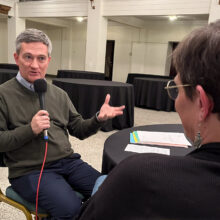
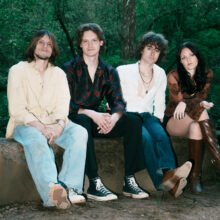
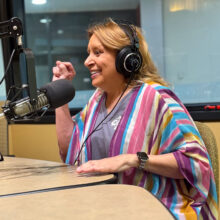
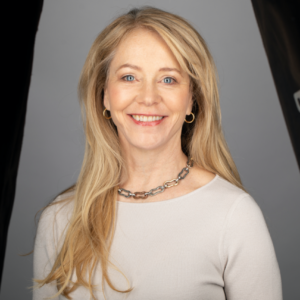
This week, we start with Jill Blocker and Keith Roysdon, two Hoosier journalists turned authors who are traveling back to Muncie for the release of their new novels. We’ll dive into the Dance Data Project with Elizabeth “Liza” Yntema and Nancy Dobbs Owen—and ask how they’re using numbers to effect change in that industry. We’ll also hear from Hall-of-Fame fiddler Michael Cleveland ahead of his group’s performance at the Muncie Three Trails Music Series (July 11), and we’ll go Behind the Song with local musicians Spenser and Kat Nightingale!