S03 E04 – We Reflect on the Banks of the Tallahatchie
Listen

Audio Transcript
Announcer (00:00):
Support for Pop of Culture comes from Stallings Wealth Management, Daniel Stallings Financial Advisor, securities and advisory services offered through Cetera Advisors LLC. Member FINRA/SIPC, a broker/dealer and registered investment advisor. Cetera is under separate ownership from any other named entity.
Michelle Kinsey (00:16):
This week on Pop of Culture, Art About Change, and Changing Art. We'll bring you an Exhibition about the Civil Rights Movement, and a longtime artist who talks about how to dive into the art world.
Jeffrey Gibson (00:30):
If you close your studio, no one's going to come and ask you to open it back up again, necessarily.
Michelle Kinsey (00:35):
Also, the Tiny Desk Contest is back for 2026, and will get tips from the judges themselves. And a balloon artist, very brave of them to show up at Pop. That's coming up.
Luke Jones (00:50):
Support for Pop of Culture comes from Stallings Wealth Management, the Innovation Connector. And from you. With state and federal money eliminated, you are the difference in keeping local programming on the air at IPR. Become a member today at Indianapublicradio.org.
Michelle Kinsey (01:13):
From IPR, this is Pop of Culture. I'm Michelle Kinsey.
Kara DuQuette (01:18):
And I'm Kara Duquette. We want to be upfront that our first story is pretty heavy, and you'll hear descriptions of violence, including sounds of gunshots. In August of 1955, a 14-year-old boy arrived at his relative's house in Mississippi. Less than a week later, he was lynched and thrown into the Tallahatchie River.
(01:39):
There's an exhibition at Minnetrista Museum & Gardens that tells the story of Emmett Till and his mother, Mamie Till-Mobley, and how they changed the civil rights movement.
Michelle Kinsey (01:49):
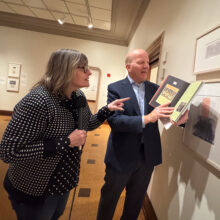
Our producer, Luke Jones and I took a tour before it was open to the public. Just outside, we met up with Sebastian Encina.
Sebastian Encina (01:57):
My title is Director of Curation and Exhibition. My role here is to find exhibitions to put on for our audiences, and work on all the content and scheduling all those exhibitions to be here.
Michelle Kinsey (02:12):
We asked him how Minnetrista chooses their exhibitions.
Sebastian Encina (02:15):
First and foremost, is the theme appropriate for Minnetrista.
Michelle Kinsey (02:18):
Gotcha.
Sebastian Encina (02:19):
So, if there might be a traveling exhibition of Rembrandts, that's fantastic. It has nothing to do with Minnetrista or us in Muncie. That's David Owsley, Newfield, something like that. So first and foremost, does it make sense here? Is our community going to react to it in a positive way? Secondly, then we look at the space, we look at the costs. We definitely would like some exhibitions that are just a little out of our price range. So we wanted to make sure of that, and just make sure that we are the right facility for some of these spaces as well. That we can take care of it, can properly show those works of art or the history or that. And then the space. There are a lot of exhibitions out there that are 5,000, 10,000 square feet-
Michelle Kinsey (03:00):
Yeah.
Sebastian Encina (03:00):
... and this is a 3,000 square-foot space.
Michelle Kinsey (03:03):
Okay.
Sebastian Encina (03:03):
So we can't fit those in here.
Michelle Kinsey (03:06):
Why did you feel like this exhibit was right for our community? Because you said that's very important to see. Is it going to fit? Is it going to be relevant to the community and what are they going to get out of it? Why did you feel this one was important?
Sebastian Encina (03:22):
This is so incredibly important, and I love that you asked this question because one of the things that I love about Minnetrista and having been here just over two years is how much community-focused it is. There are so many museums out there that still have that old mindset of, "We're going to put the art, and people are going to come to us. And, you should like it just because we said you should like it." Whereas, Minnetrista is really about that community involvement and a community buy-in. And, with an exhibition like this, it's really important to tell some of these stories that are just too important to forget because so many of the stories that are part of this exhibition are still relevant today. They're still part of our community, they're still being felt, and they're still having an impact on not everybody, but a good percentage of our community.
(04:15):
And, since Muncie is such a diverse community with all sorts of backgrounds, this is a story that's still incredibly important to so many people. And this is something that Minnetrista from the get-go, from the time that I arrived here, was really important for us to tell. And we had to share this story with our community.
Exhibit audio (04:39):
Mississippi native, Wynward Gandy, describes growing up in Mississippi in the 1960s.
(04:43):
Earliest memory I have is, our parents and friends and neighbors teaching us about what we should do and what we shouldn't do. We had to make sure that we behaved in certain ways and there was a different world, Black and white world. If we walked down the sidewalk and a white men was coming toward us, we had to look down on the ground. And if a white woman walked down our same sidewalks, we have to walk out in the street, couldn't walk down the same sidewalk.
Michelle Kinsey (05:13):
So right now we're standing in front of magazine content, different accounts of Emmett's murder, and then there's a warning for sensitive content. So you see Jet Magazine, Look Magazine, Newsweek, Life, a lot of other magazines, and then you can choose whether or not you lift up magazine content that included graphic images.
Luke Jones (05:46):
Well, and Jet Magazine, which was primarily read by Black people, had the photo. And then Look Magazine, here it says the future-
Michelle Kinsey (05:56):
The killer's story.
Luke Jones (05:57):
The killer's story.
Michelle Kinsey (05:58):
Right. And so, Jet Magazine actually published a photo of Emmett's battered face, which I'm going to be very honest, I have not seen, and I don't know if I can lift that up, to be honest with you. So I'm going to sit with that for a minute.
Luke Jones (06:28):
Do you want to look at the other one?
Michelle Kinsey (06:29):
Yeah. So this is from Look Magazine, The Shocking Story of Approved Killing in Mississippi.
Luke Jones (06:43):
I don't think I can read most of this out loud.
Michelle Kinsey (06:47):
No, we can't. We cannot. Because it's horrible.
Luke Jones (06:49):
And it's not even the real version, and it's still-
Michelle Kinsey (06:54):
Awful.
Luke Jones (06:54):
... bad.
Michelle Kinsey (06:57):
"Their intention was to just whip him and scare some sense into him." That's a quote, yep. And I know that so many exhibits, when you think of exhibits, you think of light, fun. "Here, we're going to go to this exhibit." This is not that. This centers around a horrific part of our history as a country. Why is that important, and how do you deliver it in such a way that it's... How do you encourage people to come and put themselves in that position for a very good reason?
Sebastian Encina (07:44):
And, that's very important. I want everybody to know you're not going to come here and come out feeling flowery, and birds and bees, and it's all really beautiful. It is a very difficult portion of our history, but it's only just 70, 71 years ago that this happened. So again, it's not ancient history, it's still current history. People who were involved in this are still alive. They're still out there in Chicago or Mississippi. I want people to recognize that when you come here to this exhibition, it's not going to be, "I'm going to walk out feeling awful and tired." There is going to be some of that, but there is hope.
(08:25):
The part of this that's really important is, out of tragedy, Mamie Till-Mobley was able to inspire change, and that change is still happening. So what I'm hoping is that when people leave this exhibition, they are going to feel hopeful. History is not pretty. There is a lot of ugly stuff in history. And if we just ignore that just to focus on the good things, we risk so much for our future, we risk so much for our present. And that is, I will say that's cowardly, and I think that's incredibly dangerous. And, we need to be aware of everything that has happened to get us to where we are. The norms that we have, the laws that we have, the policies that we have, they came from somewhere. And that's usually an ugly past that made the change to be where we are. It's not perfect, there's a lot that we can do, but it's better to go one mile than than wreck it because we haven't gone 100 miles yet.
(09:23):
So let's start off a little bit. Let's learn about this history. Let's not forget it. Through it all, whatever people's feelings are about race relations or about certain demographics, this is a 14-year-old child.
Michelle Kinsey (09:38):
That's right.
Sebastian Encina (09:38):
This is a kid.
Exhibit audio (09:40):
Mamie's Ripple for Justice show begins in one minute.
Michelle Kinsey (09:43):
We are now standing in an area that at first seems picturesque, right Luke? It's video of the Tallahatchie River in Mississippi, and we're surrounded on three sides by this beautiful view. And then you look ahead and you realize that this is where Emmett's body was taken and dumped in 1955. And then the sign that was installed in 2018. 2018, by the way, that was vandalized a little more than a month after it was installed. Bullets are shot.
Exhibit audio (10:42):
Our signs and ones like them have been stolen, thrown in the river, replaced, shot, replaced again, and shot again. Every time they tear one down, we're going to put one back up. We're never going to forget init.
Sebastian Encina (10:55):
This is full immersion into that story, and it doesn't just stop in 1955, it continues into 1960s, it continues to 2000, to the 2020s. And so it gives people a greater sense of the entire story and how this impacted so many people.
Exhibit audio (11:15):
History is history. Emmett Till's story's in the past, but what matters now, what are you going to do?
(11:28):
What are you going to do?
Kara DuQuette (11:32):
Emmett Till and Mamie Till-Mobley. Let the World See is open at Minnetrista Museum & Gardens through April 12th. It's recommended for visitors age 10 and up.
(11:52):
This is Pop of Culture. I'm Michelle Kinsey.
(11:55):
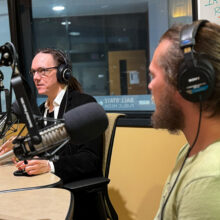
And I'm Kara Duquette. We're coming to you from Audio 1 in the IPR studios. But for the next few minutes, we're going to take a seat at NPR's Tiny Desk.
Michelle Kinsey (12:05):
The 2026 Tiny Desk Contest is open, and here to tell us all about it to judges, to experts, to people perfectly, perfectly familiar, very familiar with this Contest, Robin Hilton and Anamaria Sayre. Thank you so much for joining us, I will try not to Fangirl too hard.
Anamaria Sayre (12:30):
An introduction, Robin, are we experts, I don't know. I feel that.
Robin Hilton (12:36):
I don't know. I wonder that every day.
Anamaria Sayre (12:38):
Robin and I are just-
Robin Hilton (12:39):
But thank you for having us, Michelle.
Anamaria Sayre (12:40):
... too clueless.
Michelle Kinsey (12:42):
Yeah, uh-uh. No.
Robin Hilton (12:42):
I wonder every day, how did I get this job?
Michelle Kinsey (12:47):
I know, lucky you, right?
Anamaria Sayre (12:48):
Yeah, seriously.
Robin Hilton (12:50):
Someday they're going to find out.
Michelle Kinsey (12:53):
Well, I can't imagine that there are people out there who are not familiar with Tiny Desk or the Tiny Desk Contest, but go ahead and fill us in on what the Contest is.
Robin Hilton (13:06):
Go ahead, Ana.
Anamaria Sayre (13:09):
Okay, the difficult answer. The Contest is basically just an opportunity for any unsigned independent artists across the United States to enter a piece of their art for the chance to play their very own Tiny Desk.
Michelle Kinsey (13:25):
Which is awesome. And so this has been going on, how long? When did the Contest start?
Robin Hilton (13:31):
I think around 2014, so a little over a decade ago.
Michelle Kinsey (13:36):
Yeah. That's a lot of submissions, right?
Robin Hilton (13:39):
Well, yeah. I think we got 7,500 last year, roughly 7,500 entries. And every year we've set a new record for the number of entries every year. So yeah, many, many, many thousands of entries.
Michelle Kinsey (13:56):
Wow. What is the process like weeding through all of those entries?
Robin Hilton (14:02):
We dub them to VHS tapes, and then we throw them down a flight of stairs, and whatever tape is on the top step. No, it's-
Anamaria Sayre (14:13):
We all sit in a room, and Robin makes a couple stupid jokes like that, and we kick him out and we actually get the work done.
Robin Hilton (14:20):
No, it's an army of people on the team who literally, we watch all of the entries. And, we start winnowing them down. The first pass is just looking for things like, do they meet the minimum requirements? Are they at least 18 years old? Are they from the US? Is there a desk in the video somewhere? You have to play behind a desk. Things like that. And then we take another pass, and we just start winnowing it down. And, over the course of several weeks, we'll get to the point where there's maybe a couple dozen that we're all circling, and then within a few weeks after that, then we arrive at a winner.
Michelle Kinsey (15:02):
So each of you, Robin and Anna Maria, talk a little bit about what makes an act, a band, stand out to you as you are watching the videos.
Anamaria Sayre (15:14):
It's so heady, and feely, and arty, but really it's just the thing that I think makes me feel something. And, that can mean that it's something really impressive musically, or has a really interesting arrangement, or incorporates cool instruments. Or, it's something that it's just a beautiful, cutting, emotional voice in a guitar that I can't stop thinking about. And that's really what it's about, is finding something that feels unique, and only that person or that band who's doing it could really be doing it in the way that they're doing it, and that more people need to hear it.
Michelle Kinsey (15:50):
Mm hm.
Robin Hilton (15:50):
It's a gut reaction really more than... It's not like we're looking for a bunch of boxes that we're trying to check. It's really just a gut reaction, an emotional reaction, like Anamaria said. I'm looking for something that will make me stop what I'm doing and pay attention. Because I'll listen first blindly. I won't watch the video. If it grabs me, then I'll start watching. And if I find I just can't stop watching, if I can't look away, then there's something there.
Michelle Kinsey (16:23):
Robin, give me an example of the bands that come to mind when you think about the ones that have grabbed you and you can't get away from.
Robin Hilton (16:33):
Well, I think of someone like Tank and the Bangas. Their entry, I remember that was one year where we all knew almost immediately when we saw it. I remember with their entry, I was probably 10 seconds into it and I thought, "This may be the one." It was just instantly grabby. But then we get artists like... Last year there was one who didn't win, but I really fell for an artist named Eph See, E-P-H S-E-E, Eph See, who entered this really incredible song called Malachi the Uber Driver, and I was listening, not watching. And I was maybe a minute into it or so and I thought, "Wait a minute, what are they saying?" And I started paying attention more to the story that they're telling in the song. And I went back and listened again and within like 30 seconds, I was sobbing, it was so beautiful.
Michelle Kinsey (17:23):
Oh, wow.
Robin Hilton (17:24):
Yeah. They got very far in the process.
Michelle Kinsey (17:26):
Wow. Anamaria, what about you?
Anamaria Sayre (17:31):
Oh my goodness. I don't know. This is my first year officially judging in this sense what I've done in previous years. I know, big year. What I've done in previous years is done like that initial filtering work, which I actually really enjoy also. You come across a lot of... Robin, you probably miss these-
Robin Hilton (17:52):
A lot of them.
Anamaria Sayre (17:52):
... Because they never make it. They never make it to your desk, but wow, there's some really fun ones. You can-
Robin Hilton (17:58):
It's funny too. Yeah. Some of the best ones, they're never going to win, but they are such a joy to watch. Yeah.
Michelle Kinsey (18:06):
They're passed around among everybody like, "Yeah, we got to do this one."
Anamaria Sayre (18:10):
No, I was going to say, my family always knows when it's Tiny Desk Contest judging time because all of a sudden I'm just sending all these links. I'm like, "You guys, you have to see this." So yeah, it's been a whole spread of them that I now I can't remember because it was a beautiful, joyous moment of seeing them, and then they went away.
Michelle Kinsey (18:30):
Yeah. So while we're encouraging musicians to apply for the Contest, talk a little bit about what they get out of a win at the Tiny Desk Contest.
Anamaria Sayre (18:44):
I think most importantly, they get to play their very own actual Tiny Desk concert.
Michelle Kinsey (18:49):
You can really stop right there. Isn't that enough? My goodness, that's fantastic.
Anamaria Sayre (18:53):
And I think that kind of is enough. It's not a special off to the side one, it's just a normal, the same one that Justin Timberlake did, and that Usher did, and that Bad Bunny did. It's a Tiny Desk. And then we take them on a 10 city tour, and they also get paired up with a mentor to help them navigate where they're at in their career, and where they want to go, and I think that's a pretty key part of it too.
Michelle Kinsey (19:18):
Oh, nice. That's very cool. That's very cool. I think one of the ones that I remember the most recently, like their big Tiny Desk moment, was Phil Harmonic. That was an amazing... I mean, wow. And it translated really well to a national audience. You would not know that this band had not been doing this at a very high level for a long time.
Robin Hilton (19:42):
Yeah. That's true of a lot of the artists. They're unsigned, but a lot of them have been working really hard at this for a long time.
Michelle Kinsey (19:49):
Yeah, absolutely. So, what do acts need to do in order to apply for the contest? I know there's a quiz now on the website to see if you're eligible.
Anamaria Sayre (20:04):
Yes. So you can walk through that quiz if you want just to make sure that it makes sense for you to enter. But for the most part, the qualifications are pretty simple, in terms of what they need to have. We want them for sure to be unsigned. Unfortunately, we don't take international entries, so they do have to be within the United States. But otherwise, yeah, it's just submitting one original song. Have to include a desk in that video somewhere. But, it should be pretty simple, hopefully.
Robin Hilton (20:38):
And don't worry about whether or not it's super professionally shot or anything, or whether you've got a big backing band. It can be you by yourself with just your guitar or whatever instrument you play in your bedroom, and you can shoot it on your phone.
Michelle Kinsey (20:53):
Oh, that's awesome. Well, thank you both so much for taking the time to talk to us about the Tiny Desk Contest. And I'm so jealous of your job after it closes on February 9th when you get to sort through, what, 8,000 this time?
Robin Hilton (21:09):
Maybe.
Michelle Kinsey (21:10):
9,000 videos?
Robin Hilton (21:12):
We'll see.
Michelle Kinsey (21:13):
Well, best of luck finding the new winner of Tiny Desk Contest. Thank you so much again.
Anamaria Sayre (21:19):
Thank you.
Robin Hilton (21:20):
Thank you, Michelle.
Michelle Kinsey (21:21):
I'm Michelle Kinsey.
Kara DuQuette (21:22):
And I'm Kara Duquette. Whether you work at a tiny desk or a warehouse, you can bring Pop of Culture with you. Pick up the Pop of Culture podcast at Indianapublicradio.org on YouTube or wherever you get your podcasts.
Michelle Kinsey (21:48):
Jeffrey Gibson is a Choctaw and Cherokee artist known for his bold use of color, pattern, and materials. His work blends Indigenous history, contemporary culture, and personal identity to create art that's both joyful and deeply thoughtful. Jeffrey Gibson will be the featured Arts Alive speaker at Ball State University this February, but first he's here to talk with us on Pop of Culture. Jeffrey, thank you so much for joining us.
Jeffrey Gibson (22:17):
Absolutely, thank you for having me.
Michelle Kinsey (22:19):
So this college campus thing, is this something you do on the regular, visit college campuses and talk about your art?
Jeffrey Gibson (22:27):
I used to do a lot more of it. I have not done it in a couple of years, really. I've also taught for a very long time, and I also took about almost a three-year break.
Michelle Kinsey (22:37):
Ah, from speaking engagements as a whole?
Jeffrey Gibson (22:41):
Mainly from teaching. But yeah, speaking engagements, it's been very busy the past couple of years, so I really slowed down on speaking.
Michelle Kinsey (22:48):
So, for the Ball State event, what are you looking forward to sharing with the Ball State audience?
Jeffrey Gibson (22:57):
I actually really like young people and college-aged people. I'm turning 54 in March, and so I really feel the generational divide, and I know I experience the world differently. And I actually, really enjoy hearing what they're thinking, what they're paying attention to, and what they're making.
Michelle Kinsey (23:18):
Ah, interesting. So you like the give and take, so the Q&A portion will probably be the most interesting part to you?
Jeffrey Gibson (23:26):
Yeah. I think especially, I'm a painter and a sculptor, I work with my hands. And I think I'm not someone who uses AI, I'm not somebody who uses a lot of digital technology. And so, thinking about how they're thinking about making, how they're thinking about art and the impact of art experiences. The art world's very different now than it was when I was in my 20s.
Michelle Kinsey (23:48):
So, as an artist these days, with all of these different vehicles or ways to get your art out there, how do you break through the noise?
Jeffrey Gibson (23:59):
I personally continue to advise people. One, I think being an artist is extremely difficult. It's a really hard thing to do. No one... And I tell people this all the time, if you close your studio, no one's going to come and ask you to open it back up again, necessarily. You really have to push it every day by your choice that you're going to get up and make something. And unfortunately, it can't be dependent on an audience, it can't be dependent on a buyer. It is one of those things which you really have to believe that what you're doing is important and valuable, and worth your time and effort.
Michelle Kinsey (24:37):
Ah. So talk to me about the early years. When did you realize that this was going to be your path, no matter how difficult?
Jeffrey Gibson (24:48):
Any day now, any day. No, but it's kind of true. I think I spent so many years, and I'm talking when I finished high school, I did not know... I knew I wanted to be an artist. I didn't know how to say that out loud. So I ended up studying anthropology, archeology, and my third major was painting. And, I was kicked out of the University of Maryland. I was asked to not return because I wasn't going to class. And I ended up going to a community college. And it was there that I really felt the freedom to just pursue what I wanted to. And I was in the studios all the time, became friends with all of my studio art faculty, and then from there, transferred to the Art Institute of Chicago. And that was the beginning of this independence of making and being in a community of other makers.
(25:45):
Then you go to New York, and you hash it out every single day. And I was broke for a number of years, and nearly filed bankruptcy, and worked 70, 80 hours a week. And, you're so in it that it's difficult to see yourself from any kind of third perspective. So then any small win, an exhibition, a small sale here and there, somebody who believes in you, for me, it was always enough to continue. And there's been numerous times when I was almost going to walk away, and I really couldn't find satisfaction doing anything else. And I would find myself making again, painting again, drawing again, and imagining, and then I would come back to it. And it was really in 2012, I imagined this was going to be my last exhibition I was going to do. And, it was at that show that two commercial galleries approached me, and I got my first Critic's Pick in New York City. And I was 40 at the time. So, from there, I still felt like you're running a marathon.
(26:58):
I would say probably the pinnacle, of course, is being in Venice and representing the US. I couldn't really deny that, "Okay, I've made it. I finished the first leg of the marathon."
Michelle Kinsey (27:14):
Let's talk about Venice, the Venice Biennale in 2024. You were the first Indigenous artist to represent the United States. Just that sentence, let's just let that hang there for a minute. That's huge.
Jeffrey Gibson (27:28):
Yeah.
Michelle Kinsey (27:28):
Tell me how that felt and how it felt to be there representing the United States.
Jeffrey Gibson (27:35):
It felt, to be quite honest, it's overwhelming. The excitement of it creeps in bits and pieces, but there's so much work to do, and it's on such a public international stage. The pressure is, for me at least, felt really high. Really high. And it was a large team that was assisting me to complete everything and to get the installation up. Really, the satisfaction of that happened very recently after it had come down, after the exhibition had traveled to the Broad. We did a ton of press. I did a lot of public speaking specific to the Biennale. But it's like you're building something so intently that you don't have any opportunity to look up. And so it's really only in retrospect. And especially after the catalog came out, which is a beautiful catalog. And we worked with an independent designer named Dylan Fracareta. And he did an incredible job of really assembling a yearbook that really walked through every part of that installation and the community that helped make it happen. That was really a moment where I can absorb how huge it was, how grand of an experience it was.
Michelle Kinsey (29:01):
Yeah. So talk a little bit about the preparation of that, and maybe that goes into every time you're putting together an installation or an exhibition. What's that process like from idea to when you finally say, "Okay, this is ready?"
Jeffrey Gibson (29:19):
Yeah. Well, I originally had a first iteration of a proposal that I went to Venice, I traveled there to look at the pavilion, to walk through it. And I knew in the first five minutes of being in the building that my proposal was wrong. It would not work.
Michelle Kinsey (29:36):
Wow.
Jeffrey Gibson (29:37):
It didn't make any sense to have it there. And so, I came back to my studio, and I sat down, and I also realized this wasn't an exhibition that was happening in the US, this was an exhibition happening for an international audience. And I grew up living abroad. Part of my life was abroad in Germany and Korea, and I went to school in the UK. And so I think this understanding of my subject matter from an international perspective was something that really pushed me to rethink what I wanted to show. And I decided to look back at my history of work the previous decade. What are the pieces that I had made that I felt really engaged audiences in a way that I wanted to engage an audience at the Biennale?
(30:26):
The challenge was really to cohere it into an exhibition experience for people. But also, something that I felt was, for many people, an introduction to my work. And also something, I think being Native American, something that I could feel really proud of to have Native American people here be able to see through images or through video clips, and understand that I was really there on behalf of people other than just myself.
Michelle Kinsey (31:00):
Absolutely. And I love that because then I think your art resonates with more people. It opens it up to more people.
Jeffrey Gibson (31:07):
Yeah. Yeah, I think whenever you're talking about a very specific culture, people can become afraid to speak about it for fear of getting it wrong, or for fear of offending somebody. That's never anything that I've either been afraid of or have I tried to discourage in people. I'm much more of a fan of ask questions, talk to people about it, share your experiences.
Michelle Kinsey (31:33):
So, you are a firm believer, and I know I've read it before in some of your interviews, that you really believe art can bring people together.
Jeffrey Gibson (31:42):
Oh, absolutely. Absolutely. I think art, there was a comment made sometime during, I think it was during COVID, about imagining the world without art having been a part of our histories. And that to me is just, we're including architecture, and music, and sculpture, and painting, and illustration, and writing, and storytelling. And when you put it in that perspective, it feels like something which is so inherent to being human.
Michelle Kinsey (32:09):
Yes. Oh, yes, absolutely. Very well put. So that brings me to this question. How are you feeling about the state of the arts these days? It seems every day there's another cut to some sort of arts of funding here, there, and everywhere. How do you feel as an artist seeing this unfold?
Jeffrey Gibson (32:33):
Truthfully, I think about why somebody would want to discourage expression. I think that I wish I could impart to those people who maybe don't understand its importance or its impact, that it really is such a rare situation that is one of acceptance and allowance. And I understand it can feel intimidating. I remember being a young artist in New York City and going to openings and feeling like you were trying to introduce yourself to art communities. It is so intimidating. You feel like there's this world that everyone is in on the secret and you don't have a clue.
(33:19):
But, I will say that once you start asking questions, and really the price of admission is just choosing to engage. And once you start engaging, people are very friendly, and very open to other people coming in with a different background. I've never experienced another community like it. And, I wish that for anybody, to be quite honest. I wish everybody could experience that.
Michelle Kinsey (33:50):
Ditto. One final question. Jeffrey, what's bringing you joy in the studio these days? What are you working on?
Jeffrey Gibson (33:58):
It's a challenging time, I think, to try to think about what it means to make something, and whether we make something that illustrates a reflection of the times we're living in, or do we think about bigger issues, bigger topics? For me, I'm really enjoying thinking about time, and how time functions in terms of how we mark time, how we imagine the limits of time, or for some people, the limitlessness of time, and how it relates to the environment. And when I say environment, I mean everything from the local environment, to the global environment, to the universal environment. I think there's so many things that we don't understand. And for me, there's something very comfortable about feeling so small in the face of this immense universe. There's something very comforting about that for me right now.
Michelle Kinsey (35:00):
Jeffrey, thank you so much for taking time to talk with me today. Really looking forward to your visit in February to Ball State University.
Jeffrey Gibson (35:08):
Great. I look forward to it. Thank you.
Michelle Kinsey (35:10):
Thank you.
(35:11):
Jeffrey Gibson will speak at Pruis Hall, February 4th. The event is open to the public.
Kara DuQuette (35:33):
We've spoken to artists working in all kinds of mediums.
Michelle Kinsey (35:37):
Absolutely. Sculpture, iron, huge pieces of public art. What else?
Kara DuQuette (35:44):
Rug hooking.
Michelle Kinsey (35:45):
Rug hooking, that's right.
Kara DuQuette (35:46):
Silk painting.
Michelle Kinsey (35:47):
Yes. But this time, for the first time, we've asked a balloon artist, "What are you working on?"
Maya Doss (35:53):
Today on WAYWO?, I have Samantha Rowe, a balloon artist who owns Blank Space Balloon Art in Modoc, Indiana. What are you working on, Samantha?
Samantha Rowe (36:02):
Oh, great. Thanks for having me, I'm so excited to be here.
Maya Doss (36:04):
Of course.
Samantha Rowe (36:06):
So right now, we are planning graduation open houses for people. I've got some Valentine's Day specials.
Maya Doss (36:13):
So sweet.
Samantha Rowe (36:15):
So, I made a bouquet out of heart balloons. If you can imagine flowers in a bouquet, but switch the flowers out with heart balloons?
Maya Doss (36:24):
That's adorable.
Samantha Rowe (36:26):
I added little butterflies in one of them, and they're wrapped in floral paper. We're also doing some Senior Night options for people. So it's just a small little stack of balloons on top of each other with a basketball, for example. I have the cutest little foil number balloons that go on the basketballs, just to add a little pop to the Senior Night tables. Virtually anything that anybody asks me to do, I am 100% up for the challenge of making new things and creating art out of balloons.
Maya Doss (36:58):
That's awesome to hear that you're willing to push yourself and expand new horizons with balloon art.
Samantha Rowe (37:03):
Yes.
Maya Doss (37:05):
Balloon sculpture is your specialty. What is your favorite sculpture you've ever made?
Samantha Rowe (37:09):
Oh, my goodness. So, the hair salon that I go to, their name is Deep Roots Salon. And my mom was like, "It would be really cool if you figured out how to make a tree out of balloons."
Maya Doss (37:19):
Oo.
Samantha Rowe (37:20):
And I was like, "I don't know if I can do that, but we'll see." So I did. So she recently celebrated a big milestone in her business. And so I made a tree out of balloons. I would say that was my first time actually sculpting something. And then from there, it kind of took off. So, since that point, I've made a palm tree. I made a giant diamond ring-
Maya Doss (37:42):
Wow.
Samantha Rowe (37:42):
... which was one of my favorites. The biggest one that we just wrapped up last November was an Eiffel Tower, with a water fountain in front of the Eiffel Tower, and then we had street lights that were around the room. It was incredible.
Maya Doss (37:59):
Was that a project that made you feel really proud of being a balloon artist?
Samantha Rowe (38:03):
Yes. It was something that challenged me. It was something when the organization came to me and asked if I could do it, I was like, "Yes, I will figure it out." What started small in my head ended up being about 15 feet tall.
Maya Doss (38:21):
Wow. It was really the Eiffel Tower.
Samantha Rowe (38:23):
Yes. It was much bigger than I imagined it would be, but it also needed to fill the space in the room, so I was very happy with how it turned out.
Maya Doss (38:32):
That's amazing. What would you say were some challenges you faced while trying to do something so large?
Samantha Rowe (38:37):
I think, figuring out the framework is maybe not my strong suit. So, I have family that help me. So my dad helps me transport. Especially with the Eiffel Tower, I took my idea to my husband, and he can basically weld anything that I want. So he was like, "Okay, let me think about this." And he built my frame bigger than I needed it to be, but it ended up working out because then I could just wrap the frame with the balloons. And once I got going and figured out my method, then it's super quick in my mind, for somebody that works with balloons all the time. Now, somebody that didn't work with balloons, they would be like, "No, thank you." But it's an art, definitely, and it's a learning curve because you have to have the right balloons, and you have to have them inflated to the right amount. So if they overinflate, they'll pop. So you have to under-inflate everything to give room for expansion. So I've definitely learned a lot of things along the way that I did not know before.
Maya Doss (39:37):
So when it comes to installing such a large sculpture, do you bring in the base and then you build it there, or do you transport it with the balloons on it?
Samantha Rowe (39:46):
Kind of both. So, if I can transport everything made ahead of time, I try to do that as much as possible, just because it saves me time on site. So the Eiffel Tower, for example, I had four separate legs, and then I had a top. So I had five pieces. So I had my top completely ready to go. I had my legs maybe 75% of the way prepped. So all I had to do when I got there was assemble, and then I was able to finish it once it was assembled.
Maya Doss (40:14):
That's really cool. It's something that I've really never heard about before. So, when I saw your website and saw the huge Eiffel Tower, I was like, "Wow, she means business."
Samantha Rowe (40:24):
Yes. I don't do anything halfway. I like to go above and beyond for people, because I don't want them to be disappointed. I like setting that up and then going and getting them and being like, "Okay, I'm done. I'm ready for you to see it," because I want to step back and watch their reaction to what I've promised.
Maya Doss (40:45):
That's really cool. I've also seen that you do things like arches, tabletops, and you mentioned your Senior stacks. How do you decide how to arrange the balloons, what colors to use?
Samantha Rowe (40:54):
I work with the customer, first of all, and I ask them, "What are your preferences? Do you have color choices? Do you have ideas that you've liked?" and I have them send me those ideas. Some people will say, "Here's what I've seen," and I'll mock something up so they have some sort of visual before they see the final product. Other people will say, "You know what? I don't care. Here's the theme, I trust you, do what you want with it. "
Maya Doss (41:19):
I bet that's fun.
Samantha Rowe (41:20):
I love those, because then I get to play. And I'm blessed, I work out of my home, so I'm very blessed that we have a full basement that has turned into my studio.
Maya Doss (41:30):
Oh, nice.
Samantha Rowe (41:30):
So I can just go downstairs anytime, and I like to call it therapy, because it has kind of turned into therapy. But I just play with balloons and I figure things out. It took me a couple of days to figure out how to do the balloon fountain. So that was trial and error a few different times. But I'm fortunate enough that I can do that and not mess it up the first time.
Maya Doss (41:51):
What led you to making with balloons in the first place, I'm curious?
Samantha Rowe (41:55):
Oh, my goodness. So it was kind of by accident. I have one daughter, and I always have gone over the top for her birthdays. And so she was turning 16. We're big Taylor Swift fans in our house, so we did an Eras Tour birthday party.
Maya Doss (42:09):
Oh, nice.
Samantha Rowe (42:10):
And I got this wild idea. I was like, "Let's make a balloon arch." Never done it before. Ordered the cheapest stuff. It took me three days to build half an arch, and I was like, "This is wild. Why did I decide to do this?" Well, then people came over and they loved it.
Maya Doss (42:27):
I'm sure.
Samantha Rowe (42:27):
And then my neighbor was like, "Hey, that's amazing. If I order the supplies, will you do my graduation open house?" because she was graduating that year. And I was like, "Yeah, no problem." So, we did that. I posted a picture on my Facebook, and it just went wild from there. People started messaging me. They were like, "Hey, we don't like working with balloons. We would seriously pay you to do this for us." And I was like, "Okay, could I do this as a thing, as a side hustle?" And it's expanded from there. I've been able to meet so many people, been able to create so many things, bring so much happiness, and really up people's photos when they're taking them, and they fall in love with their backdrops and those memories. It just has spiraled.
Maya Doss (43:15):
I think that's really touching, the way you've made it kind of a community support as well. So what I'm hearing is balloons are your love language.
Samantha Rowe (43:23):
Kind of, yes.
Maya Doss (43:25):
What's a balloon sculpture you would love to build in the future? Do you have a dream sculpture you'd like to make?
Samantha Rowe (43:32):
A rainbow.
Maya Doss (43:33):
Oh, that's so cute. I would love to see that.
Samantha Rowe (43:37):
I keep seeing them. That's something I have been wanting to try to make. A birthday cake. A giant birthday cake is also something that I want to try to make.
Maya Doss (43:46):
Would you make it with a slice out of it, or would you make it like a decora?
Samantha Rowe (43:50):
I would make a decor, like a three-tiered.
Maya Doss (43:52):
Wow, yes.
Samantha Rowe (43:53):
A three-tiered birthday cake, maybe even with a hole in the middle for somebody to jump out of.
Maya Doss (43:58):
That would be fun.
Samantha Rowe (43:59):
Yes. Yes.
Kara DuQuette (44:00):
And it has a little top.
Samantha Rowe (44:01):
Yes.
Maya Doss (44:02):
Where could listeners find your balloon art if they wanted to check it out themselves?
Samantha Rowe (44:05):
So I am on Facebook. If you go to Facebook and you search for Blank Space Balloon Art, my business page should pop up. I also have an email that's blankspaceballoonart@gmail.com.
Maya Doss (44:18):
Thank you so much. I've been so happy to have you pop up on the show today.
Samantha Rowe (44:22):
Thank you so much for having me, this is so exciting.
Michelle Kinsey (44:26):
It's that time, Kara.
Kara DuQuette (44:27):
Oh, yeah.
Michelle Kinsey (44:28):
Time for the arts calendar. You know what? You don't have to go all the way to Shipshewana for arts and crafts and things. Oh no, no. Shipshewana on the Road stops by the Delaware County Fairgrounds Saturday and Sunday, January 31st and February 1st. Check out crafts, gifts, and food from 9:00 AM to 5:00 PM Saturday, and 10:00 AM to 4:00 PM on Sunday.
Kara DuQuette (44:51):
Nice.
Michelle Kinsey (44:52):
And this one is going to be so apropos.
Kara DuQuette (44:55):
It is indeed.
Michelle Kinsey (44:57):
The Meltdown Winter Ice Festival is on this weekend, January 30th through 31st in Richmond. The City Center will come alive with more than 20,000 pounds of frozen fun for all ages, with one-of-a-kind sculptures. Watch an ice cream eating contest. Cheer on your favorite team during the meltdown throw down ice carving contest, and finish the evening on Saturday with fireworks.
Kara DuQuette (45:24):
I love fireworks.
Michelle Kinsey (45:25):
Yes. I'm cold. I just had a shiver up my spine. But in a good way, because that sounds like a fun event.
Kara DuQuette (45:29):
Fire and ice.
Michelle Kinsey (45:30):
That's right. Shining Star: A Tribute to Earth, Wind & Fire, will perform Saturday, January 31st at the Gas City Performing Arts Center. It's going to be a boogie wonderland. Do you want to one Kara?
Kara DuQuette (45:42):
Yeah.
Michelle Kinsey (45:42):
And The Loving Spoonful will perform Saturday, January 31st, at the Paramount Theater in Anderson. Not a cover band this time, the real deal.
Kara DuQuette (45:51):
The Muncie Children's Museum is presenting the show, Reptiles Around the World, at 10:00 AM, Saturday, January 31st. Scales & Tails will bring two reptiles from each continent for you to meet. There will also be fun facts, games, and more.
Michelle Kinsey (46:10):
I love me some reptiles. That sounds great. The Tom Shaw Memorial Concert featuring Ball State Jazz Ensembles will be February 3rd at Sursa Performance Hall at Ball State. The concert begins at 7:30 PM, and will include standard jazz favorites and original compositions in honor of BSU alum and trumpet player, Tom Shaw.
Kara DuQuette (46:31):
And don't forget that February 5th is First Thursday in Downtown Muncie from 5:00 to 8:00 PM. Check out Maker's Market, and hear original music at the Songwriter Sessions. You know a little bit about that.
Michelle Kinsey (46:45):
A few things, yeah.
Kara DuQuette (46:46):
More at downtownmuncie.org.
Michelle Kinsey (46:49):
If you have an event, let us know at Indianapublicradio.org/contact then click Pop of Culture.
Luke Jones (47:12):
Support for Pop of Culture comes from Stallings Wealth Management, the innovation connector, and from you. With state and federal money eliminated, you are the difference in keeping local programming on the air at IPR. Become a member today at Indianapublicradio.org.
Michelle Kinsey (47:35):
And that's our show. Our digital content god is August Wilde. This week was produced by Luke Jones, who melts down weekly. We had production assistance from Andrew Montavon. Our audio fellow is Maya Doss. Our show was hosted by me, Michelle Kinsey.
Kara DuQuette (47:53):
And me, Kara Duquette.
Michelle Kinsey (47:55):
Pop of Culture is a production from IPR on the campus, on the frozen campus of Ball State University. This is Pop of Culture from IPR.
(48:09):
Perfection. I apologize. Shut your face hole.
Kara DuQuette (48:15):
That was my perfection ding.
Michelle Kinsey (48:18):
That's exactly right.
This week, we’re immersed in the visiting exhibition “Emmett Till & Mamie Till-Mobley: Let the World See.” Minnetrista Director of Curation & Exhibition Sebastián Encina explains how their team chooses exhibitions, and why this one was so important to bring to East Central Indiana.
Also in this show: we chat with 2026 NPR Tiny Desk Contest judges Anamaria Sayre and Robin Hilton, “Arts Alive” artist Jeffrey Gibson talks about the changing art world, and we interview Samantha Rowe—a balloon artist!