S03 E14 – We Do Duos
Listen

Audio Transcript
Sean Ashcraft (00:00):
Support for Pop of Culture comes from Stallings Wealth Management, Daniel Stallings financial advisor, securities and advisory services offered through Cetera Advisors LLC. Member FINRA/SIPC, a broker/dealer and registered investment advisor. Cetera is under separate ownership from any other named entity.
Michelle Kinsey (00:16):
This week on Pop of Culture, duos. We talk to two sets of local artists. John and Jenni Marsh are writing partners, and Ruthie Berkey and Randy Eyestone are independent musicians who have joined forces. They'll perform live in the pop studios. Also, this week's Beautiful Thing takes us to a hot day in the summer. We'll dive in coming up.
Luke Jones (00:42):
Support for pop of culture comes from Stallings Wealth Management and from you. You might have seen a federal judge's recent ruling against an executive order to defund public media. This does not reverse our loss of federal funding, so you are the reason local programming is still on IPR. Give today at Indianapublicradio.org.
Michelle Kinsey (01:14):
From IPR, this is Pop of Culture. I'm Michelle Kinsey.
Kara DuQuette (01:18):
And I'm Kara DuQuette. Later this hour, we'll hear a live performance from a local duo.
Michelle Kinsey (01:24):
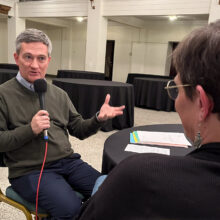
But we're going to start today with a different duo. John and Jenni Marsh recently wrote and directed The West Wind at Muncie Civic Theatre. This was their third play together. They sat down to talk about their partnership with IPR's Abby Urban.
Abby Urban (01:41):
So when did writing all start for the both of you?
Jenni Marsh (01:44):
Go first.
John Marsh (01:49):
Okay. Well, we'll kind of work our way backwards. The West Wind is our third show that we've written together. And it's a comedy, like the others. We write comedies and just have a lot of fun doing it together. It's our relaxation and our escape and so on. Our first show was called Fixing Up, and we started it in the mid-90s, and we were raising little kids at the time, so we didn't have much time to work on it. So sometimes a year or two would go by. So it took us several years to get that one done. And then we sent it off to contests and it actually won the McLaren Comedy Festival, a playwriting competition in Midland, Texas. And so it was produced down there in May of 2015. And then our second play was Cat's Pajamas, which we workshopped and was first put on here at Muncie Civic Theatre.
Jenni Marsh (02:54):
It was not a fully produced play, but it was a staged reading. And we did rewrites during the rehearsal process. So the cast had scripts in hand because we had made edits and updated things as things evolved.
John Marsh (03:08):
But it did have sets and costumes and props and so on.
Abby Urban (03:11):
What was it like rewriting it as they were doing it?
Jenni Marsh (03:15):
It was really fun. We'd see something in the evening rehearsal that we didn't like or we thought we could do a little better. We'd go home, we'd work on the pages till all hours. It was kind of exhausting really because we had to get up and do our day jobs in the morning and then come back to rehearsal with the new pages to see how it played out. And the other thing that was really special about that production was there was an audience feedback session after the performances. So audience members could ask questions or comment on things they didn't like or liked. And so all of that helped kind of take that play to the next level.
John Marsh (03:50):
Yeah. We were taking notes and all. And plays are meant to be heard, right? I mean, you write it and you can read it and get a sense of it, but you kind of really don't know until you hear it. And the West Wind, we kind of just workshopped just informally at our house with some of our civic friends coming and reading it and then tweaking it and so on after that.
Abby Urban (04:17):
So why write comedies?
Jenni Marsh (04:20):
I think the world needs more laughter in it for starters. I was involved in drama club when I was in high school and I always loved the screwball comedies like Arsenic and Old Lace and You Can't Take It With You. Those kinds of shows that just have a cast of characters that are just zany and living their best individual lives and the circumstances they find themselves thrown into. So our first two plays are true farces and that's a space we really love to be in. Our day jobs are kind of serious, so we like to laugh and giggle and just be not serious at all.
John Marsh (04:55):
And I think a lot of other people like to do that too, just be taken out of themselves and have fun and end up leaving feeling good and happy for those moments. I think that's really important. I mean, we really believe in humor as an important part of our lives and dealing with the things that go on in our lives. And so yeah, comedy sounds like it's just frivolous and extra, but really it's important.
Abby Urban (05:25):
What has it been like writing together and doing this together?
John Marsh (05:30):
Well, we have a story we like to share from a friend of ours that said to us, "You guys write plays together?" He says, "My wife and I tried to paint the den together and it ended up in a divorce." So it's so much fun. I mean, at this point in our lives, we can do it without having our ego heavily tied up in it. And so we just have the fun of the creative process that we brainstorm the ideas together and we kind of oftentimes start with a set. And this one, it was like, "Well, how about a train? That might be kind of challenging. Well, let's try and do that." We brainstorm the characters and what each of them are trying to do and so on.
Jenni Marsh (06:15):
Yeah. And this guy makes me laugh every single day. Some days we just write down funny-
John Marsh (06:21):
Sometimes intentionally.
Jenni Marsh (06:23):
Sometimes we just write down the funny things that happen in real life and that turns into a story or a play, which is certainly the case in Fixing Up, which is based on a couple that's fixing up their house and their brother. And it was kind of based on some realistic experiences.
John Marsh (06:45):
Yeah. Some of those stories didn't have to be changed too much to be put into the play, but write what you know. And that's where I think you can be the most authentic.
Abby Urban (06:56):
How did you find out like, "Oh, we're going to write plays together." That's what we're going to do.
Jenni Marsh (07:01):
We kind of stumbled upon it.
John Marsh (07:05):
We both like to create and write, and we've always done that. I mean, in fact, one of our first dates we were sharing, writing, what each other had written, poems and things like that. I'd had an interest in theater and she had a lot of performing experience in high school and...
Jenni Marsh (07:23):
Well, and one night we were just talking about, wouldn't it be fun if we could fix his brother up with someone at the time? And then we're like, "Oh, wouldn't that be a fun plan?" What if we tried to host something in this disaster of a house we're fixing up right now, we're doing it ourselves.
John Marsh (07:40):
Wait, does he know that character is based on him? This might be a reveal right here for your audience.
Jenni Marsh (07:45):
Yes, he does. He knows that.
Abby Urban (07:50):
What has been your favorite to either write or to direct or both?
Jenni Marsh (07:58):
Well, we kind of stumbled into the directing process. Michael O'Hara had directed Cat's Pajamas and he was on tap to direct Fixing Up when it was going to be produced here at Civic. And a scheduling conflict prevented him from being able to do it. And Civic said, "Why don't you guys direct? We've been wanting to get you to direct shows for a while now. Let's see what you can do." And so we directed that show and absolutely loved it.
John Marsh (08:24):
We loved it. Yeah.
Jenni Marsh (08:25):
And they invited us to come back. And so we directed the Importance of Being Earnest, which was a really magical experience. We just had a phenomenal cast. It's a brilliant play by Oscar Wilde. And we had fun with the set and the staging and it was a fantastic experience. So when it came time to put this play into the consideration for this season, they said, "Would you direct?" And we said, yes.
John Marsh (08:55):
We love it. We love the collaborative process of it. We love the fact that everybody is coming here to enjoy themselves, to express themselves, to tap into their creativity.
Jenni Marsh (09:09):
And it's so interesting to sit with pen and paper or at the computer and imagine this world and imagine these people, but the amazing talented cast we have made these people whole.
Abby Urban (09:23):
Why do you think it's important for local artists like yourself to have voices in local art spaces like the Civic?
Jenni Marsh (09:32):
Art and culture creates greater empathy and understanding of the human condition and relationships. And the more you expose yourself to stories and culture, the more empathy you have, the more you understand your fellow humans and are more likely to just be respectful, be understanding, give some grace. And I think it's really, really important that Muncie foster creativity and culture and arts because that just fosters better citizens.
John Marsh (10:06):
It takes a lot of courage for people to do creative things and put themselves out there. And here I'm crediting the cast and crew and so on tremendously. They come in here and they're stretching themselves, right? And that pays off so many benefits in your life, right? People who push themselves and those kinds of experiences, yeah, it's just going to pay off benefits in how you deal with life.
Abby Urban (10:37):
So what's next? Do we know what's next?
Jenni Marsh (10:41):
We have a play in the works. It's mostly just us talking about it over breakfast and jotting down notes and then finding all those notebooks and starting to put some pieces together. We have an idea for a show that is actually not a play, but a dance. So we're working on that. I mean, we have different ideas and we just pursue them on the side as we find time.
John Marsh (11:09):
And we're going to be directing next season on the main stage. We'll be directing a Christmas show. It's a Wonderful Life.
Jenni Marsh (11:17):
And we're very excited about that.
John Marsh (11:19):
Yeah. Super excited about that.
Jenni Marsh (11:20):
A very fond, sentimental favorite, for sure.
Abby Urban (11:23):
Well, thank you guys so much for [inaudible 00:11:26] and talking [inaudible 00:11:26]. I really appreciate it.
John Marsh (11:30):
Thank you.
Jenni Marsh (11:30):
Thank you, Abby. We appreciate it.
Michelle Kinsey (11:30):
That was John and Jenni Marsh speaking with IPR's Abby Urban.
(11:35):
This interview was produced by Stephanie Wiechmann.
(11:41):
We started today with a playwriting duo. Now we have a musical duo. And before we get into this interview, a warning that there is a brief mention of suicide near the end.
(11:53):
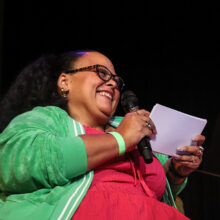
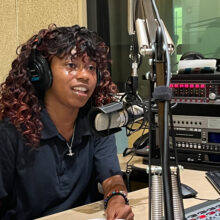
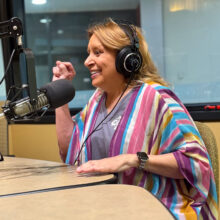
We are in the IPR studios talking with Randy Eyestone and Ruthie Berkey. And sometimes they perform individually and at other times they are a dynamic duo. So I would like you to start one of you by talking about your musical journey. And Ruthie, let's start with you.
Ruthie Berkey (12:18):
I started singing, I don't know, 20 years ago or no, 30 years ago at the Civic Theater was my first public singing. And now I sing the national anthem at numerous events, the Vietnam Veteran Memorial Service on Veterans Day and Memorial Day. Randy sang with me this last Veteran's Day. And I sing at the Senior Citizen Center. The first Saturday every month, they have a veteran's breakfast. I am a Navy veteran. And they're also having, I want to plug this, dedication of the Revolutionary War Monument on the 11th at 10 o'clock at the Senior Citizen Center.
Michelle Kinsey (13:03):
Okay. Are you going to sing at that?
Ruthie Berkey (13:05):
Yes.
Michelle Kinsey (13:06):
Okay. And what will you be singing there?
Ruthie Berkey (13:08):
The National Anthem.
Michelle Kinsey (13:09):
Okay. And that is usually what you sing?
Ruthie Berkey (13:12):
I do that, yes. And then I also go to various jams around town. There's numerous open mics. Mondays every other Monday at the Guardian. Tuesdays is at Elm Street and Room Five is on Tuesday and Wednesday. And Thursday, Governor Davis Memorial Blues Jam is at the Oasis from eight to 11.
Michelle Kinsey (13:38):
We're very familiar with all of these venues.
Ruthie Berkey (13:40):
Yes, yes.
Michelle Kinsey (13:41):
And opportunities. I wanted to know because of your service to our country, what makes you so excited about sharing the national anthem in this way with so many groups?
Ruthie Berkey (13:53):
It's an honor. It's an honor to have the ability to sing that. And it's an honor for me as a military veteran to sing it. Absolutely.
Michelle Kinsey (14:02):
Oh, that's a beautiful thing. Well, Randy, can you talk a little bit about your musical journey as well?
Randy Eyestone (14:08):
Yeah. And first of all, Ruthie's known all around town. So yeah, anytime you go to a venue, they know that she's a great singer and everybody looks forward to seeing her on stage. I'm not quite as noble as her when it comes to like my, as you said, musical journey. I've been...
Michelle Kinsey (14:32):
Did you say noble or notable?
Randy Eyestone (14:35):
Either one. They both work. But noble is what I meant to say.
Michelle Kinsey (14:39):
Okay. I just was checking.
Randy Eyestone (14:41):
She's definitely leaning towards what she can do as a service and because of her service. So thank you for that. And as far as me, I don't remember a time when I didn't sing or perform.
Ruthie Berkey (14:56):
Or write.
Randy Eyestone (14:57):
Or write, really. But the first time that I was ever on stage and sang in front of somebody who was in a church, I was around five years old. And the only thing I really know about it was that they had trouble getting me off the stage.
Michelle Kinsey (15:15):
What, does spirit move you?
Randy Eyestone (15:15):
I was supposed to do one song and I wanted to do... And I knew two. So I wanted to do the second one too, and they had to kind of pull me off-stage. But once I was up there... I didn't always get attention for good things when I was little. So that was also the first time when I was getting attention for something that felt good. And so I think it was really powerful for me early on. When I got a little older, I was in some bands. I was in a band in high school where I was by far the youngest one, and our ages ranged from, I was about 15 or 16 and the oldest guy in the band, we rehearsed at his house. He was like 32. It was a weird band.
Michelle Kinsey (16:01):
Did you convene these bands, this band particularly?
Randy Eyestone (16:01):
Did I what?
Michelle Kinsey (16:02):
Did you get all these people together to be in a band?
Randy Eyestone (16:05):
No, I joined actually later when they were looking for somebody to sing. They had like great guitarists, they had a very good drummer, but it was an odd mix of people that I learned a lot from, and part of it was like being that front man because these guys were all more experienced than me, but I was the one in front of the mic. So it was a cool, fun experience.
Michelle Kinsey (16:28):
Well, when did you start performing on your own?
Randy Eyestone (16:31):
Oh, I would say once I could. So I've always done things like open mics though, for instance. So I'm originally from Indiana, but I've moved around a lot. I'm a bit of a nomad.
Michelle Kinsey (16:48):
And Indiana called you back?
Randy Eyestone (16:49):
Yeah, tends to, but I keep running away. But one place I run to a lot is Nashville. First time I went was in 2004 and I went with a guitar player, a friend of mine. I guess I always lead with what their instrument is before they're a friend of mine too, but he was a really great guitarist and good friend. And we lived there for a short time and we did things like open mics and he would just play. But sometimes he would, for whatever reason, wouldn't go. And I would even do acapella open nights, which is very daunting when everybody in Nashville is a virtuoso on their country guitar and I'm just up there singing my original songs. It was more like a poetry with like a good melody to it.
Michelle Kinsey (17:44):
You got to love that.
Randy Eyestone (17:47):
But I've always written. I've written a few times with other people, nothing necessarily that's too notable, but it's always fun to do that as well. But most of my writing I do by myself. And Nashville is great for many, many things, but when I went there, I found out really quickly, I wasn't looking in the right place. I was looking at like Broadway and you had to know a thousand country covers and wear a different kind of hat than I wear and different things. So I felt like I didn't fit in. I wish I would have found East Nashville faster because East Nashville is where the songwriters and the hippies and the people that don't like hanging out on... I don't want to knock Broadway. Broadway is insane.
Michelle Kinsey (18:34):
No, you just found your tribe.
Randy Eyestone (18:36):
Yeah. And that's where I did end up in Nashville again and ended up living in East Nashville. And again, wish I would have known that 20 years earlier or 18 years earlier.
Michelle Kinsey (18:46):
Well, you found it now and you're here now, the two of you, so we would like to hear you the duo perform. Can you do that for us?
Randy Eyestone (18:54):
Yeah, yeah. So yeah, this one is Worthy of a Song, is the name of it, and it's kind of about trying to make, just do something every day that's worth writing about.
Michelle Kinsey (19:07):
I love it.
Randy Eyestone (19:09):
Or at a minimum finding something to write about in that day. And it means a few different things to a few different people. And so that's a cool thing too, is I might write it about something and it means something to me, and it'll mean something different to everybody who hears it, and so that's cool. So yeah, this one is Worthy of a Song, is the name of it, and it's kind of about trying to make... Just do something every day that's worth writing about.
Michelle Kinsey (19:43):
I love it.
Randy Eyestone (19:45):
And at a minimum, finding something to write about in that day. And it means a few different things to a few different people.And so that's a cool thing too, is I might write it about something and it means something to me, and it'll mean something different to everybody who hears it, and so that's cool. But let's try it.
MUSIC (20:06):
I'm nowhere I'm going, after I get down there.
(20:32):
You'll know I'm leaving when I'm gone.
(20:40):
Right here, right now, today we are together.
(20:44):
Make this day worthy of this song.
(20:44):
Make this day worthy of this song.
(21:04):
We should take a nice long walk, we could have a nice long talk.
(21:12):
Maybe have a drink or two or three.
(21:20):
See where the evening takes us, feel how Sativo wakes us.
(21:28):
Offer up myself, you open up to me.
(21:36):
Offer up myself, as you open up to me.
(21:52):
There's a light at the end of the tunnel, it's a long black train.
(22:08):
There's a light at the end of the tunnel, it's a long black train.
(22:23):
I'll know where I'm going after I get down there.
(22:34):
You'll know I'm leaving when I'm gone, long gone.
(22:42):
Right here, right now today we are together, make this day worthy of this song.
(22:57):
Make this day worthy of this song, make this day worthy of this song.
Michelle Kinsey (23:14):
Thank you.
Randy Eyestone (23:14):
Thank you.
Michelle Kinsey (23:17):
Where can we find y'all online or in-person and hear some more?
Randy Eyestone (23:22):
I've got very little online, but because of knowing I was coming here, a friend of mine was like, "Hey, put a bunch of your stuff up on SoundCloud." So on SoundCloud, I'm under just my... I go by my last name, which is Eyestone, and that's E-Y-E-S-T-O-N-E. And you can find that on SoundCloud. There's a lot of other really cool music and from the most famous people down to somebody who has one song, and I'm somewhere in the middle, but I put up like 30 songs in the last two days of just stuff that I already had recorded on my phone or recorded with other people in different studios. Most of it's just me though and Bela Negra, my guitar.
Michelle Kinsey (24:04):
Bela Negra?
Randy Eyestone (24:06):
Bela Negra. It's my black beauty, and she's a Spanish guitar, so it's Bela Negra.
Michelle Kinsey (24:10):
Excellent. Well, do you mind playing one more for us?
Randy Eyestone (24:13):
Yeah, I could do one more. I don't know if we have any others that we do together, but I could do something.
Ruthie Berkey (24:17):
Yeah, go ahead.
Michelle Kinsey (24:18):
I think that would be just fine because we talked about...
Randy Eyestone (24:20):
I was talking about Nashville earlier and I just, a really good friend of mine, I thought I was writing this song about myself and realized I was writing it about a good friend of mine named Mark and this song's called The Saint and it's another one that means different things, different people, but...
Michelle Kinsey (24:35):
That's the best kind of song, right?
Randy Eyestone (24:36):
Yeah.
MUSIC (24:55):
So you called tonight, can it wait till tomorrow?
(24:58):
My ears are burning and you sound like sorrow.
(25:01):
It's a little too late, I'm a little too gone.
(25:06):
Your little face tell me something is wrong.
(25:09):
And so I am here for you.
(25:34):
Come inside, come out of the weather, you and I can get it together.
(25:34):
Come inside and stay for a while, I pour you some cheer and I light you a smile and I, I am here for you.
(25:53):
I am here for you.
(26:05):
And if you're too wired, I can help you down.
(26:08):
If you're too tired, I can turn you around.
(26:12):
If what you need is a hand to hold on to, believe in me, I'm the man you belong to.
(26:19):
And I am here for you, I am here for you.
(26:50):
I got what you want, I ain't what you need, you need a space between you and me.
(26:56):
And as for tomorrow, you never can tell, and you can't drink the water from a wishing well.
(27:04):
But I am here for you, I am here for you.
(27:16):
I am here.
Michelle Kinsey (27:28):
Well, thank you for adding some music, both of you, to this songworthy day.
Randy Eyestone (27:33):
Awesome. Thank you.
Michelle Kinsey (27:34):
Appreciate you being here.
Randy Eyestone (27:36):
Excellent.
Michelle Kinsey (27:37):
Is there anything else you wanted to say about your music?
Randy Eyestone (27:40):
Just one quick thought, and I hate to leave it on a bad note, but doing these songs, sometimes you write them and you mean one thing and then turns into another thing. And then sometimes you think you know what it means and then something happens and all the words mean something different. And not too long ago, a very good friend of mine took his own life and I only bring that sad note up to say that these songs that I just sang to you today took on a whole new meaning. And if anybody happens to hear this and that's something that you're thinking about, please don't do it. I know you think that you might be a burden on people that you love, but there's nothing like the burden after you're gone that you feel. So I just want to say, just give somebody a call, email me at Eyestonemusic.gmail, or something. We'll talk about it, but please don't do it.
Michelle Kinsey (28:47):
Thank you so much, Randy, for sharing and-
Randy Eyestone (28:53):
Thank you...
Michelle Kinsey (28:54):
... Saying that very important, those words.
(29:00):
If you or someone you know may be considering suicide, or is in crisis, call or text 988 to reach the Suicide In Crisis lifeline.
(29:28):
This is Pop of Culture. I'm Michelle Kinsey.
Kara DuQuette (29:31):
I'm Kara DuQuette.
Jen Blackmer (29:32):
And I'm Jen Blackmer.
Michelle Kinsey (29:33):
Indiana Spring can mean snow, driving rain, brilliant sunshine, gusty winds, often in the same 24 hours. This week's Beautiful Thing is about summer and one particular afternoon.
Jen Blackmer (29:45):
And today's beautiful thing comes to us from...
Candace Angelica Walsh (29:47):
I'm Candace Angelica Walsh coming to you from Chicago.
Jen Blackmer (29:52):
And Candace, can you describe what is around you right now?
Candace Angelica Walsh (29:56):
I see a Squishmallow Hello of a Brindle French bulldog and a very real neurotic pit bull.
Jen Blackmer (30:11):
That is the best. I am assuming these are sitting on your desk?
Candace Angelica Walsh (30:15):
He'd love to be sitting on my desk. He is right by my feet, and the Squishmallow is nearby in a chair.
Jen Blackmer (30:25):
Amazing. I love that. Candace, you're going to share with us a beautiful thing entitled Playing Hooky.
Candace Angelica Walsh (30:36):
Dad sat at the park picnic table smoking one Marlboro after another, with not a word of protest from my sister or me. Poles apart from the week before when we snapped his whole pack in half and flushed it down the toilet. We were extending some grace in exchange for the freedom of a Tuesday outing during the school year, not yet knowing he'd lost another carpentry job, that we wouldn't be going back to Baldwin Elementary anyhow. That morning, he picked us up in the Toyota motorhome borrowed from grandpa that we used as a car, and we drove around East Los Angeles looking for a place to swim. On the floor amidst the empty McDonald's bags and Mobil oil bottles, I magically found my rainbow one piece from our lake trip a month prior, and my sister threw on one of dad's big white Hanes work shirts over her underwear.
(31:45):
We settled on a park with a two-foot deep wading pool. And for hours, we played mermaid royalty to a handful of preschool kids who didn't yet know how to judge us. The afternoon's sun haloed our court and warmed us to a glowing notion. Stolen time offers a unique joy.
(32:12):
As it started to get dark, I looked at dad, who made no indication he was ready to leave. He took another deep drag, and blew smoke toward the scorched sunset and the coming tomorrow like a summons to a duel.
Jen Blackmer (32:32):
Candace, thank you for sharing. That was lovely. Stolen time offers a unique joy. That really jumped out at me in regards to this picture of this moment that you are sharing with us. What inspired this piece for you?
Candace Angelica Walsh (32:49):
So originally I had written or attempted to write a novel or what a lot of us call autobiographical novels. And I reverse engineered it for Beautiful Things. And it was interesting because when I called upon the memory itself, I had already written so much description that I felt like I had to do, if it were fiction, that it became so much more alive and palpable as the truth.
Jen Blackmer (33:27):
Oh, wow.
Candace Angelica Walsh (33:27):
So I think that a lot of nonfiction writers, and maybe I'll just speak for myself, but it feels like sometimes you're writing this happened, then this happened, then this happened. But I took an amazing workshop with Claire Dederer, who is just a phenomenal memorist and critical writer. And she said, "Fiction is addition and memoir is subtraction." And although that's very drilled down or boiled down, if you want to call it. it really made sense to me because when you're creating an entire world, you focus on the little nuances and details that you otherwise wouldn't if you're just assuming the page knows what happened, that you're thinking of the memory and you're reiterating it because of course the reader sees what you're seeing, but that's not always the case. So for me, it was very much going back to the drawing board and seeing what needs to be here in order to capture this moment. And that was where the subtraction came in, what needs to not be here.
Jen Blackmer (34:35):
You also make a lovely use here of that tension between maybe a positive moment and not so much. I mean, when I was reading this, I was thinking about my parents and the things that I knew they were dealing with when I was a kid, but that I really didn't know they were dealing with, this idea of mermaids in a swimming pool while your dad is obviously worried about what comes next. So these moments of maybe joy that we remember or are imprinted in our brains, but yet when you begin to pick it apart, you're like, "What's really happening here underneath?"
Candace Angelica Walsh (35:22):
Yes, that's so insightful. I mean, I just took a scene class with a brilliant writer, Marya Hornbacher. She had recently shared, when you write in the present tense, there's a sense of innocence to it because you don't know what's coming next. So reverting back to a memory and going into the present tense first-person, if you're reflecting on a childhood moment, it really creates this sense of innocence because you don't know what's happening next. And I think I chose in this particular piece to write in the past tense because it felt like I wanted the subtext to be a little bit of that ominous sense of like, "Oh, there was more going on than I really realized at the time."
Jen Blackmer (36:15):
Yeah. And that I think is clear too. In the end of the first section, you say, "We wouldn't be going back to Baldwin Elementary anyhow." So you had this expectation as a kid, but then looking back, it wasn't fulfilled. The other thing that really struck me when I first read this is just the first moment where it pulls apart from the week before we snapped his whole pack in half. And here's the thing, right? I don't know if it was kids of a certain generation or not, but I did the same thing.
Candace Angelica Walsh (36:50):
Oh my God, how funny.
Jen Blackmer (36:53):
And my father smoked Marlboros and I did the exact same thing to both my mother and my father because we were learning all about why you shouldn't smoke. And then to see the people you love most in the world doing it, it was so hard.
Candace Angelica Walsh (37:06):
Exactly. It was so hard and it was so heartbreaking. All the DARE programs, all that stuff where like, "You're on the pathway to hell."
Jen Blackmer (37:18):
Yeah, right?
Candace Angelica Walsh (37:19):
Marlboro Reds are the gateway drug.
Jen Blackmer (37:21):
Yes. Well, and they would get so mad, but I remember a conversation with my mom much, much later, and she looked at me and said, "Thank you for that." And I was so taken aback by that. But from her perspective, and she told me, she goes, "It's because you cared." And I was like, "Yeah, of course I did, mom. You're my mom."
Candace Angelica Walsh (37:42):
Yeah. Yeah. How funny you did the same thing.
Jen Blackmer (37:45):
I know. And I think that what to me is so fabulous about that moment and starting off your piece with that moment is that you're setting up this dynamic of care for this person who is obviously troubled, obviously having issues. He just lost his job and you were probably going to move. And yet here you are, you and your sister just caring so much.
Candace Angelica Walsh (38:11):
Yeah. Yeah.
Jen Blackmer (38:13):
Yeah. Well, Candace, I can't thank you enough for taking some time and sharing this moment with us.
Candace Angelica Walsh (38:21):
Thank you so much.
Jen Blackmer (38:22):
And this lovely, lovely micro essay.
Candace Angelica Walsh (38:24):
Thank you.
Jen Blackmer (38:25):
Candace Angelica Walsh is a best of the net nominee and a finalist for the New Ohio Review Nonfiction Prize. Her work has appeared in Gulf Stream Magazine, River Teeth, Midwest Review, and elsewhere. Originally from California, Candace now resides in Chicago. Candace, thank you so much.
Candace Angelica Walsh (38:45):
Thank you so much, Jen.
Jen Blackmer (38:47):
This story comes from IPR's collaboration with River Teeth's Beautiful Things, a weekly magazine of micro essays. More at riverteethjournal.com. I'm Jen Blackmer.
Kara DuQuette (38:59):
I'm Kara DuQuette.
Michelle Kinsey (39:00):
And I'm Michelle Kinsey. No matter the weather outside, the Pop of Culture podcast is delivered into your feed every Friday at noon. Find us on the NPR app, Apple Podcast, YouTube, or wherever else you listen to shows.
(39:18):
Okay. We're in the home stretch. This is Pop of Culture. I'm Michelle Kinsey.
Kara DuQuette (39:42):
And I'm Kara DuQuette. It's time for our regular, What Are You Working On segment? It's funny you should mention stretching, Michelle, because this week's guest stretches glass. Here's our co-host, Maya Doss.
Maya Doss (39:56):
Today on the show, I have Brent Cole, an associate professor of art at Ball State. Thanks for coming on the show, Brent.
Brent Cole (40:02):
Thanks for having me on the show, Maya.
Maya Doss (40:04):
So we would love to know what are you working on?
Brent Cole (40:07):
Currently, I'm working on making glass trees.
Maya Doss (40:12):
Oh, nice. That's cool.
Brent Cole (40:13):
I've been interested in the science of dendrology where they use tree rings to date items. And currently, my former colleague, Jacinda Russell, from the photo department, and I have a show up in Tucson that is kind of working with their archive, translating their archive from a scientific perspective into one that factors in an artistic perspective.
Maya Doss (40:39):
That's so interesting. So you're using glass to translate scientific ideas?
Brent Cole (40:45):
Glass and mixed media, yeah. I have been making the tree rings out of bureaucratic paperwork that I've accumulated as a professor for the last 15 years at Ball State.
Maya Doss (40:56):
I love that. So it's kind of eco-friendly.
Brent Cole (41:00):
Eco-friendly and also taking some of those records and using them in a collaging manner with the work.
Maya Doss (41:08):
Which is kind of interesting because it's about tree rings, right? Which is like an archive or a record of that tree's life.
Brent Cole (41:13):
Right.
Maya Doss (41:14):
And you're using old paper.
Brent Cole (41:16):
Yeah.
Maya Doss (41:17):
It just circled right around, full circle moment.
Brent Cole (41:20):
Well, if you don't mind, I need to give you a little bit of a backstory. What's kind of interesting is the gentleman that founded the Dendrochronology Lab, the Lab of Tree-Ring Research, was actually an astronomer, and he had set up a observatory, but what was interesting is the person that had financed it was sure that what he was seeing through the telescope were canals on Mars. And that's when the whole Mars alien thing started. And this particular gentleman, I think his last name was Douglas, refuted his benefactors' conclusions about aliens actually being on Mars. And so he was kindly asked to exit stage left. And so he went to Tucson and started an observatory there. But the way he got interested in dendrochronology was he was trying to prove that he could find where solar flares had happened because of tree rings.
Maya Doss (42:21):
Ooh, that's interesting.
Brent Cole (42:22):
And he wasn't able to see it come to fruition in his lifetime, but they did recently prove that you can actually see where these solar flares happen. But Arizona became a perfect place because the tree sections can be stored, and can be stored in a manner in which they're kept dry. And I've been making some fungus. And so I ended up making it so that some of these fungus were kind of growing off of this tree ring research. So I was interested in this thought that through some of our own endeavors, we've set this system in motion where the things that we feel like we need to save that are giving us knowledge are actually things that we're destroying at the same time.
Maya Doss (43:07):
So what have you learned from this project that you've been working on?
Brent Cole (43:10):
I've always been interested in navigational methodologies. So I made work about buoys. I've made work about the stars. I'm still making some work about the stars, but a lot of it is my interpretation of like making my way through life as an artist. And as you know, as a fellow artist, it's not always an easy path and it's not always laid out in front of you. And so I try and express that. For me, the interesting thing is thinking about astronomical time and thinking about how short our time on the planet is and overlapping kind of my history and then maybe the viewer's history with acknowledging how small of a bandwidth we actually have on this planet.
Maya Doss (43:52):
That's fascinating. I feel like you have such big conceptual ideas that you're trying to navigate. And it's almost like this feeling of, I have this one small little human life, but I'm so in awe of all the wonders of the world.
Brent Cole (44:05):
Yeah, exactly.
Maya Doss (44:06):
Where do I fit in all of that?
Brent Cole (44:08):
Right now I'm working on a wedge of the sky, and so I have to go and get it water jet cut, and then I will take that flat sheet of glass that has stars on it, and then try and slump it over kind of a portion of the globe wedge. And then what I want to do is make it look like a portion of the sky is missing out of like this dome or hemisphere like you would see at the planetarium.
Maya Doss (44:37):
Like Chicken Little.
Brent Cole (44:38):
Like Chicken Little. Yeah.
Maya Doss (44:39):
The sky is falling.
Brent Cole (44:42):
Yeah.
Maya Doss (44:42):
Sorry.
Brent Cole (44:43):
Seems to be apropos with the time we're all dealing with.
Maya Doss (44:46):
Yeah, it does feel appropriate. Well, that's super cool. I love hearing about how my professors that I've had in the past are actual artists that have really amazing ideas. So you work almost every day over at Marilyn K. Glick Center for Glass.
Brent Cole (45:03):
Yes.
Maya Doss (45:03):
For the listeners, Brent is a masterful glassworker. Watching him, it feels like watching a wizard and you're teaching classes this semester?
Brent Cole (45:12):
I am. I'm teaching two intro to glass classes and then I'm teaching an immersive class where we are taking on the new university hotel as a client, and we are responsible as a class for designing and making the elements that will be in the hotel lobby.
Maya Doss (45:32):
How do you as an artist and a professor balance that? Like I am a guiding light for others, but I'm also charting my own path and my artistic practice.
Brent Cole (45:42):
Well, I think it's about trying to figure out where the flow is at and being able to allow students to participate in that flow and also figuring out when I can carve out time to give myself enough freedom in the studio to allow ideas to kind of crash together and coalesce. I would say that for myself, I tend to work more from a collage standpoint. I'm thinking about concepts and making work. I'm thinking about things conceptually being collaged that like this thing I'm not sure about and this other thing I'm not sure about, but by happenstance, maybe there's a relationship between those two things and maybe I can leverage that towards something that I hadn't thought about and maybe the viewer hadn't thought about.
Maya Doss (46:28):
What draws you to the different mediums to express different ideas?
Brent Cole (46:31):
When I was your age as a student, I think I looked at some of those things as limitations, but I find that I can express myself differently through different materials. And sometimes the glass isn't necessarily the best material to bring that concept to fruition. So if I can't say what I need to say in glass, that I can say it maybe with mixed media or I can say it with a collage. And a lot of times drawings, I find I do drawing in the beginning and then many times I'll do drawing somewhere in the middle. When I get stuck, I find drawing to be a really nice way to get unstuck.
Maya Doss (47:11):
Totally. I agree. I wanted you to maybe explain for our listeners what the differences between working in like a hot shop and a cold shop and the different artistic possibilities you can get from those spaces.
Brent Cole (47:23):
Well, as you know, having taken the class, the material that I've decided to spend a lot of my time in is not a kind material.
Maya Doss (47:32):
It's very hard.
Brent Cole (47:34):
So when it's hot, it's not kind. And when it's cold, it's not kind. But I think its material characteristics keep drawing me back. We have preconceived notions of what the material can do, but the material can look like a lot of different things. And it's interesting because we fall into all of these tropes. And I think one of the things that we hear over and over again is that, oh, it's about fragility and it's about ghost-like images. And I'm hoping that I can go beyond some of those standard tropes that happen when you talk about workout of glass. Many times we're having to use other materials to either support or hang or augment the material, and it's nice to try and bring in those characteristics into the conversation.
Maya Doss (48:22):
That's so fascinating. And I've really appreciated your kind of scientific perspective overlapping with art. I think that's been really interesting to talk about. Where could our listeners go to see your work for themselves?
Brent Cole (48:34):
Google me. You can find my webpage. If you just go to Brent Cole Glass, it should pop up and you can see some of my work there.
Maya Doss (48:43):
Awesome. Thank you so much for coming on the show today, Brent.
Brent Cole (48:46):
Thank you very much for having me.
Michelle Kinsey (48:51):
Well, hello, Kara.
Kara DuQuette (48:52):
Well, hello, Michelle.
Michelle Kinsey (48:54):
And Hello, Dolly. The show opens this weekend at Muncie Civic Theatre. With humor, romance, high-energy dancing, and iconic songs, this musical follows a wealthy and cantankerous widower as he hires the irrepressible Dolly, professional matchmaker, to help him find a wife. 288-PLAY is the number to call for more info.
Kara DuQuette (49:14):
The Lolly Bombs featuring founding Flaming Lips bassist, Michael Ivins, will perform Saturday, April 11th at Be Here Now in The Village. The band has been described as passionate fuzz pop with an edgy twang. The music begins at 8:00 PM.
Michelle Kinsey (49:30):
Awesome Music on the Range kicks off this Saturday, April 11th with Clay Arnett. The music begins at 7:00 PM at the Crestview Golf Course in Muncie.
Kara DuQuette (49:40):
Country legend Randy Travis is performing Saturday, April 11th at Anderson Paramount Theatre. The music begins at 7:30 PM.
Michelle Kinsey (49:49):
Mounds State Park in Anderson is inviting artists to paint in the park Saturday, April 11th at 10:00 AM. So many beautiful spots to park yourself and paint. Parkplacearts.com has details.
Kara DuQuette (50:03):
We are so lucky to have Mountain State Park.
Michelle Kinsey (50:06):
Indeed. Yes.
Kara DuQuette (50:07):
The Muncie artist disorganization, MAD will have its spring gathering at Mad Jack's in Muncie Saturday, April 11th at 6:30 PM. It's a laid back opportunity for creatives and makers and those who just love art and to hang out.
Michelle Kinsey (50:23):
Great. Ball State's Opera Theatre will present the marriage of Figaro Saturday and Sunday, April 11th and 12th at Sursa Performance Hall. The marriage of Figaro continues the plot of the Barber of Seville several years later and recounts a single day of madness in the palace.
Kara DuQuette (50:44):
Lee Alverson's tribute to Elton John will take the stage at Portland's Arts Place on Saturday, April 11th at 7:00 PM. Lee Alverson is the only Elton John tribute artist who performs and sings with authentic costumes, life-size baby grand piano, lighting and effects.
Michelle Kinsey (51:02):
And a reminder that the Public Media Pours event is Saturday, April 11th at Cornerstone Center for the Arts from 3:00 to 6:00 PM. I will be chatting with the Taste for Whiskey guys on stage at 4:30. There will be more than a dozen breweries, distillers and winemakers, tasty bites from 1925 Pubhouse, live music from Mason and Vaughn and more at this event. Indianapublicradio.org has more details. And hey, that's also where you can send us your events, Indianapublicradio.org/contact, then click Pop of Culture.
Luke Jones (51:40):
Support for Pop of Culture comes from Stallings Wealth Management, and from you. You might have seen a federal judge's recent ruling against an executive order to defund public media. This does not reverse our loss of federal funding, so, you are the reason local programming is still on IPR. Give today at Indianapublicradio.org.
Michelle Kinsey (52:07):
And that's our show. Our director of audio operations is Sean Ashcraft.
Kara DuQuette (52:12):
This week was produced by Luke Jones, whose favorite duo is a spring breeze coming through the window in a soft blanket.
Michelle Kinsey (52:19):
Aw. We had production assistance from Andrew Montevan.
Kara DuQuette (52:23):
Our audio fellow is Maya Doss. Our show was hosted by me, Kara DuQuette.
Michelle Kinsey (52:27):
And me, Michelle Kinsey. Pop of Culture is a production from IPR on the campus of Ball State University.
(52:38):
Country legend, Randy Travis, is performing Saturday, April 11th at Anderson's Paramount Theatre. The music begins at 7:00 PM.
Kara DuQuette (52:48):
Perfect.
Michelle Kinsey (52:49):
Nope, but it doesn't. It's 7:30. The music begins... Okay, one more time.
This week, we talk to two sets of artists that have teamed up! Jenni and John Marsh just finished directing “The West Wind” at Muncie Civic Theatre. It’s the third play they’ve written together, and they’ll take us into their collaborative creative process. And: Ruthie Berkey and Randy Eyestone are both musicians in their own right, but they’ve teamed up for performances across East Central Indiana—including the Pop studios.
Also in this show, we get driven straight to summer with Candace Angelica Walsh’s Beautiful Thing “Playing Hooky,” and we’ll talk with respected glass artist Brent Cole!