S03 E03 – We Wreck Your Heart
Listen

Audio Transcript
Sean Ashcraft (00:00):
Support for Pop of Culture comes from Stallings Wealth Management. Daniel Stallings financial advisor, securities and advisory services offered through Cetera advisors, LLC. Member, FINRA/SIPC, a broker/dealer and registered investment advisor. Cetera is under separate ownership from any other named entity.
Michelle Kinsey (00:16):
This week on Pop of Culture, the story behind the song. We have original music from local artists, Katie Jo Robinson, recorded live for Pop of Culture.
Jen Blackmer (00:26):
And a story with songs. Author Lori Rader-Day set her latest novel in the country music scene of Chicago.
Lori Rader-Day (00:35):
Two years before the Grand Ole Opry existed, we had the barn dance.
Michelle Kinsey (00:40):
Plus, this week's beautiful thing.
Jeannine Pitas (00:43):
First, I wept. Then, I applauded and laughed.
Michelle Kinsey (00:47):
That's all coming up.
Luke Jones (00:49):
Support for Pop of Culture comes from Stallings Wealth Management, the Innovation Connector, and from you. With state and federal money eliminated, you are the difference in keeping local programming on the air at IPR. Become a member today at Indianapublicradio.org.
Michelle Kinsey (01:13):
From IPR, this is Pop of Culture. I'm Michelle Kinsey.
Jen Blackmer (01:18):
And I'm Jen Blackmer. One of the great things about this hosting gig, for this amazing show that we do here at Indiana Public Radio, is that we get to meet artists and writers from East Central Indiana, who have East Central Indiana connections and are also from all over, and then we get to follow their work. You might remember, longtime Pop of Culture listeners, when we had a conversation with writer Lori Rader-Day, and Lori has a new book called Wreck Your Heart. We invited Lori back to the show to chat about this book and give us some information about this amazing set of characters that Lori's created. Hi, Lori. Welcome back to Pop of Culture.
Lori Rader-Day (02:03):
Thanks so much for having me, Jennifer.
Jen Blackmer (02:05):
Well, I was lucky enough to get a copy of the book, and as we were saying before we went on the air, I read it over my holiday break, and it was kind of perfect for that, because this book is about family and friendship and music and art, and it's joyful, but it's also a murder mystery because you write crime fiction. Yeah?
Lori Rader-Day (02:31):
Yeah, it's a real bummer sometimes.
Jen Blackmer (02:32):
I know. Yeah, so let's start out with, what inspired you to write this book?
Lori Rader-Day (02:41):
Yeah, so in 2019, 2020, I was the national president of a group called Sisters in Crime, which is a crime fiction association for writers and librarians and readers. If you remember, 2020 was not a good time to be in charge of anything.
Jen Blackmer (03:00):
Really, it wasn't.
Lori Rader-Day (03:01):
My job was to get the name out, to get possible new members to notice us, and so I talked my board into doing a big writing challenge, a month-long writing challenge where you write 50,000 words as quickly as possible. The problem was, it was twofold. I had never done this kind of writing challenge before. Then, I was in between project, so I didn't really have a book going and I didn't really have my next book figured out. The night before the challenge started, I wrote down a list of things that were giving me joy. And this was fall of 2020. So there wasn't a lot of joy to be had, if you recall.
Jen Blackmer (03:43):
Right. Oh, I recall. Yeah.
Lori Rader-Day (03:45):
But I had been listening to a certain kind of music that I suddenly discovered I was very into, country music, something that I had grown up with, but sort of fallen away from and found my way back to. I missed being out in my city. I missed Chicago, where I live now. I've been here for about 25 years. I missed going to a pub, a tavern with my friends, and just having a beer. I had just gotten my new puppy. She was ruling my life with an iron paw, but I loved her so much. And so, dogs, it's hard to put dogs into a mystery novel.
Jen Blackmer (04:21):
Oh, but you do it so well. It's like I knew these dogs, right?
Lori Rader-Day (04:24):
They're characters, right?
Jen Blackmer (04:25):
They are. It's wonderful.
Lori Rader-Day (04:29):
But if you put an animal into a mystery novel, then the readers have to worry about them. I wanted to title the book, The Dogs Are Going to Be Okay, by Lori Rader-Day.
Jen Blackmer (04:37):
Amazing.
Lori Rader-Day (04:39):
I wrote this list of things that I thought I could spend some time with, and the next morning I started writing furiously this story just to get as many words on the page as possible, without any expectation that it would be a book, without any expectation that anyone ever would read it, without any parameters at all. So, an up and coming country and Midwestern singer in Chicago is walking some dogs, and she lives over a tavern. Then, I put it away and wrote what would be my next book, which was The Death of Us. It was out in 2023, but that was a dark, dark book. Then, I was going through some dark, dark times, but at the end of it, I thought, "I just want to write something that has some joy in it, something that is fun for me and then also fun for readers, so I dug out those words that I had come up with during my writing challenge, and it made me laugh, so I started writing Wreck Your Heart.
Jen Blackmer (05:41):
Yeah, and I love hearing this origin story for this because that feeling is infused throughout the piece. It really is. I think what, among so many things, in particular, you don't think about Chicago as a country music hub, right? But there are. There are places all throughout the city that you can go listen to country music, so that being an unusual and very specific location, in and of itself, was very compelling. Then, throughout the piece, you create these wonderful relationships, these very interesting and intricate family relationships.
Lori Rader-Day (06:20):
Yeah. Well, I want to speak for Chicago's country music scene. There is a scene, a current scene, little patches all over the city and the suburbs where you can see country music almost any night of the week, but also historically, Chicago, I think we have a pretty good dibs, to use a Chicago term, dibs, on a country music hub because two years before the Grand Ole Opry existed, we had The Barn Dance, which was a live music show that was broadcast out to all of America.
Jen Blackmer (06:54):
Wow.
Lori Rader-Day (06:54):
So, the origin of that Grand Ole Opry sort of piece, it started in Chicago, so we'll take a little slice of...
Jen Blackmer (07:04):
Yes. Chicago totally should, and that's such an interesting piece of history. I didn't know that.
Lori Rader-Day (07:10):
And then, the relationships, yeah, they're complex. Dahlia Devine, she's a complex character. She's had a rough and tumble kind of life, the kind of life you might write a country music song about. She has not had a home, really. She's had a very itinerant life, in that she was sort of whisked out of her mother's care because she needed to be at age six. Then, she was in the foster system. She had one beacon of home, and that was her guardian, a term that she uses. I'm not sure that it was ever legally established.
Jen Blackmer (07:49):
Right, yeah.
Lori Rader-Day (07:49):
And that was Alex. So when the book opens, Dahlia is back with Alex. Now, she's not happy to be back with Alex, because that, to her, means failure, failure to launch, but she can rely on Alex, and that relationship became a really big piece of the novel.
Jen Blackmer (08:07):
Yeah, yeah. And what's interesting is she's sort of an unwitting potential mystery solver, right? But then, these things happen, and she gets involved in a lot of complications, and the knots just get tighter and tighter and tighter, but as the story progresses, she also learns that she has family, right? For the longest time she's been by herself, but then getting involved in some of these very difficult moments and events reveals to her some things that she didn't know.
Lori Rader-Day (08:45):
Yeah. I don't think it's a spoiler, because it's on the back cover that her mother, who she hasn't seen in a very long time, returns and then immediately disappears again, but really disappears. Then, the next morning, Dahlia discovers a young woman at the front door of the tavern, banging on the door because she can't find her mother, and so she has a half sibling that she did not know she had.
Jen Blackmer (09:09):
Right, yeah. And that relationship grows and strengthens throughout the adventures that follow.
Lori Rader-Day (09:15):
Yeah. All these relationships end up being tied more closely together than maybe it first seems.
Jen Blackmer (09:22):
Right. And the tavern itself is a character as well. I think you've done a really interesting thing with the setting, in that there's the tavern, and then there's living space that is connected to the tavern, but then there's this also, and again, not a spoiler, sort of liminal space between these two areas, right? That's such an unusual thing. It's a feature of city buildings, certainly, but it plays some really crucial parts to your story.
Lori Rader-Day (09:56):
Yeah. I described the two parts of the building as sort of, I think it's the two chambers of a heart. They're connected, but they're connected in specific ways, and one half has been empty for a long time. The other half is the tavern, and then there are apartments above. When I lived in Munsee, I lived over a business in an apartment. Now, the apartments were not connected, except through a catwalk porch on the back.
Jen Blackmer (10:25):
Sure, yeah.
Lori Rader-Day (10:27):
But city buildings are always interesting, right? They've always been redone and sometimes you find secrets in them.
Jen Blackmer (10:33):
Totally, and there's these layers of history that you sort of piece through to unearth some of those secrets, and that certainly happens in the book, which is really incredible. Music also plays, of course. I mean, she's a singer. Music also plays a very large part in the story, and she sings a lot of Patsy Klein, and she is struggling with writing her own songs, right? It's something that she had been encouraged to do by a potential manager, and is broaching the subject with her bandmates, and that is such an interesting, lovely exploration, really, of the artistic process, and the stuff we do to get in our own way.
Lori Rader-Day (11:17):
And I think, as artists, we all start by imitating the artists we love. Who, among us, has not tried to write a Hemingway story or a Tolkien story, whatever it is, whoever it is.
Jen Blackmer (11:32):
Of course, yeah.
Lori Rader-Day (11:34):
But the real journey is in finding your own voice, singing it as well as you can, and developing it over time, so she's sort of been writing songs in secret, sort of tucking them away.
Jen Blackmer (11:48):
And she's always stashing them in her boot.
Lori Rader-Day (11:51):
Yes. And she hears lines sometimes, and she thinks, "Yeah. That's a good line. I could use that," but she's not doing the work. She's not sharing her work. She's not being open with it, even her bandmates, because it's something that she cares so much about. What if she's bad at it? What if it doesn't work out? What if these are terrible songs that I'm attempting? And of course they are. The first time you write anything, the first time you create anything, it's going to be that bad pancake, right?
Jen Blackmer (12:20):
Oh, yeah, totally. It's always that first round.
Lori Rader-Day (12:25):
As I wrote this book, a lot of my own feelings about creativity sneaked in. I didn't know that I was writing a book about writing, but it turns out she's a songwriter, and so I could use some of my own experiences as a creator and as somebody in an industry that uses creative work to make a product. I can sneak in some of my own thoughts and feelings about that.
Jen Blackmer (12:48):
Well, and you do it so well. You just really get to know these people very, very quickly, and you get to care about them very, very quickly. As these events unfold and Dahlia gets caught up in them, you really do invest, I think, not only in what happens to her, but also in these people around her. You don't know who is what and who's pulling the strings, and when you do find things out, then like any good piece of crime fiction, you're connecting the dots, right? It's like, "Oh, that's right. Yes, I saw that several chapters back," so it's also a fun read in that way.
Lori Rader-Day (13:35):
Yeah. I think one of the goals of a mystery novel, a traditional mystery novel anyway, is that when you come to the solution, which everyone is reading for, of course-
Jen Blackmer (13:43):
Absolutely, yeah.
Lori Rader-Day (13:47):
.... All the clues, all the pieces of information that you've been fed all along, all through the entire book, should sort of light up a set of string lights all the way back to, "Oh, yeah. I've been told this story, and now I actually get all the pieces."
Jen Blackmer (14:04):
Yeah, yeah. Well, it's such a lovely read, and what are the specifics about when it comes out? Because I know I have an advanced copy, but is it out yet? When does it come out?
Lori Rader-Day (14:18):
It came out January 6th. It's available in hardcover, eBook, and audio. I've heard great things about the audiobook. We chose someone from Chicago's to make sure that she could say Dahlia just the way she needed to occasionally.
Jen Blackmer (14:32):
Yeah, that is a definite accent that puts you right in the middle of it. I love that. That's great. Lori, thank you so much for joining us on Pop of Culture to discuss your writing and this book in particular, I thoroughly enjoyed it, and it's lovely reconnecting with you.
Lori Rader-Day (14:51):
It's great talking to you.
Jen Blackmer (15:10):
There are a few reasons you might find yourself in a delivery room when you're not the one on the bed. That's what happened in this week's beautiful thing. We're here with author Jeannine Pitas. Hello, Jeannine.
Jeannine Pitas (15:24):
Hi.
Jen Blackmer (15:24):
Hi. Thank you so much for taking some time to share your beautiful thing with us. Jeannine's essay is called In the Delivery Room.
Jeannine Pitas (15:36):
In the Delivery Room. It's not a place I ever thought I'd see. A committed unmother I am, my body never to be a factory of human beings, but today someone needs me, and I have come to clasp her hands and feet, to shout encouragement in her native tongue, which the nurse and obstetrician do not know. [Foreign Language 00:16:03]. A person the size I once was, a person not here minutes ago. The room is huge. Leaves no to grow each April, to fall in October. One body emerges from another. The doctor lets me cut the cord, then places him in her arms. I take a picture.
(16:24):
"It seems he didn't approve of being born," a friend says later, eyeing his frowning face. Maybe he hates the hospital air conditioning as much as I do. He doesn't know he's a US citizen. His mother is undocumented. His father isn't here. He didn't ask to be born in this town where it hasn't rained in five weeks, where the may grass is brown. He didn't ask to be born among masked faces, among germs of our own making, but here he is, and he grips my finger, clinging to someone who feels like a tree. His name is Domingo. Later, I'm asked if this experience makes me want a child. I reply with my truth, "It makes me want a better world for all children."
Jen Blackmer (17:20):
Thank you so much, Jeannine. That is so powerful, especially that last line. That last line just kind of knocked me over when I first read your essay, how it's so apparent that this one birth is also an indication of all of these babies that come into the world not knowing anything. In the middle of the piece, you talk about, he didn't ask to be born in this town. He didn't ask for these things. It's very potent when you think about the situation of this particular birth, right? So, tell us a little bit about what your inspiration was for this.
Jeannine Pitas (18:07):
So, I wrote this while living in Dubuque, Iowa, where I lived for seven years. I live in Pittsburgh now, but while living in Dubuque, I got involved with the immigrant rights movement, and it really started because I am a non-native Spanish speaker. I've learned Spanish to fluency or near fluency, and there was a need for language interpretation. This was about 2017, 2018, because many young people had come to the town as unaccompanied minors. Many were seeking legal status, and there are not a lot of fully bilingual people around that can serve as interpreters. This was a moment during Trump's first term that I really was thinking, "What can I do? What can I do about the way my country is going, these realities that I see, this discrimination against immigrants that I don't like?" Here was something really concrete, right in front of me, that I was able to do: drive people to appointments, accompany them, interpret for them at legal and medical appointments.
(19:25):
It just so happened that during the pandemic, around 2021, a lot of the young people who had settled and gotten older were having children. There was a need to accompany women to maternal health appointments. I ended up having the opportunity to accompany some childbirths, so that was the second birth I accompanied. And it was a young woman whom I had known for many years, and I was really excited to be with her, but when the baby came out, I don't know what I was expecting to see. Was I expecting a dog? Was I expecting a cat? Was I expecting a goldfish? I don't know what I was expecting to see, but I'm like, "Oh my goodness. It's a person. It's a person who wasn't here a few minutes ago." My first reaction, I actually wept. First, I wept. Then, I applauded and laughed, and in the births I've accompanied since, I haven't cried since, but I just laugh and clap, and it's so exciting. But this was the first child that I actually saw come into the world, and I just wept. It's so huge.
Jen Blackmer (20:40):
It is overwhelming.
Jeannine Pitas (20:41):
It's so cosmic.
Jen Blackmer (20:42):
Yeah, it's overwhelming, and when you're on the other end of that and you are the person giving birth, there's nothing like getting to the end of that process, and it is overwhelming for so many reasons. I mean, there's just so much. All of the emotions are just present there in that space.
Jeannine Pitas (20:59):
It's a sacred moment, to accompany a birth. Again, I do not have children. I never wanted to have children, so I never thought that I would be this close to birthing and babies. I am a person of faith, but even if you're not, I would say there's something about that moment, where you just feel yourself as part of something bigger than just you and just our everyday reality. Even though births happen every day, obviously, but there's something very sacred about it. Same thing accompanying people at the end of life.
Jen Blackmer (21:38):
Absolutely, yes.
Jeannine Pitas (21:38):
I've had that opportunity as well. I've never been with someone at the moment of death, but I have in the immediate days before, and those moments really bring us into communion with all of humanity, and just beyond all of our petty squabbles and these problems that we're facing. We really see just what is common to all, birth and death and life, and just this reality that we all share and that we're all in together.
Jen Blackmer (22:07):
And struggle and wanting the best for ourselves and our loved ones, certainly. Again, I think that the humanity that you manage to capture so beautifully in the peace, when you set that against the world that's petty, and it's thriving on conflict and it's about trying to craft a message or an idea or something, and yet in the middle of this, there are so many human beings with their own struggles, their joys, their desires, everything that they want out of life.
Jeannine Pitas (22:48):
Yes.
Jen Blackmer (22:48):
Yeah, and your piece just does that so well, Jeannine. It's this beautiful sort of tug of war, I guess, in the best way between these two points of view.
Jeannine Pitas (23:00):
Thank you. I mean, it's really what I want to get across, I think, is that, as we talk about all these issues and deal with this conflict. It comes down to human beings and other living beings, not only humans. I mean, it comes down to the future of all life on earth, but at the most relatable level on all sides of the political divide that we are experiencing in the US right now are the lives of human beings, and I just wish that everybody could remember that more often.
Jen Blackmer (23:34):
It makes me want a better world for all children, as you say at the end. Jeannine M. Pitas is a Pittsburgh-based writer, teacher, Spanish English translator, and editor. She is also a volunteer for the Refugees Resettlement Agency, Hello Neighbor. Jeannine, thank you so much for your time today.
Jeannine Pitas (23:55):
Thank you so much for having me. This was wonderful.
Jen Blackmer (23:59):
This story comes from IPR's collaboration with River Teeth's Beautiful Things, a weekly magazine of micro essays. More at riverteethjournal.com.
Michelle Kinsey (24:24):
I'm Michelle Kinsey.
Jen Blackmer (24:25):
And I'm Jen Blackmer. You're listening to Pop of Culture.
Michelle Kinsey (24:29):
And we have something new for your listening ears. Every month in Muncy, there is First Thursday, a gathering of arts and culture events in downtown.
Jen Blackmer (24:39):
One of those monthly events is the songwriter sessions. This is a singer-songwriter showcase built as an intentional listening opportunity. It lets songwriters share the meaning behind their words, and it exposes listeners to local talent.
Michelle Kinsey (24:54):
We're bringing you part of one of those sessions in our new segment, Story Behind the Song, recorded live exclusively for IPR. For our first story and song, here's multi-genre musician, Katie Jo Robinson.
Katie Jo Robinson (25:09):
Much love. Many blessings to all y'all. My name's Katie Jo Robinson. Thank you, again, Songwriter Sessions and the Fierce and Seven Rock for having me out. This next one, I'm going to take a minute, give y'all some context behind the music. For those of y'all that don't know, my name's Katie Jo Robinson. I'm a musician from Daleville, Indiana. I've been doing this for about 15 years, and when I'm not doing this, I'm teaching other people how to do this. That's my heart and soul, within the music and sharing that with other people.
(25:51):
That's part of who I am, and that's part of my purpose. Something special to me is my ability to create as an artist and put a message out in the world. Right now, more than ever, I 100% feel like we as human beings are more united. We got more in common than the world would lead you to believe right now, and this song really speaks to that. It's like a message on my heart that I got to get this out into the world, and contrary to what folks might think, I'm a pretty big person when it comes to life, faith, and family. This song is called Love Your Neighbor, Be Your Friend.
(26:29):
Here there ain't no way. [inaudible 00:27:10]. I do recall how sweet it is to feel the sunshine on my skin, step outside into the light, begin again. Could you think of me as listening in on the enemy when all I'm in to do is feel real? I just wanted to feel free. I just want to feel real. I just wanted to feel free. This is your mindset, is something you won't regret when you look into the eyes of the human being. I can't believe how many folks are out there, acting up and acting tough and, honestly, just straight up being mean. I just don't know if we can't go in this direction. I just don't know if we can't go in this direction.
(28:00):
I just want to be your friend. I just wanted to be your friend. I just want to be your friend. I just wanted to be your friend. [inaudible 00:30:10] and protection. This is your mindset, is something you won't regret when you look into the eyes of the human being. How could you think of me, my family, my community as less than or the enemy when blood is red, water is blue, and grass is green? I just want to be your friend. I just wanted to be your friend. I just want to be your friend. I just wanted to be your friend. I just want to be your friend. I just wanted to be your friend. I just want to be your neighbor, your teacher, your sister, brother. I just want to be your friend.
Michelle Kinsey (33:15):
As a treat for listening to our podcast, we've got another song from Katie Jo Robinson. Here they are with What For.
Katie Jo Robinson (33:24):
Sometimes that's a question you've got to ask, what for?
(33:26):
Tell me that you'll love me but you're leaving. I don't really know what to believe. Tell me you don't miss me, but I'm feening, but I don't know what for. Always talking up and telling me down. Talking to her. I can't think clearly anymore. Always got to [inaudible 00:35:03], but I don't know what for. It ain't easy, but I can't lie. I think [inaudible 00:35:14] babe all the time. The days go by, and I'm [inaudible 00:35:22], so tell me why can't we just be. I told myself you broke a heavy heart. Now I'm just a thought that you chose to ignore. Still, I'm grasping onto everything [inaudible 00:36:00], but I don't know what for. It ain't easy, but I can't lie. I think about it, babe, all the time. The days go by, and I'm [inaudible 00:36:20], so tell me why can't we just be? All the time. Yeah, yeah, yeah. The days go by, and I'm [inaudible 00:37:53], so tell me why can't we just be?
Jen Blackmer (38:19):
That was What For from Katie Jo Robinson.
Michelle Kinsey (38:23):
Story behind the song comes from the songwriter sessions, created by The Fierce and produced by Josh Eisenhardt. Full disclosure, I'm a member of The Fierce and the host of the sessions. You're listening to Pop of Culture from IPR.
Jen Blackmer (38:37):
It's the part of the show where we ask an artist, "What are you working on?" Our co-host, Maya Doss, spoke with a sculptor working in wood.
Maya Doss (38:47):
Today on the show, I have Chet Geiselman, an artist, woodworker, and educator at Ball State. Chet, share with us, what are you working on?
Chet Geiselman (38:54):
I'm always working on my artwork. I am the 3D studio manager here, so I am a professional staff. When everybody else gets to go home for break, I stay here and clean and repair tools, and so I'm in the wood shop right now, repairing some tools.
Maya Doss (39:13):
That's great. Artistically, I'm curious, because I know you have a show coming up in March at the storage space in Indy. What inspired this body of work you've been making?
Chet Geiselman (39:24):
Well, I've been working on this body of work for 12 years now.
Maya Doss (39:28):
Wow.
Chet Geiselman (39:28):
These relief sculptures or bar relief sculptures, I call them, so they just keep, over the years, evolving. I'm sort of where I'm at now in that evolution. Sometimes it's hard for me to go back and really talk about the early work, because sometimes I look at them, and I'm like, "Who made that? Who was that guy way back then?" But I call them bow relief. They're low relief sculptures.
Maya Doss (40:01):
They kind of have a shadow box quality, right?
Chet Geiselman (40:03):
Yes. Most of them have a shadow box around them. The size of that box depends on, that's the last thing I do. Some people think I build the box first and then I put these objects in. It's actually different. I start out with what I call a substrate. It's basically a piece of plywood with some wood around the back, and then I just start taking pieces of wood, laying them on top, and sort of creating a design. Then, finally, I build the wooden box around the outside as sort of a frame, just like a painting would have a frame. So, these contain the box, and there was a point where I started working outside of that frame. I was just talking to a lot of people, and I said, "Do you ever go outside of that frame?" I started doing that, so some of the more recent ones are doing that too.
Maya Doss (41:01):
What do you think it is about the frame that made you make so many of them with this kind of box shape?
Chet Geiselman (41:08):
I think, like painters who framed the work, it hasn't been that long ago in art history that you just assumed all paintings had a frame, but then with the abstract expressionists, they felt that they didn't want their work to be contained and stop at the edge, so they started not putting frames around their artwork so that the viewer would just assume that the painting went on forever.
Maya Doss (41:38):
That's actually interesting you say that, because now that I'm thinking of when I've gone to museums, older paintings always have some elaborate frame, and newer paintings don't usually. That's really interesting.
Chet Geiselman (41:47):
Yeah, and they're mostly made out of wood. Sometimes I throw some other elements, found objects, steel or glass. I've been using some glass eyes, or more recently, some bison teeth and deer teeth, things like that.
Maya Doss (42:03):
Yeah. I want us to talk more about those, because you were at the Evansville Museum for their 48th Mid-States Crafts Exhibition. They were so animated. Can you tell us about those pieces, like why they're looking back at us, so to speak?
Chet Geiselman (42:19):
Yeah. In the last few months, I've been working with putting some eyes, glass eyes in my sculptures. I was having some difficulty with my actual left eye. I was seeing a little bit of, like if I looked at a vertical line, I could see a little bump out, and I thought I maybe found a glitch in the matrix or something, but turns out it's macular degeneration, and so I had a lot of tests done. They're like, "Well, okay. You should be okay. Just take this vitamin," and so I started that, but it's a real scary thing being a visual artist and thinking, "Oh, wow. I could potentially go blind in the world."
Maya Doss (43:01):
Right, yeah.
Chet Geiselman (43:04):
So yeah, that started creeping into my work, the eyeballs.
Maya Doss (43:08):
Yeah. It makes me think of Andy Warhol after he faced death, right? He started making all these colorful skulls. You were like, "Well, I guess I'm going to start adding eyeballs."
Chet Geiselman (43:16):
Yeah.
Maya Doss (43:17):
No, that's so fun. What do you like about working with wood, that you can't get out of other mediums? What makes you feel so comfortable with it?
Chet Geiselman (43:24):
Well, it's a medium that I'm around every day. I work in the wood shop and I just love wood. It comes in a variety of colors and shapes and grain patterns, and it was once alive, and it still very much is when you work with it. There's a lot you have to think about. Is this going to move? Because depending on the relative humidity, I've had pieces crack years later. A few years back, I had work in the faculty show, and I walked in and there was a crack in it. I thought, what?
Maya Doss (43:59):
That's crazy.
Chet Geiselman (44:01):
But then I looked at it, and I thought, "Oh. It was my fault. I didn't think about grain direction when I was making this, and it moved."
Maya Doss (44:09):
Wow, so it's always teaching you things.
Chet Geiselman (44:12):
It's always teaching me something, and wood is also very forgiving. Sometimes I have to remake a piece, and it's easier than cutting something out of steel or making it again out of clay, firing it and all that. I feel it has a more directness than a lot of other materials do.
Maya Doss (44:38):
No. That's very interesting, because I've only gotten to work with wood a few short times when I took 3D classes, and I really enjoyed it, so whenever people always go back to it, I'm always like, "I wonder why they really resonate with that," but I'm curious because when we look at your sculpture, sometimes it's very smooth. Sometimes there's multiple little itty bitty pieces, kind of fit together like a puzzle. Other times there's spikes. What makes you choose what goes into one of your sculptures?
Chet Geiselman (45:04):
I wish I had an easy answer for that, and I really don't. It's always a matter of me, and I don't do any sketches or drawings.
Maya Doss (45:17):
Oh, really?
Chet Geiselman (45:17):
No. I've tried that before and it's because I really work with the materials that are on hand. I've got a lot of pieces of wood, and so I kind of look at everything that I have, and I say, "Oh. This would be interesting here," and I think, "What if I put this next to that? Okay, that seems to be working, but it needs a little something extra. So yeah, what about these spiky things?" or I've been working a lot more with color.
Maya Doss (45:47):
Yeah. I love your use of color.
Chet Geiselman (45:49):
Thank you. Som, that can dictate too how color bumps up against other color.
Maya Doss (45:56):
That's fair. That makes sense. Chet, this has been so interesting to hear about your artistic process. Where can our listeners go if they want to see more of your work?
Chet Geiselman (46:06):
My house. No. Actually-
Maya Doss (46:10):
Get your pens and paper out. You got to write his address down.
Chet Geiselman (46:13):
Yeah. Let's see. In March, I'm going to be in a show at Storage Space Indy with another woodworker, Connor Noel.
Maya Doss (46:24):
What about online? Do you have an online platform where people could go?
Chet Geiselman (46:27):
I don't. All I have is my Facebook, and what's that other one?
Maya Doss (46:32):
Instagram?
Chet Geiselman (46:34):
Instagram account, but I don't have a separate thing for my artwork. That's something I'm going to try and do soon, is get somebody to help me do a website of my artwork.
Maya Doss (46:44):
Right on.
Chet Geiselman (46:45):
And I do have a couple pieces, like you said, in that show at the Evansville Museum right now.
Maya Doss (46:50):
That's so awesome, Chet. Well, I really appreciate you for coming on the show and sharing with us what you've been working on.
Chet Geiselman (46:56):
Thank you for having me.
Jen Blackmer (47:19):
It may be cold outside, but it's hot in here. Time for the arts calendar. You ready?
Michelle Kinsey (47:24):
Yes, I'm ready. Go.
Jen Blackmer (47:25):
All right. Cornfed Roller Derby is hosting the second annual Cornflict Scrim-a-Thon. Oh, that is so much fun to say.
Michelle Kinsey (47:33):
I love it.
Jen Blackmer (47:34):
Cornflict Scrim-a-Thon, and all day open gender Scrim-a-Thon on Saturday, January 24th at the Delaware County Fairgrounds, and you can watch all the action from 10:00 AM to 6:00 PM.
Michelle Kinsey (47:46):
That sounds like so much fun.
Jen Blackmer (47:47):
It does.
Michelle Kinsey (47:47):
Speaking of fun, Paramount Theater and Anderson will host its second annual Paramount Lip Sync battle on Saturday, January 24th. The lip syncery featuring Madison County celebrities will begin at 7:00 PM.
Jen Blackmer (48:02):
Let's jump back in the time machine for a few concerts this weekend, shall we?
Michelle Kinsey (48:05):
Yes, we shall.
Jen Blackmer (48:06):
I want to put on my, my, my boogie shoes and boogie with you. And shake your booty too. Well, yes. Let's see. KC and the Sunshine Band will perform Friday, January 23rd at the Old National Center in Indianapolis, and Sawyer Brown will perform Saturday, January 24th at the Gas City Performing Arts Center. The 80s and 90s country pop and rock band will perform all their top country tunes.
Michelle Kinsey (48:33):
Think you're funny?
Jen Blackmer (48:35):
I know you're funny.
Michelle Kinsey (48:38):
Guardian Brewing Company in Munsey is having an open mic comedy night on Monday, January 26th. All funny people are invited to perform a 5-minute set. Signups begin at 7:30 PM, and the laughs begin at 8:00.
Jen Blackmer (48:52):
Hopefully the laughs begin at 8:00 there.
Michelle Kinsey (48:55):
I wasn't going to say that. I'm going to assume it's going to be a chuckle fest.
Jen Blackmer (48:58):
All right. Looking ahead, the Meltdown Ice Festival is January 30th and 31st in Richmond. Professional ice carvers and artists transform over 20,000 pounds of ice into amazing sculptures throughout Richmond's City Center. Ice cream eating contest, a meltdown throw down competition, and fireworks are also on the schedule. Richmond Meltdown has the chilly details.
Michelle Kinsey (49:25):
That's so cool.
Jen Blackmer (49:26):
I know, and an ice cream eating contest? I would do so well.
Michelle Kinsey (49:30):
And I think the weather's going to cooperate, because it has been very chilly.
Jen Blackmer (49:34):
It has.
Michelle Kinsey (49:35):
If you have an event pop listeners should know about, tell us at Indianapublicradio.org/contact. Then, click Pop of Culture.
Intro and Outro (49:48):
Support for Pop of Culture comes from Stallings Wealth Management, the innovation connector, and from you. With state and federal money eliminated, you are the difference in keeping local programming on the air at IPR. Become a member today at Indianapublicradio.org.
Michelle Kinsey (50:11):
And that's our show. Our art director is Tracie Louck.
Jen Blackmer (50:15):
This week was produced by Luke Jones, who looks like he hit a growth spurt in the last 24 hours. Congrats.
Michelle Kinsey (50:22):
That's wonderful.
Jen Blackmer (50:23):
Good for him.
Michelle Kinsey (50:24):
Way to go, Luke. We had production assistance from Andrew Montavon.
Jen Blackmer (50:28):
Our audio fellow is Maya Doss, and our show was hosted by me, Jen Blackmer.
Michelle Kinsey (50:33):
And me, Michelle Kinsey. Pop of Culture is a production from IPR on the campus of Fall State University. Calendar?
Jen Blackmer (50:43):
And now we go to the Arts Calendar. Arts Calendar.
Michelle Kinsey (50:49):
You didn't know that's our new theme song?
Jen Blackmer (50:51):
It is time for the arts calendar.
Michelle Kinsey (50:52):
Arts calendar.
Jen Blackmer (50:54):
Arts calendar.
Michelle Kinsey (50:56):
Calendar.
Jen Blackmer (50:59):
Sorry. I was [inaudible 00:51:02].
Michelle Kinsey (51:02):
No, you're doing great.
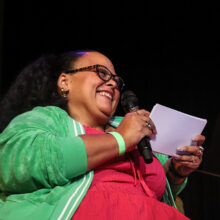
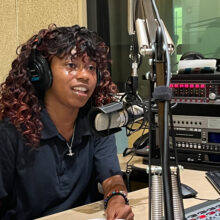
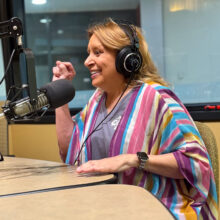
This week, we learn about two singer-songwriters—one real, one fictional. Author Lori Rader-Day returns to the show with her new murder mystery “Wreck Your Heart,” set in the country music scene of Chicago (yes, really). Later, we hear a performance from multi-genre musician Katie Jo Robinson, recorded live for Pop of Culture.
Also in this episode: A Beautiful Thing set “In the Delivery Room,” and sculptor Chet Geiselman shares what he’s working on!