Audio Transcript
Sean Ashcraft (00:00):
Support for Pop of Culture comes from Stallings Wealth Management, Daniel Stallings, financial advisor. Securities and advisory services offered through Cetera Advisors LLC, member FINRA/SIPC, a broker/dealer and registered investment advisor. Cetera is under separate ownership from any other named entity.
Michelle Kinsey (00:15):
This week on Pop of Culture, we travel from all over the world to get to East Central Indiana.
Sharon Grubbs (00:21):
Well, we order in the end of December because you can get pre-booked at better prices.
Scott Garnham (00:27):
I remember we sold out within about two weeks, which is incredible. And then for about nine months, nothing really happened. So it was kind of like straight back to reality.
Jen Blackmer (00:36):
We'll speak with artists handling travel logistics to bring the arts inland.
Michelle Kinsey (00:41):
And it's Black History Month. We have a special conversation ahead of an event celebrating the legacy of women from Muncie's historic Whitely neighborhood.
Luke Jones (00:50):
Support for Pop of Culture comes from Stallings Wealth Management, The Innovation Connector, and from you. With state and federal money eliminated, you are the difference in keeping local programming on the air at IPR. Become a member today at indianapublicradio.org.
Jen Blackmer (01:14):
From IPR, this is Pop of Culture. I'm Jen Blackmer.
Michelle Kinsey (01:18):
And I'm Michelle Kinsey. This week, we go international.
Jen Blackmer (01:22):
What does it take to get flowers from around the world into vases in East Central Indiana?
Michelle Kinsey (01:27):
And how does a stage show make it from the UK to Muncie? We'll take you there.
Jen Blackmer (01:33):
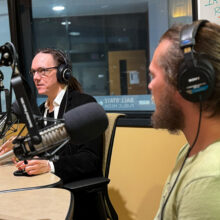
We're going to start today right here in the Pop of Culture studios. There's a presentation happening Thursday, February 26th. It's called Women of Whitely at the Heart of Muncie's Black History. And joining me are two panelists from the event. First, we have Sara McKinley and Sara's the manager and archivist at the Carnegie Library in Muncie. Hello, Sara.
Sara McKinley (01:56):
Hello.
Jen Blackmer (01:57):
And joining Sara is Melissa Gentry, the supervisor of the Map Collection at Ball State University Libraries. Hello, Melissa.
Melissa Gentry (02:05):
Hi, thanks for having us.
Jen Blackmer (02:06):
Of course. We're happy that you could both come and join us in studio today. So why don't you tell us a little bit about the event, what inspired Women of Whitely?
Sara McKinley (02:18):
So the Women of Whitely event is part of the Notable Women of Muncie and Delaware County Project, which is a project that is a partnered initiative with Muncie Public Library, Delaware County Historical Society, Ball State University, and the Minnetrista Museum and Gardens. And that project was really started to bring stories of women to light because women traditionally aren't written about as much in the historic record. And we have a lot of amazing women here in Delaware County whose stories are worth sharing. And so the program with Shaffer Chapel came about through a project that Muncie Public Library did in collaboration with Shaffer in 2024. They have a wonderful museum there that's in the back of the church.
Melissa Gentry (03:05):
Yes, they do. Yeah.
Sara McKinley (03:06):
And so we met with them and talked about ways that we could collaborate to preserve the collections that they have there through digitization. Just in case anything were to ever happen to any of the original collections, there would be a record that would move forward. And so through those conversations, once Muncie Public Library digitized those, we talked about all of the wonderful history that's there involving women. And I know Melissa had been working on creating some creative maps of the Women of Whitely for some of her projects. And so we thought it would be great to partner with them to bring a program there to the Whitely neighborhood.
Jen Blackmer (03:44):
Yeah, absolutely. So Melissa, tell us a little bit about these maps. How do you take stories and put them into a map?
Melissa Gentry (03:52):
Okay. So I actually was inspired by Dr. Jorn Seemann. He's a geography professor here at Ball State. He's doing an immersive learning project over several years with students working with the Whitely neighborhood, and they've been creating story maps about Whitely. And he asked me to come and speak about some of the women of Whitely, and we interviewed some of the women that were there at the program. And so I thought, well, I should just be making some maps too. So you can make a story map. It's really easy. In Bracken Library, we have resources if students or anyone is interested in making maps like that.
Jen Blackmer (04:28):
So for our listeners who have never done this or heard of this, what is a story map?
Melissa Gentry (04:33):
So it's just something simple. You just put in the points and write a little blurb about that point on the map. You can add photographs and then you can include links to videos. And that's the kind of story maps that I like to create. So it's more like a webpage-
Jen Blackmer (04:47):
Oh, that's excellent. Yeah.
Melissa Gentry (04:48):
... with all different interactive links.
Jen Blackmer (04:50):
Yeah. So you found some stories then and worked on building some maps of these stories and the locations. So when folks come to the event then, what will they experience? What will be the discussion?
Melissa Gentry (05:08):
So we're doing a panel presentation. It will be three of us presenting some of the stories and then Sara can tell you more about the pastor's going to be involved in the program that night. And so we just all chose a different topic. And I'm covering a lot of different women that I've found just doing the research for the maps. And then I'll be talking about the Women of Whitely and how they were organizing during World War I. And they were a force to be reckoned with and did a lot. They raised a lot of money and they did a lot of different programs and events.
(05:42):
And it's exciting for me because one of my favorite things when I'm doing these maps is looking at the buildings that no longer exist in Muncie and just learning about the history of these buildings that we used to have here. And one of the buildings that I'll be talking about is the Campbell's Auditorium. And that's where they hosted some of these events for World War I. And they sounded like really elaborate events. And I thought it was interesting in the history, the city itself was never technically segregated, but Campbell's Auditorium was segregated by night. So the white community used it one night and then the African American community used it on different nights. So I thought that was kind of interesting. So that's where they hosted their big fundraising event too. They created comfort bags for the soldiers that were going off to fight in World War I.
Jen Blackmer (06:30):
Oh, fantastic. Yeah. And is there a story that stands out to you, Sara, of something you want to bring our attention to?
Sara McKinley (06:38):
Sure. So I will be introducing a little bit about the Shaffer Chapel Collection at this program to show some of the resources where people can discover more stories of women connected with the Whitely community. But also I'll be talking about the first women pastors of Shaffer Chapel, and I'll be highlighting the story of Alice McIntosh, who she was a difference maker in a lot of different areas of Muncie's history. She was a civil rights activist. She was an entrepreneur who started a lot of businesses here in Muncie. Some of those businesses were very creative in terms of they were there specifically to help people sort of learn skills that would help them work their way out of generational poverty. She also was the first black woman to be elected to Muncie City Council. So she made an impact in a lot of different areas in the community.
Jen Blackmer (07:31):
Awesome. I think we might have time for maybe one other story that's interesting to you that you're going to talk about. Yeah. Does that sound okay? Yeah. Okay. Great.
Melissa Gentry (07:42):
Yeah. I have one. Okay. So one of the women that we discovered from the Whiteley neighborhood was a woman named Charlotte Law. And there was kind of an interesting connection between Muncie and Wilberforce University, which is a predominantly African American university in Ohio. And there were a lot of women from Muncie who attended Wilberforce University. So Charlotte was a phenomenal scholar and she attended Wilberforce and she was inducted into Delta Sigma Theta, which was an honorary sorority. And she also served as an assistant instructor in English when she was there. And she actually graduated magna cum laude. She was first in her class. She graduated in 1927 from Wilberforce, and she had actually completed her four-year degree in three years. But the interesting part is she was first in her class, but one of the other women that she graduated with was Dorothy Johnson, who is photographed with Charlotte in one of their senior pictures. And Dorothy is probably... She was known as Dorothy Johnson at the time, but she's probably better known by her married name, Dorothy Vaughan. She was the... You may know her from the movie or the book, Hidden Figures.
Jen Blackmer (09:01):
Yes.
Melissa Gentry (09:02):
She was the NASA genius mathematician. And so Charlotte Law was actually first in class, and so Dorothy was...
Jen Blackmer (09:11):
I had no idea.
Melissa Gentry (09:12):
Yeah. So it's kind of an interesting connection.
Jen Blackmer (09:15):
Oh, I love that. Oh, I love that connection. That's wonderful.
Melissa Gentry (09:16):
Yeah.
Jen Blackmer (09:17):
Yeah. And Sara, you have another story?
Sara McKinley (09:19):
Sure. So there was actually a young girl who made Muncie civil rights history back in the spring of 1949. This was actually six years before the Montgomery bus boycott with Rosa Parks. Patricia Bragg, who we have kind of dubbed Muncie's Rosa Parks, but even though she predated Rosa Parks with her story, she was a member of a local debate club, the Honor Society, and a French club at Muncie Central High School. And she attended a field trip to a restaurant located here in Ball State's Village near campus. And I won't spoil the story. If you come to the program, you'll hear more about the story. But she was met with discriminatory treatment there and her response to it was what made history here in Muncie. She later became the president of the local chapter of the NAACP, and she fought for many other issues related to education and discrimination throughout her life.
Jen Blackmer (10:14):
Wow. Wow. And I love these stories of the place where I have lived for so long and just learning about all of these incredible connections. Talk about what you hope the audience members who come to hear the discussion will get from this. I mean, do you hope that this encourages people to seek out archives and to maybe do their own digging into what's available for them to do historical research?
Melissa Gentry (10:48):
When I work with English classes here on campus, especially English classes, but also history classes, I'm always telling them when they're researching for a paper or a presentation, they are so lucky to come here to Ball State because we do have these four archives right here with the Historical Society and Minnetrista and Muncie Public Library and then the Digital Media Repository that's from the Ball State University Libraries. You can look at photographs and oral histories and personal correspondence. There's even personal diaries. And it's just amazing what you can discover just listening to an oral history or reading someone's letter. And there's so much history that's been impacted worldwide just by people from Muncie. And I just think we have a pretty unique city that we live in.
Jen Blackmer (11:34):
Yeah, we really do. And I think that surprises people I think when they learn about it, when they learn about what's available to them to learn. Sara, how does one access archival material? Do they just show up and say, "Hey?" Can you...
Sara McKinley (11:49):
Sure. Well, it depends on the archive, but here in Muncie, we're pretty lucky that you can pretty much just walk into an archive and somebody can assist you. It does help if you contact us in advance with a question because then we can be more prepared to locate materials for you. Sometimes it does take time. But yeah, you can call, you can go in person. We do have, as Melissa mentioned, there's the Digital Media Repository at Ball State that does have a lot of materials that are available free online directly from the archive. Muncie Public Library and Minnetrista and Delaware County Historical Society have similar internet archives that you can access that have a limited volume of those materials.
(12:30):
And just kind of dovetailing off what Melissa said about what we hope to get from the program, I think that learning through archives also gives us a sense of community. It gives us a sense of empathy with people that are different from ourselves. And it also, I think, gives people an idea of how important it is to save our history now. And so everybody has their own unique stories and we're hoping that... It's difficult to find some of these women's stories now, so we want to make sure that we're helping people prepare to carry those stories onto the future as well.
Jen Blackmer (13:07):
Yeah, absolutely. Absolutely. And I think we're so kind of stuck in this sense that if there's something we want to find out, we'll just Google it and that'll be enough. And the fact that we have all of these living histories still very present and available to us in the library, I think is an important reminder that we don't just get stuck in this immediate sense of the first answer is the only one we have. Because the further we go into the archive, the more stories we unearth. And this notion of empathy, Sara, I think is quite lovely. Yeah. So February 26th, Women of Whitely at the Shaffer Chapel, open to the public. Sara McKinley is the manager and archivist at the Carnegie Library in Muncie. And Melissa Gentry is the supervisor of the Map Collection at Ball State University. Thank you both for being in the studio with us today.
Sara McKinley (14:07):
Our pleasure. Thank you.
Melissa Gentry (14:09):
Thanks so much.
Jen Blackmer (14:23):
So last Saturday was Valentine's Day. Hopefully, this isn't how you're finding that out. The Pop team was curious what that holiday looks like for a florist.
Sharon Grubbs (14:35):
Oh, hello.
Luke Jones (14:36):
Hello.
Kara DuQuette (14:36):
[inaudible 00:14:37].
Sharon Grubbs (14:39):
Oh, that's all right. How are you?
Kara DuQuette (14:40):
I'm good.
Luke Jones (14:40):
Good. How are you?
Sharon Grubbs (14:40):
I'm good.
Kara DuQuette (14:40):
[inaudible 00:14:42].
Jen Blackmer (14:41):
Our co-host, Kara DuQuette, paid a visit to a flower shop in Yorktown before their big day.
Kara DuQuette (14:47):
We're here at Foister's Flowers. We're talking with Sharon Grubbs. And some of you might remember she was the 2025 David Owsley Museum of Art's Art in Bloom People's Choice Award winner. So that's exciting. And today we're here to talk to you about something equally exciting maybe, Valentine's Day. It's coming right up.
Sharon Grubbs (15:13):
Every year at this time.
Kara DuQuette (15:16):
One of the things we're curious about is when do you start ordering for holidays like this, like major holidays like Valentine's Day?
Sharon Grubbs (15:26):
Well, we order in the end of December, because you can get pre-booked at better prices at the end of December, but you have to know what you need before that. So it's planning even before that, which I'm not real good at, but you have to plan before that.
Kara DuQuette (15:44):
And so I imagine some of the planning has to do with sales from the previous year, but what other things do you consider when you make your orders?
Sharon Grubbs (15:55):
Well, we have to make designs for them. Other than roses, we have other little mixed arrangements because some people just don't like roses or their roses are more costly than some of our other designs. So you have to have a recipe to know how many containers and how many flowers are in that, and then you have to multiply it together so you know how many carnations or daisies or snapdragons or roses or whatever else that you need to order for each item. So then we have the spreadsheet and we sell... I usually normally would buy a thousand roses, but it's on a Saturday and Saturdays, we'll deliver a lot on Friday and we'll deliver a lot on Saturday, but we deliver more on Friday to people's work and stuff.
Kara DuQuette (16:51):
A lot less deliveries on a Saturday-
Sharon Grubbs (16:52):
Yeah, I think so.
Kara DuQuette (16:53):
... Valentine's Day.
Sharon Grubbs (16:54):
Yeah.
Kara DuQuette (16:55):
Well, I once helped a friend who owns a flower shop in Chicago and it was a madhouse the entire day. A lot of people, including a large portion of men coming in saying, "I need a dozen roses right now." Do you experience that?
Sharon Grubbs (17:11):
Yes. And it's like they'll call in the morning and will want delivery that afternoon. All these other people ordered before you did. So we'll get there maybe, but sometimes you have to go, "I'm sorry, I don't have enough drivers. I don't have enough employees to make these arrangements for you." So then they'll go to something else. If we can't do that, then they'll pick something else.
Kara DuQuette (17:36):
And what are some of these something elses that are available?
Sharon Grubbs (17:39):
They're the arrangements that are...
Kara DuQuette (17:41):
Okay. So you will try to steer them to an arrangement.
Sharon Grubbs (17:44):
Right. Yeah.
Kara DuQuette (17:44):
Well, can you describe one of these arrangements possibly for us?
Sharon Grubbs (17:48):
Well, we'll do purples. Lots of people like purples. Some of them do bright colors, yellows, oranges, reds, purples. And then we do a dozen yellow roses or a dozen white roses or mix of roses. Or then we do the arrangements have roses, alstroemeria, daisies, carnations, your typical just traditional stuff. They last the longest if you do carnations, daisies, and alstroemeria. Those are the longer lasting flowers, the less expensive, but longer lasting.
Kara DuQuette (18:22):
Well, and that gives kind of a spring vibe since we're in this snow covered tundra right now. Another thing we were curious about is where do you order flowers from since Indiana is snow covered right now, at least our part of Indiana?
Sharon Grubbs (18:37):
We have a wholesaler in Indianapolis, we have a couple, and then I have a couple dealers that I deal with that out of Miami, and then you can order direct from the farm. But most of the time I do my local wholesaler because if there is a problem, I know who to go to and I can get my credit faster than I can if I order out of state.
Kara DuQuette (18:59):
Now, is your local wholesaler connected to a farm in Indiana?
Sharon Grubbs (19:04):
No. Well, they do have some local offerings during the summer and stuff. They will purchase off of local farms and things like sunflowers and I think it's sunflowers, ranunculus, and lisianthus.
Kara DuQuette (19:20):
My favorite flower, sorry. Yes. So when I helped out my friend who's a florist for a couple of years, there are orders that came in through the computer and then there were orders that I took on the phone, and I couldn't believe there were some spicy notes. Have you ever had to take a spicy note?
Sharon Grubbs (19:40):
Yep. In a minute. Give me a minute.
Luke Jones (19:46):
You can run your business if you need to.
Sharon Grubbs (19:48):
[inaudible 00:19:48].
Kara DuQuette (19:48):
Yeah, we don't want to...
Sharon Grubbs (19:49):
That's fine.
Luke Jones (19:49):
Yeah. Hi.
Kara DuQuette (19:49):
How's it going?
Sharon Grubbs (19:53):
He's delivering today. What was the question?
Kara DuQuette (19:57):
Oh, no. So when-
Sharon Grubbs (20:00):
Oh, spicy cards.
Kara DuQuette (20:00):
Yeah.
Sharon Grubbs (20:02):
Not a lot. Not a whole lot. I think they buy their own cards and write their own spicy cards.
Kara DuQuette (20:09):
I also would like to know, do you have a best or worst Valentine's Day experience that you've had?
Sharon Grubbs (20:17):
Yeah, I have a worst, and that was in February that it snowed. And my daughter was, she was young. I think she might've been eight. She's 35 now. We spent the night here and then nobody could come in. We really couldn't get anything out. But I did have a lady that she did come in and she did deliver and then we delivered everything the next day, and everybody was okay with that. So when I say we've had the best customers, we've had the best customers.
Kara DuQuette (20:50):
Well, that stuck with you, as I imagine it would.
Sharon Grubbs (20:53):
Yeah.
Kara DuQuette (20:54):
Is there anything else, Sharon, that you'd like to share with us about Valentine's Day?
Sharon Grubbs (20:58):
Order early, please. Don't buy just one thing. You can buy for your mom and your girls and all that.
Luke Jones (21:08):
Can we possibly see the wholesaler delivered today?
Sharon Grubbs (21:11):
Sure.
Kara DuQuette (21:11):
Oh, yeah.
Sharon Grubbs (21:11):
Sure.
Kara DuQuette (21:12):
That's easier.
Sharon Grubbs (21:16):
Thank you. Sorry.
Luke Jones (21:16):
No, it's okay. See you later. Good to see you.
Sharon Grubbs (21:19):
All right. Bye. You too.
Luke Jones (21:19):
So what'd you get today?
Sharon Grubbs (21:24):
I got sunflowers and lilies, and these are greens for Valentine's Day. You wonder why we order early, so we can go ahead and green our vases and stuff so they'll be ready. Oh, we got roses, white and red. This is high hypericum berry.
Luke Jones (22:07):
Oh, wow.
Sharon Grubbs (22:07):
We've got more roses. I don't know. It's just amazing on how they get all of them, how they get from Ecuador, a lot of them come from Ecuador, to here, or how they get from Mexico to here.
Kara DuQuette (22:21):
And they stay good. So are there any measures that are taken? I see some of these flowers are wrapped in plastic. But how do they-
Sharon Grubbs (22:33):
They try to do a cold chain.
Kara DuQuette (22:36):
What's that?
Sharon Grubbs (22:36):
So they stay cold till they get to Miami and they stay cold in Miami and then they... Because everything I think comes through Miami. And then they get dropped at the Indianapolis and then Indianapolis sorts them and brings them up here.
Luke Jones (22:50):
And you said you were going to green... So you'll have vases prepped ahead of time?
Sharon Grubbs (22:55):
Yes.
Luke Jones (22:56):
How many vases do you prep? Do you have a staging area?
Sharon Grubbs (23:01):
Well, we each have a station. Right now, they don't look like they're usable, but we each have a station. And then we'll... I've got girls coming in the mornings, I got girls coming in the evenings, and they'll make probably 30 or 40 vases. People, Saturday they think... And Sunday's even worse because people will go out to dinner and they don't think of flowers that... You can go to dinner or you can give flowers. There are people that buy both, but... And then flowers are a luxury. They're considered a luxury. They're not considered a necessity.
Kara DuQuette (23:44):
Do you agree with that? Because I consider them like wellness, life improvement.
Sharon Grubbs (23:50):
Yes, yes. If you put a vase of flowers on your table in the morning or in the kitchen or wherever, and you get to see them every morning, it's going to make... There's been studies and stuff. It's going to make you happier.
Jen Blackmer (24:06):
That's florist sharing grubs of Foister's Flowers & Gifts in Yorktown. She spoke to Kara DuQuette.
Michelle Kinsey (24:24):
The Barricade Boys are on their way to Muncie.
Jen Blackmer (24:27):
The show is billed as a Broadway party. IPR's Thomas Ouellette jumped on an international call with two members of the production.
Scott Garnham (24:35):
My name is Scott Garnham. I'm one of the founding members of The Barricade Boys and also the creator.
David Wyatt (24:42):
My name is David Wyatt, and I am one of the boys.
Thomas Ouellette (24:46):
So Scott, let's start with you. I understand this concept came from you and a friend.
Scott Garnham (24:52):
Yeah, that's right. So myself and Simon Schofield. We're also in the group. So we're the creators and also two members of the band. It was about 11 years ago we created the show. And I was in Les Miserables at the time in London's West End, and always felt that there was this amazing roster of incredible talent, particularly male talent, because that show's just full of guys. I just thought it'd be a really great idea to put on a concert in London's West End where they got to sing other things, not just those very serious, amazing songs from Les Mis, but very serious. And so we put this little show together. We sold out a West End theater and off we went. 11 years on, we're now touring the States and having the best time.
Thomas Ouellette (25:31):
So that sounds pretty incredible. Do you remember how it felt to see that whole theater sold out when you first performed?
Scott Garnham (25:39):
It was kind of surreal because I'd never produced anything before. And Simon, who also is in the group with me, we've always wanted to be creative and produce different things. We hadn't found the right concepts. And there was something felt right about this. I don't know what it was. We just thought this could be really interesting and very magical. I remember we sold out within about two weeks, which was incredible. And then for about nine months, nothing really happened. So it was kind of straight back to reality. But we've worked hard and we've had some amazingly talented guys come and do the show with us. And David's one of those guys which is absolutely brilliant. And that's the success of the show is we bring these unique, talented people together and we sing lots of different songs and we try and have fun. And there's dance moves and costumes and all kinds of things. So we try and put on a really big show that we'd want to see and then hopefully people want to see as well.
Thomas Ouellette (26:27):
Now, I'm curious about the name of the group. Where did that come from?
Scott Garnham (26:32):
So if you are in Les Mis, you spend most of your time in that show as a man on the barricades. So really it just became this thing. At first, it came a bit of a joke that you were a barricade boy. And actually the very first title for the show was The Boys of the Barricade. And then we realized very quickly that we wanted to feel more like a group and less like a big concert, and that's why we shortened it to The Barricade Boys. And actually when we changed the name, that's really when things took off and I think people could see the concept a bit easier.
Thomas Ouellette (27:01):
Those are always where the best names come from. Now, David, can you tell me about your theater journey and what brought you to the group?
David Wyatt (27:09):
So like Scott said, many, many years ago, I did Joseph and the Amazing Technicolor Dreamcoat in London with Simon Schofield, who was the other producer on the show. And him and I became fast friends doing that show. And then a few years later, I actually met Scott working in Reno, Nevada on a completely different show. We were both very young, and also became fast friends. And then fast-forward to many years later, I actually see a performance of The Barricade Boys. And I'm clearly very impressed with my two friends that are on stage and they've produced this wonderful kind of concept and idea. And they invited me, I think it was back in 2018 to come and do a show with them. And I've not stopped since. So wow, that's been eight years.
Thomas Ouellette (28:05):
And Scott, what do you think makes The Barricade Boys stand out among other Broadway tribute shows?
Scott Garnham (28:12):
I think because A, I guess we're not trying to be a Broadway tribute. And I think what we've seen in the past is a lot of other shows are trying to fit into a little box. And we've always said, "Let's break the box." But when you're creating a show, it's very easy to fall into the trap of going, "Oh, I wonder what people want to see," and trying to carve out a show that suits the audience you're trying to sell tickets to. But we've always just been like, "Well, let's create a show that we know we'd love to watch." And I think because of that, people come and watch our show and they find it infectious because we're having a good time. We have a lot of banter in the show, that kind of British dry sense of humor. We take the mick out of each other. But then we also make sure the vocals are really strong and that we worked really hard on the harmonies and the dance routines are tight. So if people are coming to see a show that's called a Broadway party, then that's what we want to give them, a Broadway standard show, but also a really big party at the end of the day.
Thomas Ouellette (29:07):
Oh, wow. I'm listening to you talk about this and I'm like, "You don't need to convince me anymore. I'm going to see it."
Scott Garnham (29:11):
Yes. Mission accomplished.
Thomas Ouellette (29:15):
So David, you were talking a bit about your experience with these productions. So I got to know, what is your favorite Broadway tune during the show?
David Wyatt (29:25):
Ooh, in this current show, I would definitely say The Jersey Boys Medley because choreography is fantastic. Singing that kind of music is so much fun. Four-part harmony, a very tight four-part harmony. Everyone is showcased. There's no Frankie Valli. So that's a lot of fun to do.
Thomas Ouellette (29:46):
Yeah. And Scott, same question to you. What's your favorite song that you guys do during your performances?
Scott Garnham (29:51):
Gosh, this changes, because we've been going 11 years now, this changes. Sometimes I love a song and then I sing it so much I fall out of love with that song, and then a few years later, suddenly I like it again. So I think at the moment, the one that I'm really enjoying is we've got this fantastic unique arrangement of Defying Gravity. Obviously with Wicked being such a big hit last year, we did this great arrangement. And it's pretty electric. It's kind of rocky. And the response we get at the end of that is always a really big response from the crowd. So I also get to sing Hey Jude in the show by The Beatles, and I've got a little boy who's six weeks old who's called Oliver Jude. So the fact I get to sing that now is very special to me.
Thomas Ouellette (30:29):
That's incredible. And congratulations.
Scott Garnham (30:32):
Thank you.
Thomas Ouellette (30:32):
So The Barricade Boys have an impressive list of West End credits. I hear that you not only perform the songs from the show, but you talk about your own experiences with those Broadway shows. So do you think we could get a story from each of you about being on Broadway?
Scott Garnham (30:48):
Ooh, that's a good one. Well, the kind of one and only time that I've appeared on Broadway, because obviously our version of Broadway is the West End, so a lot of our stories come from London. But I was young, I was 23 years old and I was in a show in London that was called Eurobeat. Smash it. And it wasn't sadly. It lasted about eight weeks. But it was a parody of the Eurovision Song Contest. And we got told that the show was closing and a director friend of mine, who I'd worked on a play called The Rise and Fall of Little Voice, called me on the same day we got told it was on notice. He had no idea that the show was closing and said, "I've directed this version of Jason and the Argonauts, and it's just played at Sydney Opera House in Australia and it's going to the New Victory Theater in New York. And I was wondering what you're doing at the moment. Would you be interested?" And I was like, "I just got my notice. I was like, "Oh my..." So I said, "Honestly, I would love to audition. It would be amazing." And he said, "Oh no, I'm not asking you to audition. I'm just offering you the part if you want to do it." And I was like, "Yes."
(31:54):
So I went over to New York and did six weeks at the New Victory Theater, and I was literally opposite Mary Poppins, right next door doing Frankenstein, and it was the most amazing experience. But I was 23, so I didn't really appreciate it. I think now if I went back, I'd be like, "I'm on Broadway." But at the time I was just like, "Oh, this is cool. I'm doing this play on Broadway." So that's a very cool experience for me. That was one I was very, very, very happy about.
Thomas Ouellette (32:17):
Yeah. And David, do you think we could get one from you too?
David Wyatt (32:20):
Yeah, sure. I've actually never been on Broadway. I'm not as fortunate as Scott. But there's still time. But my West End debut was in the show Joseph back in 2003. And when I was auditioning for that show, I was working front of house at another theater selling programs and working in the bar and things. And I got a phone call to say that I was going to have my final recall at, I think it was 6:00 PM on a Wednesday. So I went into work and I worked the matinee of that show. And then I said to my manager, "I need to leave to go to this recall." And there was another guy that I was working with that also had a recall for the show. So we traveled together and then we both left and was like, "Well, if you're in work tomorrow, then I got the job and vice versa."
(33:18):
So we left. We left each other on the London Underground. I went one direction, he went the other direction, and I got a phone call to say that I'd got the job. So I started rehearsals the next morning, so this is the Thursday morning, and they said to me that morning, "You're going to be doing your first show at the Saturday matinee. So you've got two days to learn the entire show and then you're on." So I learned the show. And the Saturday matinee, I'm stood on stage. At the beginning of the show, the curtain's about to go up. I'm crying because I'm making my West End debut. I'm kind of overwhelmed by the thing. But on the Wednesday, I was selling programs at a different show. And then on the Saturday, I was making my West End debut. So it was kind of a really magical week for me.
Thomas Ouellette (34:05):
No pressure, right?
David Wyatt (34:07):
No pressure at all. And my entire family are in the audience and friends.
Thomas Ouellette (34:12):
Well, thank-
Scott Garnham (34:13):
I will just say that the West End don't normally just give you two days, but there was one particular producer that David's referring to, and he would often just give you two days to learn a show. So the norm is not that. That's not the norm.
Thomas Ouellette (34:25):
So he got lucky. I got you. All right, cool. But thank you guys so much for your time. This sounds like it's going to be an incredible experience. The Barricade Boys will bring their Broadway party to Emens Auditorium at Ball State University on February 24th. I'm Michelle Kinsey. No, just kidding. I'm Thomas Ouellette.
Jen Blackmer (35:01):
This is Pop of Culture. I'm Jen Blackmer.
Michelle Kinsey (35:03):
And I'm Michelle Kinsey. This month for What Are You Working On, we've been beating the devil out of brushes. It's Paint Month. Our co-host, Maya Doss, easels us into this one.
Jen Blackmer (35:15):
Really?
Michelle Kinsey (35:16):
Yeah.
Jen Blackmer (35:16):
Really?
Michelle Kinsey (35:17):
Well, I thought it was good.
Maya Doss (35:19):
Today on WAYWO, I have Eva Thomson, a student at Ball State. Eva, we'd love to know what are you working on?
Eva Thomson (35:25):
Well, right now, working on two different art classes. Well, three different art classes, two different painting classes specifically. One of them is more of a narrative base. It's a retake from last semester because we have only so many credits that the painting students can take, and they're really, really great, so I get to retake a class with one of my favorite professors. And the next one that we're working on is supposed to be something called a pastiche painting. So we're taking inspiration, like heavy inspiration from a narrative piece of a different artist, another class, another painting class. We're working on two different abstraction expressionist kind of styles.
Maya Doss (36:05):
That's awesome. You've been such an active artist, even as a student, and I saw such a large volume of work that you completed last semester. What inspires your work when you're pulling from inspiration for these projects?
Eva Thomson (36:17):
Last semester, I really wanted to tackle some personal hard experiences that I experienced back in my early teen years. And I wanted to try to figure out how to dissect those experiences and help process them because it's been a couple years, I'm ready to kind of sort through all the mud. And so last semester was a really heavy hitter on how do I talk about these things in a way that's really productive for me, but also expressing the raw emotions that go into it.
Maya Doss (36:47):
Totally. I feel like art is the best avenue for healing those intense emotional experiences that we have. I always say it's kind of like you get to hide in a way because you're being super vulnerable, but you kind of get to put it out there in something that isn't so directly you.
Eva Thomson (37:03):
Yeah.
Maya Doss (37:04):
Some repeated motifs I've seen in your work are like ocean scapes, portraits, abstraction. How do these avenues help you express what you're feeling as an artist?
Eva Thomson (37:12):
So I actually, I tend to try to avoid doing very explicit narrative pieces about things that I'm trying to process. So with the portraiture, I find it easier to express how I'm feeling or express the feelings from a past experience through subtle facial expressions. So they're never really big and loud. It's always really small and subliminal. So when you're seeing it, my goal for the viewer is to let them pinpoint something for themselves where I'm also getting it all out. So it'll be a lot of very soft somber looks. And they all look really similar, but each of them genuinely mean different things to me. And the feedback that I get from those is that people really do experience them the way that I'm intending them to. And that's always a great boost to my ego.
Maya Doss (38:04):
You like when people project themselves into the work?
Eva Thomson (38:06):
I love it. I love it. Because I don't need people to experience what I experience when I make something. I'm perfectly happy and actually really love when people can see themselves in something that I've created. I want them to feel seen. And that is one of the most important things about art to me is that we can all kind of find ourselves inside that community, whether we're creators or we're just observers.
Maya Doss (38:29):
Very profound.
Eva Thomson (38:30):
Thanks.
Maya Doss (38:31):
And I agree. When you are leaning into the visual aesthetics of your pieces, what do you lean towards intuitively?
Eva Thomson (38:40):
There's a solid mix between what is now intuitive and what was kind of I've made become intuitive. I am always looking for ways to be better, of course, with my art, but I tend to be more of like an academic painter, I think. So I love getting into the nitty-gritty technical details and I tend to play it safe pretty often. But I love my portraiture. I'm a little bit scared to do more experimental, abstract work, even though I think it's really good for me and it's good that I'm in this class that I'm taking right now.
Maya Doss (39:10):
And your abstract pieces I've seen before have really great concepts.
Eva Thomson (39:13):
Thank you. Thank you. I've really enjoyed making them. When I allow myself to actually create them, I find that I can relax. What's become a little bit more intuitive is the way that I go about using color. It's definitely become more of a what feels right rather than what would necessarily look right, I think.
Maya Doss (39:33):
You definitely have an eye for what would look right. I remember in critiques with you, you'd be like, "You used a cool tone here and it should be a warm tone." And I'm like, "Wow, she really has her color field down." So shifting from that academic overthinking of color into an intuitive, what does that look like for you?
Eva Thomson (39:48):
I tend to really love to put my complimentaries together a lot. So the colors that I picked for this piece that I had just done for my narrative class was a magenta and then I wanted to use like a violet as an accent, but I decided to use those two colors because I love the way that they were kind of communicating. And another color that I put in was using like a cobalt blue, very, very cool blue with some white. So it's like that pop of like a sky blue. And so I'm always like picturing the color wheel in my brain and trying not to necessarily use colors that are right next to each other. I find that it helps everything pop a lot more, but that's again, very academic.
Maya Doss (40:32):
It is intuitive too though, because as artists especially, but I think a lot of people, we know when colors feel right. If a color with another color neighbor doesn't look right, everyone can feel it.
Eva Thomson (40:43):
I know. And sometimes there's a huge place for that. It just tends to not be what I usually do.
Maya Doss (40:49):
And that's totally fine. If there was a piece where you felt like you really nailed it and you were like, "Yeah, this is that good Eva Thomson work," what piece would you say that is?
Eva Thomson (40:59):
Oh, okay. I did this painting about a year ago now, but it was of my friend Susan, and it was for this figure painting class. So we had to combine the visual or narrative concepts of two separate painters and combine them. One of them was Isabel Bishop, and I'm trying to remember what the other one was. But Isabel Bishop has this draw, like this charcoal-like feeling to her paintings. I still have absolutely no idea how she does it, but it feels like she's drawn on them, but they're usually oil paint.
Maya Doss (41:34):
Wow.
Eva Thomson (41:34):
Yeah. It's very, very cool. Very atmospheric in general. So she'll have figures that almost feel like they're emerging from an environment, but almost in a ghostly kind of sense. And so I was really drawn to her, but then her muted tones. She had a lot of muted tones with those. The other artist that was paired up with her work used incredibly saturated colors and I loved the way that that looked as well. So I decided to kind of do that ghostly kind of scene for Isabel Bishop's part of this painting and then do very vibrant, saturated colors. And that was the first time that I really felt like I understood color. I decided to name it What Was, because it was drawing from a place of a relationship that had ended that I didn't necessarily want to end. And it was just a really good friend of mine that could no longer really be present in my life. And it was really upsetting for me.
(42:26):
I decided to use one of my other really close friends as the face and just have this slightly mouth gape, eyes big, almost like a surprise look on her face. And then there's a figure that's kind of standing to her right in front of her. So we can't see the face. We can only see the back of them. And it almost looks like she's supposed to be having a conversation with this figure, but she's making eye contact with the viewer instead and just kind of like staring at them, almost like pausing. And so I feel like that piece really highlighted the way that I love to do portraiture and then also have figured out how I really enjoy doing color.
Maya Doss (43:04):
That's awesome. I love hearing how you've taken what you've experienced and learned as a student and you're carrying it forward into your new works and you're figuring out what works for you.
Eva Thomson (43:12):
Yeah.
Maya Doss (43:13):
Ava, if our listeners wanted to see your work for themselves, where could they find you?
Eva Thomson (43:17):
I have an art Instagram account that is called nakedmaidenstudio. It's all one word, no numbers or anything, all lowercase, so you can find it on there.
Maya Doss (43:27):
I've really enjoyed having you in today to talk about artwork and how you're growing as an artist.
Eva Thomson (43:31):
Thank you, Maya.
Jen Blackmer (43:36):
Michelle.
Michelle Kinsey (43:37):
Yes, Jen.
Jen Blackmer (43:38):
There's all kinds of things happening this week in East Central Indiana.
Michelle Kinsey (43:42):
There are indeed.
Jen Blackmer (43:43):
Surprise, surprise, right? All right. We begin with the Ball State Studio Band, friends of the show, performing Friday night, February 20th at Be Here Now in The Village. Opening for the band will be Five and Blind Hog. The music begins at 9:00 PM.
Michelle Kinsey (44:00):
Ooh, that sounds good. The play Veal by JoJo Jones is on stage this weekend at Ball State University. Presented by the Department of Theater and Dance, the play tells the story of a young woman named Chelsea who is crowned Queen of North America. In the midst of her newfound reign, three friends from middle school ask Chelsea for a big favor. But before she grants it, she's going to make them reminisce about their shared friendship. Have you seen this, Jen? This sounds so interesting to me.
Jen Blackmer (44:30):
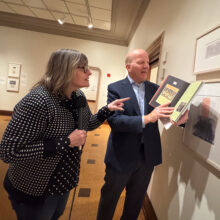
It is really, really interesting and it actually comes to us direct from Chicago. It ran at Red Orchid Theater in Chicago. All right. The exhibition, Nora Krug Belonging, is opening this weekend at the David Owsley Museum of Art. The exhibition will be on display through June 13th and focuses on her graphic memoir, Belonging: A German Reckons with History and Home, as well as her most recent book, an illustrated edition of historian Timothy Snyder's On Tyranny: 20 Lessons From the 20th Century. Combining the artist's personal experiences with the events of history through museum artifacts, flea market finds, vintage photography, oral histories, and personal conversations, as well as a lot of research. This sounds absolutely fascinating.
Michelle Kinsey (45:20):
I have seen some photographs from this exhibit, and it looks amazing.
Jen Blackmer (45:25):
Awesome.
Michelle Kinsey (45:26):
I really feel like it's unlike anything I've seen at the museum for quite some time.
Jen Blackmer (45:30):
Absolutely. And it's timely and incredibly contemporary.
Michelle Kinsey (45:34):
Jen, do you ever have that urge to look for thrifty treasures late at night?
Jen Blackmer (45:39):
When don't I have that urge, Michelle?
Michelle Kinsey (45:42):
Well, the midnight market in Newcastle is Saturday, February 21st from 7:00 to midnight. There will be more than 70 vendors at Junk in the Trunk Vendor Market. You'll also get coffee or cocoa to keep you going.
Jen Blackmer (45:57):
The musical Don't Let the Pigeon Drive the Bus is rolling into the Paramount Theater Center in Anderson on Tuesday, February 24th. You and I were just talking about how much we love Mo Willems. This musical tells the story of a bird who never gets to do anything.
Michelle Kinsey (46:14):
Never.
Jen Blackmer (46:15):
But this time he might just get to drive that bus. Andersonparamount.org has the details.
Michelle Kinsey (46:21):
Awesome. The guy who didn't like musicals and Groundhog Day are on stage again this weekend at Muncie Civic Theater. MuncieCivic.org has all your details.
Jen Blackmer (46:33):
And the Ball State Symphony Orchestra will perform at 7:30 PM Thursday, February 26th at Sursa Performance Hall. This ensemble performs orchestral music from a wide variety of backgrounds and time periods.
Michelle Kinsey (46:47):
You know what? We would love to hear about your events. Let us know at indianapublicradio.org/contact, then click Pop of Culture.
Speaker 6 (47:02):
Support for Pop of Culture comes from Stallings Wealth Management, The Innovation Connector, and from you. With state and federal money eliminated, you are the difference in keeping local programming on the air at IPR. Become a member today at indianapublicradio.org.
Jen Blackmer (47:26):
And that's our show. Our executive producer is Angie Grimes.
Michelle Kinsey (47:30):
This week was produced by Luke Jones, who has been thinking internationally this week, like maybe Turks and Caicos.
Jen Blackmer (47:38):
Oh, lovely. We had production assistance from Andrew Montavon.
Michelle Kinsey (47:43):
Our audio fellow is Maya Doss. Our show was hosted by me, Thomas Ouellette...
Jen Blackmer (47:49):
And me, Jen Blackmer. Pop of Culture is a production from IPR on the campus of Ball State University.
Scott Garnham (48:01):
There you go. We're going to Wisconsin. So I don't think I've ever been to Wisconsin, so I'm excited to visit Wisconsin. So there we go.
Thomas Ouellette (48:06):
Well, I think they're-
Scott Garnham (48:07):
They have good cheese apparently.
Thomas Ouellette (48:08):
Yeah, they've got a big thing on cheese over there, so give it a shot.
Scott Garnham (48:13):
Well, I like cheese. That's good.
Thomas Ouellette (48:14):
All right. Well, thank you guys so much for your time. I really appreciate it. I think we got everything we need.