Audio Transcript
00;00;00;02 - 00;00;16;05
J.R. Jamison
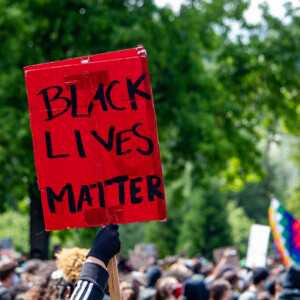
Jamison: The killing of George Floyd by a Minneapolis police officer, and the subsequent protests, have brought to the forefront a renewed conversation on Black lives and the injustices BIPOC folks face each day. But this time, will there be change? I'm J.R. Jamison.
00;00;16;08 - 00;00;26;20
Kelsey Timmerman
Timmerman: And I'm Kelsey Timmerman. Today on the Facing Project, we'll discuss Living while Black in the USA. [Theme music]
00;00;26;22 - 00;00;50;19
Kelsey Timmerman
Timmerman: On June 3rd, the day before 2000 people march for Black lives in Muncie in the abandoned Dress Barn at the mall, the Muncie community held a forum with local leaders, including the mayor, chief of police and other city and county officials. Everyone on the panel was white. As the event came to a close, WaTasha Barnes Griffin stepped to the mic and our community listened.
00;00;50;22 - 00;01;17;14
J.R. Jamison
Jamison: In our first season, we shared WaTasha’s story from Facing Racism in Muncie, Indiana. We want to re-air that story today. In this story, WaTasha shared her experience of being called the N-word for the first time as a young child while she played with her white friend. Now, she's a mother of a 16 year old black man, a community leader, and the executive director of our local YWCA, where she works each day to empower women and fight racism.
00;01;17;17 - 00;01;24;23
J.R. Jamison
And later in the show, we'll share what she had to say on that day in the Dress Barn. And then, she'll join us to talk about her work.
00;01;24;25 - 00;01;35;22
Kelsey Timmerman
Timmerman: First, we want to acknowledge that we are two white men. Typically, each episode, we banter back and forth about experiences we've had related to a topic or share some of our thoughts and research.
00;01;35;24 - 00;01;48;15
Kelsey Timmerman
But sometimes, we as people and as a society just need to listen. Now is the time we need to listen to black voices. Their lived experiences. The injustices they've faced. And their fears.
00;01;48;17 - 00;01;59;24
J.R. Jamison
Jamison: Even though our show is listened to outside of our hometown, we want to center the experiences of black voices in our community. It's important to start hyperlocal, so that's where we want to begin.
00;01;59;26 - 00;02;08;29
J.R. Jamison
But as a listener, we encourage you to think about your own community and how the stories you hear today apply to you and your town.
00;02;09;01 - 00;02;36;01
Amanda Hummer
Hummer: It Shouldn't Matter, by WaTasha Barnes Griffin, as told to Seth Carrier-Ladd, performed by Amanda Hummer. “Madeline, what you doing?” That was the moment everything changed. Madeline was my best friend. We'd known each other since we met in kindergarten, delighted when we figured out that we lived across the street from each other. We noticed, of course, that our skin was a different color.
00;02;36;03 - 00;03;04;22
Amanda Hummer
Madeline's white, mine black. But that didn't matter to me. And it didn't matter to her. I mean, we noticed, right? After we became friends, we asked, “can I touch your skin and see if it feels different?” Which it didn't really. And of course, “can I touch your hair?” Which did actually feel different. But outside of those natural curiosities that any kid of that age has,
00;03;04;24 - 00;03;26;17
Amanda Hummer
we pretty much just played. Now, I didn't play with Madeline all of the time. Our street was the dividing line, so I always had to choose: out the front door to the white neighborhood, or out the back door to the black. Two doors in one house. In my house. Each door leading to a totally different kind of place.
00;03;26;19 - 00;03;51;16
Amanda Hummer
I liked both. Safe and at home with my black friends out back; different and interesting white friends out front. My black friends didn't understand. “Why you want to hang out with the white kids?” they would ask. “Madeline's my friend,” I would respond and leave it at that. My grandmother, she'd have white friends over for dinner every so often.
00;03;51;18 - 00;04;16;07
Amanda Hummer
And our pastor, he talked all the time at church about how important it was to have friends of every color. And we went to the same school as all these white kids, so their questions didn't even make sense to me. Of course, I wanted to hang out with Madeline. She was my friend. I didn't get it. Truthfully, the difference I noticed more between me and Madeline was about class.
00;04;16;09 - 00;04;41;25
Amanda Hummer
Madeline's folks were poor as could be, despite living on the white side of the street. And while we weren't well-off at my grandmother's house, we always had enough. We always had everything we needed. And we certainly had more than enough love. You could see the difference just looking at our two houses: plunked down between two more well-kept houses, a green one on one side, and a yellow one on the other.
00;04;41;27 - 00;05;07;10
Amanda Hummer
Madeline's dark gray colored house looked worn. It had a light gray picket fence around its front yard, with the paint flaking and chipped off in places, and the yard was all dirt, no grass in Madeline's front yard, just dirt. Dirt and two green metal chairs that rocked a bit when you sat in them. And the front porch. Can't forget that porch. Covered in junk
00;05;07;15 - 00;05;27;29
Amanda Hummer
end to end from who knows where. Our house, on the other hand, was proud: two stories of brick with a well-kept front yard, nice pine shrubs on either side of front steps, pillars on the front porch, and, of course, a few pieces of nice patio furniture.
00;05;28;01 - 00;05;50;11
Amanda Hummer
The class difference showed in other ways too. The way we dressed, for example, my clothes were usually in better shape. Now we didn't care. We played in Madeline's dirt front yard with the green chairs just as often, if not more, than when we played on the nice front porch at my grandmother's house. And we didn't talk about clothes, but we noticed.
00;05;50;14 - 00;06;15;29
Amanda Hummer
Or at least I did. Sometimes I would ask my mama, “Mom, you know those shoes I don't wear anymore? Can I give them to Madeline?” She really needed some shoes. It only made sense. Madeline was my friend, and she needed stuff. And I had stuff that I wasn't using. And so we continued merrily on our way. It wasn't perfect.
00;06;16;02 - 00;06;44;01
Amanda Hummer
No friendship ever is. We had our little fights and disagreements, but never about the color of our skin. And we always worked it out. Kindergarten through fourth grade was pretty great. And then one day, everything changed. It was a nice sunny day. We were sitting out in Madeline's dirt front yard near those green metal chairs, that peeling gray picket fence.
00;06;44;03 - 00;07;09;02
Amanda Hummer
We were sitting there playing with dolls, white baby dolls. Two little girls playing, not a care in the world. And then some white man I didn't know, a friend of the neighbors in the yellow house, he shouted out, “Madeline, what are you doing?” “Just playing.” “Why are you playing with a n-?” “This isn't a n-. This is ‘Tasha.”
00;07;09;04 - 00;07;26;26
Amanda Hummer
Looking back. I'm glad that white man didn't push it any further. He just walked away. And Madeline asked, “What's a n-?” “He's talking about black people.” And we left it at that.
00;07;26;28 - 00;07;53;11
Amanda Hummer
Now, I don't know if Madeline talked to her parents, but I talked to my mom as soon as I got home and told her what happened. “It made me feel bad, mom. It hurt my feelings.” “Oh, honey, some people are just like that. Some people see color instead of seeing people for who they really are. In our family, we treat people the way they want to be treated.
00;07;53;13 - 00;08;21;13
Amanda Hummer
With kindness, love and respect. You're beautiful. You're smart. You're intelligent. You're my ‘Tasha. But sometimes other black people call each other n-.” “Why do they do that?” “They shouldn't do it, honey. No one should ever call each other by that name.” What she didn't say to me then was as important as what she did.
00;08;21;16 - 00;08;54;19
Amanda Hummer
She didn't tell me, “No more going back over there to play with Madeline.” She never said, “You stay away from the white side of the street.” She just explained and supported. And so the next day, back I went to play dolls again with my best friend. I've never forgotten, though. Before, I knew about black & white. After, black & white meant black, and white.
00;08;54;21 - 00;09;19;01
Amanda Hummer
The thing is, I've never really changed. I've experienced my fair share of racism. So much so, in fact, that I usually just tune out the consistent, regular, repetitive, low level stuff. But the color of a person's skin still doesn't matter to me. I see it. I know it makes a difference. I talk to my two black children about how America treats them differently
00;09;19;01 - 00;09;37;07
Amanda Hummer
as a black person, because I have to. But when I meet people, skin color is one of the last things I notice. Just like with Madeline, I see people. I see human beings. I see my friends.
00;09;37;10 - 00;09;58;09
Amanda Hummer
Skin color shouldn't matter. That's the way it should be. We have to keep putting in the work to make it so. [Contemplative hip-hop music]
00;09;58;11 - 00;10;07;29
J.R. Jamison
Jamison: We want to welcome WaTasha to the show. WaTasha, hearing your story again, what advice would you give to that little girl about the world she would grow up in?
00;10;08;01 - 00;10;23;28
WaTasha Barnes Griffin
Griffin: If I could give advice to that little girl, I would just simply tell her to, just use her voice for good. Use her voice to bring people together and not tear them apart. And to continue just to be a light.
00;10;24;01 - 00;10;48;02
Kelsey Timmerman
Timmerman: So WaTasha, that's that's, fantastic. And. And you. Now you're a mother. That little girl is grown up. And as a mother and community leader, you took the mic recently, and your voice quivering with emotion and the mask hanging from your ear, and you addressed, our community and, at, and our leaders at a forum on racial injustice.
00;10;48;03 - 00;10;57;12
Kelsey Timmerman
Can you kind of set the scene for us a little bit, describe like the feel of the room and who was on the panel and what you thought and felt as you started to speak?
00;10;57;15 - 00;11;24;22
WaTasha Barnes Griffin
Griffin: So we had that that forum that prior Monday. Our city leaders had reached out to some of the leaders in our African-American community to kind of come together to discuss the issues that had arisen with the George Floyd murder. And just to present a united front to our community, to share that we would not tolerate, any acts of racism, overt racism, in that manner.
00;11;24;22 - 00;11;44;21
WaTasha Barnes Griffin
And so we collectively decided that we would hold this forum and, as we begin to build the agenda, there became a point in a time when there would be an opportunity for closing remarks. And, I was just asked if I'd be willing to provide those remarks, and there was no really a direction on how we would close it out.
00;11;44;23 - 00;12;12;26
WaTasha Barnes Griffin
And so I just felt as we were in the room, and I have been just a journal a lot. And so I write down feelings and thoughts. And so I had been just, you know, brainstorming, stewing over some of those things. So they were there with me on my iPad. And so that room, I think the folks in the room were really, allies and folks who are really committed to, standing up for social justice and stopping those injustices.
00;12;12;26 - 00;12;32;29
WaTasha Barnes Griffin
And so, the room at that moment just felt right. And I did not have a plan to to really come with all of those things. But as I got up to begin to share that closing and just to say thank you. I wasn't able to do so. I had to really ask those those questions and, you know, do Black lives matter?
00;12;32;29 - 00;12;48;06
WaTasha Barnes Griffin
Do they really matter? And I just thought that was just that prime time. And so, as a leader standing up there as a mother, you know, as a black woman, it just it just came, and so I just went with it.
00;12;48;08 - 00;12;51;18
Kelsey Timmerman
Timmerman: And and, kind of, who was on the panel behind you?
00;12;51;21 - 00;13;33;11
WaTasha Barnes Griffin
Griffin: So, so the panelists were, we had Tony Skinner, who is the sheriff, Delaware County Sheriff. We had the CEO of a bunch of community schools, Dr. Kwiatkowski. There was our prosecutor, Mr. Huffman. There was Ball State police Duckham, Jimmy Duckham; our mayor, Dan Ridenour; police chief Sloan, Nate Sloan. There was also, [thinking] there was the Yorktown police chief was up there as well.
00;13;33;16 - 00;14;08;08
WaTasha Barnes Griffin
And then there was a representative from Ball State’s president's office, and her name was Ro Anne Engle. She wasn't sitting there, but she was definitely a panelist. And then the moderator was Pastor Robert Scaife, who leads our Collective Coalition of Concerned Clergy, and then a few of the clergy members who were doing Q&A, pastor Andre Mitchell with Deliverance Temple, a Black church in our community, and then Pastor Andrew Draper with Urban Light, who pastors a multiracial church on the south side of town.
00;14;08;10 - 00;14;16;24
WaTasha Barnes Griffin
And then we also had Yvonne Thompson with Human Rights, who was kind of managing the social media aspect aspect of that. Yeah. Yeah.
00;14;16;27 - 00;14;40;11
Kelsey Timmerman
Timmerman: So you stepped to the mic and, and your plans aren't necessarily to, you know, you're kind of just going to go up there and at first say like, hey, thanks for coming. There's still more work to be done. And then, I mean, you can I can tell at the beginning, like, your heart is beating pretty hard. Like you turn around and you're not just you're not just addressing the audience, but you turn around and address the the panelist.
00;14;40;11 - 00;14;44;01
Kelsey Timmerman
I mean, so was none of that was planned, it just like happened in the moment?
00;14;44;04 - 00;15;01;19
WaTasha Barnes Griffin
Griffin: It was not planned. It wasn't planned at all. And I just thought that. Yes. You know, when you address an audience, you know, you're talking to the people that are in front of you. But I knew that there were people behind me as well. So I needed to make sure that they also got to see my face and and hear my voice directly.
00;15;01;26 - 00;15;23;01
WaTasha Barnes Griffin
And because they are leaders in our community, I knew that it would be important for them to hear, hear from someone who's directly affected that they also know on a personal level. And they they know me through the community. And so, I know they know me, WaTasha, as the CEO of the YWCA and doing these particular things in our community.
00;15;23;04 - 00;15;44;12
WaTasha Barnes Griffin
But I needed them at that moment to see me as WaTasha, a black and brown woman who has a black son, and you know what I mean? I needed them to see that. And so I think that is what caused me to really pause and, and really just focus in on them and to think, think about Black lives and how we really matter.
00;15;44;12 - 00;15;49;04
WaTasha Barnes Griffin
And so, yeah, not not planned at all. And just, yeah.
00;15;49;06 - 00;16;09;05
J.R. Jamison
Jamison: Yeah, well, your message was really powerful and it was shared over and over on social media. And some of our listeners may have not gotten the chance to hear your message. And so we want to share that with them now. And we want to give thanks to Mark Slusher from Endpoint Creative for capturing your moment and for giving us permission to use his recording.
00;16;09;08 - 00;16;17;19
WaTasha Barnes Griffin
Griffin: Black Lives Matter. [Applause]
00;16;17;21 - 00;16;24;17
WaTasha Barnes Griffin
Black lives Matter. [Applause continues]
00;16;24;20 - 00;16;30;03
WaTasha Barnes Griffin
Black Lives matter. [Applause continues]
00;16;30;05 - 00;16;34;00
WaTasha Barnes Griffin
They matter. [Applause continues]
00;16;34;02 - 00;16;41;16
WaTasha Barnes Griffin
But do they really, really matter to you? [Applause continues]
00;16;41;18 - 00;16;50;17
WaTasha Barnes Griffin
They can't without relationships. Okay, so let me tell you just a little bit about me.
00;16;50;19 - 00;17;30;26
WaTasha Barnes Griffin
My name is WaTasha Barnes Griffin. I'm the CEO of the YWCA here in Muncie. Our mission is to eliminate racism and empower women. I'm the president of the Muncie chapter of Indiana Black Expo, and our mission is to be an effective voice in vehicle for the advancement of black folks. MLK Dream Team, I'm a member, and our job is to hold Doctor King's dream live and true, and make sure that our civil rights are protected and upheld.
00;17;30;28 - 00;17;51;15
WaTasha Barnes Griffin
Just a little black girl grew up across town on Five Points, Macedonian First Street, with my mom, my grandmother, my mom was a single, single woman. My mom and dad were 16 and 17 when they got pregnant with me walking across the high school stage with me in my mom's belly. Out the front door of my house was the white community.
00;17;51;17 - 00;18;30;17
WaTasha Barnes Griffin
At my Grandmama's back door was the black community. I was always interested in what was out front and how white folks lived, because I kind of knew what it was for us. I'm the daughter of a black man, the sister to three, big sister to three black boys, black cousins, uncles, nephews, grandparents, friends, colleagues, black men. I'm the wife of a hard working, honest black man, Chaka Griffin, right here. [Applause]
00;18;30;19 - 00;18;49;27
WaTasha Barnes Griffin
I'm the mama to a 13 year old little black and brown girl, Sonia. But I am the mother of a 16 year old black male child, a young black man.
00;18;49;29 - 00;19;16;24
WaTasha Barnes Griffin
The day I pushed my baby boy out of my belly, he was guilty from the color of his skin, guilty by the color of his skin. And so every day since he was born, we've been teaching him how to live. And I had to write it down, cause I got to tell you what it was.
00;19;16;27 - 00;19;45;11
WaTasha Barnes Griffin
Black men dying unjustly every day across our country at the hands of law enforcement. And then we black and brown mamas is left to pick up the pieces. The list of black and brown people dying at the hands of the police continues to get longer and longer. The list gets longer and longer. No, we've not had any deaths in Muncie yet.
00;19;45;13 - 00;20;14;14
WaTasha Barnes Griffin
Is there injustice here? Yes. Is there racism, Muncie? Yes. It's here. It absolutely exists. So when my son was one, our son, and he’s 16, now. Little Chaka, don't wear that durag outside. Little Chaka, you can't have that hood on when you're out, when you out there. If you go in that grocery store and you don't, if you ain't buying it, don't touch it.
00;20;14;16 - 00;20;22;11
WaTasha Barnes Griffin
And if you do buy it, make him give you a receipt, even if it is a little pack of gum. Get a receipt. [Applause]
00;20;22;14 - 00;20;46;01
WaTasha Barnes Griffin
When you’re out in your car don't play the music too loud. If you go to McDonald's with your homies, don't be in there getting smart and throwing ketchup packets because they might think something, right? If you get pulled over by the police, comply. Just do what they ask. Don't say nothing extra. Ask the police if you have permission to get your I.D. out.
00;20;46;01 - 00;21;09;08
WaTasha Barnes Griffin
Matter of fact, don't leave the house without your I.D., but ask them. Put your hands up and then ask them if you can get your I.D. out. I need you, whether it's right or wrong, to come home safely. If they mistreated you in any kind of way, we'll handle that once you get home. But we need you to get home. [Applause]
00;21;09;10 - 00;21;23;24
WaTasha Barnes Griffin
Check in with your people. I don't care who is down the street. We need to know where you at. Keep your phone laid down beside you. Turn it on if you need to. Is that freedom? [Sighs]
00;21;23;26 - 00;21;27;18
Unknown
Unknown audience member: All right, now.
00;21;27;21 - 00;21;43;14
WaTasha Barnes Griffin
He says, “Mom and daddy, you all have been telling this to me for a long time. And I do all that. I don’t wear no durag. I don't play my music loud when I'm at school.” He don't get in trouble. Good grade, loves to play football, wants to take his football career and his academics to get him to college.
00;21;43;16 - 00;22;00;05
WaTasha Barnes Griffin
Really laid back, very quiet, big 16 year old. But he is a sweet giant bear. These teachers can vouch for that. But he said, “Y'all tell us to do all this stuff. Don't do this, do this, say this to the police. Don't say this to the police. I can't wear this.” He can't even wear a shirt that even says, I don't know.
00;22;00;05 - 00;22;18;27
WaTasha Barnes Griffin
He can't put two, but he can't put, you can't... “Pull them pants up.” “Yes, sir.” “No, sir.” All of those things on a 16 year old boy just so we can keep him alive. And he says, “Mama, we do all that. I've been doing all that. Most of us black boys do all that, but we still getting killed.
00;22;18;29 - 00;22;25;18
WaTasha Barnes Griffin
So what I'm supposed to do, mom and dad?” What am I supposed to tell my son?
00;22;25;20 - 00;22;53;16
WaTasha Barnes Griffin
What am I supposed to tell my son? What can you, what can you tell my son? Can you promise him that you're going to make sure he stay safe? Can you please make sure my son stay safe? Their sons stay safe? Please? Please. In Muncie, please. Please, please, please! [Applause]
00;22;53;18 - 00;23;20;19
WaTasha Barnes Griffin
And the last thing I'll say is, if Black lives really matter in Muncie, if they really matter in Muncie, here's what we request of you. Don't say you don't see color. When white people say they don't see color, it's an insult because our color is what makes us who we are. If you don’t see my color, I don't exist. [Applause]
00;23;20;21 - 00;23;39;14
WaTasha Barnes Griffin
Number two: Once the rioting and protest are all over, you all get to choose to put your signs down, then go back to your everyday life. You get to choose to stay active or completely ignore it. We don't get that choice!
00;23;39;16 - 00;23;42;15
Unknown
Unknown audience member: All right, now.
00;23;42;18 - 00;24;11;19
WaTasha Barnes Griffin
It's an everyday fight. Because, for black and brown people, we don't have a regular scheduled program to get back to. This is our regularly scheduled program every day. They said it. Y'all been tired for what, a couple of weeks? A couple of months listening to us? We've been tired and exhausted and waiting for real justice. And it's long overdue.
00;24;11;22 - 00;24;39;21
WaTasha Barnes Griffin
It’s long overdue. We are tired of having dialog over and over and over that leads to no real solutions. We are tired of being pacified. We are tired of empty promises. Most of all, y'all really know about the famous cases that hit the news, and even those happened back to back. But just imagine if you knew how those cases come up on a daily and nothing happens.
00;24;39;21 - 00;24;53;19
WaTasha Barnes Griffin
How do you feel? Do the work. Have some uncomfortable conversations with yourselves, with your kids, with some black and brown people.
00;24;53;22 - 00;25;23;21
WaTasha Barnes Griffin
Diversify your leadership teams. Use fair and equitable hiring practices. Train, train, train. I've heard that all night. Train. The next step must involve rapid and bold changes that address racism and the fundamental ways to reform a broken criminal justice system. Everyone responsible for justice in our legal system must be held accountable. Everyone, everyone. And it ain’t just him; everyone! [Applause]
00;25;23;24 - 00;25;49;06
WaTasha Barnes Griffin
Commit today to us, the black and brown folks. On paper you said a lot, but commit paper to pen the plans, the framework. Put those plans in place, but invite us to the table to give you some input as to what we need and how we need it to happen. [Applause]
00;25;49;09 - 00;26;12;26
WaTasha Barnes Griffin
We demand the leadership of Muncie in Delaware County to work with us, to make systematic change, to eliminate racism and injustice. And finally, if black and brown lives really do matter to you, check your heart. [Applause]
00;26;12;28 - 00;26;34;22
Kelsey Timmerman
Timmerman: So, Watasha, you ended your talk with, like, “Check your heart.” And you know, that stuck with me. I think that we all have been like, checking our hearts and looking into ourselves, and, you know, you address both a heart problem that we have as a nation and society and also a systemic problem. So I kind of have I have two questions.
00;26;34;25 - 00;26;42;14
Kelsey Timmerman
How do we best fight for change in the system? And then also how do we fight for change in people's hearts?
00;26;42;17 - 00;27;08;17
WaTasha Barnes Griffin
Griffin: I think we fight for change in the system by really, again, looking at all of those, entities that play a role in how justice is carried out and how justice is served. So we definitely have to look at our, you know, city administration. If we if we talk Muncie, look at our city administration, how what their make up is there, the diversity or the lack of diversity in their leadership?
00;27;08;20 - 00;27;16;23
Kelsey Timmerman
Timmerman: Well even even the panel itself behind you was, I mean, it was it, I mean, other than the moderator was the all white panelists.
00;27;16;25 - 00;27;42;04
WaTasha Barnes Griffin
Griffin: They were all white panelists. And so if if I could just share just a little back history, when we were creating the agenda for that, that, that, that forum, there was a thread where we were all linked together and we just kind of set it up. And immediately when they brought out the rough edit of that agenda, I said, “Where are the black and brown people?”
00;27;42;06 - 00;28;08;05
WaTasha Barnes Griffin
And then they added the few, and then I said, “Where are the wom- Where are the women?” “Oh, oh okay.” Then they added 1 or 2. Right? But it, even in the setting up of the meeting, just the the structural, systemic things that have been embedded into just how we act, think and move is just so deep.
00;28;08;05 - 00;28;28;15
WaTasha Barnes Griffin
And so I don't think it was a conscious thing. I just think that it was something that wasn't even, not even really thought of. And so it just took someone to say, “Hey, where where are the, these voices are missing, and they need to be present.” And sometimes I feel like I alway- I'm like, I mean, I'm always the one that has to open my mouth and say something.
00;28;28;17 - 00;28;49;08
WaTasha Barnes Griffin
But I looked at that, I said, “There are no women here. There are no people of color.” This this, the entire purpose of the forum is to talk about, you know, the issues that people of color are facing. So we have to be present. Our voices need to be heard. And then women oftentimes, and I said it to this, this group of folks in this thread, that black men are being murdered.
00;28;49;09 - 00;29;07;06
WaTasha Barnes Griffin
You know, we are here because of this. And black women are left to pick up the pieces and raise families and, and doing this thing. So our voices have to be a part of that. And so even though you saw that panel and you saw just a few, please know that the voices of us were saying we need to be represented.
00;29;07;08 - 00;29;18;04
WaTasha Barnes Griffin
But we also knew that you can't put something there that's not there. And that is, that that panel reflected our community in our in our leadership right now.
00;29;18;06 - 00;29;22;20
Kelsey Timmerman
Timmerman: Yeah. And and as for the hearts, how do we how do we change hearts?
00;29;22;22 - 00;29;40;19
WaTasha Barnes Griffin
Griffin: Treat- The golden rule is to treat people the way you want to be treated, for one. We've learned, we've learned that as as as kids. Right. But then also there comes a point in time where you do have a job and you do have a duty that are assigned to you, and you have to do those. But at the same time, we cannot lose touch with the human side of us.
00;29;40;19 - 00;30;10;05
WaTasha Barnes Griffin
Right? Like that is a huge piece. And so, you know, even right now with this civil unrest across the country, you know, and, people, black and brown people are protesting and our allies are standing with us and protesting with us. You know, those in power, those who are in leadership are doing all they can to kind of appease and calm us down and settle us down, hoping, this is what history shows, is hoping that, you know, things will get back to some sort of normalcy.
00;30;10;05 - 00;30;30;14
WaTasha Barnes Griffin
And then we can continue on with, you know, our normal day. But when I say, check your heart, do the right thing because it's the right thing. Don't do the right thing because, you know, the camera is rolling and, you know that you have to behave in such a way that is positive, but do that if no one else is around.
00;30;30;14 - 00;30;58;15
WaTasha Barnes Griffin
Like, just do the right thing because it's the right thing. And as far as racism, we know that it's it's it's not gotten worse. It's not gotten widespread. It's just now being recorded and it's just been captured more. Right? So there are so many means to be able to show that to the world of the country. And so, yeah, it's just a heart check, you know, treat, treat, treat all of us in each other like it's our mom, our sister, our brother.
00;30;58;15 - 00;31;12;25
WaTasha Barnes Griffin
Right? You know what I mean? Think about it. You know, I engage with people every day that don't look like me, but I want to treat them the way I want to be treated. Right? And so it's just a check your heart so you can say a lot of things. You can put a lot of things to paper.
00;31;12;25 - 00;31;21;23
WaTasha Barnes Griffin
We can change policies, we can do a bunch of those things. But none of that can change the heart. So it is a check. Check your heart and check your motives.
00;31;21;25 - 00;31;43;25
J.R. Jamison
Jamison: Since the killing of George Floyd, and I want to get back to, you had mentioned the protests that we're seeing, we're seeing more white people speak out in support of Black Lives Matter and join in those protests to end police brutality. And while that's good, we also recognize that's not enough. In your opinion, where are white folks still falling short?
00;31;43;27 - 00;32;12;17
WaTasha Barnes Griffin
Griffin: And I think I said it in my speech, is that, you know, white people, we appreciate their support. We appreciate them standing with us and and joining in to say, “This is unfair. This is cruel. Enough is enough.” We need that. But we also need white people to, one, listen to us. We have been saying these things for hundreds of years and no one has listened.
00;32;12;19 - 00;32;38;05
WaTasha Barnes Griffin
So when we don't feel like we're heard, then you start to see protests and riots and people are expressing their anguish in a way that may not be the best, but one thing that we've realized as a black and brown community is that sometimes we need our white allies to speak out, because the message may be received better from someone that doesn't look like me.
00;32;38;07 - 00;32;55;19
WaTasha Barnes Griffin
And so we need them. We need that support. But we also recognize that we're black, 24 hours a day for the rest of our lives. And some people have the opportunity to step away when they're too tired. You know, some people are already feeling like, “Oh my gosh, there's been a couple of weeks. I'm exhausted. I'm tired of this.
00;32;55;19 - 00;33;13;16
WaTasha Barnes Griffin
Can we move on? Can we let go of this Black Lives Matter thing?” Well, we don't have a chance or the opportunity to kind of walk away from that. This is just what we are and who we will be 24 hours a day. So we don't have- this is our regular scheduled program, right? We don't get to just, you know, walk away from it.
00;33;13;18 - 00;33;29;19
WaTasha Barnes Griffin
And there are some ally that are there to the end, but there are some, when the heat gets too hot, you have the opportunity to decide if I want to stay in the fight or walk away. And so, I told someone last week that what we need is we need allies. We need your support. We need your voices.
00;33;29;19 - 00;33;49;26
WaTasha Barnes Griffin
We need you at the table, speaking for us. When you hear things that are not positive. When you hear or observe overt racism, racism or things that are under, you have to use your voice and say, “Hey, that's not cool.” Like, that's what we need people to do, allies to do for us, all the time.
00;33;49;28 - 00;34;12;13
WaTasha Barnes Griffin
But we also really, you know, with that panel, it was like, okay, we're going to get out here and we're going to presen- we're going to have a forum to say that Muncie, Indiana, will not tolerate these things. But my my concern was before we had this forum, before you get out there and say those things, you've not had the opportunity to talk to us, to ask us what even what we want you to do for us.
00;34;12;13 - 00;34;40;09
WaTasha Barnes Griffin
Right? So that's all we need. Listen to us, have conversations with us, and then we make some some changes. And so today there was a meeting with those same individuals, our, our our, our, our city administration, our county police, our our, our city police, Ball State admin, Muncie Community Schools, NAACP, Muncie Black Expo, the clergy.
00;34;40;11 - 00;35;08;02
WaTasha Barnes Griffin
We we met this morning because the black and brown leaders had drafted up a list of things that were asking all those entities to consider and to make some changes, you know, not things that'll happen overnight, but some things that can help to reduce systemic racism. So we met today to, to do that. And so I say that to say that the dialog continues. There's going to be marches, there's protests, there will be rallies.
00;35;08;02 - 00;35;36;26
WaTasha Barnes Griffin
But after those things stop, this work continues. And we leaders in this community have, have, have, the obligation to our black and brown community are reaching out, like, “What are you all doing let this happening? It's the same old thing.” And we have we have to answer to them. Right? And so because we are held in these, these esteemed positions, and we have to go to our city leaders and say, “This is what our community is asking for.”
00;35;37;02 - 00;35;57;00
WaTasha Barnes Griffin
And so that's what we're doing now. But we want to come to the table together to, like, collaborate and to, you know, to do things. Not demand, not force, but because it's just the right thing to do. Right. And so we want our, our city leaders and our officials to hear us and to be willing to work with.
00;35;57;00 - 00;36;24;11
WaTasha Barnes Griffin
Maybe they can't do everything that we've asked immediately, but let's work at it. Don't just deny. Don't just brush it away. But let's work to make sure that Muncie does not become a Minneapolis, that we don't have those those things happen here. Racism happens. Absolutely. But we don't it doesn't have to to get to the point where we're on the national news for something like that.
00;36;24;14 - 00;36;29;15
J.R. Jamison
Jamison: Do you think we're at a turning point this time?
00;36;29;17 - 00;36;57;07
WaTasha Barnes Griffin
Griffin: Based on history and based on what we've seen in the past, I can really say, I don't know, you know, but but from the people that we have been engaging with, the hope is there. So we don't lose that hope. And I think that that we are really at a turning point and it won't be, it will be black and brown people having to stay in the fight and continue to hold our leadership accountable.
00;36;57;07 - 00;37;16;21
WaTasha Barnes Griffin
So we will have to continue to to be the one. You know what I mean? We hey, knock, knock, knock. We're still here. We're still asking for these things. So we we have realized that we cannot, cannot let go and let up on just equity and justice for all. That's what we want. We're not asking for. And we just want to be safe.
00;37;16;21 - 00;37;37;11
WaTasha Barnes Griffin
I want to be able to send my son out in his car and know that he is safe when he is out there, you know what I mean? That if he is pulled over by an officer, that, if he's done something wrong, then let like, you pay for the things that you've done wrong, but allow him to be able to to come home.
00;37;37;11 - 00;37;54;14
WaTasha Barnes Griffin
You know what I mean? If it's my friend or, loved one who is, look, you know, applying for a position, you know, whether she gets a position or not based on her skill and not color. You know what I mean? It's those things that we're just asking for, just basic things.
00;37;54;15 - 00;38;12;09
Kelsey Timmerman
Timmerman: So that you, in your talk, with saying, “Check your heart,” you, hand back the mic. The crowd clears out, you go home. What are your kids tell you about what you said?
00;38;12;12 - 00;38;33;25
WaTasha Barnes Griffin
Griffin: So my kids, they they hear me quite a bit. So they, you know, they they were kind of born into this work. And it's great when something that you're passionate about in a career kind of come together because the YWCA, our mission is to eliminate racism and empower women. So most folks hear about our work with the homeless women and those who are underserved.
00;38;33;25 - 00;38;55;28
WaTasha Barnes Griffin
But the focal and the first part of our mission is to eliminate racism. And so that that work, my kids know that work. They were born into that. And so they tease me and they call me like, you know, mother, doctor, Coretta Scott - Harriet Tubman - King kind of a thing. So they're used to it. They live it every day.
00;38;55;28 - 00;39;11;18
WaTasha Barnes Griffin
So they they weren't shocked by it. They they everything that I said are things that we say to them all the time. And that is where I say that it's not freedom. When I had to tell my kids, you know, when you go out, make sure you don't, you know, take take that hoodie off. Don't wear that hoodie in there.
00;39;11;24 - 00;39;34;09
WaTasha Barnes Griffin
Don't play your music too loud. Say, “Yes, ma'am.” Say, “No sir.” You know. Don't you sag, you know, do not get smart. Don't talk back. You know what I mean? You do that. And they've been doing that since birth. So, they're used to, to to hearing those things, but in this moment, they are a little bit more aware of what's happening across the country.
00;39;34;09 - 00;39;58;16
WaTasha Barnes Griffin
You know, they kind of follow it. They hear us talk about it, but they also follow it as well. And I mean, it's frightening. They have questions of fear. You know, if is this time, are there going to be any other blacks that are going to be killed by the police? Are are we going to be safe, for me, or are people going to be mad at you, mom, and try to retaliate or hurt you for speaking out?
00;39;58;16 - 00;40;26;24
WaTasha Barnes Griffin
And so we have to be honest and have honest conversations with them, and I try to tell them as much as possible and to reassure them that Muncie is a is a safe place to live, that we have really good people here, and that all we're doing is just making sure that the good that we are, that we have in Muncie is just gets a little bit better so that, you know, you all can be live healthy and happy lives and those that come after you can live the same kind of life.
00;40;26;26 - 00;40;37;23
J.R. Jamison
Jamison: Do you have hope in the youth? Do you see that today's youth are going to be different than our generation?
00;40;37;25 - 00;41;05;07
WaTasha Barnes Griffin
Griffin: I do have hope in today's youth. They are, really, they're bold. They're brave. I mean, they use their voice for change. They know that they have, have the power and the power and the ability to speak and act and make change, where we were a little hesitant and and not sure and questioned. They just, they stand up, they speak out.
00;41;05;07 - 00;41;33;22
WaTasha Barnes Griffin
And I love that. So I think that there is hope with them. That's black, white. They are just willing, ready and less tolerant of things than than we have been in previous, previous eras. So yeah, I am excited. You know, even when they were, I think, the, that one of the early, peaceful rallies where Destiny Donati and Brooke Stalling, they, they were planning that event.
00;41;33;24 - 00;41;39;01
WaTasha Barnes Griffin
I mean, they reached out to me as like, “Hey, Miss WaTasha, can we talk to you about a protest?” I'm like, “I don't know how.
00;41;39;03 - 00;41;40;20
WaTasha Barnes Griffin
You can reach out to me. We can have a
00;41;40;20 - 00;41;58;27
WaTasha Barnes Griffin
conversation,” but I'm like, “You don't need me. You use your voice. You know what you're filling. You know what you want to see. So you just get out there and you just do that.” And so, they don't need a lot of pushing, a lot of prodding. They are just when they see something, they stand up for it or against it.
00;41;58;27 - 00;42;09;15
WaTasha Barnes Griffin
And they just do that in a, in a bold way. And they just need some support from folks to just encourage them along. But I see a lot of hope with with them.
00;42;09;18 - 00;42;23;28
Kelsey Timmerman
Timmerman: Yeah. That's great. And we really appreciate the example that you're setting for the youth, the leaders coming up and for our community in general. So thank you so much for taking the time to be on the Facing Project and sharing your story once again.
00;42;24;00 - 00;42;40;10
WaTasha Barnes Griffin
Griffin: Thank you. I always love being in the presence of J.R. and Kelsey and and the Facing Project. Great things happen with the Facing Project. So thank you. [Theme music]
00;42;40;12 - 00;42;52;14
J.R. Jamison
Jamison: To listen to past episodes of this program, visit IndianaPublicRadio.org/TheFacingProject. From there you can subscribe to the podcast where you'll get episodes of The Facing Project delivered to your device each month.
00;42;52;16 - 00;43;02;20
Kelsey Timmerman
Timmerman: Listeners can contribute stories or volunteer to share the stories of others with the Facing Project that may appear on the show. More information at FacingProject.com/InspireAction.
00;43;02;23 - 00;43;07;17
Kelsey Timmerman
To continue the conversation about this episode, find us on Facebook at The Facing Project.
00;43;07;19 - 00;43;29;12
J.R. Jamison
Jamison: The Facing Project is recorded in Indiana Public Radio at Ball State University in Muncie, Indiana, and is produced by Sean Ashcraft. The show is distributed nationally through PRX. We are your Host, Kelsey Timmerman and J.R. Jamison. And until next time, we wish you the courage to share your own story and the empathy to listen to others. [Theme music]