Audio Transcript
00;00;00;03 - 00;00;29;08
J.R. Jamison
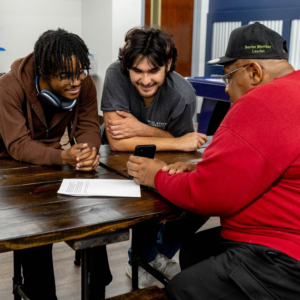
Jamison: I'm J.R. Jamison. Today on the Facing Project, we'll take a deep dive into recovery: A word I thought I knew what it meant, like mainly recovery from drug or alcohol abuse, until I had the opportunity to collaborate with today's guest on a new book that's been released by The Facing Project Press, “Facing Recovery,” a collection of 17 first person narratives that captures the wide spectrum of what recovery actually is, and that it's not just tied to addiction.
00;00;29;11 - 00;00;55;14
J.R. Jamison
I'll be joined by Dr. Kathryn Ludwig, assistant teaching professor of English at Ball State University, and two of her students who worked on the book project, Bridgett Nesbitt and Hayden Gorham. And later in the show, I'll sit down with Abby Gluvna, a program manager for Recovery Cafe Muncie, the partner in the project that supports the development of mind, body and spirit for those desiring recovery by creating a community committed to love and inclusion.
00;00;55;16 - 00;01;14;06
J.R. Jamison
Recovery Cafe Muncie is a chapter of the National Recovery Cafe Network. I'll also share four stories from individuals featured in the book who have experienced the path to recovery in diverse and vulnerable and hopeful ways. Stay with us. [Theme music]
00;01;14;09 - 00;01;47;19
J.R. Jamison
Jamison: You're listening to The Facing Project with J.R. Jamison, and today we'll explore the diverse definition of recovery through the lens of a recent book project, “Facing Recovery,” a collection of 17 first person narratives that captures the wide spectrum of what recovery means. And, contrary to popular belief, it's not just tied to addiction. I'll sit down with four individuals involved in producing the work, and we'll hear four stories from individuals featured in the book who've experienced the path to recovery in diverse and vulnerable and hopeful ways.
00;01;47;21 - 00;02;10;03
J.R. Jamison
Due to some sensitive content expressed in the stories, listener discretion is advised. I want to welcome to the show three of my guest for today, Dr. Kathryn Ludwig, Assistant Teaching Professor of English at Ball State University and editor of Facing Recovery, and two student writers on the book project, Bridgett Nesbitt and Hayden Gorham. Thank you for joining me on The Facing Project.
00;02;10;03 - 00;02;11;09
Dr. Kathryn Ludwig
Ludwig: Thank you. Great to be here.
00;02;11;16 - 00;02;22;16
J.R. Jamison
Jamison: I'm thrilled to have you here. Kathryn, I actually want to start with you. Tell me more about your work with recovery and why, as an educator, this was an important story to tell.
00;02;22;19 - 00;02;52;11
Dr. Kathryn Ludwig
Ludwig: My work with recovery has really been about learning. I'm actually, because I'm an English professor focused on teaching, writing and teaching literature. So this is an immersive first year composition class, which is one of three sections; we wanted to take the learning that students do in first year composition beyond the classroom. And so it was a matter of finding a community partner that we felt we could contribute to their mission and that they could be good learning partners for us.
00;02;52;11 - 00;03;19;06
Dr. Kathryn Ludwig
Recovery Cafe has absolutely been that. So when I settled on Recovery Cafe, we, we proposed projects, and some of that is described in the book, and we had great conversations. And those conversations we felt were so impactful for us, students, myself. And we wanted to find a way to bring the connection that we experienced to people in the community.
00;03;19;08 - 00;03;31;05
Dr. Kathryn Ludwig
I'm a big believer that stories are really important tools for changing minds and changing attitudes. And, the Facing Project was a great tool for doing that.
00;03;31;07 - 00;03;44;15
J.R. Jamison
Jamison: I'm also curious to know, from what I gather in past conversations we've had, you've done other storytelling or writing projects. How has this been different?
00;03;44;17 - 00;04;15;18
Dr. Kathryn Ludwig
Ludwig: This one has been easier because of the structure that the Facing Project provided. We've tried to set up conversations in the community in a few places. Our previous community partner was YWCA Central Indiana, and they were also wonderful partners. And we hosted a sort of one on one conversation opportunity for people whose stories are frequently misunderstood, and for the community to come in and sit down, hear their story and ask questions.
00;04;15;21 - 00;04;50;25
Dr. Kathryn Ludwig
The Facing Project allows those conversations to be captured, right? The students got to not only hear the stories for themselves, but they get to share them, and they have an opportunity to think about, how do we listen well? How, how can I convey the experience of being with this person in the writing? So, in the way, in the sense that there is a structure, it was easier, but I think it also offered some unique opportunities for students to learn about storytelling.
00;04;50;27 - 00;05;04;17
J.R. Jamison
Jamison: Bridget and Hayden, as writers, you were tasked with getting to know your storytellers and working with them to craft these first person narratives on the page. Describe what the process was like for both of you. How'd it go?
00;05;04;19 - 00;05;31;24
Hayden Gorham
Gorham: It was definitely something that I had to be willing to learn a lot of, a lot of everything from, I think. I, you know, you go into this space and you're not really knowing what to expect. We all have our, I think, like, preconceived ideas on, like, what recovery or addiction even can be. And, and so I walked in especially, like, not really knowing just where I'd be, where I'd end up with the entire thing.
00;05;31;26 - 00;05;53;29
Hayden Gorham
But I would say a lot of it was just listening, and a lot of it, honestly- the stories, the, the way they spoke to each other, the way, the staff and, like, and the members interacted, just, like, paying attention and taking in as much as you could of, like, the environment that they had built for themselves.
00;05;53;29 - 00;06;14;01
Hayden Gorham
And also, like, what they had come from, whether it was, like, just family or, or, you know, a whole lifetime of, of hardship. It was, yeah, definitely, a learning experience, if nothing else. And, and something that I, yeah, I had a really amazing time with.
00;06;14;03 - 00;06;17;29
Bridgett Nesbitt
Nesbitt: I also had a really amazing time. I actually learned how to listen.
00;06;17;29 - 00;06;22;25
Bridgett Nesbitt
Like, I learned that I wasn't fully listening to my full potential before this.
00;06;23;02 - 00;06;24;01
J.R. Jamison
Jamison: Interesting.
00;06;24;04 - 00;06;48;08
Bridgett Nesbitt
Nesbitt: So, I've gathered so much from that. And my partner, Nate, I feel like we've, we were able to bond really well over the course of this project, and I've learned a lot, and not just from him, but from a lot of the other members as well. Like Hayden said, just from observing, you can implement some of the things that you see into your own life.
00;06;48;10 - 00;06;51;18
Bridgett Nesbitt
And it's just been a really amazing experience all around.
00;06;51;21 - 00;07;00;15
J.R. Jamison
Jamison: I'm curious too to know, as writers, what did you learn about yourself as a writer?
00;07;00;17 - 00;07;26;13
Bridgett Nesbitt
Nesbitt: That it takes me a while. [Laughter] It was a really weird project to write, if I'm being honest, because I've never had a write like that, like, somebody else's story but in their own words and how they would sound. So that was kind of hard, to be honest, but it was really cool once I was able to piece it all together and just read it back and I'm like, wow, that really does sound like him.
00;07;26;16 - 00;07;27;00
J.R. Jamison
Jamison: It did.
00;07;27;02 - 00;07;42;09
Dr. Kathryn Ludwig
Ludwig: Bridget's partner Nate commented on that. He said he felt like it was what he would say, and I think that was a real triumph of that because, you know, these conversations are really long, and then they're edited down into a thousand word piece. So Bridget did a great job with that.
00;07;42;09 - 00;07;44;11
J.R. Jamison
Jamison: Yes. Yeah. How about you?
00;07;44;16 - 00;08;05;20
Hayden Gorham
Gorham: Oh, man. I would say I learned that I really love being in control of, like, what I'm talking about. And if it's not my own story that I can, you know, tweak however I want, I'm a little bit more frustrated. So it was definitely a lot of, like, putting myself on the backburner and having to be like, okay, Hayden, let's maybe make sure we have their life on the, you know, on the front lines here.
00;08;05;20 - 00;08;26;05
Hayden Gorham
But, I yeah, it was, it was a lot of, once I was able to like, take myself out of, like, the cen- like, front and center, I guess, in my own brain, it was, it was like, okay, this is a lot more. You do feel the person's, like, life story, I guess, as you're trying to recount it.
00;08;26;07 - 00;08;44;11
J.R. Jamison
Jamison: And we'll hear some of the stories from the project here in a moment. But Katheryn, you had shared with me that one of the storytellers read his story to the larger group at the cafe. And there it was a vulnerable moment, but also one where he felt quite proud of what he and his writer had accomplished together.
00;08;44;14 - 00;08;45;26
J.R. Jamison
Could you talk more about that?
00;08;45;29 - 00;09;14;08
Dr. Kathryn Ludwig
Ludwig: Oh, yeah. Well, this is Gary, and he is a senior leader who- He's just the kind of person that you're drawn to, is very charismatic and very open and generous. And so we've enjoyed his bravery in sharing difficult things about his life in our interactions, and to see him then stand up in front of the whole community and share all the details that his listening partner and I had, had been privy to,
00;09;14;10 - 00;09;41;04
Dr. Kathryn Ludwig
it was really an honor that he chose to do that, using the story that his storytelling partner had helped to craft for him. And it was, for me, made me feel that not only is it exciting and joyful to be in conversation, but like, it's a real responsibility. And to find that he felt that story was a great way to, to do his spotlight, which is something that folks do pretty regularly,
00;09;41;04 - 00;09;50;28
Dr. Kathryn Ludwig
they talk about their recovery story to, you know, sort of help other people connect. Yeah. The fact that he chose our story was really exciting and such an honor.
00;09;51;01 - 00;10;06;06
J.R. Jamison
Jamison: So those spotlight moments, are those ever taken out into the community, and would this be an opportunity for all storytellers to kind of have a framing of their story to share with others about the road to recovery?
00;10;06;08 - 00;10;39;00
Dr. Kathryn Ludwig
Ludwig: Absolutely. I mean, I really hope the stories do just that, that they make their way into the community to complicate some understandings of, first of all, what recovery is, but also what people experience that bring them to the need for recovery. They, they did stream Gary's spotlight on their Facebook page. So they definitely try to put out content in ways that members feel comfortable with to help people connect with what's going on at the cafe.
00;10;39;02 - 00;10;42;14
Dr. Kathryn Ludwig
But I'm hoping the stories can serve that purpose a little bit.
00;10;42;16 - 00;11;00;17
J.R. Jamison
Jamison: Yeah. So much of the work of the Facing Project and the work that you all did to produce these stories with the storytellers is about empathy, which we haven't talked about quite yet. I'm curious to know from the students, how did this process make you more or less sympathetic?
00;11;00;20 - 00;11;31;04
Hayden Gorham
Gorham: Oh, man. [Laughter] I, I hate to sound like a, like a broken record, but it really is just like hearing what they had to say. I actually went through two different partners, Chris and T.J., throughout our process. And listening to T.J.’s story, his experience with grief, and, and his life story, it was really like, I mean, it doesn't matter whether you can connect or, like, relate on a personal level.
00;11;31;04 - 00;11;56;15
Hayden Gorham
It's just the emotion that you hear, like, and the weight that you feel, like, with every single word. It's, yeah. And not just T.J.’s story, but Chris’ as well. The way he spoke with his, his family and how they were impacted by his situation, like, it's like, what could you do if not feel for them? And, and and want to, I don't know, help people understand that like, yeah,
00;11;56;15 - 00;12;06;05
Hayden Gorham
you don't have the right idea about what they go through. You don't, you can even begin to, to understand. Yeah, definitely walked away with a lot more empathy than I had before.
00;12;06;08 - 00;12;18;26
Bridgett Nesbitt
Nesbitt: I've always been a very empathetic person, but just hearing what they had to say, and my partner actually broke down a couple times while he was talking, and that made me want to cry with him.
00;12;18;28 - 00;12;31;29
Bridgett Nesbitt
And it was just, it was very, a very, very emotional process, just going through all the traumas that they've had to endure. But, you know, we got a very rewarding product in the end.
00;12;32;01 - 00;12;54;14
J.R. Jamison
Jamison: And the voices are so strong in the stories; I've read all of them. And it is like the person is speaking directly to you. So great job all around on that. How is this process impacted everyone involved, from project organizers including you, Katheryn, and folks at the cafe, but also writers and storytellers?
00;12;54;16 - 00;13;32;29
Dr. Kathryn Ludwig
Ludwig: For me personally, interacting with folks who are willing and in many cases eager to share their stories and their hard stories was kind of mind blowing, because I think that we tend to want to hide the things about ourselves in our lives that aren’t pleasing or edifying for us, and the the, I don't know, bravery seems like such a patronizing word, but there's really no other word to apply to someone sitting in front of you and acknowledging every shortcoming or every failing, because that's part of the process of getting to recovery.
00;13;33;01 - 00;13;55;23
Dr. Kathryn Ludwig
It makes me think, if I were as candid with the world about, you know, my own life, what, you know, what- How would that change me? And I think it's, for me personally, interacting with the people telling their stories has made me want to really be forthcoming about my experiences. Because people connect, right? It's, it means a lot to hear someone else's story.
00;13;55;25 - 00;14;23;05
Bridgett Nesbitt
Nesbitt: Yeah. It kind of made me realize that I don't have to hide all those little, like, bad parts of my life. And it was really amazing to see how the Recovery Cafe was such an open and honest space. Like, I've never seen that before. And that in itself made me emotional as well. But yeah, I guess it's just made me a more open person.
00;14;23;07 - 00;14;52;09
Hayden Gorham
Gorham: In the same way that, that Bridget and Dr. Ludwig kind of mentioned, I, both the community and the desire to be more forthcoming, but like, with myself, I think. And and and understanding that I don't really need to- I can admit to myself like where my shortcomings are without really having to, like, let it take over my life, and at the same time, like, I really, really do want to be able to create a space like the Recovery Cafe, where people can like, I don't know, just the community.
00;14;52;09 - 00;15;00;18
Hayden Gorham
That's that's what people need and that's what stood out more than anything. Yeah, I really, really appreciate being able to witness that.
00;15;00;20 - 00;15;06;19
J.R. Jamison
Jamison: Kathryn, as an educator, what's your biggest hope for those who read Facing Recovery?
00;15;06;21 - 00;15;48;04
Dr. Kathryn Ludwig
Ludwig: Well, I hope that the story is really capture the voices, which you said they do, so I'm delighted. Because, you know, the people we talked to deserve to have their stories told well, and those stories matter. We want to do justice to them. But I also hope people experience some fraction of the connection that we're trying to describe that we felt, that, you know, thinking about big issues that we think of in terms of issues and not in terms of people, that they will begin to think of those in terms of people, right, to humanize backstories that you can't even imagine, and, and maybe have that impact the decisions
00;15;48;04 - 00;16;07;04
Dr. Kathryn Ludwig
they make about our community, and really just apply that deep understanding of these important issues to their actions, to their willingness to cross boundaries and have conversations and learn more. Almost like this would be the impetus for, you know, more engagement.
00;16;07;07 - 00;16;25;15
J.R. Jamison
Jamison: That's the hope. And I think you all you all did it. So great job. Dr Kathryn Ludwig, assistant teaching professor of English at Ball State University and editor of Facing Recovery, and two student writers on the book project, Bridget Nesbitt and Hayden Gorham. Thank you so much for joining me today on the Facing Project.
00;16;25;15 - 00;16;26;02
Dr. Kathryn Ludwig
Ludwig: Thanks so much.
00;16;26;02 - 00;16;27;20
Hayden Gorham
Gorham & Nesbitt: Thank you so much for having us.
00;16;27;22 - 00;16;36;04
J.R. Jamison
Jamison: Facing Recovery is out now everywhere books are borrowed and sold. Up next we'll hear four stories from the project. Stay with us.
00;16;36;07 - 00;16;50;19
Carl Frost
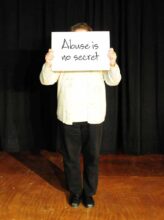
Frost: Roses Over Rocks. Nate's story told to Bridgett Nesbitt, performed by Carl Frost. One thing my son's mom told me that I've held on to is, “A rose given gets you a lot further than a rock thrown.”
00;16;50;21 - 00;17;14;11
Carl Frost
It reminds me that to receive respect, I must give respect. It's a reminder to stay calm and collected when talking to people. That's hard for me sometimes because dope has made me aggressive. My main motivator to get and stay clean has always been the family I created, especially my son. If it weren't for them, I wouldn't care as much.
00;17;14;13 - 00;17;31;24
Carl Frost
I got to do it for them, because in my own childhood, I never had a dad or much of a family at all. It's important to me that my kids do get that. I know I haven't been the perfect dad, but I've worked a lot on myself even to be here today, so that I can give them my best.
00;17;31;27 - 00;17;51;13
Carl Frost
Dope really messed my life up. I lost everything because of it. I had it all. A nice car and a beautiful house, a family. A single decision six years ago made that all vanish. I didn't know when I went to my best friend's house to be consoled after a bad fight with my ex that he was going to have dope there.
00;17;51;16 - 00;18;16;02
Carl Frost
I’d always been kind of a person to say that nothing can make me addicted to it. I could quit anything at any time, until I touched that s---. After my very first hit, I was hooked. I was strung out for three days after that. It was crazy because I'd only ever used weed before. And even crazier that this happened after I had gone to prison.
00;18;16;05 - 00;18;36;08
Carl Frost
My whole life changed that night. All I cared about was getting another hit. I mean, I even quit my job so I could spend all my time looking for it. It was a disease. And for three years, that's all I did. I can't believe I let it kick my ass like that. I started to believe there was no way in hell I could ever get off it.
00;18;36;11 - 00;19;06;04
Carl Frost
It finally got to the point where it was messing with my mind and making me very aggressive. I don't like being like that. I don't like that side of me. I like to be cool, calm, collected and respect everybody. But if I find someone who's disrespectful, I'm very ready to fight. I shouldn't be like that, though. I'm learning to have a conversation instead of instantly snapping, because what's disrespectful to me might not be disrespectful to you.
00;19;06;07 - 00;19;32;15
Carl Frost
It has taken everything in me to get to where I am now. I'd eventually move out of the city to get away from the drugs. I moved from Anderson to Muncie in 2022, and when I first got here, I still smoked meth. That was until June 17th when I was arrested. My wife called me when I was in jail and said if I continued using, she was done, and I never touched that s--- again.
00;19;32;18 - 00;19;51;26
Carl Frost
Family has always been what brings me back to myself. Before the drugs, when I was in jail in 2012, I was on the phone with my son one day, and he said, “Daddy, when are you going to come home and play with me?” And made me start crying and help me straighten up. From that day forward, I never got another write up,
00;19;52;01 - 00;20;06;14
Carl Frost
never received any conduct or anything like that. I was straight to get home. If I could do it for them back then, I can do it for them now. I just need to remember that motivation.
00;20;06;16 - 00;20;30;00
Carl Frost
Since June 17th, 2022, I've been straightin’ out my life for them. It's been hard, but it's what they deserve. I started going to the Recovery Cafe about six months ago and I love it there. It's such an uplifting and motivating place. Seriously, you can't go there in a bad mood and leave still in a bad mood. I was a companion here, but I was just made a team leader.
00;20;30;02 - 00;20;48;02
Carl Frost
Going to the Recovery Cafe has helped me in my own recovery. Being able to hear about other people's lives and learn from others mistakes steered me in the way I needed to go. So yeah, I've been working really hard to get myself back right for my family's sake. I realized that once I set my mind to it, I know I can do it.
00;20;48;09 - 00;21;10;10
Carl Frost
That's the main thing, is setting my mind to do it. I'm proving to myself that I can actually do this. Since getting sober, I feel a lot better. I'm more at ease, I guess you could say; I don't feel so uptight and aggressive. And don't get me wrong, getting sober didn't cure it, but it has eased it up because I'm not on drugs anymore.
00;21;10;13 - 00;21;51;09
Carl Frost
I also realized I was never a bad person. The dope just made me a bad person. But that was because of the drug. It wasn't me. I believe everything in life happens for a reason, and if you're a good person, you will eventually get good things. I'm now seeing the good things life has to offer, which has proven to me that I really am a good person. [Hopeful acoustic music]
00;21;51;12 - 00;22;13;17
Katy Wolfe
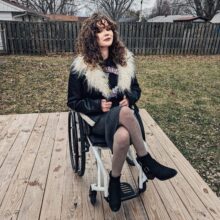
Wolfe: A Warrior Heart and a Friendly Smile. Cat’s story as told to Joey Philpott, performed by Katy Lynn Wolfe. My full name is Melody Catherine Meyer, but everyone calls me Cat. I think what people notice about me is that I'm usually pretty happy and excited with a smile on my face, no matter if it's early morning or late at night.
00;22;13;19 - 00;22;37;11
Katy Wolfe
But there's a lot more to my story than most people would guess. Back in 2019, just before the pandemic hit, I moved from Toledo to Indianapolis and things started going really wrong for me. I met someone at a shelter who became my roommate. The first year living together was fine. I mean, we argued sometimes like roommates too, but I didn't think much of it.
00;22;37;13 - 00;23;06;10
Katy Wolfe
But then toward the end of that year, everything changed. She began physically beating me, mentally and emotionally, abusing me, calling me names and everything you can think of. One time she beat me so badly that the whole left side of my face was swollen up. I couldn't even go to work. She threatened that if I told anyone, my parents, people at work, or anyone at church, she'd find me wherever I was and put me six feet under the ground.
00;23;06;13 - 00;23;27;20
Katy Wolfe
I was too afraid to tell anyone for a long time, but finally I couldn't take it anymore. I told my mom and dad what was happening. They freaked out and took me straight to the police station to file a report. But the police weren't much help. They said since she was just my roommate and not family or a romantic partner, they didn't even consider it domestic violence.
00;23;27;23 - 00;23;49;15
Katy Wolfe
I was like, seriously, how is this not domestic violence? All they told me was to file a protection order and said I could press charges if I wanted to. I filed that protection order against her and her cousin, who would watch as she beat me. I found out later that my roommate had been in jail 3 or 4 times for the same thing.
00;23;49;17 - 00;24;03;10
Katy Wolfe
When I moved out, my parents tried to take me to a shelter, but it was the same place where I met my roommate. She was threatening me, so I knew I couldn't stay there. That's when I decided to disappear.
00;24;03;13 - 00;24;26;01
Katy Wolfe
I ended up living under a bridge for three months. It was complete terror. There was a homeless community and cops would drive by all the time. Every night I had to find a quiet, safe place to pitch my tent, then pack everything up in the morning so nobody would steal my stuff. Just trying to find somewhere clean to wash up and something to eat every day was a struggle.
00;24;26;03 - 00;24;50;02
Katy Wolfe
One day my stepdad’s cousin found me living under that bridge and brought me to their house for the night. I knew I needed to do something. Finally, on August 22nd, 2021, I called 211. That's the resource number for anyone dealing with homelessness. I told them I was in a domestic situation and needed to get out of Indianapolis, because I was scared for my life.
00;24;50;05 - 00;25;00;29
Katy Wolfe
They directed me to the YWCA in Muncie, where there was an opening. I packed up two weeks worth of stuff, which was all they allowed, and my cousin drove me to Muncie.
00;25;01;01 - 00;25;20;28
Katy Wolfe
For the first week, I stayed in their emergency overnight program. Then I met with my case manager and got moved into their 45 day program. For the first time in a while, I had my own room with a bed and TV. At the Y, I met a young lady who was coming to the Recovery Cafe, which is just down the street.
00;25;21;00 - 00;25;42;09
Katy Wolfe
I started going all the time. I became a full member and then I went through all the different programs here. The companion program, the member program, and the member leader program. I eventually became a senior member leader. Recovery Cafe is not what you might expect. A lot of people, when they first hear “recovery,” they think it's just for addiction.
00;25;42;11 - 00;26;05;10
Katy Wolfe
That's one of the big misconceptions about this place. We accept people in any form of recovery, from addiction to mental health stuff to domestic violence. Even just being lonely. It's a special place. The second you walk in upstairs and get off the elevator, you just feel such a warm and welcoming glow. I'm in recovery from mental health stuff myself.
00;26;05;13 - 00;26;13;26
Katy Wolfe
Major depressive disorder, social anxiety, bipolar two, ADHD, and general anxiety. [Sighs]
00;26;13;28 - 00;26;37;08
Katy Wolfe
I've struggled with my mental health since I was about 12, but it wasn't until I came here that I really got diagnosed and started getting the help I needed. I didn't even realize how much help I needed. When I first moved to Muncie, I wouldn't go out on my own. I'd only go out with groups of ladies I'd made friends with at the Y, and even then I'd be looking over my shoulder constantly. In my new place,
00;26;37;10 - 00;27;01;20
Katy Wolfe
sometimes I think I hear my old roommate hollering my name, especially when I'm alone. When I tell people that, they say I'm crazy, but I'm not. I'm just still trying to recover from a domestic situation. Now I can recognize my triggers and handle things better. December 12th will mark three years since I started actually getting help. That's what I consider my recovery date.
00;27;01;22 - 00;27;25;12
Katy Wolfe
Sometimes I still struggle, but things have gotten better in ways I never expected. Less than a year after coming here, I went back to school at Ivy Tech. See, meeting all the young ladies at the Y and hearing their stories about what brought them there and their different recovery stories made me realize there aren't very many resources to help young women dealing with domestic violence or homelessness or substance abuse problems.
00;27;25;14 - 00;27;48;15
Katy Wolfe
There aren't many resources for teens in the same situation either. I want to be a part of helping them, just like others helped me. On January 17th, thanks to the Y, A Better Way and Meridian, I got my own place. They set me up with a case manager and a skills builder through Meridian Health Services, and help me get on the list for public housing.
00;27;48;17 - 00;28;13;15
Katy Wolfe
They helped with the cost of housing and utilities for a year. I still struggle here and there to pay bills like everybody else, but I'm happy. I wear my Ivy Tech lanyard and hoodie proudly, excited about helping others change their lives, just like I changed mine. Sometimes I think about how if I hadn't gone through that terrible situation, I probably wouldn't be the person I am today.
00;28;13;18 - 00;28;37;08
Katy Wolfe
I've learned that if you need help, you shouldn't be afraid to ask questions or ask for help. That's what recovery is really about. Knowing you're not alone. [Upbeat alternative rock music]
00;28;37;10 - 00;29;06;01
David Welty
Welty: Out of Isolation. Mark's story, as told to Kyndall Tucker, performed by David Welty. I grew up feeling like an only child, even though I had three older siblings. I was born with a disability called Usher syndrome, which often set me apart from other people. On a lot of days, I felt very lonely and didn't know who to turn to.
00;29;06;04 - 00;29;32;23
David Welty
I love talking to people, being around people, I do. So, it's hard to be so isolated. But I love the people here at the café. I love hearing people's stories. The social aspect of meetings helps me out a lot with my depression and staying sober. It helps me to get out of myself. People have asked, “Do you think you have a recovery story?
00;29;32;26 - 00;30;01;26
David Welty
Are you in recovery from something?” I thought, what from? The truth is, I'm recovering from alcohol, but I'm also recovering from the isolation I've had all my life with my disability. Usher syndrome is a rare genetic disease that affects hearing, vision, and sometimes balance. Because of my disability, it's always been hard for me to socialize with others, especially in school.
00;30;01;29 - 00;30;24;07
David Welty
I had to dedicate so much time trying to succeed in my schoolwork, and it affected my social life. The first grade, I was placed in a special education program where I was in a special needs classroom for half the day, because of the challenges I had. The teacher would come over a couple of times a week and do one on one sessions to help me retain the knowledge.
00;30;24;10 - 00;30;50;05
David Welty
When my vision issues started, that just added to my problems of socialization and feeling different. I didn't get much help from my disability and loneliness at home. My parents tried their hardest to make sure we were as “normal” as possible, but both of them struggled with alcohol addiction, making my life at home very chaotic. Since my sister and I share the same disability, we had to lean on each other a lot
00;30;50;06 - 00;31;10;07
David Welty
when it came to school stuff, and I didn't have any friends to play outside with. I spent most of my time by myself, mostly in front of the television. But I really love learning. My mother was a very, very intelligent person. She loved to read, and that's probably one of the few things she did for me and my siblings.
00;31;10;09 - 00;31;34;10
David Welty
We all love to read. She was a wonderful person, but she struggled with her mental health. We never did figure out exactly what her diagnosis would have been. Probably would have been manic depression. Now they call it bipolar disorder. I ended up pursuing my education, hoping everything else would fall into place, but it was when I was in college that I turned to alcohol.
00;31;34;13 - 00;32;07;21
David Welty
I wasn't doing too well in school. They have the ADA now, but it's about 30 years too late for me. During college, my mother was diagnosed with a terminal illness. Some people talk about a higher power. You know what? My higher power was my mother. For 25 years, everything revolved around her. But she passed away in 1990. Because I grew up in an alcoholic, dysfunctional family, alcohol was a natural way for me to cope with her death.
00;32;07;24 - 00;32;28;14
David Welty
When I was young adult living in Indianapolis, I had a hard time getting a job. A lot of the problem was because of my hearing. They didn't have the technology that they have now, so I spent most of my time partying. It was good to be around people, but it took me 15 years after my dad passed away to realize alcohol would not help my depression.
00;32;28;20 - 00;33;06;07
David Welty
Surprise, surprise. You can't medicate depression with a depressant. My job today is staying sober one day at a time. I've got about 20 years of not living the way I used to. You know, most people, when they come into the cafe, feel like they're at the end of the world. But when you get started, when you finally get it, you realize it's just the end of your old life and the beginning of a new one. [Uplifting alternative rock music crescendos]
00;33;06;10 - 00;33;19;11
Chandra Ford
Ford: Come How You Are. Rosa's story, as told to Janiya Woolfork, performed by Chandra Ford.
00;33;19;14 - 00;33;52;12
Chandra Ford
“Clothes mean nothing. It's your soul. So come how you are.” I try to tell people that every day to help them through their past. But I didn't always believe it for myself. I had to go through life and live through things to learn it. Learning things was always hard for me. Not only in reading and writing, but in understanding the important things.
00;33;52;14 - 00;34;23;25
Chandra Ford
It was rough for me when I was a child. I went through a lot. It was always a sad house in a way. I had to take care of everyone in my family: my daddy, my mother and my grandmother. Maybe because of all that rough stuff with my family, I rejected the faith they tried to teach me. I was taught faith all throughout my upbringing.
00;34;23;27 - 00;34;33;04
Chandra Ford
I mean, I went to Sunday school and everything, but it was still rough for me.
00;34;33;07 - 00;34;56;23
Chandra Ford
When I left my faith, I started to live differently. I mean, I went a little wild since I could finally do what I wanted. In my 20s, I started using crack for fun, but it turned into more. I just wanted to have fun after being cooped up in the house all throughout my childhood. But I fell into a bad space.
00;34;56;25 - 00;35;04;10
Chandra Ford
I had to learn that being in that bad headspace was messing up my life.
00;35;04;13 - 00;35;29;17
Chandra Ford
After years of living this way, I said, oh Lord, I am tired of this. I came to the conclusion I got to walk out on this man and walk on. And I told my boyfriend that I had had enough. I lost my house, my money, and I chose to be homeless rather than to be stuck in a relationship like that.
00;35;29;20 - 00;36;04;11
Chandra Ford
But I stopped taking drugs cold turkey and never looked back. It was not hard to quit when I found God again. I found my way back in the light, back into Jesus's light. I made that one step, and God took me all the way. I had to learn the gift of life that God had given to me. I had to learn what faith meant to me and not what faith meant to my family.
00;36;04;14 - 00;36;34;20
Chandra Ford
So I started to go back to church to connect with the community and Jesus more, which is what I needed. I learned that Jesus says, “Come how you are.” The path that Jesus had for me led to the Recovery Cafe. At the cafe, I help others learn to love themselves by sharing my love. It's the best thing that could have ever happened to me.
00;36;34;23 - 00;37;01;14
Chandra Ford
Everyone I meet here is different. People here: you can feel the love. I love to be around them. I love to hear their stories. I love to tell them your past is your past. For listening to people's stories, I help them talk it out. People say, “Thank you, Miss Rosa,” which makes me want to come back every day.
00;37;01;16 - 00;37;49;08
Chandra Ford
There have been a lot of bad things in my life, but now it's just so joyful. I have my own apartment. It's so nice. I tell everyone, if you get to know God and you believe in him and have trust in him, it's a wonderful feeling. I am so blessed. I get to see God's plan and I get to share it with others. [Hymn “Leaning on the Everlasting Arms” playing on piano]
00;37;49;10 - 00;37;56;04
J.R. Jamison
Jamison: I want to welcome to the show Abby Gluvna, a program manager for the Recovery Cafe, Muncie. Thank you for joining me on the Facing Project.
00;37;56;05 - 00;37;57;22
Abby Gluvna
Gluvna: Thank you for having me.
00;37;57;23 - 00;38;20;01
J.R. Jamison
Jamison: I'm so excited to be here today to talk about your work. And we just heard four story performances from Facing Recovery. And as this project came together, I was struck by both the vulnerability and resiliency of cafe members and storytellers. Talk more about your work at the cafe and why these stories are important to tell.
00;38;20;04 - 00;38;52;07
Abby Gluvna
Gluvna: Yeah. So, Recovery Cafe, it is- Long story short, it's like a- It's a safe place for people to land and find community, whether they are new to recovery, or if they're 20 years into the recovery. So if you're there, you can sense, you know, just this family type of energy there of all of our members just being that support for one another.
00;38;52;09 - 00;39;21;08
Abby Gluvna
We also have a lot of resources, that are at the cafe. So it kind of eliminates that barrier of, you know, members seeking community resources, so: health navigators from Open Door or Meridian. We have a clothing closet and food pantry that we regularly keep stocked that people can utilize. And then, you know, part of membership at the cafe is attending recovery circles.
00;39;21;11 - 00;39;47;16
Abby Gluvna
And essentially these are like weekly check ins that members will meet with their group once a week, set goals, that type of thing. So, the cafe is- It's really just like a support for people to navigate the recovery, have that autonomy to see what works for them. We always recognize all pathways of recovery.
00;39;47;18 - 00;39;57;04
Abby Gluvna
So it really does give people the opportunity to kind of explore what works for them while also having that long term social support as well.
00;39;57;07 - 00;40;21;06
J.R. Jamison
Jamison: Talk more about the story piece of this. Part of the work that we did along with Kathryn and with members of the cafe was to collect these narratives of experience. Talk more about the storytelling piece and why was that important at this moment, and what did the members think about the experience?
00;40;21;09 - 00;40;47;10
Abby Gluvna
Gluvna: So they are always excited anytime to tell their story. And I think it's worth mentioning and giving them the space to use their voices. And part of our model at the cafe is recognizing that anyone can be in recovery from absolutely anything. I think, at first people might think that recovery is just, you know, drugs and alcohol.
00;40;47;13 - 00;41;18;10
Abby Gluvna
But, you know, if you take, like, a recovering, like, football player that has like a knee injury, like they're in recovery. So we can be in recovery from anything. So, in these stories, it allowed our members to talk about those things. So they were really excited. And, I think it's really important to have, you know, those conversations and the opportunity to just talk about those uncomfortable, you know, situations.
00;41;18;13 - 00;41;42;27
J.R. Jamison
Jamison: I was really moved by the diversity of experience, like you were just talking about. And naively, when I used to hear the term recovery, I would immediately think about recovery from drug or alcohol abuse. Right? But when I heard the stories, this is really just one piece of the puzzle. Talk more about what recovery means to you and also the cafe.
00;41;43;04 - 00;42;10;07
Abby Gluvna
Gluvna: Yeah. So I can even admit, before I started working at the cafe, that was my outlook on recovery. And so I never considered myself to be in recovery because I never really had an issue with drugs and alcohol. But the more that I was around these members and just hearing their stories, I was able to recognize in myself, like, oh, these are things that I am also recovering from.
00;42;10;07 - 00;42;36;02
Abby Gluvna
And a lot of it is, you know, trauma and mental health challenges. And that is a ongoing recovery as well. So it kind of takes some, I think, someone to be in the cafe space and in that atmosphere to realize like, oh, this is something that I could be recovering from if it, if it's not, you know, a drug and alcohol issue.
00;42;36;04 - 00;43;06;22
J.R. Jamison
Jamison: One of the stories in the book was about burnout and time management and how this person really found space at the cafe. Much like you were just talking about, they would have never considered themselves as being in recovery, but they're recovering from burnout, right? Which also is psychological trauma. And being able to find that space and home at the cafe has meant so much to them.
00;43;06;22 - 00;43;12;12
J.R. Jamison
And that's another example where I was like, I would have never thought about that when I hear the term recovery.
00;43;12;13 - 00;43;30;03
Abby Gluvna
Gluvna: Yeah. And I mean, you take burnout. Everyone has probably experienced burnout at some point or another in their lives. So just having like that support at the cafe and it's like, no, like that's not normal. Like, yeah, let's work on that. So yeah. Yeah.
00;43;30;06 - 00;43;54;25
J.R. Jamison
Jamison: And I know being at the cafe when we were early on working with the storytellers and the writers before it even went into their work together, I was like, these folks really lean on each other. I mean, it really is a support group, regardless of what your your pathway was to get to the Recovery Cafe. They all lean on each other.
00;43;54;26 - 00;43;59;09
J.R. Jamison
Can you talk more about kind of that member support?
00;43;59;11 - 00;44;26;28
Abby Gluvna
Gluvna: I always- so when whenever I'm talking about the cafe and someone is asking about resources and stuff like that, if I can't find the answer, I always tell that individual, like, the cafe itself is a resource. So, you know, the the people that make up the cafe are members and our guests, they've probably been through it and they can lead you down the right, you know, direction or road
00;44;27;00 - 00;44;53;17
Abby Gluvna
to find that answer. So they're a resource themselves. But yeah, that that consistent social support, it's always there. They always want to encourage each other to keep going and growing. You know, showing that compassion and empathy towards one another. They really do understand that everyone is going through something. So what can I do to help you?
00;44;53;20 - 00;44;55;15
Abby Gluvna
They're amazing. They're amazing people.
00;44;55;19 - 00;45;16;14
J.R. Jamison
Jamison: Yeah. I also think the role that you're in as program manager is quite amazing. You talked about your own journey with recovery, looking at mental health challenges. What has it meant to you to own your story in that way and to walk alongside cafe members in a leadership role?
00;45;16;17 - 00;45;51;06
Abby Gluvna
Gluvna: Oh my gosh. It's, it's everything. You know, when I first recognize that, you know, I am in recovery myself, being able to spend my days with just humans on a very human level, it feels so good because I don't have to show up as anybody but myself. So I always tell our members or our new members, like, just because I have this lanyard and this key doesn't mean I'm above or anything like that.
00;45;51;07 - 00;46;08;05
Abby Gluvna
Like, we are here as humans on the same level, just trying to navigate life. And I'm here to help you with that. So it means everything that we all just can show up authentically ourselves and just, you know, do our day to day the best that we can.
00;46;08;12 - 00;46;16;29
J.R. Jamison
Jamison: Yeah. What do you hope someone who picks up this book or is listening to this interview learns about recovery?
00;46;17;01 - 00;46;45;11
Abby Gluvna
Gluvna: I think I just want, you know, the reader to understand that there is space for them and they deserve recovery if that is something that, you know, if they're seeking or if they're questioning. Like I said before, and we touched on, like, I think that first idea of recovery of drugs and alcohol, that can turn people away like, no, this, this isn't something that I need.
00;46;45;14 - 00;47;11;23
Abby Gluvna
So I hope that, you know, when someone reads this book, they have a better understanding that, yeah, I can be in recovery, from whatever. So I hope it's, you know, it helps them. I hope it opens their mind and their eyes to maybe new opportunities and hopefully encourages them to start that journey if that's something that they want and, you know, reach out and hopefully attend the cafe one day.
00;47;11;25 - 00;47;42;27
J.R. Jamison
Jamison: What I love about the cafe, too, and I have to admit, I've only been there a handful of times. But what I love about the space, there's some recreation, right? There are little pods where people can sit and talk. You also have meditation time that happens. There's a really holistic and special about that. Can you talk more about the physical space itself and kind of the setup and design and how that creates a space for people who are in recovery?
00;47;42;29 - 00;47;48;19
J.R. Jamison
To, to be there in place in space and connection with others.
00;47;48;20 - 00;48;12;05
Abby Gluvna
Gluvna: Yeah. So, like you were saying, we have our serenity room, we call it. So that's a good space for, you know, yoga, meditation. It's also a really great space that if someone comes in and they are just, you know, overwhelmed, anxious, and they need a calming space to just be by themselves, that is a great space for that to happen.
00;48;12;07 - 00;48;35;28
Abby Gluvna
We also have like our annex, which is directly off of my office, and that is a space for, say someone comes in under the influence, rather than us, you know, making them leave or something like that, we will ask them to sit in the annex so they can, you know, do what they need to do; eat some, you know, lunch, drink some coffee.
00;48;36;00 - 00;49;02;17
Abby Gluvna
But it also avoids triggers from the main cafe space where the rest of the members and guests will be. We have our game room that has, you know, pool tables, air hockey, a ping pong table. So anything to really keep the mind and hands busy. And it also provides an opportunity for people to just, you know, meet one another and, you know, hang out with themselves and stuff like that.
00;49;02;20 - 00;49;20;21
Abby Gluvna
So, yeah, our main cafe space, that's where everything kind of goes down. Our games, our lunch. That's where everyone hangs out. But again, we have different rooms and spaces for those that need a little bit more alone time or just to get away from the the busyness.
00;49;20;24 - 00;49;27;19
J.R. Jamison
Jamison: What's the best way for someone to get involved in Recovery Cafe as either a new member or a volunteer?
00;49;27;21 - 00;49;47;23
Abby Gluvna
Gluvna: Yeah. So for new members they would just show up, show up as yourself. You don't need to schedule an appointment or anything like that. So you can just come to the cafe, we give you three guest days just to see if this is a good fit for you. And then we invite those new guests to become new members on Fridays.
00;49;47;25 - 00;50;12;21
Abby Gluvna
So we have new member introductions every Friday at 1 p.m.. And then volunteers: we hold a volunteer orientation every first Wednesday of the month at 3:30. So, anyone who's interested in volunteering is encouraged to reach out. We have our Connect@RecoveryCafeMuncie.org email. That is just kind of like our general email that you can reach out to.
00;50;12;24 - 00;50;17;19
Abby Gluvna
Or you can just show up to new member or volunteer orientation on that Wednesday. Yeah.
00;50;17;22 - 00;50;24;08
J.R. Jamison
Jamison: Awesome. Abby Gluvna, program manager for Recovery Cafe Muncie, thank you for joining me on the Facing Project.
00;50;24;09 - 00;50;26;19
Abby Gluvna
Gluvna: Thank you for joining us. And thank you for having me.
00;50;26;20 - 00;50;44;18
J.R. Jamison
Jamison: Oh, absolutely. More about Recovery Cafe in Muncie can be found online, RecoveryCafeMuncie.org. And more about the National Recovery Cafe Network can be found at RecoveryCafeNetwork.org. [Theme music]
00;50;44;20 - 00;51;12;20
J.R. Jamison
Jamison: Many thanks once again to my guests Dr. Kathryn Ludwig, Bridgett Nesbitt and Hayden Gorham from Ball State University, and Abby Gluvna from Recovery Cafe in Muncie for joining me on today's show. And to all of the storytellers and writers who collaborated together to produce Facing Recovery, a publication of the Facing Project Press. Cat’s story, A Warrior Heart and a Friendly Smile, was written in collaboration with Joey Philpott and was performed by Katy Wolfe.
00;51;12;23 - 00;51;38;27
J.R. Jamison
Rosa’s story, Come How You Are, was written in collaboration with Janiya Woolfork and was performed by Chanda Ford. Mark’s story, Out of Isolation, was written in collaboration with Kyndall Tucker and was performed by David Welty. Nate’s story, Roses over Rocks, was written in collaboration with Bridget Nesbit and was performed by Carl Frost. More about starting a Facing Project in your community can be found at FacingProject.com.
00;51;39;00 - 00;52;01;16
J.R. Jamison
To listen to past episodes of this program, visit IndianaPublicRadio.org/TheFacingProject or find us on your favorite podcasting app, or on YouTube, or on the NPR network. Or just ask your smart speaker to play The Facing Project on NPR. To continue the conversation about this episode, find us on Facebook and Instagram at Facing Project.
00;52;01;19 - 00;52;28;00
J.R. Jamison
The Facing Project is recorded at Indiana Public Radio at Ball State University in beautiful and wonderful and evergreen Muncie, Indiana, and is produced by the amazing producer and audio engineer extraordinaire Sean Ashcraft. The show is distributed nationally through PRX. I'm your host, J.R. Jamison, and until next time, I wish you the courage to share your own story and the empathy to listen to others. [Theme music]