Audio Transcript
00;00;00;08 - 00;00;13;23
Kelsey Timmerman
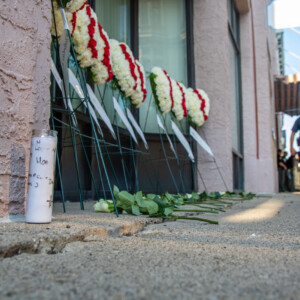
Timmerman: It's been one year since a gunman opened fire in Dayton's Oregon district, killing nine people and injuring 27. It was a 233rd mass shooting of 2019, and one of 107 in the Midwest. I'm Kelsey Timmerman.
00;00;13;27 - 00;00;23;10
J.R. Jamison
Jamison: And I'm J.R. Jamison. Today on the Facing Project, a shooting in the heartland. [Theme music]
00;00;23;13 - 00;00;47;18
J.R. Jamison
Jamison: August 4th, 2019. Two mass shootings occurred on the state, the first at a Walmart in El Paso, Texas, and the second, only hours later, in the heart of downtown Dayton, Ohio. Over the past few years, I've become numb to the number of mass shootings in the US. I see it on the news. I know it's happening, and at first glance I even travel through all the emotions: shock, sadness, anger.
00;00;47;20 - 00;00;51;28
J.R. Jamison
And then, like the rest of the country, I click off the news and move on to dinner.
00;00;52;00 - 00;01;20;28
Kelsey Timmerman
Timmerman: But the shooting in Dayton was closer to home. We live and record the show only 90 minutes outside of Dayton in eastern Indiana. The likelihood of knowing a victim, or knowing someone who knew a victim, was higher than most of the mass shootings on the news. Fortunately, neither of us knew any of the victims at first, but we spent the last six months with the citizens of Dayton and the Dayton Peace Museum to help tell the stories of 16 gun violence survivors, including some who were at Ned Peppers that night a year ago.
00;01;21;01 - 00;01;23;03
Kelsey Timmerman
Today you'll hear from three of them.
00;01;23;06 - 00;01;47;11
J.R. Jamison
Jamison: Dion Green, a patron. Tom McMurtry, a police officer. Jason Phillips, a bouncer. Three strangers who lives are now forever intertwined. These are their words about that night and the impact it's had in the year that's followed. These accounts deal with difficult and potentially unsettling subject matter. Listener discretion is advised. And later in the show, we'll be joined by Dayton Mayor, Nan Whaley.
00;01;47;13 - 00;01;54;02
Kasaahn Johnson
Johnson: Dion Green, patron at Ned Peppers, May 29th, 2019.
00;01;54;04 - 00;02;17;04
Kasaahn Johnson
My daughter and her mother and I were at my house of North Dayton. We survived a tornado, destroyed the house around us. I was always told, “You go through a disaster that big, you'll never be the person you were before.” So I picked up, started trying to build the new me. Then August 4th happened.
00;02;17;06 - 00;02;37;09
Kasaahn Johnson
I’m my dad's only child. He had a hard life, but me and my dad was close. We go fishing, drink, play cards. He always set my poles because I don't have the patience to do all the lines. And he was always my griller at the cookouts. Even the day of the tornado, there was 50 of us at the house.
00;02;37;11 - 00;02;59;27
Kasaahn Johnson
A big Memorial Day cookout. He cooked and we had a blast. 60 days later, August 4th, I was starting to get back ahead in life. I quit working all the time. Started making time for my family. It was my sister's husband's birthday. My girlfriend Anita and I picked up my dad, and we all went to the Oregon district.
00;02;59;29 - 00;03;21;09
Kasaahn Johnson
When we get there, he was asleep in the car. But he said, “If you're going in, I'm going in.” He was buying all our drinks, dancing. When we get outside, me and my dad and Anita were waiting for my sister and her husband to come out. I saw the shooter coming down the side of the building with a gun and a black mask.
00;03;21;11 - 00;03;45;09
Kasaahn Johnson
I'm thinking, this ain't real, because why would you do that? There's all the police around, but he walks in between the cars, brings his guns up, and shoots a couple of times. My dad hits the ground, but I don't see any blood. No one panicked yet, so I'm still thinking, this ain’t real. Once he got on the other side of the street, you start to hear the barrage of gunshots.
00;03;45;11 - 00;04;07;12
Kasaahn Johnson
I'm like, “Dad, get up! We gotta get out of here.” I grab out my phone and start calling 911. I say, “Come on, dad, get up.” He just looking at me. He want to say something to me. I got down by his head and started seeing the blood. I just grab onto him tight and start telling him, “I love you.”
00;04;07;14 - 00;04;21;13
Kasaahn Johnson
I'm thinking, at least you hear my words telling you I'm here. The police come, but I don't want anyone touching him. Once I see them put the sheets over my dad, I just lose it.
00;04;21;15 - 00;04;46;29
Saul Caplan
Caplan: Tom McMurtry, police officer who arrived on scene. An urgent voice broke over the Dayton police radio. Gun shots fired, multiple people shot. I didn't hang around to listen to anything else. I ran to my cruiser, fired up the engine, realizing that every precious second was exactly that, a precious second. I hit the lights, the siren, and the gas.
00;04;46;29 - 00;05;13;15
Saul Caplan
But in what order? I don't remember. I parked. Throngs of Oregon district patrons were running toward me in a panic due west. That meant I needed to run due east. Waves of wild eyed humans passing me as I threaded my way through a sea of confusion and mayhem. I quickly saw where I was needed. A gentleman was lying in the street, screaming in pain.
00;05;13;18 - 00;05;38;17
Saul Caplan
I quickly checked his front side and saw no blood or wounds, so I rolled him over. Again, I found no wounds so I left him there screaming. Later I found out he had fallen and broken his pelvis. The next patient I attended was a young lady who had been shot through the arm and was bleeding profusely. A bystander was performing CPR.
00;05;38;19 - 00;06;03;16
Saul Caplan
I dropped to my knees and placed my finger over the brachial artery, trying to stem the intense bleeding. A Dayton police officer arrived at the same time and put a tourniquet on her arm. The bullet had passed through her upper extremity and lodged in her chest. Once the tourniquet was in place, I checked for a carotid pulse. It was absent.
00;06;03;19 - 00;06;19;25
Saul Caplan
I took over CPR for the exhausted bystander, but all of our efforts were for naught. Later, I draped a white sheet over the victim. It turned out it was the shooter's sister.
00;06;19;28 - 00;06;45;17
Chris Hahn
Hahn: Jason Phillips, bouncer at Ned Peppers. I ran the door at Ned Peppers for a long time. I heard four shots come from across the street. I've lived in the city long enough to be able to kind of pinpoint where shots are coming from. I just expected to see some guys running away because it went pow, pow, pow, pow real quick, and I thought it was just some inner city beef and people were going to scatter and it'd be over.
00;06;45;19 - 00;07;12;29
Chris Hahn
There was a brief flow after those first four shots and then it started again. It was intentional. It was targeted. I could tell the shots were being thought out. I thought to myself, this is not okay. I realized it wasn't just a handgun. It was a much more powerful gun. I started looking for muzzle flash, but as I started looking all hell was breaking loose and people were running past me.
00;07;13;01 - 00;07;37;26
Chris Hahn
I realized at that point I needed to kind of protect myself. I realized that I could not do anything to neutralize whoever was shooting because I couldn't locate them. The shots were going off. They kept going off. One of the other bouncers said, “Get inside. Get inside!” I wear a vest when I'm out on my bike. As I run in, my vest catches the door handle and it jerks me to a stop and I have to back up.
00;07;37;29 - 00;07;59;08
Chris Hahn
Bullets going past. I have to unhook myself. I looked directly ahead of me. It's just a pile of human beings. The whole dance floor, about two thirds of the way back, was a wall of people trying to climb over each other. I looked to the right, where you go up to the DJ booth or go down stairs. People are crowded in there blocking the stairs.
00;07;59;08 - 00;08;13;21
Chris Hahn
Both directions up and down. I looked at the bar. There's no way I actually can get down behind the bar. Gunshots are going off. There's nowhere to go.
00;08;13;23 - 00;08;38;13
Chris Hahn
I got down behind the trash can and put my back up against it. The only thing blocking me was a Rubbermaid trash can. I just made myself as small as possible. I remember thinking, pull your legs in, get small, get small. I got small, and I remember covering my head like in a tornado drill in school, and I would open my eyes every once in a while.
00;08;38;16 - 00;09;09;07
Chris Hahn
There was a car, headlights shining in, and maybe it was the street light. I don't know. It was a bright light shining into that patio wall that was open. And I remember dust. Dust rolling past me, illuminated by the light. Whether it was gunsmoke or what. I just remember all this dust going past me. The only thing I can think of was my eldest daughter just turned 11.
00;09;09;09 - 00;09;33;02
Chris Hahn
She's going to remember me. My middle daughter had just turned three. She may have some vague memories of me, but my youngest was a year and a half and there's no way she's going to remember me. And I kept thinking, there's no way that Haley is going to remember her dad. I was close enough that I could hear the bullets crack as they went by.
00;09;33;02 - 00;09;50;06
Chris Hahn
It was like a miniature sonic boom. A sound I never want to hear again. Then all of the sudden, shooting was done. I don't know how I figured out it was certainly over and safe to stand up, but you could see on one of the videos they played on the news. Me standing up next to the trash can.
00;09;50;06 - 00;10;16;16
Chris Hahn
I kept checking myself. Feeling myself. Where are the bullet holes? I stood up and there was that guy, Connor Betts, dead, basically four feet away from me. A bullet was lodged in the floor directly next to my leg. Another went through the door directly where I was prior to running inside. There's a hole through what would have been me, which was lodged in the other door.
00;10;16;19 - 00;10;45;16
Chris Hahn
I watched his body start to change color. Very quickly, when a human dies, the color leaves the body. I sat there looking at this guy and his chubby face was kind of pointed at me. I didn't see some animal, some monster. I saw somebody’s child. Period. Somebody’s kid just got killed. He was somebody's pride and joy.
00;10;45;19 - 00;11;10;28
Chris Hahn
I guess I was totally in shock. I shut down. Everyone else is crying and screaming, and I'm like, this is crazy, but calm down. Down the sidewalk, people were laid out. Some had been shot, some hadn't. Some were alive. Some were dead. It's so fuzzy and so clear all at the same time.
00;11;11;01 - 00;11;40;01
Saul Caplan
Caplan: The killer, whose name is now known but not worth listing here, had been silenced by the bullets of the brave Dayton officers that were patrolling the street that night. The first several victims were driven to hospitals and police cruisers. Then, with the scene safe, the medics began to arrive. With no one else needing CPR or tourniquets, I turned my focus to the crowd, which was starting to head back toward the crime scene.
00;11;40;04 - 00;12;04;11
Saul Caplan
I knew my next duty was crowd control. I pushed the throngs back, separating the frightened witnesses from the frightened non-witnesses. As I stood there, arms outstretched, something drew my senses to the left, down a short walkway. The air was full of the smell of burning meat coming from a food cart that had been abandoned in the chaos.
00;12;04;14 - 00;12;31;10
Saul Caplan
As I looked to my left, I saw the outline of something on the ground. I drew closer. It was a black man on black asphalt in the black of night, only slightly illuminated by the patio lights at Blind Bob's. He must have been one of the first victims to be gunned down. I checked him for signs of life.
00;12;31;10 - 00;12;44;12
Saul Caplan
A pulse. When I saw the terrific wound. I knew nothing could be done. I put a sheet over him, as I had with the shooter's sister.
00;12;44;14 - 00;13;09;22
Kasaahn Johnson
Johnson: I'm angry. I'm slapping. I started beating windows and brick walls, yelling. I didn't care about nothing but what was in front of me. We were stepping over bodies with white sheets and blood. Just bodies. Bodies. It was like a scary scene out of a movie. It just didn't seem real. Even now, I'm still in shock.
00;13;09;24 - 00;13;47;11
Kasaahn Johnson
I got diagnosed with acute PTSD. My therapist told me, “Just write.” And that's where the good came. Forgiving God. For a minute, I thought he was coming after me. Forgiving the shooter. I wrote to his parents and told them, “If you need to talk, I'll listen. I forgive you,” because they lost both their kids. I started to fight to represent my father and all the rest of the victims whose lives were taken to keep their names alive here and across the nation.
00;13;47;13 - 00;14;17;17
Kasaahn Johnson
My dad used to ring the bell for the Salvation Army, and last year I stood in place for him. I started a nonprofit in his name. I started to speak, going to conferences for 9/11, Orlando, Las Vegas, Chicago. Trying to turn something negative into something positive. I want all those places to have a survivors walk. If tacos can get a taco day, why can't we have a day to keep memories alive?
00;14;17;19 - 00;14;43;10
Kasaahn Johnson
Bringing survivors from all avenues of life. Let them share their stories together. People hold so much in, they don't know how to talk about it. But if you talk to someone who's going through the same thing, this is all God's work. With the tornado, the shooting, Covid. We all get to reconnect and get back to the focus point of life.
00;14;43;12 - 00;15;10;02
Kasaahn Johnson
That's family. That's friends. That's the community. We're realizing we're stronger together than we are apart. This is something I'm going to live with with the rest of my life. I'm tired of fighting. But if I can change something. Not the world, but somebody, maybe it will be worth it someday.
00;15;10;04 - 00;15;33;16
Chris Hahn
Hahn: It all comes out in the news several days later. They had so many red flags, this kid was disturbed. The kid had a hit list. The kid had this, this, this, this. People knew this kid was dangerous. They never got him the mental health help that he needed. The whole system failed this kid.
00;15;33;18 - 00;15;55;04
Chris Hahn
On the morning of August 4th, I'm sitting on the couch with my wife and two youngest daughters, and I'm crying. And I finally kind of dry up a little bit. I look over and my one and a half year old has a balloon, and it pops up out of her hands into the air. She's reaching in the air for it, and giggling and smiling so big.
00;15;55;07 - 00;16;19;27
Chris Hahn
She's so happy with a simplistic thing like a balloon. So pure. I lost it. I broke down harder than I've probably ever broken down in my life. I told my wife, “You know, his parents used to watch him do that. Connor Betts, his parents used to watch him do that.”
00;16;20;00 - 00;16;52;14
Saul Caplan
Caplan: I got home 90 minutes late. My wife greeted me. I asked if she'd seen the morning news. She had not. So I told her of the terrible slaughter and my efforts to help. With deep eyes, she looked at me and said, “I'm so sorry you had to go through that.” But then her countenance changed. “You know, I'm actually glad that it was you.”
00;16;52;16 - 00;17;20;29
Saul Caplan
That was the kindest thing that anyone could have said to me. In the days and weeks that followed, my thoughts would drift back to the wee hours of August 4th. I was glad I was there. I was sleeping well enough, and the expected nightmares never visited me. However, one day, as I was waiting for my cheesesteak to finish cooking on a grill, suddenly I was back on Fifth Street.
00;17;21;01 - 00;17;43;16
Saul Caplan
Sirens flashing and chaos revolving all around me. “What the-?” I said to myself. But then it dawned on me. It was the smell of the meat burning on the abandoned food cart. The aroma of my sizzling sandwich had taken me back to that night.
00;17;43;18 - 00;18;20;07
Saul Caplan
Julian Barnes, the great English novelist, asked, “Do the books that writers don't write even matter?” And what about the unfinished accomplishments of the nine gentle spirits felled by a mad man's bullets? What paintings didn't get painted? What stories were never told? What wonderful advice was never passed on? What milestones were never celebrated? We will never know. It is deeply saddening.
00;18;20;10 - 00;18;42;15
Saul Caplan
The sadness brings me to the question: In America, should weapons of war be in the hands of civilians? [Pensive acoustic guitar]
00;18;42;18 - 00;18;46;29
J.R. Jamison
Jamison: We want to welcome to the show Dayton Mayor, Nan Whaley. Thank you for joining us.
00;18;47;02 - 00;18;50;29
Nan Whaley
Whaley: I'm glad to be on. Thank you guys for all the great work you're doing.
00;18;51;01 - 00;19;12;04
Kelsey Timmerman
Timmerman: We really appreciate your support with this project. And, yeah, it's it's a pretty powerful project. And we just heard from three individuals who recounted their experiences from the August 4th shooting, very personal experiences. And take us back to that night and your experience. Was it a phone call or a text? And where were you when you first heard about it?
00;19;12;06 - 00;19;28;05
Nan Whaley
Whaley: Well, actually, it was a knock on my door. I was asleep in bed and it was probably, I think, around four in the morning. And the city attorney had come to my door. At first I thought it was like a neighbor that was locked out of the house. We have a pretty tight knit street we live on.
00;19;28;07 - 00;19;51;13
Nan Whaley
Woke my husband up, went downstairs, and right as I was opening the door, I had grabbed my phone, and somebody had texted me. I just had I just seen the news, and I realized, oh, something is wrong. And then the city attorney was there, and I said, “What's the matter?” And he said, “There's been, a mass shooting in the Oregon district.
00;19;51;13 - 00;19;53;00
Nan Whaley
Nine people are dead.”
00;19;53;02 - 00;19;54;08
J.R. Jamison
Timmerman & Jamison: Ooph, wow.
00;19;54;11 - 00;19;56;22
Kelsey Timmerman
Timmerman: So what do you do? What do you do after that, like?
00;19;56;24 - 00;20;17;27
Nan Whaley
Whaley: Well, I, I thought I would, like, throw on my clothes and just get to the scene, was the thought. And, my husband and the attorney were like, “Hey, you've got some time, and you're probably going to have a full day, so, like, shower, get yourself together, and then we'll go down.” And so then we went down to the convention center, which is right at the edge of the Oregon district.
00;20;17;29 - 00;20;41;12
Nan Whaley
And that's where we started, just getting all the information from police and the first responders that what had happened. And prepared for, I think our first press conference was at 7 a.m. that morning, and began to prepare for that. And then through the course of the day, I think we did, gosh, I think like 5 or 6 press conferences through the course of that day.
00;20;41;12 - 00;20;43;12
Nan Whaley
And then the vigil that evening.
00;20;43;14 - 00;20;47;23
Kelsey Timmerman
Timmerman: Wow. I mean, nothing can prepare you, I'm sure, for that knock on the door.
00;20;47;25 - 00;21;09;09
Nan Whaley
Whaley: No, no, no. And nothing can prepare you for seeing the site. It was very eerie. You know, I went to the site that morning, and you could still see, like, the food on the taco truck and, you know, like, everything had been, like, stopped in place, except there was, like, nobody there. So it was a very eerie feeling.
00;21;09;11 - 00;21;10;06
Nan Whaley
Yeah.
00;21;10;08 - 00;21;14;21
J.R. Jamison
Jamison: How do you emotionally prepare yourself for that?
00;21;14;24 - 00;21;34;00
Nan Whaley
Whaley: Well, I remember, I mean, I had a couple of mayors I called early and they called me back at like six in the morning that have gone through this and they just said like, you know, look, I think mayor of Cincinnati said to me, you know, it's, “You've got 24 hours and you've got to, you know, ask questions and not give answers when you're talking to the community.”
00;21;34;00 - 00;21;55;17
Nan Whaley
And then, you know, “Be really transparent on what you know.” And, I think that was really helpful for me to get through that period because I said, okay, I can get through these 24 hours. You know, I have to, I have to lead my community through the next day. And, you know, I gone through some [training, it’s] interesting, in July.
00;21;55;18 - 00;22;18;29
Nan Whaley
I've gone through some training with it's called the Bloomberg Harvard Mayor's City Leadership Initiative, and, you know, I was like, you know, last year I was in my sixth year as mayor, but, that, you know, you you never can get, I think, enough, like, practice and training. And so that I had just gone through that the month before, I think it had, like, really toned my communication skills a bit.
00;22;18;29 - 00;22;41;00
Nan Whaley
And so, you know, in a weird way, I was, both from my being the mayor for six years and then also, that, that, like, kind of tune up, I think was really helpful for me to get through August 4th. It's still hard. And very difficult. And, I mean, I have a counselor I see, so that was helpful.
00;22;41;00 - 00;22;54;26
Nan Whaley
And just the sheer amount of shock and pain for the whole community was really difficult. Not to mention for the victims, the families, and the business district, the owners of the small businesses.
00;22;54;28 - 00;23;12;04
J.R. Jamison
Jamison: And it sounds like you have support from other mayors across the country. And in fact, you joined over 200 mayors calling on the Senate to end their summer recess and act on a gun control bill. Senator Mitch McConnell refused to do that, but said that the Senate would act that September.
00;23;12;06 - 00;23;14;20
Nan Whaley
Whaley: [Sarcastically] Oh, yeah, we saw that action, right?
00;23;14;24 - 00;23;26;24
J.R. Jamison
Jamison: [Laughing] Yeah. Well, so much has happened in our country over the last year, things just go by in blips and disappear. Can you bring us up to date on on where are we with that? Did any action happen from that?
00;23;26;27 - 00;24;02;02
Nan Whaley
Whaley: No, we're exactly nowhere on it, both in state and federal advocacy and federal legislation. And, you know, I think look, I think that's what the, the McConnells and the pro-gun lobby and the gun manufacturing lobby want. They want people to go to the next thing and not think this is a priority. And I think it still is a priority, obviously, you know, for voters, I just think, you know, for us, it's, you know, because of- For everybody,
00;24;02;02 - 00;24;33;01
Nan Whaley
what's the priority right now? It's the pandemic and job loss. And, you know, something really, really strange and unprecedented in our time. And what is, I think, a problem with these mass shootings and just gun violence in general is it's become so regular. And, in our cities, you know, regular gun violence. I would say the, the, the unrest that we see with police has to do with just how guns are ubiquitous anymore, and just everywhere.
00;24;33;01 - 00;24;57;23
Nan Whaley
And everyone has one. And so that just makes everything, you know, becomes such, such high stakes on, on contact with a person and a police officer. So, I mean, I think that that just, I, I've come to the conclusion in general about our country that nearly every issue will come down to race and, and then guns play a key part in race.
00;24;57;23 - 00;25;21;13
Nan Whaley
And so, I think that's why we don't see any movement. I'm hopeful, you know, next year, you know, the House, when Speaker Pelosi did make House Bill one, universal background checks that 90% of Americans agree with. And, you know, perhaps the Senate can change. And there will be a new Senate president that will make this a priority and be with 90% of the American population.
00;25;21;13 - 00;25;23;02
Nan Whaley
That's my hope for next year.
00;25;23;05 - 00;25;35;09
J.R. Jamison
Jamison: Yeah, well, voting plays a huge part in this. But if there- [if] a citizen said, “well, what can I do to make change beyond voting?” What would your answer be to them?
00;25;35;11 - 00;26;03;04
Nan Whaley
Whaley: Well, you know, get others to vote. And then also, I get involved with Everytown and Moms Demand Action. They're amazing groups and have changed elections. I think we're really close because of their advocacy and their work. And they have, I mean, citizen led organizations all across the country. You know, Susie is the leader in Dayton, and I know, I actually have known Susie before August 4th, I was working with them.
00;26;03;06 - 00;26;22;00
Nan Whaley
You know, this issue of gun violence has been something I've been passionate about the entire time I've been mayor. But, yeah, and they have actions on, you know, being a gun, a gun-sense voter and, you know, understanding. And for the first time in 2018, we actually saw where guns became such a priority on the other way.
00;26;22;00 - 00;26;45;15
Nan Whaley
Usually it was, you know, a single issue gun voter. But now we are seeing, particularly with moms, that this is like a very significant issue. And I think it will continue to be this November as well. So I would encourage people to do that if they really want real change. And pay attention particularly to congressional races, but also to your state legislative races.
00;26;45;17 - 00;27;06;26
Nan Whaley
You know, the governor and, you know, came through with, I mean, pretty watered down version of what we could get for change. And, the Statehouse, it has gotten no movement out of the Statehouse. As a matter of fact, the House on the other end, they passed out Stand Your Ground, which, right after the George Floyd death and murder,
00;27;06;26 - 00;27;17;12
Nan Whaley
and, you know, that disproportionately affects African-Americans. So, you know, I really encourage people to study up on their state legislative races and congressional races.
00;27;17;14 - 00;27;32;28
Kelsey Timmerman
Timmerman: So the last 12 to 18 months in our country, but especially in Dayton, has been really challenging with the tornadoes hit in May. And then there was the shooting. And now we're in the middle of a pandemic and job losses.
00;27;33;00 - 00;27;34;15
Nan Whaley
Whaley: The hits keep on coming, right?
00;27;34;16 - 00;27;43;16
Kelsey Timmerman
Timmerman: Yeah. Let's hope they stop coming, right? So what have you learned about yourself and all this and also about the citizens of Dayton during these challenging times?
00;27;43;18 - 00;28;13;18
Nan Whaley
Whaley: Well, I mean, I have learned that the citizens and the city of Dayton is one gritty, resilient city. And I think I knew this and it’s why I love this community, but they just keep getting up and keep on fighting. And it's made me so grateful to be their mayor. It's a tough job. This is not, easy, easy work, but it's incredibly, incredibly meaningful because the people of Dayton are people that just do not give up.
00;28;13;20 - 00;28;39;17
Nan Whaley
And so, you know, they're still demanding change around, around gun violence. They're demanding change in our systems that, you know, are, are racist. They're they're demanding a fundamental change of how our community works and how our country works. And they have the grit that they will not give up on it. And I think that's that's what I've learned about Dayton.
00;28;39;20 - 00;28;53;01
Nan Whaley
I've learned about myself that, like, man, I can, you know, handle a lot, too. So, I'm proud of that. And proud and grateful for the support that the people of Dayton have given me, and being their leader too.
00;28;53;03 - 00;29;06;23
J.R. Jamison
Jamison: Over the last six months, we have worked with you and others in your community to help tell some of the stories from victims from that night. What do you hope people get from this book?
00;29;06;25 - 00;29;26;28
Nan Whaley
Whaley: Well, I hope that it is, number one, for the people of Dayton, that it is something that can be kept. I mean, it is a key part of our history, and it's something that is a fabric of our community and there's incredible pain in it. But, you know, I think it's, you know, a hopeful point for change, too.
00;29;26;28 - 00;29;49;17
Nan Whaley
So, you know, for people of Dayton, I hope that it helps them process a year later and, you know, grieve through this and hopefully inspire some activism again on this issue around gun violence. And for, for the other communities and other people that might read it that aren't from Dayton, I hope it changes some hearts and minds.
00;29;49;17 - 00;30;13;18
Nan Whaley
You know, it doesn't have to be this way. And these stories don't have to happen. And we choose this, and I'm hoping that, you know, it changes a person's mind about how they think about guns or that maybe they think, you know, they haven't given it any thought at all and now have- makes them think a little differently because of what these folks have gone through.
00;30;13;20 - 00;30;16;05
Nan Whaley
That's my hope.
00;30;16;08 - 00;30;21;25
Kelsey Timmerman
Timmerman: Mayor Nan Whaley, thank you so much for being a part of the Facing Project and joining us on the show today.
00;30;21;28 - 00;30;28;19
Nan Whaley
Whaley: Hey, it's my pleasure. Thank you guys. Thank you for, you know, telling Dayton Story. I'm really grateful that you did.
00;30;28;22 - 00;30;31;19
J.R. Jamison
Jamison: You bet. [Theme music]
00;30;31;22 - 00;30;35;07
Unknown
00;30;35;10 - 00;30;40;13
Kelsey Timmerman
Timmerman: The book Facing Gun Violence is now available on Amazon through the Facing Project Press.
00;30;40;15 - 00;31;06;12
J.R. Jamison
Jamison: We want to thank Sinclair Community College's music, theater and dance department for recruiting and recording the voice actors for today's episode. Gina Neuerer and Kimberly Borst provided direction. Daniel Brunk provided sound. Dion Green was played by Kasaahn Johnson, was story by Rea Megnin and Dion Green. Saul Caplan played Tom McMurty, with story by Rick Gephart and Tom McMurtry. And Chris Hahn played Jason Phillips, with story by Whitney Bell and Jason Phillips.
00;31;06;15 - 00;31;17;25
J.R. Jamison
To listen to past episodes of this program, visit IndianaPublicRadio.org/TheFacingProject. From there, you can subscribe to the podcast, where you'll get episodes of The Facing Project delivered to your device each month.
00;31;17;27 - 00;31;33;10
Kelsey Timmerman
Timmerman: Listeners can contribute stories or volunteer to share the stories of others with the Facing Project that may appear on the show. More information at FacingProject.com/InspireAction. And to continue the conversation about this episode, find us on Facebook at the Facing Project.
00;31;33;13 - 00;31;51;03
J.R. Jamison
Jamison: The Facing Project is recorded at Indiana Public Radio at Ball State University in Muncie, Indiana, and is produced by Sean Ashcraft. The show is distributed nationally through PRX. We are your host, Kelsey Timmerman and J.R. Jamison. And until next time, we wish you the courage to share your own story and the empathy to listen to others. [Theme music fades]