Audio Transcript
Please note: Accuracy and availability of IPR transcripts may vary.
00;00;00;14 - 00;00;24;08
J.R. Jamison
Jamison: Imagine the motions of your everyday life work, errands, meeting up with friends, and also the things that aren't always enjoyable like going to the dentist or the inevitable. Like navigating the loss of a loved one no matter who you are. All of these cycles of living happen in some shape or form each year. Now let's hone in on the latter.
00;00;24;08 - 00;00;59;23
J.R. Jamison
Medical treatments and loss. Imagine these everyday experiences destroying your life because one tiny little pill was given to ease your pain. That's the case for one out of every ten people who are prescribed an opioid. I'm J.R. Jamison. Today on the facing project, I'll share the stories of three women whose lives have changed due to addiction. One from a sister who fights each day to win back her brother, another from a pharmacist on the frontlines of the opioid epidemic, and one from a young mother who abused pain pills after the death of her child.
00;00;59;25 - 00;01;25;00
J.R. Jamison
Later in the show, I'll be joined by Kyle Brewer from Naderi, the Association for Addiction Professionals, to explore stopping the cycle of addiction. The stories in today's episode may be challenging for some. Listener discretion is advised.
00;01;25;03 - 00;01;52;04
Melinda Messineo
Messineo: Denial is Over. Robin’s story as told to Missy Reid, performed by Melinda. My mom called my cell around four in the morning, two days before Christmas, and without any sense of urgency. Despite calling so early, she simply said, what are you doing? I could tell from her voice that the question was rhetorical, and I knew the real purpose for calling was to see if I had heard from my brother until a few weeks prior.
00;01;52;05 - 00;02;16;08
Melinda Messineo
The drill had always been the same. I'd answer this question with nothing much. What are you doing? Then she'd make a little small talk before easing into the real issue. Have you heard from your brother? And I typically say something like. Not lately. Then she'd say something like, well, he left here five hours ago to get cigarettes, and he's not back.
00;02;16;10 - 00;02;38;08
Melinda Messineo
But this time, I briefly said, I'm at the jail picking up your son. You might consider this insensitive, but it's really not. After four years of playing this game, I convinced my mother there should be no more euphemistic lead ins to discuss a serious problem. My brother is an addict, and we were going to face it head on.
00;02;38;08 - 00;03;02;16
Melinda Messineo
And if we face the truth. Maybe he will too. In all honesty, I didn't see his problem coming. Growing up, we were buddies. We never fought, and we shared a sibling bond. Pretty typical of a lot of kids. Then I graduated from high school, got married and started my life. And then he graduated and moved away to college.
00;03;02;17 - 00;03;26;29
Melinda Messineo
So we grew apart. I was okay in my new life. I just assumed he was too. And really, he was unreal. The knee surgery. Here's the basic breakdown of events. He earned a degree and immediately got a good job in Northern Kentucky. And after five years, he found a job here in our hometown, which is something we'd hoped for all along.
00;03;27;03 - 00;03;47;26
Melinda Messineo
He made a responsible plan surrounding the transition between jobs. He bought a fixer upper here in Knox County and scheduled a much overdue knee surgery at the same time. According to plan, his first day at the new job would coincide with the end of his recovery period from surgery and the completion of enough home repairs to make the new place livable.
00;03;47;29 - 00;04;14;19
Melinda Messineo
He'd saved money for new appliances, furniture and money to supplement his income until commissions started coming in reliably. He didn't borrow a dime other than for the mortgage, but when he came home and lived with mom and dad while recovering from the surgery, his high school friends, those who didn't seem to grow up, came around a lot. Did they come around because of his steady supply of pain pills?
00;04;14;21 - 00;04;35;22
Melinda Messineo
Probably had something to do with it, but I'll never know for sure. But I do know that my brother jumped back into the circle of friends pretty much overnight. Before we knew it, his debt was out of control. He blew through his savings, maxed out three credit cards, cashed in his 401, and was soon behind on three mortgage payments.
00;04;35;24 - 00;04;59;13
Melinda Messineo
Then he lost his job. I ran off his friends. Don't ask me how. You don't want to know. And I loaned him some money so he could keep his house. And things seemed to be back to normal. He got another job and eventually a girlfriend. We thought he was adjusting well, and my mom became excited about claiming this woman's daughter as her own granddaughter.
00;04;59;15 - 00;05;23;21
Melinda Messineo
But these were short lived dreams. Just before we learned the bank would foreclose on his house. I discovered that his girlfriend had a drug related rap sheet that required regular visits from social services. Lots of drama followed, and I eventually ran her off to again. You don't want to know. He moved back in with Mom and Dad, and I believed his life would turn around.
00;05;23;24 - 00;05;48;09
Melinda Messineo
I removed the problems. Right? No more pill. Had friends, no crackhead girlfriend. And he seemed to be doing fine. He's just easily influenced. I told myself he'll be fine as long as I can control the people he associates with while he gets back on his feet. Then I went to work for a doctor who treated many addicts. And clarity set in.
00;05;48;11 - 00;06;10;26
Melinda Messineo
I recognize behaviors in my brother that I saw on patients, even though he promised he was clean. And I'm talking about hand on the Bible promise that he was clean. One day I said, you won't have a problem with this drug test, will you? I'd gotten it from work. He shook his head and grinned. Oh absolutely not. Let's do it.
00;06;10;27 - 00;06;37;04
Melinda Messineo
So I administered the test and he was positive for seven out of 11 substances. Why? I asked myself, would he agree to be tested if he knew the outcome? It's because he believes his own lies. I vowed from that time forward, I would do everything in my power to force him to face the truth. And I got my mom on board with this, at least to some extent.
00;06;37;06 - 00;06;58;05
Melinda Messineo
She's still anxious to believe him when he says he's fine, but for me, denial is over and I constantly struggle with convincing my parents. They should get their heads out of the sand. Which brings me back to Christmas, when he called and asked me to pick him up from jail, I didn't question whether or not I should do it.
00;06;58;11 - 00;07;28;07
Melinda Messineo
Many people's version of tough love would dictate that I turn my back, but I don't have it in me. My version is more about forcing him to face the truth. So I showed up and I didn't blame an over aggressive newbie police officer. I blamed my brother. His response? They can't prove anything. I nodded and said, okay, but you'll take a drug test when we get home.
00;07;28;10 - 00;07;44;22
Melinda Messineo
He cried and said he wanted to quit. We're still hopeful that that day will come.
00;07;44;25 - 00;08;07;14
Amanda Hummer
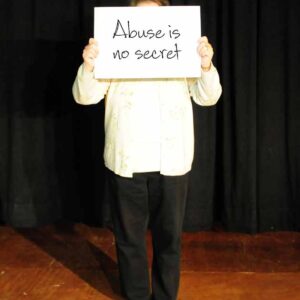
Hummer: Abuse is no secret. Susan's story as told to Sarah Wilder, performed by Amanda Hummer Pharmacy School prepares you for a lot of things, but one thing it doesn't prepare you for is watching a customer getting arrested in your businesses parking lot. It all started with a doctor's office calling in a prescription for pain pills. That seems normal enough.
00;08;07;18 - 00;08;32;22
Amanda Hummer
It happens every day. But something about this call seemed a little suspicious. So just to be on the safe side. After we hung up, I called the doctor's office. That was referenced, and sure enough, they hadn't called it in since it was a clear case of prescription forgery. We notified the police and we had the woman's name because she had given it to us when she had pretended to be the doctor's office.
00;08;32;24 - 00;08;57;20
Amanda Hummer
But to prosecute for a prescription forgery, you have to catch a person in the act of trying to pick up the medication. So we flagged the prescription in case the lady ever did try to come pick up the order. It was about three weeks later when it happened. She entered the business, filled her prescription, and then left. Upon leaving, she was immediately arrested in our parking lot.
00;08;57;22 - 00;09;23;22
Amanda Hummer
Okay, maybe pharmacy school didn't prepare me for that, but in all honesty, I can't say it came as a surprise. In the past few years alone, there have been new systems introduced to help prevent this one called Meth Check, which is a nationwide database to track pseudoephedrine sales. And another one called Kentucky, all scheduled Prescription electronic reporting, or Casper for short.
00;09;23;29 - 00;09;41;29
Amanda Hummer
Was one of the first programs of its kind in the nation to track controlled substance prescriptions within a state. But I guess one of the biggest differences in the industry I have seen would be the rising popularity of pain clinics. They are designed to help people who are addicted to opioids and then wean them off of these drugs.
00;09;42;01 - 00;10;07;04
Amanda Hummer
But honestly, I don't know how much help they are, the medications they prescribe. But these clinics are expensive and aren't often covered by insurance. I see people or families of people come in all the time to get these medicines, and they have to pay out of pocket. That's a lot of money for some of them, money that could be used elsewhere to help their families, I'm sure.
00;10;07;07 - 00;10;27;05
Amanda Hummer
But despite all this, people still try to figure out a way to get more pills. I can't tell you the number of times I've had people call trying to get their prescription refilled, and the list of excuses they use for losing pills is just as long. I dropped them in the lake. I dropped them in the toilet. My dog ate them.
00;10;27;11 - 00;10;48;26
Amanda Hummer
And on and on. And if they can't get the pills from us, they'll go to the streets to buy them. We know this because they then come to the pharmacy and ask us to identify what they've bought. I may have said the arrest was a surprise, but I deal with addiction almost daily as a function of my job.
00;10;48;28 - 00;11;15;05
Amanda Hummer
I deal with it when I have to check a prescription in Casper, just to make sure it hasn't already been filled at another pharmacy. I deal with it when I have to count, then recount, and then have two other texts count the inventory of controlled substance meds after filling a prescription. And I definitely have to deal with it on the rare occasion I have to call the police, because I suspect one of my customers is trying to commit prescription forgery.
00;11;15;08 - 00;11;32;20
Amanda Hummer
All of this because people have become addicted to pain pills. Prescription drug abuse is a problem and it isn't going away.
00;11;32;23 - 00;12;01;17
Tiffany Erk
Erk: Love is greater than anger. Debbie’s story as told to Melinda Hornbeck, performed by Tiffany Erk. No one wakes up and says, today I think I'll be an addict. My story of addiction and recovery is not the story of a junkie. It's the story of a mother with an addiction to pills. I never chose to hurt my children, but I did choose to use pills.
00;12;01;19 - 00;12;39;04
Tiffany Erk
Unfortunately, that choice devastated what was most important to me. It all started when my fourth child was born, a precious baby boy. He was one month and 27 days old when he died of SIDs. My husband found him. I started screaming. I wanted him to do something CPR, call an ambulance, anything. When the EMT pronounced him dead, I think I died to not a part of me, but all of me.
00;12;39;06 - 00;13;02;02
Tiffany Erk
And you know the worst of it. People say the dumbest things when you are grieving. Like he's in a better place. And God must have needed another angel. And be strong. You have your other kids who need you. None of that helped. Every part of me hurt. And then I discovered magic in a bag. Those pills took away my pain.
00;13;02;02 - 00;13;25;16
Tiffany Erk
And I liked the feeling. I started using them off and on as the ache in my heart demanded. But I felt alone. So I went to a counselor who called my doctor and asked him to prescribe me something. Eventually, the doctor realized I had a problem and he stopped feeding my addiction. I had to seek the pills off the street.
00;13;25;17 - 00;13;48;25
Tiffany Erk
Lots of them. And I began doing whatever it took to get the relief I needed. Though I was doing all of this, I thought I was still being a good mom. The front part of my brain was so numb I couldn't see the truth. My children were falling apart and that was my fault. My girls left me. They went to live with their dad.
00;13;48;27 - 00;14;02;00
Tiffany Erk
It broke my heart. But they were right. I tried to get into rehab, several of them, but I kept being put on waiting lists with no date of admission in sight.
00;14;02;03 - 00;14;27;12
Tiffany Erk
Then one year after my baby died, a neighbor called social services and my son, my last kid to be with me, was taken away. If I were thinking clearly, this would have rocked me into sobriety. In reality, I felt more powerless and more like a failure, which made me take more pills. A judge placed my case in drug court.
00;14;27;14 - 00;14;49;13
Tiffany Erk
I failed a few screens, and my levels were getting so high that the judge felt I wasn't going to make it unless I got help, but there were no beds open in rehab, so he locked me up to detox. I thought I was going to die in that cell. I was so sick. However, it was a blessing in disguise.
00;14;49;13 - 00;15;18;00
Tiffany Erk
And when I came home, I knew what I needed to do. And I was placed with a social worker to help me. She was hard on me, though. When I completed a, B, c to get my son back, she presented me with D, E and F. It made me so mad. The expectations just kept changing. Today I realize how fortunate I was to have her and the judge who cared enough to stay on me.
00;15;18;02 - 00;15;43;29
Tiffany Erk
I was also blessed that my son was placed in a foster home of a woman. I knew she was great with my son and he was safe. Following my jail detox experience, I never used pills again. I've been clean for six years. I wish my transformation had magically healed my family, but it has been hard work to restore my relationship with my children.
00;15;44;02 - 00;16;08;06
Tiffany Erk
I hurt them and I can't take that away. My son had to transition back into our house, but he's doing great now. I think my girls have forgiven me. Their dad and I co-parent and that is working well. Sometimes I wish I could go back and have a normal life with my girls, but I've learned that different can be good too.
00;16;08;09 - 00;16;32;15
Tiffany Erk
My children had to learn who I was clean and sober, and they had to learn to trust that I would stay that way. That takes time, but it is so worth the wait. I have an inner strength now that did not exist before and it feels great.
00;16;32;18 - 00;16;57;28
J.R. Jamison
Jamison: I want to welcome to the show Kyle Brewer from the Association for Addiction Professionals. NAADAC represents the interest of more than 100,000 addiction counselors, educators and other addiction focused health care professionals in the United States, Canada, and abroad. The organization works to create healthier individuals, families, and communities through prevention, intervention, quality, treatment, and recovery support. Kyle thank you for joining me.
00;16;57;29 - 00;17;01;25
Kyle Brewer
Brewer: Absolutely J.R. Appreciate you having me. It's an honor and a privilege.
00;17;01;27 - 00;17;11;05
J.R. Jamison
Jamison: You're now the peer specialist program manager for nada. And you were drawn to this work due to your own personal experiences. Tell me more about that.
00;17;11;07 - 00;17;44;28
Kyle Brewer
Brewer: Yeah absolutely. So I'm a person in long term recovery from opioid use disorder. That started for me my freshman year of college, got my wisdom teeth removed, was prescribed an opiate oxycodone. I started taking those as prescribed. And then after the refills ran out, I continued taking them, buying them off the streets, so on and so forth. And that continued on all throughout college, through graduation and then after graduation, where I no longer had, you know, the social life, the academics, the money for my scholarship to keep the lie kind of going.
00;17;45;01 - 00;18;08;27
Kyle Brewer
Life started spiraling pretty quickly. So I graduated in 2013. And from from that time to 2017, I progressed from taking pills to snorting pills to shooting up pills to shooting up heroin, you know, in and out of jail, in and out of treatment a couple different times really turned into a person I never imagined I would be doing, things I never thought I would imagine I would do, really.
00;18;08;27 - 00;18;26;22
Kyle Brewer
And it was all driven by the need to stay well, because at this point it was no longer about, you know, having fun or partying. It was about if I didn't have these opioids and I would be physically sick. And so I live with this timer in my head that told me, you know, how long I had before the withdrawal symptoms would begin.
00;18;26;23 - 00;18;47;01
Kyle Brewer
And so that drove every decision that I make on a day to day basis. Then in July, on July 10 to 2017, I hit what's called, you know, a rock bottom for the for the last time. That started me on this current chapter of my recovery journey, and I reached out to a faith based treatment program. I gave my life to God and I surrendered to recovery.
00;18;47;01 - 00;19;06;23
Kyle Brewer
And from that day forward, I completed that program and have been living a life of recovery, thankfully, one day at a time, and learned about peer support and how that gives me the opportunity to take my, you know, my worst experiences in life and use that in a positive way to help other people who may be going through those same challenges and got involved with that.
00;19;06;24 - 00;19;24;20
Kyle Brewer
Been working in that field for about four years now, and got connected and working with Natalie last January 21st. And, you know, that's kind of a real short summary of a very long story. But at the end of the day, I'm just I'm grateful to be alive and appreciative of all the people that have helped me get to where I'm at today.
00;19;24;27 - 00;19;55;27
J.R. Jamison
Jamison: Well, congratulations. I mean, for making it out and now helping others. That's an amazing feat. And honestly, it's hopeful. Your story and the ones we shared in this episode today, are only a few of a thousand of stories from across the country and what is now known as an epidemic. And according to the CDC, this opioid epidemic has quadrupled in the United States in the last two decades and has come in three waves, starting with prescription drug abuse in the 90s, leading to now synthetic opioids.
00;19;56;03 - 00;20;00;14
J.R. Jamison
How have these ways impacted the work you do with counselors and educators?
00;20;00;16 - 00;20;39;28
Kyle Brewer
Brewer: So the opioid epidemic is has been a complete crisis in our country, has been going on for quite some time. And that affects families, communities, loved ones from all around. And when it affects those people, then it affects the professionals that work with that population of people. So as far as it's affected the education that we focused on, we've done a lot of specific trainings and educations and webinars surrounding the opioid epidemic, stuff like that's focusing on the medications that are being used to to support people in recovery like Suboxone, people, Vivitar, those types of medication, and just making sure that everybody has the knowledge and education and training that they need to be familiar
00;20;39;28 - 00;21;06;24
Kyle Brewer
with the most latest trends and the most latest treatment modalities and approaches. So that's one way that that it's affected us. But again, it's affecting everyone. So if you're if you're a counselor or you're a pastor or you're a, you know, a teacher, it doesn't matter that people have been affected by this personally and professionally. And as a result of that at night, it affects, you know, every every piece of the work that we do from advocacy to education and training.
00;21;06;26 - 00;21;26;27
J.R. Jamison
Jamison: And that training and counseling is really important. In recent years, there has been a shift in general attitudes from incarceration to rehabilitation, but comprehensive reform has yet to happen. What does this look like at a federal and state level, and are there complications to this type of reform?
00;21;26;29 - 00;21;46;24
Kyle Brewer
Brewer: Well, I'll start with the complications. So of course there's going to be complications with any change. You know, I know me personally. I'm naturally initially resistant to change. And so we've been doing things when it comes to this a certain way for quite some time. And there's financial gains and different entities that, you know, make a lot of money off these types of things.
00;21;46;24 - 00;22;17;20
Kyle Brewer
And so there will be challenges and complexities to making a shift in perception and a shift of approaches and how we deal with these types of issues. But it's going to start at a federal or state level with conversations. You know, we have to have real conversations with people that are that is directly affecting and also our legislators, the people in the Congress and in Senate and advocating for for different policies and procedures at that level, federal level that make it even possible for these things to happen at a, at a state level.
00;22;17;20 - 00;22;41;01
Kyle Brewer
And so it all it all begins with relationships. And that's one of the things that that we really focus on at night is advocating and getting to know our our policymakers, our decision makers, our legislators, and building those relationships to, you know, to put a face with the things that are going on that sometimes when when we're having these conversations, if it's not directly affected our lives, it's kind of a distant thing and we don't really understand it.
00;22;41;02 - 00;23;05;19
Kyle Brewer
And so definitely believe that putting people in recovery, like the stories that you've shared, that having them in the conversation, sharing what's impacted them, what worked, what didn't work. I believe that's a critical part to to trying to change this perception and really break stigma, because for a lot of times, you know, drug use, not just opioid use disorder, but, you know, back in with the crack epidemic and that's still going on.
00;23;05;19 - 00;23;23;07
Kyle Brewer
And methamphetamine use there's it's really well, stigmatizing drug use and mental health challenges were looked at as like a moral failing or moral challenge or issue and that we should people deserve to be incarcerated when they make those types of decisions. Well, that's not the case. This is a brain disorder. This is a disease, and we need to treat it as such.
00;23;23;08 - 00;23;44;02
Kyle Brewer
And so instead of a moral problem, it's a health problem. And we need to be able to recognize that when someone is in these situations, that incarceration may not be the best path for every single person that falls into a certain category. And I believe we really get to that when we when we're having those one on one conversations and putting faces with all these issues.
00;23;44;05 - 00;24;07;23
J.R. Jamison
Jamison: And you're in Arkansas and I'm in Indiana. And while the opioid epidemic reaches all parts of the US, rural communities have been impacted the most. And the USDA indicates that opioid overdose rates have quadrupled among those between the ages of 18 and 25 during the past 15 years. What are happening to help rural communities combat the crisis?
00;24;07;25 - 00;24;37;28
Kyle Brewer
Brewer: Yeah, I mean, really good point here in Arkansas. This is something that really familiar with and the communities here because we have a lot of rural parts. So I'm located in Pulaski County where little Rock, the capital is. And here there's, you know, several resources, several options for recovery and treatment. But when you get to the more rural parts, access to care, transportation, insurance, like all of these barriers make, make, make it really difficult to provide services and someone to get the help that they that they're seeking.
00;24;38;00 - 00;25;02;00
Kyle Brewer
So one thing that's being done at a state level, I know here in Arkansas and really across the country is something that's called peer recovery specialist. And so what a peer recovery specialist is, is someone that has lived experience, they're in recovery themselves and they go through training. They get a certification and they're able to go out into these communities and meet people right where they're at and get them connected because they're resource brokers to the appropriate resources.
00;25;02;05 - 00;25;27;12
Kyle Brewer
I know HRSa has put out a lot of different funding to address the rural areas of the country and to, you know, pilot programs such as like wellness vans that that go out into these communities and offer, you know, harm reduction opportunities and medication assisted treatment and recovery. And, you know, really it's taking it to the community instead of, you know, like we traditionally do, waiting on someone to come in.
00;25;27;12 - 00;25;35;01
Kyle Brewer
Because in these rural areas, that's just not as easy as it may be in a more populated city.
00;25;35;03 - 00;25;42;05
J.R. Jamison
Jamison: If someone's listening today and they or a loved one are battling addiction, what would you say to them?
00;25;42;08 - 00;26;03;23
Kyle Brewer
Brewer: What I would say is that you're not alone. First and foremost, I know that that situation or personal experience, it can feel really lonely. There can be a lot of shame attached to it. And I just want you to know that you're not alone. But in addition to that, there are so many people across the country that are living lives of recovery, including myself, and that we're here to walk that journey with you.
00;26;03;23 - 00;26;24;01
Kyle Brewer
And so wherever you're located, I would just encourage you to step past that fear and shame and reach out and ask for help. And I know that may be challenging. I know it's easier said than done, but I tell you, you can't move past the problem until you acknowledge it. And I want you to know that you will be met with compassion, understanding, and love through this process.
00;26;24;01 - 00;26;37;27
Kyle Brewer
And so I know it's hard at the beginning. There'll be hard days throughout the entire process, but both for the person that's having the challenges and for the family members, there is hope, there is resources, and that recovery is certainly possible.
00;26;38;00 - 00;26;49;20
J.R. Jamison
Jamison: Kyle Brewer, pier specialist program manager for the Association for Addiction Professionals, thank you so much for sharing your own personal journey with our listeners and for joining me.
00;26;49;22 - 00;26;52;06
Kyle Brewer
Brewer: Thank you, J.R., appreciate your time.
00;26;52;09 - 00;27;10;19
J.R. Jamison
Jamison: If you or someone you know is suffering from addiction, it's never too late to reach out for help. Resources, treatment and support available by state and region can be found at Addiction Resource com. To learn more about the work of Nasdaq, they can be found online at nada.
00;27;10;21 - 00;27;18;14
J.R. Jamison
Center.
00;27;18;16 - 00;27;39;11
J.R. Jamison
Stories from today's episode came from rural Kentucky through facing addiction in Knox County. It's our move. We want to thank Union College for organizing this facing project, and give an extra shout out to President Marcia Hawkins and Monica Shannon Klaus for coordinating all of the moving pieces. Robin story was written in collaboration with Missy Reed and was performed by Melinda.
00;27;39;18 - 00;28;01;20
J.R. Jamison
Susan Story was written in collaboration with Sarah Wilder and was performed by Amanda Hummer. Debbie Story was written in collaboration with Melinda Hornbeck and was performed by Tiffany Erk. To listen to past episodes of this program, visit Indiana Public Radio Project. From there, you can subscribe to the podcast where you'll get the facing project delivered to your device each month.
00;28;01;20 - 00;28;34;12
J.R. Jamison
Or just ask your smart speaker to play the facing project on NPR. Listeners can contribute stories or volunteer to share the stories of others that may appear on the show. More information at Facing Project. To continue the conversation about this episode, find us on Facebook, Instagram and Twitter at The Facing Project. The facing project is recorded at Indiana Public Radio at Ball State University and Beautiful and Wonderful, Muncie, Indiana, and is produced by the amazing producer and sound engineer extraordinaire, Sean Ashcraft.
00;28;34;13 - 00;28;46;14
J.R. Jamison
The show is distributed nationally through. We Are Your Host, Kelsey Timmerman and J.R. Jamison. And until next time, we wish you the courage to share your own story and the empathy to listen to others.