Audio Transcript
Please note: Accuracy and availability of IPR transcripts may vary.
00;00;01;21 - 00;00;35;22
J.R. Jamison
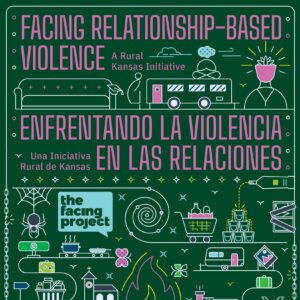
Jamison: I’m J.R. Jamison, and you're listening to the Facing Project. Today I'll be joined by Drs. Ziwei Qi and Lori E. Kniffin, editors of Facing Relationship Based Violence, a collection of 19 first person stories from people in rural Kansas whose lives have been impacted by the harm that happens when relationships are shaped by fear and control, instead of love and trust. Together, we'll explore why survivor stories matter, not just as a powerful account of what people have experienced, but as a resource that can increase awareness, break down silence, and encourage conversations.
00;00;35;22 - 00;01;03;25
J.R. Jamison
Then I'll share four stories from the project that cover the spectrum of survivors, their relatives and frontline professionals. And later I'll be joined by psychologist and author Dr. Sherry Hamby, whose book, Stronger Than You Think: Building Lifelong Resilience, explores evidence based strategies and resources that can help us flourish despite life's hardest moments. Stay with us.
00;01;03;27 - 00;01;33;10
J.R. Jamison
You're listening to The Facing Project, and I'm J.R. Jamison. My guest today are Dr. Ziwei Qi, assistant professor in Criminal Justice Programs at Fort Hays State University, and Dr. Lori Kniffin, Voss Distinguished Professor of Leadership and Director of Civic Learning and Engagement at Fort Hays State University. Together, the two led Facing Relationship-Based Violence: A Rural Kansas Initiative, and served as editors of the subsequent book along with their colleague, Diana Angarita Santos, who is not with us today.
00;01;33;12 - 00;01;36;05
J.R. Jamison
Zi and Lori, thank you for joining me on The Facing Project.
00;01;36;06 - 00;01;38;17
Dr. Ziwei Qi
Qi & Kniffin: Hey, thank you so much for having us. Great.
00;01;38;17 - 00;02;00;09
J.R. Jamison
Jamison: Your project focused specifically on rural Western Kansans who are survivors, frontline workers or family members who had experienced relationship based violence in some way. Zi, lay the landscape for us. What's this part of the state like compared to other areas, and why did you decide to concentrate your focus there?
00;02;00;14 - 00;02;34;12
Dr. Ziwei Qi
Qi: All right. Thank you so much, J.R., for the question. So a little bit background about me. My research had focused on like rural communities in a very long time. Back to graduate school. My research on road to urban migration in China. So I always have this like a sweet spot about real population, rural communities. So when I moved to the United States, I really tried to see, you know, in such a developed country, there's still a lot of like Reuben, urban, rural urban divides and including crime, victimization and communities.
00;02;34;12 - 00;03;07;05
Dr. Ziwei Qi
So why rural western Kansas? First thing first, I start working at four Hays State University since 2018. So this is Mark, my six years working here. And because my interest in rural communities, victimization, crime, I had a lot of opportunity to connect with local communities, organizations, advocates to learn about the work they do. I think one common myth about road communities in the US is that they are homogenous, or rural communities look alike, which is untrue.
00;03;07;06 - 00;03;35;07
Dr. Ziwei Qi
As a matter of fact, rural Kansas is very different compared to Robert Monroe, Indiana, or even Rover. I think it's important to understand that diversity in the rural context. But also I think when we think about Ro, we do recognize there are a lot of limitations, for example, lack of trust and lack of services. However, there are also a lot of resilience, innovations and creativity we are missing in these communities.
00;03;35;08 - 00;03;53;13
Dr. Ziwei Qi
So to me, because of years of collaboration and the sort of inspiration with these local communities, I think they deserve their story, deserve to be heard. So that is why I think this is a wonderful opportunity to bring rural western Kansas to the spotlight on relationship based violence.
00;03;53;15 - 00;04;06;13
J.R. Jamison
Jamison: Laura, you had used the model of the facing project in the past and brought this idea to Zi. Talk more about why you felt this form of storytelling was the right way to approach a sensitive and often anonymous topic.
00;04;06;15 - 00;04;38;02
Dr. Lori Kniffin
Kniffin: Well, as I mentioned, I've had the pleasure of working with the facing project in the past, and the purpose is to develop empathy and understanding through stories that inspire action. And in my previous experience, that's what it did. The project itself inspired a lot of action that came after those stories were told and brought together. So I've believed in this model for a long time, and I thought it was really great for our community as as he was talking about in rural Kansas, there's so much geography.
00;04;38;03 - 00;05;09;17
Dr. Lori Kniffin
There's we're really, really spread out. And so sometimes those stories in those experiences can feel very isolated. But I think the facing project model really allows individuals to tell their stories, to have agency in telling their stories, to connect with others who are listening, but then bring that collective story together. And I think that's what this book does, is that it shows the diversity of ways that people experience relationship based violence, but still holds up that uniqueness.
00;05;09;18 - 00;05;32;03
Dr. Lori Kniffin
I think these work in mine and those at Fort Hays State University, is to try to be very connected to our communities and to engage with them in ways that shares power. And I think this model allows for that type of storytelling to bring bring those stories into light and through cyber feature action.
00;05;32;06 - 00;05;53;22
J.R. Jamison
Jamison: And you also made the conscious decision to outreach to Spanish speaking communities for stories, and to have the finished book available in both English and Spanish. Tell me more about this decision and also barriers that might have arisen working with immigrant populations at a time when it can feel, well, not safe to be a span of speaking immigrant.
00;05;53;29 - 00;06;12;00
Dr. Ziwei Qi
Qi: So one thing is that because this is a project being founded by Robert Wood Johnson Foundation, which very much focusing on diversity and the health equity, and then we must admit that, you know, for us, we have a lot of diversity in the populations, including refugee and the immigrant populations. I know, you know, it depends on the states.
00;06;12;02 - 00;06;40;20
Dr. Ziwei Qi
The diversity could be varies, you know, but in rural Kansas. We have large population in southwest southeast Kansas. A lot of the immigrants refugees set out there. I think their stories need to be hard, especially relationship based violence. I think this issue is not new. It has the existing as long as with human history. And I think a lot of time I'm looking at relationship based violence.
00;06;40;20 - 00;07;35;21
Dr. Ziwei Qi
We have to enter the cultural, social, political, economic and legal contexts. So I think if we want to really, truly look at issue holistically, we really need to include more voices and that including everybody, especially marginalized communities where, you know, their voices may not be often selected, heard compared to others as well. And in terms of challenges, I think, you know, without that too deep in terms of policies and challenges, I think one thing is really about telling story needs courage is because even though when somebody feel like they tell about their story, they feel somewhat empowered, but still could trigger some Trump trauma and some memories.
00;07;35;22 - 00;08;10;03
Dr. Ziwei Qi
So I think this is a specially challenging even for immigrant communities. If they do encounter with additional barriers such as language, cultural barriers. So that is why I think when we try to recruit this diverse populations, there might be some hesitations, some concerns, but also, to be fair, this availability, because we are collecting stories from people who are actually real people.
00;08;10;03 - 00;08;34;08
Dr. Ziwei Qi
They work, they are fighting for survival every day. You know, to be able to collecting these stories, such personal gain trust from them, but also they need to have the time to sit down to tell the stories. We don't want to rush them. I think that is one of the motto, very much focusing on. So I think a lot of times people may not be able to say, well, I'm willing to to do so.
00;08;34;10 - 00;09;07;05
Dr. Ziwei Qi
Maybe I'm not available, but I think it's really, you know, the nature of the project. You're trying to really seeking this kind of opportunity while with all of these challenges and ultimately are the people who care about this issue, come together to showed up, to tell the story, to inspire others. So I think that is really the spirits of this project, how we as a community can collectively tell the stories and inspire actually actionable policy.
00;09;07;07 - 00;09;37;00
J.R. Jamison
Jamison: And our long time listeners will be familiar with the model of writer and storyteller sitting down together. But maybe our newer listeners don't know that the process, as you alluded to, is a writer and a storyteller sitting down together, building that rapport and that comfort level through through trainings they go through before they begin to talk about their stories and capture them in the book.
00;09;37;01 - 00;10;10;12
J.R. Jamison
I think you all did a great job of diversity in this. Even looking at the writer side, you included voices of all genders, all identities, and even in the the outreach we did with storytellers and matching them with a writer, the asking of comfort level of identity of your writer to write, to say that there may be a assistant or female storyteller, maybe not comfortable telling a story to assist gender male.
00;10;10;20 - 00;10;34;14
J.R. Jamison
Then some instances people were okay with that. And so I feel like you did a really deliberate and good job of making sure that the matches were happening appropriately and the recruitment was done really, really well in this project. Could you talk about what surprised you the most as the two of you worked together on managing this project and collecting the narratives?
00;10;34;18 - 00;10;58;27
Dr. Lori Kniffin
Kniffin: One thing that surprised me in a good way was just the willingness of people to participate, the willingness of storytellers to sit down with someone over multiple meetings to tell their story. And the writers we had we had students, we had faculty and staff. We had community members that invested their time and their emotions as well in this process.
00;10;58;27 - 00;11;19;28
Dr. Lori Kniffin
And it was a beautiful experience. And that we also because of the bilingual nature of the project, there were a lot of considerations that we had to do as a team that that invited unique skills from different people. And so we kept inviting more and more to the process in any one that we really explain this to and ask.
00;11;19;29 - 00;11;27;17
Dr. Lori Kniffin
There was there was a strong agreement to participate, to make these stories came to light.
00;11;27;19 - 00;11;34;27
J.R. Jamison
Jamison: What are some of the biggest misconceptions you think people have about those who face relationship based violence?
00;11;35;00 - 00;11;58;15
Dr. Ziwei Qi
Qi: I think that on my head is basically, why can't you leave right if it's not right for you? If something is not right, one can't you leave? I think I always start with a conversation with, you know, sometimes leaving is more dangerous than staying. You know, a lot of time. The intimate partner violence homicide happened. One the victim decided to leave.
00;11;58;17 - 00;12;24;15
Dr. Ziwei Qi
Also, when we talk about resources, talking about transportations is a really hard for victims to to leave because that is one of the techniques that perpetrators did. They are trying to isolate them, detach them from other social networks to let them not able to connect, help and assistance. And I think another thing is also about, you know, relationship based violence may only happen to specific populations.
00;12;24;15 - 00;12;55;05
Dr. Ziwei Qi
That vulnerability is very specific, which is not true. As a matter of fact, relationship based violence can, you know, ranging variety of spectrum. That's not always physical violence. It could be emotional abuse, financial abuse, or kind of indirect abuse towards manipulate something or someone that victims care about. Could be children, could be family or pets in rural communities, can be farms, could be farm animals.
00;12;55;05 - 00;13;04;12
Dr. Ziwei Qi
So I think we really need to understand relationship based violence from much more broad spectrum. Is that a very narrow.
00;13;04;14 - 00;13;15;21
J.R. Jamison
Jamison: Well, soon you'll be hosting reading and listening circles throughout western Kansas, using the book as a guide. What do you hope readers and listeners walk away with from this experience?
00;13;15;24 - 00;13;54;09
Dr. Ziwei Qi
Qi: Honestly, I think because the stories were told by rural Kansans, it already established a great connection in these settings. I'm not concerned at all in terms of how people may feel connected to these stories. I think, well, I want to create a space for more dialog and more community connections, like how we can support communities or organizations who are engaging in this work, from lie to better support victim survivors, but also to educate young people about what is considered as a healthy relationship.
00;13;54;09 - 00;14;19;24
Dr. Ziwei Qi
And if you will ever get into unhealthy relationship, what's the safest way for you to act it? How to support others, how to learn to trust each other and how to learn to actually not thinking. Relationship based violence is something private. Matter is not my business. It's some things a public house issue we all should cared about.
00;14;19;26 - 00;14;28;23
J.R. Jamison
Jamison: Dr. Ziwei Qi and Dr. Lori Kniffin, editors of Facing Relationship Based Violence or Rural Kansas Initiative. Thank you for joining me on the Facing Project.
00;14;28;25 - 00;14;29;19
Dr. Lori Kniffin
Kniffin: Thank you so much.
00;14;29;20 - 00;14;31;02
Dr. Ziwei Qi
Qi: Thank you so much, y'all.
00;14;31;03 - 00;14;54;18
J.R. Jamison
Jamison: Facing Relationship Based Violence: A Rural Kansas initiative is out now. Everywhere books are sold and borrowed. Just request it at your local library. Next up, we'll hear four stories from the book. Then later, I'm joined by psychologist Dr. Sherry Hamby, whose latest project, Stronger Than You Think Building Lifelong Resilience, explores a set of evidence based strategies and resources that can help you flourish despite life's hardest moments.
00;14;54;19 - 00;14;56;06
J.R. Jamison
Stay with us.
00;14;56;08 - 00;15;36;28
Rebecca Taylor
Taylor: From Betrayal to Becoming, an anonymous story as told to Jenni Reling, performed by Rebecca Taylor. Pieces of the experience robbed my older sister and me of trust and innocence and other elements as it unfolded. Revealed purpose for my future. It took years for all of the disclosure of the fragments and ultimately the redeeming stories to be sorted. I was young, not even a teen yet, when a man cloaked in lies of family friendship didn't just prey on innocence, he used a sick type of charm to earn the title of uncle in our family, to gain trust among all of us.
00;15;37;01 - 00;16;05;07
Rebecca Taylor
The children and the adults were deceived. Eventually, I found myself at his home, a drink used to lure but spiked. My favorite movie chosen to lower my guard. Waking up in an unfamiliar place, my clothes folded neatly on a bedside table. CD details. And he deserves no more of this story except to be called to account. This story.
00;16;05;08 - 00;16;45;23
Rebecca Taylor
My story is about rising up, about creating a life and career focused on combating those who intend evil toward others, whether sexual assault or domestic violence. It's about making a choice not to be defined by disgusting circumstances, but to be resilient, to become who I was meant to be. My sweet sister, truly my best friend, carried pain from similar experiences with the same man, as well as a coercive relationship through her high school years, until, in a counselors office, the stories came tumbling out upon hearing her account, similar to mine from my pre-teen years.
00;16;45;27 - 00;17;07;06
Rebecca Taylor
I was able to develop awareness of what had happened to me in that house, and it shocked me. I'd had questions, but the trust I'd felt for the man and my own youth at the time had prevented me from piecing the puzzle together previously. We were then thrust into a social and legal system, not well trained or well intentioned.
00;17;07;08 - 00;17;35;20
Rebecca Taylor
We felt betrayed by the helpers in their line of questioning, but we responded to their inquiries with the intent of revealing the truth and hopefully to hold the perpetrator to account. Our parents who had raised us in faith were our devoted supporters, though the rest of the experience lacked true care for young girls. The system failed us by their methods of questioning and even more, their lack of interest in the perpetrators liability.
00;17;35;24 - 00;18;06;09
Rebecca Taylor
The judge, a woman kind to us and fiercely chastising toward the defendant, clearly believed our narratives and had compassion for us. Unfortunately, legal hindrances tied her hands in ways that precluded what we'd hope to place him behind bars, far from other children. Partial justice came when he was required to register as a sex offender. My sister and I spoke of things young girls shouldn't need to recall, but needed to discuss in order to sort out emotions and layers of healing.
00;18;06;14 - 00;18;38;26
Rebecca Taylor
We were held emotionally also by our family, rooted in faith. The same faith that A strengthened me as I've grown from child to adult and in my college career. It might seem coincidental the path my college experience took, but I believe deeply that these things happen for a reason, and that those reasons reveal purposes for our lives. As I entered college and applied to a living environment dorm that especially appealed to me, I learned that as criteria to live there, I'd need to enter into a group study social environment.
00;18;38;28 - 00;19;05;19
Rebecca Taylor
While that appealed, there was only one group left with openings at that time. Its focus was law, politics, and justice. I was a business major, or so I thought. Undeterred, I joined the group, secured my preferred living arrangement, and began to experience the unfolding of my future justice. Wasn't that exactly what I'd wanted, needed, fought for as a teenager?
00;19;05;24 - 00;19;31;22
Rebecca Taylor
Was seeking justice for others part of my future as I became immersed in the group focused on law, politics, and justice. My interests toward making the path smoother for other survivors began to emerge, and my direction led away from a business degree and toward a pre-law track. Part of my education process required an internship. I'd just been thinking about it, pondering what type of experience to consider when.
00;19;31;23 - 00;20;02;27
Rebecca Taylor
Minutes later, an instructor approached me. She gave me an announcement for an internship opportunity for a national education and violence prevention organization with a mission of reducing relationship violence. Further goals are to deliver educational programs to prevent domestic and dating violence, sexual violence, and stalking. Accepted as an intern and later a staff member with that organization, I've just begun to fulfill my calling and my vocational purpose while preparing to enter law school.
00;20;02;29 - 00;20;29;19
Rebecca Taylor
My aforementioned instructor became instrumental with her understanding, encouragement and guidance gently steering me. She's been a compass, seeing potential that I might have missed. I will continue to be a seeker of justice and a crusader against assault. And my dear sister, recently, I stood beside her as she exchanged vows with a kind and loving man, the type of man she deserves.
00;20;29;20 - 00;21;07;26
Rebecca Taylor
She and I have healed so much what was meant for harm. God has created good in it and we await the upcoming chapters. And so this story is decidedly not about the man who harmed me. Yes, he had a pardon it. And I deserved to be able to tell that story. But this is my story of experiencing betrayal, pulling up resilience from deep within, surrounding myself with faith filled family and supporters, and then keeping my eyes open for the path, choosing new opportunities put before me, trusting the process, remaining in the deep faith I embrace.
00;21;07;28 - 00;21;39;19
Rebecca Taylor
Each step led to the next, and I continue forward working as an advocate and a justice seeker. No coincidences, only events orchestrated by God for my good and the benefit of others. My survival story. May it be a guidepost for other women as I go about the business of securing justice on their behalf.
00;21;39;21 - 00;22;13;10
Heather Troupe
Troupe: Not That Simple. Cia’s story as told to Emma Loomis, performed by Heather Troupe. There I was, first thing in the morning. Getting yelled at by someone I had never met. As a prosecutor, there are times when I make decisions that will most definitely upset people. I must trust that my knowledge and judgment or what's right. I knew I wanted to do something in the criminal justice system since I was in middle school.
00;22;13;13 - 00;22;40;01
Heather Troupe
My teacher told us we could do a presentation on any topic. I decided to do it over the criminal justice system, since my mom and grandma worked at a domestic violence shelter. They helped me get in contact with many professionals in the field. I talked to a judge, a prosecutor, a detective, a sheriff and undersheriff and some dispatchers.
00;22;40;04 - 00;23;13;23
Heather Troupe
This gave me a clear picture of how domestic violence progresses through all phases of the process, from the first call to the officer who responds on the scene all the way to the courts. The thing that stood out is how the victim is treated from the initial call, and how that can impact their trust in the process. This sticks with me today as I work as a prosecutor who specializes in domestic violence and sex crimes.
00;23;13;25 - 00;23;42;28
Heather Troupe
When I'm working with the victims of crimes like domestic violence, I always keep in mind how ultimately this is their story. Although I might have an idea of what sentence someone should face, I always keep in mind their wishes. It's not uncommon when I'm working with the victim of domestic violence that they want to drop the no contact order.
00;23;43;00 - 00;24;29;15
Heather Troupe
A no contact order is a court ordered legal agreement that's put in place to protect survivors and to keep the integrity of the case. It prohibits direct or indirect contact between the perpetrator and the survivor. This can put me in a tricky situation because I still want to respect their wishes while also ensuring their safety. There have been cases where the victim gets upset with me for not allowing the no contact order to be lifted, but I always remind them of one thing I say you felt threatened enough in that moment to call law enforcement.
00;24;29;17 - 00;25;07;26
Heather Troupe
Something I keep in mind is if someone felt scared or unsafe enough to call law enforcement, it must have been threatening. I say this because often this isn't the first time they've been in that situation with the individual harming them, but this time they decided to make the call in. That call could save their life over time. I've seen firsthand how hard it can be for someone to leave, to make that life saving call, to stay away from the person who hurt them.
00;25;07;28 - 00;25;37;28
Heather Troupe
To this day, we still hear people say, why didn't they just leave? Here are some reasons why. Fear for their life. Fear for their child's life. They might not have anyone to turn to. They've often been isolated with just the person causing them harm. And although this person is causing them harm, maybe they still love them and want to protect them.
00;25;38;01 - 00;26;14;26
Heather Troupe
So the answer to the question why don't they just leave is not that simple. Living in rural Kansas, it can often be a challenge to get the people around us to understand why it isn't as simple as leaving. We often see people questioning what the survivor could have done differently. We don't often hear why would someone do this to someone they love?
00;26;14;28 - 00;26;48;05
Heather Troupe
These questions are why I have found a passion for prosecuting cases of domestic violence. Although it isn't an easy job, seeing people who've been able to leave and live happy lives inspires me to keep fighting. Education about domestic violence is so important because people often don't know what domestic violence is to some. It may seem obvious, but it's not that simple.
00;26;48;08 - 00;27;20;00
Heather Troupe
Domestic violence and intimate partner violence look different in every case. My job isn't as simple as one might think. Sometimes I get yelled at. It comes with the job. But at the end of the day, I do what is right.
00;27;20;03 - 00;27;44;15
Sydney Maurer
Maurer: You Can't Get Rid of Glitter. An anonymous story as told to Katy Harris, performed by Sydney Maurer. I am not a stranger to sexual and relationship violence. It all started with my perception of love from my parents. For years I watched my sperm donor of a dad be abusive. He's not around anymore, but that doesn't mean his actions from the past don't stop haunting my family.
00;27;44;18 - 00;28;13;04
Sydney Maurer
Both in his work as a cop and at home. He only saw women as objects. To him, that was all my mom was good for. The final straw for my mom came when I was only two years old. My dad stared at my pregnant mom before kicking her in the stomach, killing my little sister in the womb. Distraught and scared for our lives, my mom took me and ran away to Colorado, wanting him out of our lives forever.
00;28;13;07 - 00;28;34;22
Sydney Maurer
Although my mom got away as a minor, I was forced to continue seeing him. My dad got himself a new wife who was just as evil as he was. When I was eight, my stepmother dragged me into the bathroom and cut my forearm on the faucet. She locked me in there for hours, listening to me scream and cry.
00;28;34;24 - 00;29;00;28
Sydney Maurer
Eventually, there was a knock at the door. I thought that finally I would be let out. Instead, to uniform, cops stepped inside the bathroom and molested me on the cold floor. In my memory, everything goes black after that day for a while. I don't think I want to remember what happened.
00;29;01;00 - 00;29;26;10
Sydney Maurer
From that night on. I handled my trauma through physical acts. I became hypersexual, just wanting to feel seen by any and everyone. This led me to my first boyfriend. Things started out good, the sex was good, and I felt desired, but it turned south very quickly when he began tying me up nonconsensual and burning me with cigarettes on my hips.
00;29;26;13 - 00;29;51;19
Sydney Maurer
I got away from him, but that relationship only made my desires worse. I came out as bisexual in high school. I was really proud of who I was, and I would say yes to anyone wanting to have sex. Whether it was a man wanting another body or a woman wanting to explore, I didn't care. I just wanted to feel desired, to feel wanted.
00;29;51;21 - 00;30;12;16
Sydney Maurer
I started dating another man in high school. He said he didn't care about how many women I had been with because he had one goal in mind the gay out of me. He didn't care what I had to say about my sexuality. I would tell him that it's who I am, that he couldn't just get rid of such a big part of me.
00;30;12;18 - 00;30;39;26
Sydney Maurer
He would continue to do anything he could to hurt me and my sexuality. After a while, I managed to cut ties with him and I thought I had gotten away, but he started stalking me. One day he found me and raped me, claiming he still needed to gay out of me. After my relationship with him, he made me start questioning my sexuality.
00;30;39;28 - 00;31;00;12
Sydney Maurer
I felt like I didn't know who I was and I hated that feeling. I had been so proud of who I was. How could I let someone try and take that from me? Thankfully, when I got to community college, I found some amazing friends who really helped me. They helped me get back to a place where I love who I am.
00;31;00;14 - 00;31;27;12
Sydney Maurer
I love being gay. Now I am in a happy relationship with a man who doesn't care what my past holds. He loves me anyways. I have amazing friends who support my sexuality and express their own happily. There's really some irony in my experiences with my high school boyfriend because it made me who I am today. He's still out there looking for me, trying to change who I am.
00;31;27;15 - 00;31;56;17
Sydney Maurer
But just like glitter, my gayness never left. It's still a part of who I am. So the more people I can make proud of who they are. I will. I want every member of the LGBTQ plus community to know that their glitter will never go away, just like mine.
00;31;56;20 - 00;32;34;27
Tracena Marie
Marie: A Glimmer of Jana. Christie Brungardt’s story as told to Raya Carter, performed by Tracena. July 3rd, 2008. As I'm finishing grocery shopping to head back to the lake house, my phone startles me as it rings. It's Jana's best friend. They should be at the lake house by now. I answer to see if they made it. Kristi I can't find Jana. She says. What do you mean?
00;32;34;28 - 00;33;06;22
Tracena Marie
She's six feet tall and really loud. How could you miss her? I play it off instantly as this can't be true. No, Kristi, I'm serious, she says adamantly. What do you mean you can't find her? I reply. She was supposed to meet me at noon and never showed up, she says, her voice shaking. My heart races as it sinks.
00;33;06;24 - 00;33;39;17
Tracena Marie
An overwhelming sense of sickness swirls inside me. Jana is missing. Jana would step into a room and make it glow in ways people immediately gravitated toward. Like a moth to a flame, her vibrance radiated onto others. Jana, a beautiful six foot tall girl with a big heart and an even bigger voice, was born in Hayes, Kansas. From kindergarten through 12th grade.
00;33;39;18 - 00;34;09;24
Tracena Marie
She blossomed into astonishing singer, though the coaches thought she was the perfect fit for sports. Jana new singing and musical theater was meant for her. Her talents led to a majority paid tuition offer from the University of Kansas, Ku, where she majored in vocal music, earning honors and academic scholarships. During her sophomore year, she called and said, mom, I'm sick of singing.
00;34;09;26 - 00;34;39;29
Tracena Marie
I reminded her how talented she was. I know, she replied, I've done this my whole life. But I took a women's studies class as a Jennette and it just lit me on fire. I tried to reason with her, but I knew her mind was made up. I'm just so pissed off. I never learned about the inequalities women face prior to taking these women's studies courses, she continued.
00;34;40;06 - 00;35;12;25
Tracena Marie
I'm mad enough to do something about it. The mother in me wanted her to stay on course, but I knew my daughter. This is my passion. This is my thing, she told me. I came to understand her need for change, and I'm grateful I did. Women's rights and advocacy became her driving force. He interned and worked with legislators and policy leaders, graduating within four years.
00;35;12;28 - 00;35;57;25
Tracena Marie
Jana became a lobbyist for the National Organization for women. She coordinated initiatives, built momentum, and created community. She inspired my husband and me to become more involved in policy change as well. I later started the Kansas Women's Leadership Conference, and Jana helped me develop and coordinate conferences. Jana eventually shared concerns about the low pay of lobbying. We talked about gaining experience while staying true to her passion, and for three years she worked as a lobbyist and sang karaoke to earn a little extra income, becoming known as the singing Lobbyist.
00;35;57;28 - 00;36;28;02
Tracena Marie
After her third year, she told me she couldn't be the advocate women needed without a legal education. After briefly considering a master's in public affairs, Jana was accepted into Ku Law School. While I worked toward my PhD, she would be working toward her JD. July 3rd, 2008 will be a day I will never forget. The phone call. Jana.
00;36;28;04 - 00;36;57;12
Tracena Marie
Never making it to the meeting spot. Shock turned to fear. I wondered if she was studying at the K Law school or had been in an accident. Her friend had already checked the hospital. I headed to Lawrence, Kansas, where they lived. Her car had been found in the hospital parking lot. The window was partially down. Her purse and laptop inside.
00;36;57;15 - 00;37;28;21
Tracena Marie
Police were contacted and told us not to touch anything. As we waited in the hospital parking lot, I recognized the house across the street from where we were standing. Is that his house? I asked her friend confirmed the house was Jana's ex-boyfriend's. I wanted to rush over, but law enforcement told us not to go. Officers showed up and asked if we had.
00;37;28;21 - 00;37;56;04
Tracena Marie
Some were comfortable to wait as they checked the area. We went to Janis house. Friends arrived. My husband came. I updated my sons as they were in route to the lake house and told them to hold off. Coming for now. Later, an officer showed up and asked my husband and me to go to the police station. I told my sons to head to Lawrence as we waited in the station.
00;37;56;06 - 00;38;33;13
Tracena Marie
They asked what was going on and all I could get out was, it's it's not good. A very bad feeling engulfed me. An officer walked into the room and said, we found Jana. She is deceased. My world stopped. Everything blurred. Her best friend arrived along with her brothers and Janis biological father. I had to tell them before I could stop myself, I blurted.
00;38;33;16 - 00;38;35;13
Tracena Marie
He killed her.
00;38;35;16 - 00;39;08;08
Tracena Marie
It was all I could manage. Days later, law enforcement told us they found him. He had taken Jana's phone, fled east, and was tracked to new Jersey after resisting arrest. He was hospitalized and placed on suicide watch, where later he took his own life. The police asked me to gather my family as they shared the news. After you sure he's dead?
00;39;08;08 - 00;39;49;13
Tracena Marie
I asked, the officer confirmed. Then I passed out. Many emotions raged through the air for my family. I felt a sense of relief knowing my family wouldn't endure years of court or trial. The dean of the law school at Ku helped arrange Jana's funeral. It was held at Liberty Hall, her favorite place. The dean told me we would need a large venue, which astonished me as Deana was only 25, yet had built such a strong community that was grieving her loss.
00;39;49;15 - 00;40;32;23
Tracena Marie
Liberty Hall held 1100 people, and more than 1100 people attended. Many stood just to be present. Family, friends and colleagues came to celebrate her life, honoring her impact on women's rights. The dean also gave me Jana's law school acceptance letter. A rare and deeply meaningful gesture. Jana's impact became clear as I began meeting and being introduced to many of her mentors, colleagues, friends, and even strangers who learned of her.
00;40;32;25 - 00;41;14;01
Tracena Marie
Many initiatives and programs were created in her honor. Ku established the Jana mackey lecture Series. The 1100 torches campaign was created to carry on her work, and she volunteered with sexual and domestic violence agencies. Leaving a lasting legacy. Jana's impact inspired my husband and me to turn tragedy into action. We educated ourselves on domestic violence and by utilizing our skills in curriculum, writing and teaching large groups, Jana's campaign was born.
00;41;14;03 - 00;41;45;09
Tracena Marie
Step by step, we move forward, advancing while also overcoming hurdles. We met incredible people who supported us. We served as chairs on boards and created meaningful change within domestic violence work. By becoming involved in policy, working alongside domestic violence policy leaders, we continue to further Janice legacy by carrying forward the work she believed in and dedicated her life to.
00;41;45;12 - 00;42;21;05
Tracena Marie
That commitment lives on through Jana's campaign, which has made a significant impact by educating individuals on recognizing unhealthy relationship behaviors. We have worked directly with over 100,000 K through 12 students, and indirectly worked with thousands of higher education students to promote healthy relationship behaviors. There is power in Jana's story, power that continues to shape and build the framework needed for our advocacy.
00;42;21;08 - 00;42;50;22
Tracena Marie
Jana's campaign helps communities build lasting conversations centered on prevention and education about unhealthy relationships. By having these hard conversations, we move one step forward each day and continue her legacy.
00;42;50;25 - 00;43;18;15
J.R. Jamison
Jamison: I want to welcome to the show psychologist Dr. Sherry Hamby. Dr. Hamby is author of the book Stronger Than You Think: Building Lifelong Resilience that draws on more than 30 years of studying violence, trauma, and recovery. Doctor Hamby is an award winning Distinguished Research Professor of psychology at Suwanee, the University of the South, and she directs a life past Appalachian Research Center and is founder and co-chair of Resilience Con, a conference on strengths based approach to overcoming trauma.
00;43;18;20 - 00;43;31;23
J.R. Jamison
She has authored or coauthored more than 200 scholarly articles and five books, and her work has appeared in The New York Times, USA today, HuffPost, and on CBS news. Doctor Hamby. Thank you for joining me on The Facing Project.
00;43;31;25 - 00;43;33;18
Dr. Sherry Hamby
Hamby: Oh, well, thank you so much for having me.
00;43;33;20 - 00;44;00;15
J.R. Jamison
Jamison: We just heard four stories from the Facing Relationship Based Violence Project, and they covered the perspectives of survivors, both victims and family members and those from frontline professionals. Your book, Stronger Than You Think, is intriguing because too often resilience, I believe, is portrayed as something people have or they don't. What have you learned about what resilience actually is and where it comes from, and how much of it can be built?
00;44;00;16 - 00;44;24;06
Dr. Sherry Hamby
Hamby: Yeah, that is a great question because I do think that is the single biggest problem out there with people's perceptions of resilience and, and psychologists. We are partly to blame for that because back in the 70s and 80s and 90s, we contributed to that idea that it was some sort of inherent characteristic or your emotional toughness or whatever.
00;44;24;08 - 00;44;52;19
Dr. Sherry Hamby
But we have also known, even going back to the 20th century, that that's really wrong. And it takes a lot of different types of assets and resources, different good things in your life for anybody to overcome trauma. And in fact, the actual message is, is much more hopeful because we now know that you can get better at resilience at any time in your life by adding more good things to your life.
00;44;52;22 - 00;45;15;18
J.R. Jamison
Jamison: I love your approach about connecting to the natural world around us and also focusing focusing on areas like meditation and breathing. Talk more about this and describe what a more honest, human version of resilience looks like when life has fundamentally changed us. And there are pathways, as you describe in your book, that help.
00;45;15;23 - 00;45;43;23
Dr. Sherry Hamby
Hamby: Yeah, I think we have stuck too long to a medical model for what healing from trauma looks like, when if you've been through traumatic experiences, it's not really like having an infection or a cancerous process in your body or something like that. And the solution is not really going and sitting in a doctor's office for an hour every week trying to make it better.
00;45;43;27 - 00;46;07;29
Dr. Sherry Hamby
I mean, it certainly can help to have a safe place to tell your story, but but that alone is never going to give anybody a good life. And so what we need to do is get much more intentional about adding these other elements, as you suggest. I was trained as a clinical psychologist, and we never talked about the environment or nature or anything like that when I was in school a long time ago.
00;46;07;29 - 00;46;31;14
Dr. Sherry Hamby
And but now we know that getting out in nature and reconnecting with green spaces and blue spaces, that's just as powerful as psychotherapy or antidepressant medication. And the same with mindfulness and exercise and a lot of these other things that lots of people who have full, rich lives have as elements of their lives.
00;46;31;17 - 00;46;45;07
J.R. Jamison
Jamison: Do you find when people discover your work in this new way of focusing on themselves, do you find skepticism at first, or what are reactions that you often get from those who are seeking this pathway?
00;46;45;08 - 00;47;10;15
Dr. Sherry Hamby
Hamby: Well, you know, I've had a real wide range of reactions. I was talking to a retired lawyer last week who spent 32 years in the district attorney's office here near where I live, and he said that he thought this should be required reading for everybody who graduates from law school. And I was like, yes, you could tell all the lawyers, you know that.
00;47;10;21 - 00;47;30;10
Dr. Sherry Hamby
But but you know. But sure, I have definitely I was talking about the impact of nature once to a group of social workers, and one of them put her hand in the air and she's like, so they're just supposed to go for a walk in the woods, and then everything is going to get sorted. And, you know, and this like dripping with skepticism.
00;47;30;10 - 00;48;01;24
Dr. Sherry Hamby
And so I definitely have encountered some skepticism, but I think the science is really piling up against them, even though I mean, it's hard because that's not what I was taught either. I mean, I get where that social worker was coming from, but there was just a new study that just came out a few weeks ago. That was this massive review of nature based interventions that looked at studies involving more than 10 million participants.
00;48;01;24 - 00;48;21;26
Dr. Sherry Hamby
And it just came out again with these incredible results about how it both lowers the things we don't want, like depression and anxiety, and raises the things we do want, like our sense of well-being. And, you know, it's fantastic. It's amazing how fantastic it is.
00;48;21;28 - 00;48;46;20
J.R. Jamison
Jamison: When thinking about relationship based violence has one part of trauma, because trauma can cover, right, like a spectrum of experiences that have happened. And relationship based violence is one of those. I think the thing that's challenging with relationship based violence is, is often someone a victim has trusted who has harmed them in some way. Right. That's one slice of that pie.
00;48;46;23 - 00;48;56;08
J.R. Jamison
What if survivors of relationship violence taught you about the ways people begin to rebuild a sense of self after someone they trusted did harm them?
00;48;56;09 - 00;49;25;10
Dr. Sherry Hamby
Hamby: Yeah, I actually started off focusing on relationship violence. That's where my focus was in the early years of my career. And and honestly, it was really from talking to survivors that got me to shift my work. Because when I first started out in this field, I was doing what's much more conventional research in this area where you're just doing a lot of documentation of how big the problem is and how harmful the problem is.
00;49;25;11 - 00;49;57;27
Dr. Sherry Hamby
And but they kept coming to me over and over again and saying, you know, that's all well and good, Sherri or maybe Doctor Hamby depending. And but you know, what we really want to know is how to feel better. And, and I do think that a lot of what I have learned has come from talking to survivors like that and that we that there's so much untapped wisdom out there about people who have followed these paths, and we just haven't done a very good job of asking them about it.
00;49;57;27 - 00;50;46;02
Dr. Sherry Hamby
But for, you know, making meaning, like one woman I met who was in a really very serious domestic abuse situation, and she had two school aged children, and she was very worried that her husband was going to kidnap them when she left and that she'd never see them again, which was definitely a legitimate concern in her situation. And she started volunteering at their school, mostly motivated because of her fear that he would even though she had a restraining order, she was just worried that there'd be somebody at the front desk who wouldn't know about her or her kids, and the wrong person would be there at the wrong time, and that he would be able
00;50;46;02 - 00;51;08;01
Dr. Sherry Hamby
to take them. And so she started volunteering in the school just so she could keep close her watch over them. But then that really turned out to be this amazing healing force for her, because it turned out that she loved working in the school, and she threw herself into all of this tutoring and found she had a real knack for helping the kids who were struggling with reading.
00;51;08;01 - 00;51;31;08
Dr. Sherry Hamby
And not too long after that, maybe a year or two later, she actually received the volunteer of the year award for the entire countywide school system. And so I think she found something beyond her trauma experiences. And I think that is something we can learn from all survivors as just an essential part of healing.
00;51;31;11 - 00;52;02;02
J.R. Jamison
Jamison: I think that's such an important point, and often the hallmark of a story people focus on is the leaving right the leaving of the relationship. And we often don't focus or hear as much about the stories like you just mentioned. Talk more about this. What do we miss when we focus on the leaving aspect of a story, more so than what the survivor navigated before, during, but more importantly, after that experience?
00;52;02;02 - 00;52;05;26
J.R. Jamison
And what does genuine support actually look like through that process?
00;52;06;01 - 00;52;34;04
Dr. Sherry Hamby
Hamby: Yeah, I think that a lot of the mistakes that we see in conventional services is that we're always looking backwards and that we're worried about their symptoms, we worried about what happened to them. We want to process what happened to them. And I certainly do think that there's a place for all of that. But a lot of conventional services for relationship violence or a lot of conventional psychotherapies, I think, need to do more.
00;52;34;05 - 00;52;42;06
Dr. Sherry Hamby
Looking forward. That's what I think people can get from shifting to a strength based perspective.
00;52;42;08 - 00;52;56;10
J.R. Jamison
Jamison: If some of our listeners tuning in are in the middle of the hardest chapter of their lives, and you could tell them one thing about their own capacity to survive and grow something maybe they just can't see yet. What would you want them to hear?
00;52;56;13 - 00;53;24;27
Dr. Sherry Hamby
Hamby: You know, I think that I would want them to hear that some people who have had just incredible burdens of trauma have still managed to put together the pieces of a good life, and that the the depths of your despair and the worst crisis that you're in is not going to be permanent, and that you can learn from other survivors and follow a path to where you will eventually get to a much better place.
00;53;24;27 - 00;53;58;09
Dr. Sherry Hamby
And it's it's not as hard as it seems like sometimes. And, and I guess the other thing, if I may, that I might want to say to them is that I, I know it's quite common to, unfortunately, to go places where you don't get the kind of help you're looking for. And sometimes our services can be very bureaucratic and even unfeeling and and that it's okay just to keep trying and keep looking for the right person, because there are people out there who do know how to help.
00;53;58;12 - 00;54;05;21
J.R. Jamison
Jamison: Dr. Sherry Hamby, psychologist and author of Stronger Than You Think: Building Lifelong Resilience. Thank you for joining me on The Facing Project.
00;54;05;28 - 00;54;07;13
Dr. Sherry Hamby
Hamby: Thank you so much for having me.
00;54;07;18 - 00;54;21;06
J.R. Jamison
Jamison: Stronger Than You Think: Building Lifelong Resilience is out now everywhere books are borrowed and sold. More about Doctor Sherry Hamby and her work at LifePathsResearch.org.
00;54;21;08 - 00;54;46;19
J.R. Jamison
Thank you again to Drs. Ziwei Qi, Lori Kniffin, and Sherry Hamby for joining me on today's show. From Betrayal to Becoming was an anonymous story as told to Jenni Reling and was performed by Rebecca Taylor. Not That Simple was told by Cia to Emma Loomis and was performed by Heather Troupe. You Can’t Get Rid of Glitter was an anonymous story as told to Katy Harris and was performed by Sydney Mauer.
00;54;46;22 - 00;55;08;11
J.R. Jamison
A Glimmer of Jana was told by Christie Brungardt to Raya Carter and was performed by Tracena Marie. Special thanks to Muncie Civic Theater for providing the voice actors for today's show. To listen to past episodes of this program, visit Indiana Public Radio Project, or find us on your favorite podcasting app, or on YouTube or on the NPR network.
00;55;08;11 - 00;55;32;15
J.R. Jamison
Or just ask your smart speaker to play The Facing Project on NPR to continue the conversation about this episode. Find us on Facebook and Instagram at Facing Project. The Facing project is recorded at Indiana Public Radio at Ball State University and Beautiful and Wonderful in Evergreen, Muncie, Indiana, and is produced by the amazing producer and audio engineer extraordinaire Sean Ashcraft.
00;55;32;16 - 00;55;44;10
J.R. Jamison
The show is distributed nationally through PR. I'm your host, J.R. Jameson, and until next time, it will show you the courage to share your own story and the empathy to listen to others.