Audio Transcript
Please note: Accuracy and availability of IPR transcripts may vary.
00;00;00;13 - 00;00;20;08
Sean Ashcraft
Ashcraft: Support for the facing project comes from Behavior Associates providing intensive therapy, individualized academic instruction, and social skills training for children with autism. Behavior associates analysts develop an individualized treatment plan for each child receiving services. Presenting sponsor of the facing project. More at behavior ABA.
00;00;20;11 - 00;00;53;18
J.R. Jamison
Jamison: Grief has long been known to be psychological, but scientists now know that grief is also physiological and can impact brain function, gut health, the cardiovascular system, and breathing. But does grief also have the ability to change our bodies in positive ways? I'm J.R. Jamison today on The Facing Project will explore this question and I'll share the stories of two women, one from my mother in Ohio who lost her son to gun violence, in another from a young professional in Indiana who rebuilt her life after an abusive relationship.
00;00;53;21 - 00;01;20;00
J.R. Jamison
Later, I'll be joined by Dr. Mary-Frances O’Connor, an associate professor of psychology at the University of Arizona and author of The Grieving Brain The Surprising Science of How We Learn from Love and Loss. Stay with us for today's episode on the science of grief.
00;01;20;03 - 00;01;42;03
J.R. Jamison
Grief first came to me in the fall of 1987 on a crisp November evening. No, it wasn't my own. I watched it from afar as my great Aunt Maxine pulled the blankets from her bed and carried them to the laundry room, her head buried in there, sent from days, maybe weeks worth of where her husband had died suddenly that morning, a heart attack.
00;01;42;08 - 00;02;09;25
J.R. Jamison
It happened right after they had finished up their daily breakfast routine, one they had done time and again each morning for decades. Maxine rolled all of the blankets in one big wad and stuffed them into the washer. Damn it, damn it! She screamed and kicked at the bottom of the machine and slammed the lid shut. She laid the top half of her body across the washer and hugged the sides as she cried and screamed, screamed and cried.
00;02;09;27 - 00;02;34;22
J.R. Jamison
A cycle of repetition. I watched from the doorway as she reluctantly let go. And I'll never forget seen one of the strongest women I've ever known crumble in such a real and honest way. I've experienced my own grief on multiple occasions since that November evening, and I'm sure you have two. It never gets easier, does it? Be it love, loss, job loss, the loss of a furry friend.
00;02;34;24 - 00;02;56;29
J.R. Jamison
The worst grief I've experienced today is when our lucky loss Apso Sammy had to be put to sleep. That little gnarly tooth guy never left my side. And then he was gone for weeks after his death. I would close my eyes for minutes at a time and think that I could feel him nestled between my legs, but I would open my eyes in a bit of reality would set in.
00;02;57;02 - 00;03;20;02
J.R. Jamison
Then the wind would rattle the storm door and I would think it was his tags on his collar clinking together like they used to do when he jumped from the floor to the couch. It took a long time, but eventually those feelings and sounds faded away. But not before I spent days on the couch in my pajamas. Friends would say things like, it's okay to be sad, but focus on your work.
00;03;20;02 - 00;03;45;20
J.R. Jamison
It'll take your mind off of everything. I just couldn't, or they'd say things like, I know you're sad, but he was a dog. That didn't help either. I had to heal in my own time. And just when I thought I was getting better, it was time to clean the house. And I broke down all over again because I realized I was washing away the last remnants of Sammy forever.
00;03;45;23 - 00;04;07;19
J.R. Jamison
So what eventually worked for me was going to the gym and throwing around weights and shouting, damn it! Just like my great Aunt Maxine had done all of those years before. And of course, I know that grief will revisit me again at some point in the future. That's inevitable, but I've been thinking lately about how grief progresses and impacts the body.
00;04;07;22 - 00;04;33;09
J.R. Jamison
I'm sure you've heard, just as I have, that grief is a linear process with stages. But if a person is stuck in, let's say, the anger phase or the depression phase, and they never progress through to the other stages, does that mean that they're not processing their grief? Does it mean that they're not actually grieving at all? Well, thanks to science, we now know that grief is actually not a linear process.
00;04;33;09 - 00;05;00;28
J.R. Jamison
And we now know that grief is also physiological and can impact brain function, gut health, the cardiovascular system, and breathing. But does grief also have the ability to change our bodies in positive ways? Today we'll explore that through stories and science. You'll hear from two women who have experienced profound grief a mother in Ohio who lost her son to gun violence, and a young professional in Indiana who rebuilt her life after an abusive relationship.
00;05;01;00 - 00;05;18;25
J.R. Jamison
Later, I'll be joined by Doctor Mary Frances O'Connor, an associate professor of psychology at the University of Arizona and author of The Grieving Brain The Surprising Science of How We Learn from Love and Loss. Due to strong language and content that may be disturbing to some listeners, discretion is advised.
00;05;18;28 - 00;05;58;00
Chandra Ford
Ford: Life Goes On. Marjorie Jackson’s story as told to Kate Geiselman, performed by Chandra Ford. Billy was my knee baby. He was always quiet. Never got into trouble. I never had the hoop, Billy. He was just an awesome kid. He grew up, got his first job at McDonald's, went on in school. But he didn't finish, which was on my nerves because he got tied up with some bad fellas.
00;05;58;02 - 00;06;25;07
Chandra Ford
I don't know how to explain how that happened. I mean, he didn't cuss. He wasn't a mean child at all. So his temperament wasn't right for what he got into. Every loved him. But I told him, if you don't get right, those streets are going to eat you up. But he said, oh, mama, it's going to be okay.
00;06;25;10 - 00;06;58;28
Chandra Ford
When the house across the street from us came up to rent, Billy got it. My oldest son, James Jr, rented the house next door to Billy. They liked to group up and watch the Bulls game together. My husband's sister, Henrietta lived on the corner. It was like a family neighborhood. Everybody was close. When I'd barbecue out back, Billy could smell it and would show up at my house with his plate, ready to eat.
00;06;59;00 - 00;07;32;28
Chandra Ford
Then come February 3rd, 1996. And that was the last time I saw my Billy alive. My husband, James, and I had been invited that day to a surprise birthday party over in Richmond. It was cold out and a long drive, and I didn't want much to go, but he talked me into it at the party. We were playing cards and talking, and all of a sudden this feeling come over me.
00;07;33;00 - 00;08;03;00
Chandra Ford
One of the worst feelings I ever had in my life. And I haven't had one since I got this. I don't know, it was a it wasn't a sick feeling, but I just something just come over me. A friend noticed and suggested I get something to drink. I was in the kitchen getting my pop when somebody said, Margie, your purse is ringing.
00;08;03;02 - 00;08;38;25
Chandra Ford
And I thought, doggone it, I bet one of them kids is wanting something. So I checked my pager and it said to call home. When I did, my youngest son Lamar answered. At first, I didn't recognize his voice. He. He sounded so strange. He said, mama, come home. Billy's been shot. Billy's dead. I passed out, I think. And next I knew they were patting me and rubbing me.
00;08;38;28 - 00;09;05;05
Chandra Ford
Now I'm screaming. I told my husband Billy's dad. Come on, we got to go. On the drive back to date. And I was praying. Oh, Lord, please don't let it be true. Before we got to Dayton, James's sister Henrietta call and she said, Margie, it's okay. Everything is all right. Billy got shot, but he was shot in the arm.
00;09;05;07 - 00;09;33;10
Chandra Ford
Lord have mercy, I said. Thank you Lord. She knew he was dead, but she also knew we would be flying that highway and it wasn't safe. When we finally turned up the street, there was flashing lights, police cars, yellow ribbons. I thought, that's an awful lot of police for just a gunshot wound. We pulled into the driveway and James took off across the street.
00;09;33;11 - 00;10;04;13
Chandra Ford
Henrietta said, come here, come here. When I saw her face, I knew it was no gunshot wound to the arm. The funeral was huge. The procession, 7 or 8 blocks long because he was young and popular. On the way I was riding and looking at the people, walking along the cars, walking. And I said, wow, life goes on.
00;10;04;15 - 00;10;36;07
Chandra Ford
My child is dead and I'm fixing to go bury him. But life goes on for everybody else. I went to every minute of that trial. One of the guys got three rituals because he didn't pull the trigger, even though he tossed the gun to the guy who did. Once the court sorted out, you know, sorted all that out, both of them were sentenced to life, plus many years.
00;10;36;13 - 00;11;08;11
Chandra Ford
They'll never get out of prison. After the sentencing, I was trying hard to forgive these guys and figure out a way to move forward because I hated both of them. Then I had to think, well, I can't go to heaven, Hayden. But it hurts so bad. I ended up developing diabetes. My doctor said the grieving was taken control of my body.
00;11;08;14 - 00;11;52;11
Chandra Ford
Everyone grieves differently. It changed us all. Lamar. He turned into a comedian. I asked him why was he always kidding? And he told me, mama, I do that because if people are laughing, they won't think of killing. But loud noises would make his heart just about come out of his chest. My granddaughter Tiffany wouldn't go to the funeral, and even though it's been nearly 25 years, she has yet to go to the cemetery because, see, she feels that if she doesn't go, then Billy's not dead.
00;11;52;14 - 00;12;24;12
Chandra Ford
That's that's how she thinks. It cleared my daughter up. She had been on the streets at the time, but Billy's death had changed her. Now she's happily married and has a good job. But she'll never come back to date. And it changed. James Jr, too. It's a good thing he wasn't there because he was the type to not let anyone push him around.
00;12;24;15 - 00;12;48;04
Chandra Ford
It would have been a fight when those guys come through that door. They put that gun to Billy's head and made everybody get on the floor. James Jr would not have done that and it would have been a fight. Right off the bat. But the grief hold the grief. I'll never get over it. And I'll never forget February 3rd as long as I live.
00;12;48;07 - 00;13;14;25
Chandra Ford
Each year on that day I go through what happened from the beginning. From the time we got up that morning to riding, to that birthday party, to making the call, come home to learn that Billy's been killed. I go through it every year, step by step. I would turn to each and every moment, all the way up until the eighth, when we had his funeral.
00;13;14;27 - 00;13;27;21
Chandra Ford
And then I started recovering all over again.
00;13;27;23 - 00;13;53;14
Amanda Hummer
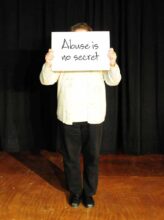
Hummer: Through the Eyes of the Past. Emma’s story as told to Madison Savage, performed by Amanda Hummer. There are days when I look in the mirror and begin to see the reflections of who I once was. I feel myself shrinking, losing friends, losing control, losing my mind. I go back to a time when I felt so alone, and I start to grow smaller with each layer I shed.
00;13;53;18 - 00;14;18;05
Amanda Hummer
I was a puppet bound by the hands of a perfectly tailored boy, wearing me alongside his class ring. Sometimes if I close my eyes, I can see it in my mind, playing back like a recording. The air was hot and sticky, almost begging for a breeze. The noises of carnival rides and small talks surrounded me. It was summertime at the fair.
00;14;18;07 - 00;14;39;27
Amanda Hummer
I was 16 and smitten. He was from a family of churchgoers, a routine I learned to adopt as my own. As I fell into my role in his Sundays, I started losing my place in my own life. My time began to belong to him as I lost touch with my friends and spent less time with my parents and more time with his.
00;14;39;29 - 00;15;07;17
Amanda Hummer
We did everything together. No longer just me. It was we and our Sundays. First to go was my time, then my choices. Don't wear shorts. They don't look good on you. So I didn't wear shorts. You look a lot better in makeup. So I saw the world through glitter lined eyes and smiled with lips glossed to his fancy.
00;15;07;19 - 00;15;27;09
Amanda Hummer
I should have seen these things as red flags, but I was young and naive. It just means he cares. I shared my mother and then I requested more money from her to buy the dress he wanted me to wear to the school dance. My mom and that damn dress watched me cry that night. I could handle it, I thought.
00;15;27;12 - 00;15;53;09
Amanda Hummer
But then it was my body. He stole pieces of me bit by bit. He took my words, hearing a no as a yes and a stop as a go. He made me put up walls. And then he tried to hold me against those same walls. It hurt. And looking back, it sometimes still hurts. There are days when I look in the mirror and see my true reflection.
00;15;53;11 - 00;16;25;19
Amanda Hummer
A strong woman who has been belittled but still stands. I spent a lot of time thinking I was damaged because of the situations I had faced. I was torn, ripped apart, emotionally, physically, sexually. But I was not and will not be broken. I've learned to rebuild myself after I was knocked down. Starting at the foundation, I remembered to love me brick by brick, piece by piece and glance by glance.
00;16;25;22 - 00;16;50;17
Amanda Hummer
Through the times of pain, anger and grief, I pushed myself to take back the voice I had once lost. And now I remember who I am. And I will never, ever give up.
00;16;50;20 - 00;17;12;01
Sean Ashcraft
Ashcraft: Support for the facing project comes from Behavior Associates providing intensive therapy, individualized academic instruction, and social skills training for children with autism behavior associates analysts develop an individualized treatment plan for each child receiving services. Presenting sponsor of the facing project. More at behavior ABA.
00;17;12;03 - 00;17;34;27
J.R. Jamison
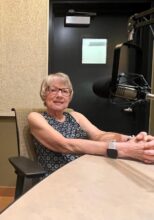
Jamison: I want to welcome to the show Dr. Mary-Frances O’Connor, associate professor of psychology at the University of Arizona and author of The Grieving Brain The Surprising Science of How We Learn from Love and Loss. Doctor O'Connor is a renowned grief expert and neuroscientist, and a leader in the field of prolonged grief, where her research aims to team out mechanisms that cause this ongoing and severe reaction to loss.
00;17;35;05 - 00;17;46;16
J.R. Jamison
Doctor O'Connor's work has been featured in numerous print and visual outlets, including The Guardian, Lit Hub, NPR, Science Friday, Psychology Today, among others. Doctor O'Connor, thank you for joining me.
00;17;46;18 - 00;17;48;05
Dr. Mary-Frances O’Connor
O’Connor: Oh, it's so nice to be here.
00;17;48;05 - 00;18;02;23
J.R. Jamison
Jamison: I want to dive right into the five stages of grief. There's been a long standing belief among the masses that grief is linear, but your work, building off of others, has shown that's actually not the case. Tell me more.
00;18;02;25 - 00;18;41;01
Dr. Mary-Frances O’Connor
O’Connor: Well, the five stages of grief, which many people know was actually published in 1969, and you can think about how far science has come since 1969. Right? It was, you know, originally developed by Doctor Elizabeth Kubler-Ross, who was a remarkable psychiatrist. And she really was doing what all scientists do when they're first trying to explain a phenomena, which is that she did interviews and she described what people were experiencing first, people who were terminally ill, and then later people who were grieving the death of a loved one.
00;18;41;01 - 00;19;10;19
Dr. Mary-Frances O’Connor
And so she was really able, through these interviews, these conversations to help us delve into the feeling of grief. And that grief can include anger, it can include depression, it can include denial and acceptance. And those things are accurate about grief. But I find it's very helpful to make this distinction. I make this distinction in the book between grief and grieving.
00;19;10;19 - 00;19;42;02
Dr. Mary-Frances O’Connor
And grief is that wave that overtakes you and might have any of those elements that I mentioned. But grieving is really the way that grief changes over time. So it isn't a single moment in time, but it's the change that happens. Grief can become more familiar, or from the research that's been done since then, we know that people tend to feel accepting more often, and they tend to feel yearning less often.
00;19;42;02 - 00;20;08;29
Dr. Mary-Frances O’Connor
But that doesn't mean that they never feel grief in a moment again. That is just because we become aware of this terrible thing that we have experienced, this loss of someone so close to us. So we don't really consider there to be five stages anymore. We don't think of people going through them in a linear way, but rather it's a description of grief and not a prescription for how to grieve.
00;20;09;02 - 00;20;21;04
J.R. Jamison
Jamison: And so some people may get stuck in what was once called the five stages, or the linear version of grief, and they might think, what's wrong with me? Right?
00;20;21;06 - 00;20;41;29
Dr. Mary-Frances O’Connor
O’Connor: That's right. This is the downside. Because, you know, people will say to me, well, I haven't really experienced anger, so I guess I'm not done yet. Well, there is no done with grief, right? Yeah. This is an experience you've had and it's not going to look like anybody else's experience. Just the same way that no one's relationship looks like anyone else's.
00;20;42;01 - 00;20;53;24
J.R. Jamison
Jamison: Yeah. And in case folks missed it in the lead in you're a neuroscientist. So you've dedicated decades to researching the effects of grief on the brain. What does happen to the brain during grief?
00;20;54;02 - 00;21;23;21
Dr. Mary-Frances O’Connor
O’Connor: Well, this is a bit of an unusual perspective to take. I'll be honest. We don't really think about the brain first, usually when we think about grief and grieving. But I think it is very helpful. And from the neuroimaging work that we've done, one of the things that we know is that when we bond with another person, right when we fall in love with our spouse or with our baby, that that process of bonding, it actually changes our brain.
00;21;23;21 - 00;21;50;14
Dr. Mary-Frances O’Connor
It physically reorganizes proteins in our brain and the way that neurons fire. And so what that means is then when the death of a loved one happens, the brain has to update. It has to understand what does it mean in the world for me, now that this person is gone? And because bonding has this aspect to it, which is I will always be there for you and you will always be there for me.
00;21;50;19 - 00;22;01;20
Dr. Mary-Frances O’Connor
It's very difficult for the brain to understand this person isn't on this earthly plane anymore. How do I understand that? What do I do in my life now?
00;22;01;24 - 00;22;24;02
J.R. Jamison
Jamison: Yeah. And you've also found that cortisol levels increase steering the onset of grief. And that can lead to negative impacts such as weight gain, stress on the heart. On the opposite end of that spectrum, because we're dealing with the brain, right. Does grief have the ability to change our bodies or our brain in positive ways?
00;22;24;04 - 00;22;44;07
Dr. Mary-Frances O’Connor
O’Connor: Oh, this is an excellent question. And I will say that as clinical psychologists, we are very focused usually on the people who are having the most difficulty. The people who are finding it difficult to get out to work every day or get dinner on the table, or who feel like they're just sort of going through the motions since a loved one died.
00;22;44;11 - 00;23;12;21
Dr. Mary-Frances O’Connor
So psychology has been very focused on this side, this piece of the of the continuum. But it is very clearly true that there are people for whom the death of a loved one is a turning point for them, where they feel that how they understand life has changed, or the way that they feel close to people around them who really were, were there with them, who understood them.
00;23;12;21 - 00;23;28;29
Dr. Mary-Frances O’Connor
So we call these aspects post-traumatic growth. And we have very little neuroimaging, very little physiology associated with that experience. We don't know much yet about how that affects the body.
00;23;29;02 - 00;23;50;05
J.R. Jamison
Jamison: In your book you discuss grieving in relation to the loss of a loved one. Is there a difference between grieving the loss of a spouse or a friend versus grieving the end of a career or a job, you know, through retirement? Or maybe quitting a job or a divorce? Is that grieving process different?
00;23;50;07 - 00;24;17;08
Dr. Mary-Frances O’Connor
O’Connor: It's a very common question, and I will say yes and no. So the yes part is when we bond with another person, as I was saying, that creates changes in us, and then that bond can be broken in a whole host of different ways, so it can be broken because of divorce. We might move away. Our children, you know, we go through empty nest when our children leave home.
00;24;17;08 - 00;24;43;10
Dr. Mary-Frances O’Connor
And it's not that they've died, but that our relationship has really very much changed the the way that we interact with them, the way that we our a resource for them in the world or they are for us has very much changed. So that grief is very much the same way. And I think that because evolutionarily, our loved ones are vital to our survival.
00;24;43;17 - 00;25;05;26
Dr. Mary-Frances O’Connor
I think it makes sense that the brain has evolved ways to make these bonds, and then eventually to try and learn to understand and update when a loved one is not bonded any longer. But having said that, there are these other kinds of grief that you mentioned, the loss of a job, loss of health, or loss of function, right?
00;25;05;27 - 00;25;33;01
Dr. Mary-Frances O’Connor
Someone becomes deaf. And those are also a type of grief. And I think that the way to sort of see the connection there is when we lose a loved one, we do actually lose a part of ourself. So, for example, if I use the word daughter to describe myself, that actually is talking about two people, isn't it? There's another person in the world implied when I describe myself as a daughter.
00;25;33;01 - 00;25;52;19
Dr. Mary-Frances O’Connor
So when my mother died, then there's the well, how do I function in the world if I'm not the daughter that I knew myself to be? And I think it's similar. How do I function in the world as a retired person? How do I function in the world as a person with a chronic illness, or who is now disabled?
00;25;52;21 - 00;26;03;25
Dr. Mary-Frances O’Connor
That change in our self is a type of grieving that I think the brain can recognize as also a type of loss, and have some of those same feelings.
00;26;03;27 - 00;26;22;28
J.R. Jamison
Jamison: Of course, our work here at the Facing Project is steeped in storytelling, so I feel like I'd be remiss if I didn't ask what role does storytelling or empathy understanding others? What role does that play in helping those who are grieving?
00;26;23;00 - 00;26;54;17
Dr. Mary-Frances O’Connor
O’Connor: Storytelling actually plays a really important place in grief, and we see this at funerals and memorials when we all tell stories. We know, even from psychotherapy, that what we might call narrative therapy, where people are, are sort of aided in, in reconstructing a meaningful world by understanding what happened and what impact did it have. And I don't mean meaning in a simplistic way.
00;26;54;17 - 00;27;19;09
Dr. Mary-Frances O’Connor
I don't mean the feeling that something is a death has been justified. We're right now in the moment at the University of Arizona, where a faculty member was shot and killed yesterday. And we are all in this moment of telling the story to each other, of where we were and what happened and and how we knew him. And so those stories, they make it.
00;27;19;15 - 00;27;39;13
Dr. Mary-Frances O’Connor
They make it real, right? They make it real that this happened. They make it real that this person lived and was important. And so telling those stories helps us to make sense of the world, not necessarily to make sense of the of the gun violence, but to make sense of what has happened and how are we connected through it.
00;27;39;15 - 00;28;06;05
J.R. Jamison
Jamison: And I'm sorry to hear about your your colleague. And I am glad to hear, though, that through this process and process of grieving in many ways, that those stories and your bond as a community is helping folks process this. And as you said, not about the gun violence, but about the process of this person now being gone to make sense of that world.
00;28;06;05 - 00;28;09;10
J.R. Jamison
So I'm really sorry to hear about your colleague.
00;28;09;12 - 00;28;10;10
Dr. Mary-Frances O’Connor
O’Connor: Thank you.
00;28;10;14 - 00;28;20;21
Dr. Mary-Frances O’Connor
Stories really bring us together. They help to explain what's happening on the inside and help us to see a little bit more that our own story is more universal.
00;28;20;23 - 00;28;34;03
J.R. Jamison
Jamison: If there were one thing you would want someone to understand about the grieving process that perhaps was misunderstood before. Aside from the stages of grief, what might that be?
00;28;34;05 - 00;28;59;11
Dr. Mary-Frances O’Connor
O’Connor: I think that many of us don't have a lot of experience with grief as we live longer and as end of life, care is more medicalized, so it isn't happening at home the way it was 100 years ago. But it's happening in institutions, in hospitals. We just don't have as much experience with grief. We don't talk with each other about what our grief is like.
00;28;59;11 - 00;29;24;11
Dr. Mary-Frances O’Connor
And because of that, many of us feel that what we're feeling or doing or thinking is wrong or abnormal. And in truth, my experience is that even some of the things that seem really crazy, like looking for the person in a crowd or picking up your phone to text them and then realizing that you can't do that, those are actually really normal experiences.
00;29;24;11 - 00;29;36;01
Dr. Mary-Frances O’Connor
So I think if I had something to convey, it would be this is all probably more normal than you think, and to try and reach out and find someone who can understand your experience.
00;29;36;04 - 00;29;43;12
J.R. Jamison
Jamison: Doctor Mary Frances O'Connor, author of The Grieving Brain The Surprising Science of How We Learn from Love and Loss. Thank you for joining me.
00;29;43;12 - 00;29;46;18
Dr. Mary-Frances O’Connor
O’Connor: Thank you so much, and thanks for bringing this conversation to people. J.R.
00;29;46;25 - 00;30;01;22
J.R. Jamison
Jamison: Thank you for your wonderful book. More can be found online. About Doctor Mary Frances O'Connor's work on the grieving at Mary Frances O'Connor.
00;30;01;25 - 00;30;26;12
J.R. Jamison
Stories from today's episode came from facing gun violence in Ohio and facing teen dating violence in east central Indiana. We want to thank Sinclair Community College, the City of Dayton, and a better way for organizing these two facing projects. Marjorie Jackson’s story was written in collaboration with Kate Geiselman and was performed by Chandra Ford. Emma’s story was written in collaboration with Madison Savage and was performed by Amanda Hummer.
00;30;26;14 - 00;30;48;27
J.R. Jamison
To listen to past episodes of this program, visit Indiana Public Facing project. From there, you can subscribe to the podcast where you'll get the facing project delivered to your device each month. Or just ask your smart speaker to play the facing project on NPR. Listeners can contribute stories or volunteer to share the stories of others that may appear on the show.
00;30;49;03 - 00;31;13;22
J.R. Jamison
More information at project. To continue the conversation about this episode. Find us on Facebook, Instagram and Twitter at The Facing Project. The facing project is recorded at Indiana Public Radio at Ball State University and Beautiful and Wonderful, Muncie, Indiana, and is produced by the amazing producer and sound engineer extraordinaire, Sean Ashcraft. The show is distributed nationally through PRT.
00;31;13;25 - 00;31;25;19
J.R. Jamison
I'm your host, J.R. Jamison, and until next time, I wish you the courage to share your own story and the empathy to listen to others.
00;31;25;22 - 00;31;44;20
Sean Ashcraft
Ashcraft: Support for the project comes from Behavior Associates providing intensive therapy, individualized academic instruction, and social skills training for children with autism behavior associates analysts develop an individualized treatment plan for each child receiving services. Presenting sponsor of the facing project. More at behavior ABA.